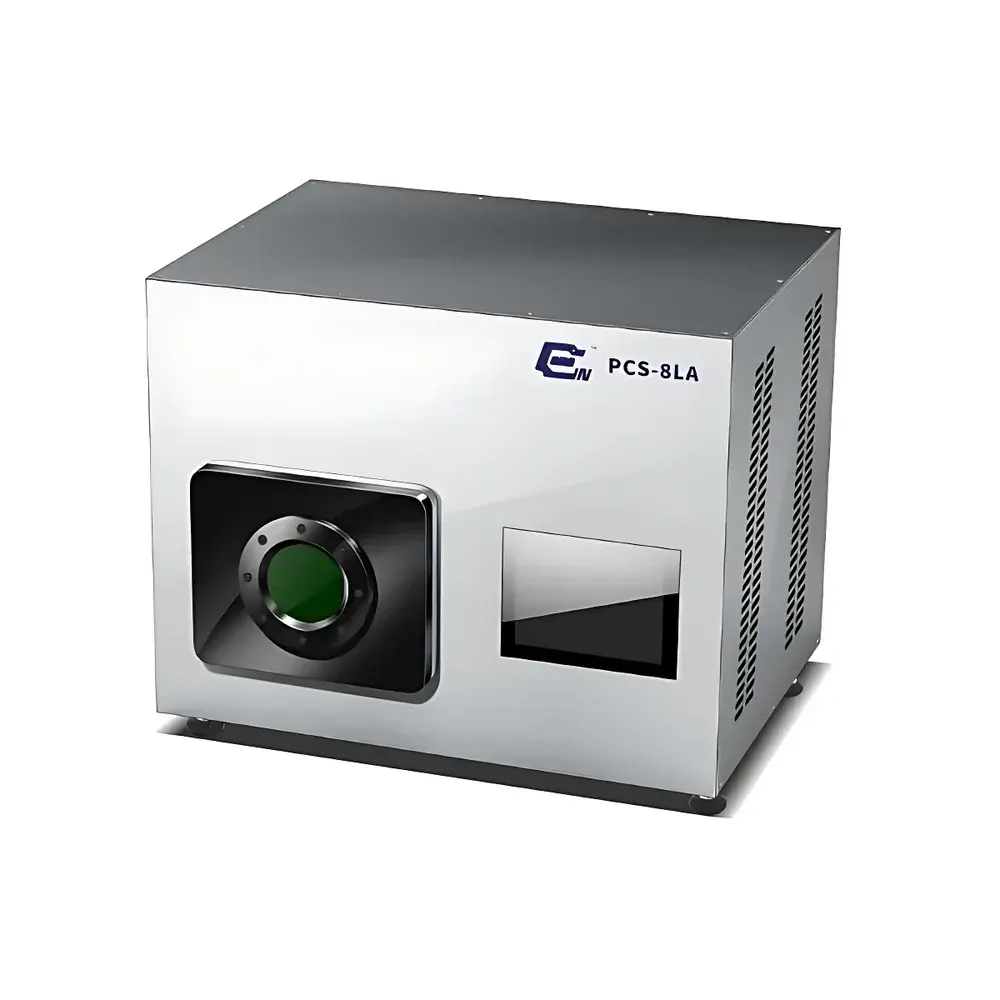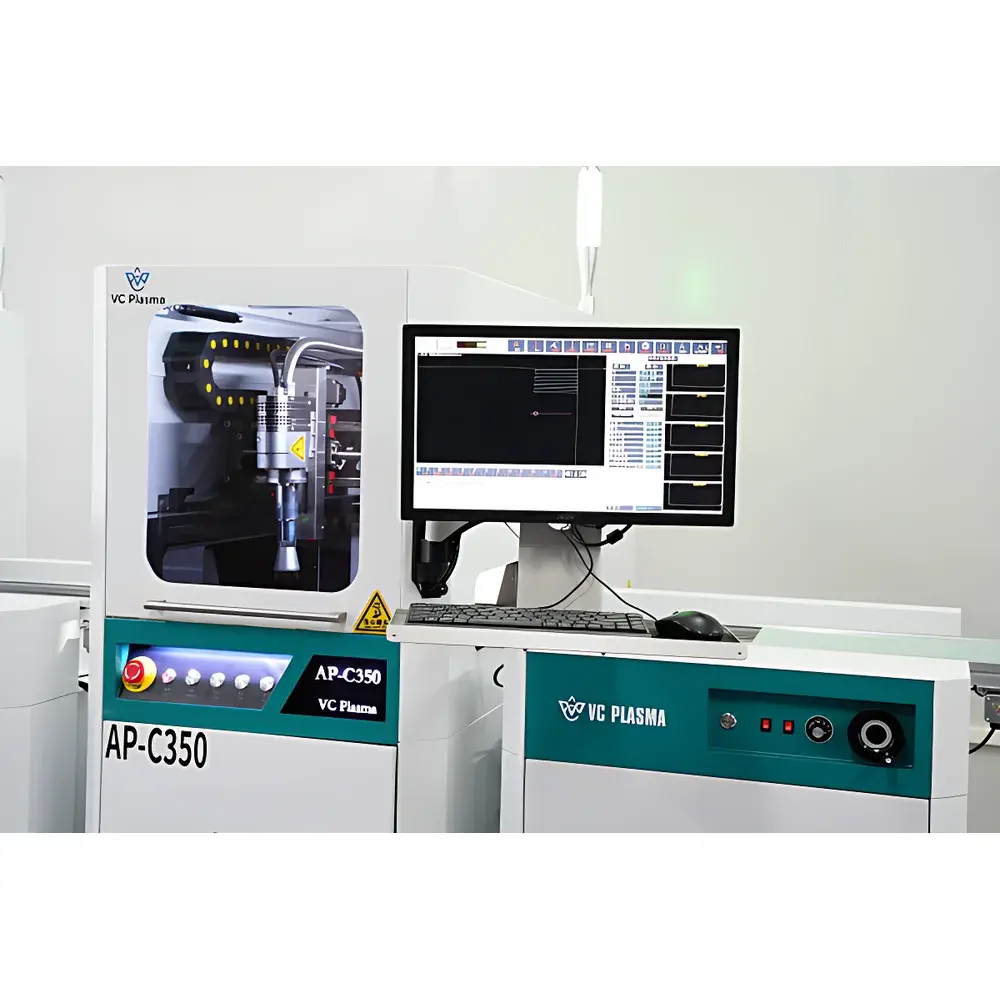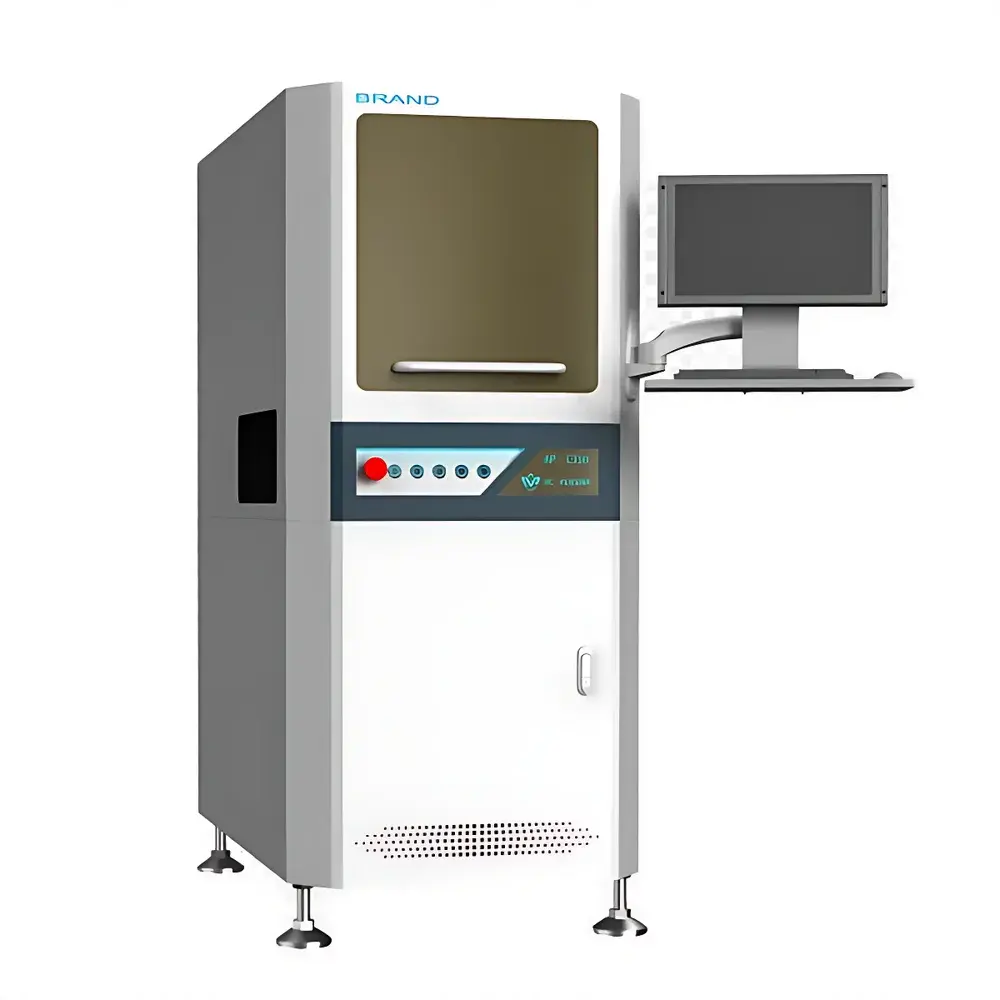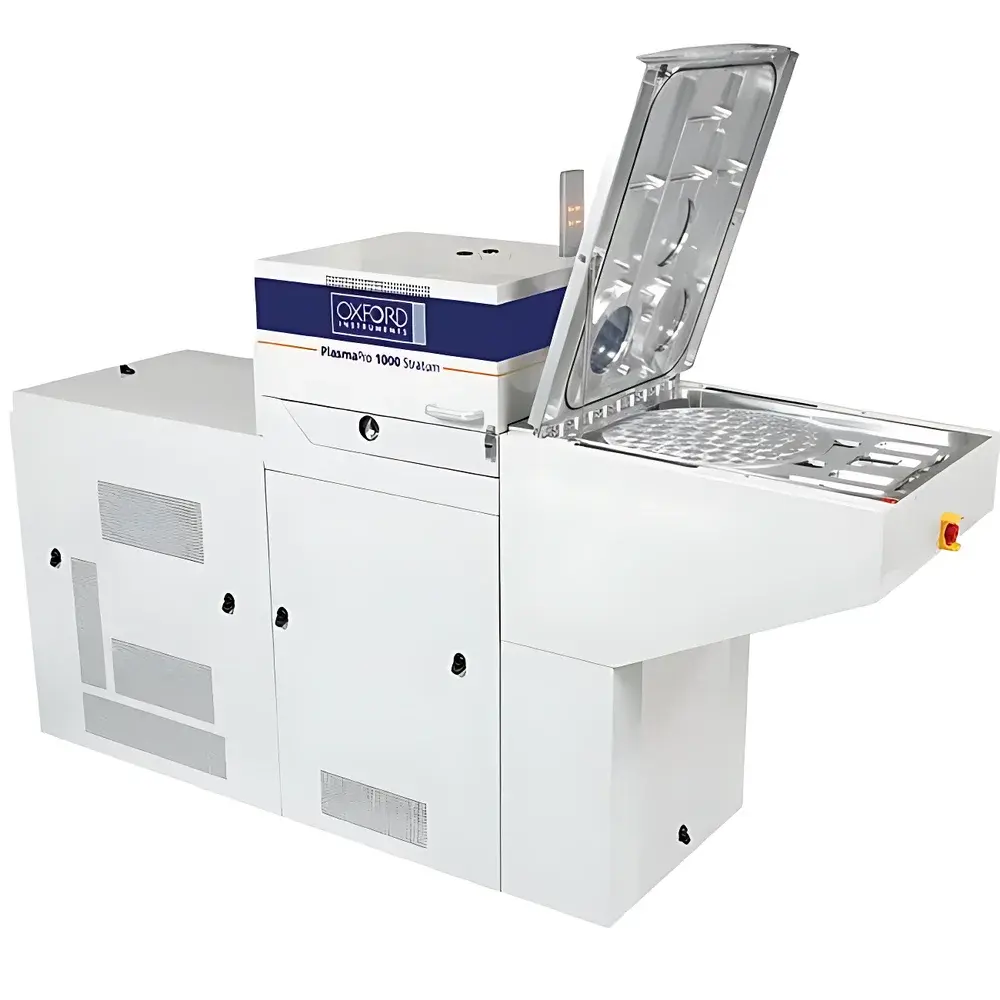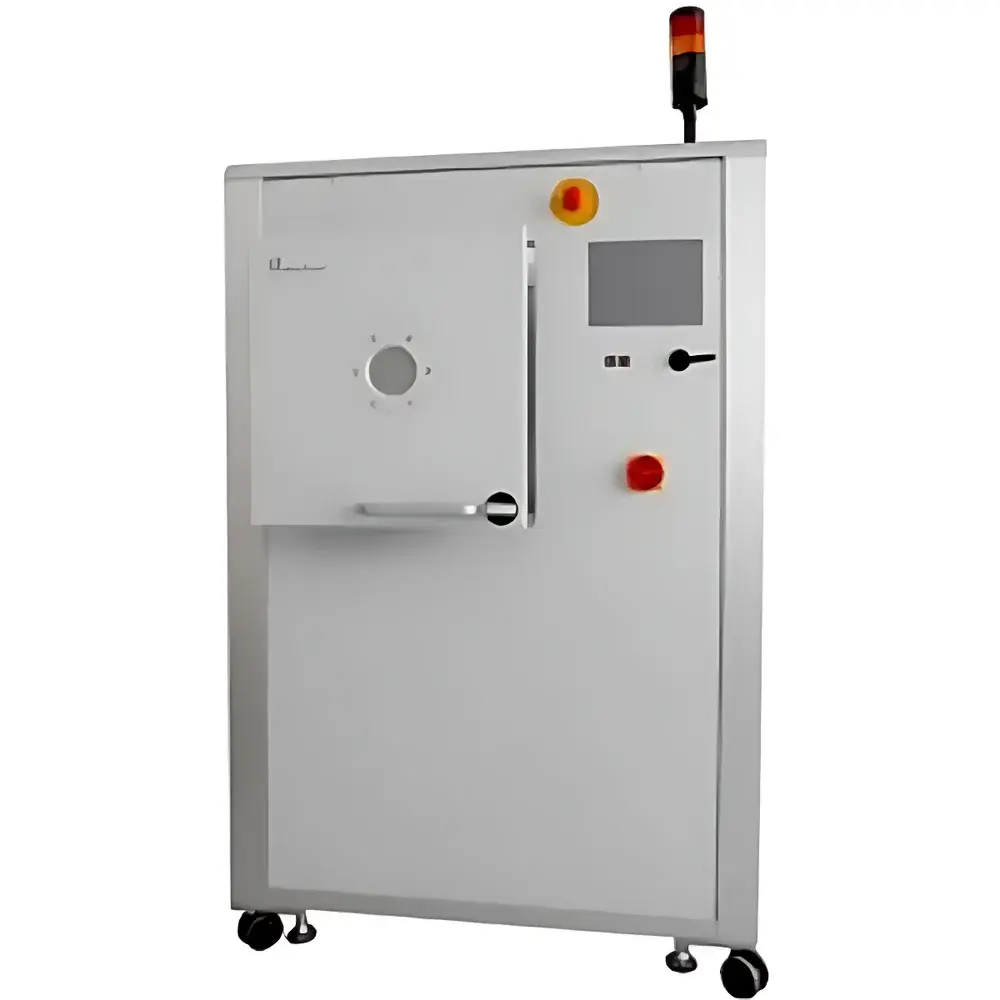
Alpha Plasma AL76 Compact Microwave Plasma Cleaner
| Brand | Alpha Plasma |
|---|---|
| Origin | Germany |
| Model | AL76 |
| Plasma Source | 2.45 GHz microwave, 1200 W |
| Chamber Volume | 76 L (400 × 400 × 490 mm, aluminum) |
| External Dimensions | 1050 × 800 × 2020 mm (incl. signal tower) |
| Gas Inlets | 3 standard mass flow-controlled lines (MKS digital controllers) |
| Door Type | Dual-mode hinged/drawer with UV- and microwave-shielded viewport |
| Control Interface | 10.4" resistive touchscreen, Windows CE OS |
| Optional | Dry pump package, tri-color signal tower, up to 4 gas lines, φ350 mm motorized rotating stage, ECR enhancement module |
Overview
The Alpha Plasma AL76 Compact is a benchtop-integrated microwave plasma cleaning system engineered for high-reproducibility surface activation, organic residue removal, and native oxide reduction in semiconductor packaging and microelectronics fabrication environments. Operating at the industrial standard 2.45 GHz microwave frequency, the system generates high-density, low-pressure plasma via electron cyclotron resonance (ECR)-capable excitation—enabling efficient dissociation of process gases (O₂, Ar, H₂, CF₄, N₂, or mixtures) without electrode contamination or ion bombardment damage. Unlike RF-based plasma systems, the AL76’s waveguide-coupled microwave source delivers uniform plasma distribution across large-area substrates, minimizing edge effects and ensuring consistent treatment of wafers, leadframes, packages, and bare dies. Its 76-liter aluminum chamber supports batch processing of up to 25 × 25 mm die arrays or full 8-inch wafers (with optional rotating stage), making it suitable for both R&D validation and medium-volume production integration within cleanroom Class 100–1000 environments.
Key Features
- 2.45 GHz microwave plasma generator with 1200 W nominal power output and integrated ECR magnetic field configuration for enhanced electron confinement and plasma density (>1 × 10¹¹ cm⁻³ at 10 mTorr)
- Aluminum vacuum chamber (400 × 400 × 490 mm) with electropolished interior surfaces and ISO-KF 63 flange ports for rapid pump-down (< 60 s to 10 mTorr with标配 dry pump)
- Dual-function door mechanism: front-hinged access combined with drawer-style substrate loading—optimized for ergonomic operation and repeatable positioning
- UV- and microwave-shielded quartz viewport (λ < 200 nm cutoff, >60 dB attenuation at 2.45 GHz) enabling real-time visual monitoring without radiation leakage
- Three-channel digital mass flow control (MKS Series 1179, ±1% full scale accuracy) with programmable gas sequencing and dwell timing
- 10.4-inch industrial-grade resistive touchscreen HMI running Windows CE 6.0 with embedded recipe management, event logging, and USB export capability
- Modular expansion architecture supporting up to four independent gas lines, motorized φ350 mm rotating stage (0.1–10 rpm, programmable acceleration profile), and optional ECR coil driver
Sample Compatibility & Compliance
The AL76 accommodates rigid and flexible substrates ranging from individual die (≥2 × 2 mm) to 200 mm wafers, PCBs, ceramic packages (QFN, BGA, WLCSP), and metal leadframes. It supports direct placement on chamber floor or use with custom fixtures (e.g., quartz boats, graphite carriers). All wet-chemistry-free cleaning processes comply with JEDEC J-STD-020 moisture sensitivity level (MSL) preconditioning requirements and are compatible with post-plasma inspection per SEMI F20 and IPC-A-610 standards. Vacuum integrity meets ISO 10110-7 for optical component cleaning; residual hydrocarbon levels post-treatment are verified below 5 ng/cm² via XPS surface analysis—ensuring compatibility with subsequent Au/Sn soldering, epoxy die attach, and underfill dispensing steps. The system conforms to CE Machinery Directive 2006/42/EC, EMC Directive 2014/30/EU, and RoHS 2011/65/EU. Optional IQ/OQ documentation packages support GMP-compliant installation and operational qualification per ASTM E2500-13.
Software & Data Management
The embedded Windows CE platform hosts a deterministic real-time control engine that synchronizes microwave power ramping, gas flow transitions, pressure regulation, and stage rotation with sub-second timing resolution. Up to 99 process recipes can be stored locally, each defining multi-step sequences (e.g., Ar purge → O₂ plasma → N₂ bake), with user-defined setpoints for power (100–1200 W), pressure (5–100 mTorr), duration (0.1–9999 s), and gas ratios. All operational parameters—including actual chamber pressure (capacitance manometer), forward/reflected microwave power (directional coupler), and stage position—are logged at 1 Hz and archived in CSV format. Audit trail functionality records operator ID, timestamp, parameter changes, and alarm events—meeting FDA 21 CFR Part 11 requirements when paired with network authentication and electronic signature modules. Remote diagnostics via Ethernet (TCP/IP) enable predictive maintenance alerts based on plasma ignition success rate and vacuum pump current draw trends.
Applications
- Die bonding enhancement: Removal of monolayer hydrocarbons and siloxanes from Cu/Ni/Pd metallization prior to epoxy or eutectic solder attachment—increasing bond strength by ≥35% (per pull-test data per MIL-STD-883H Method 2011.10)
- Wire bonding readiness: Activation of Al or Cu bond pads after molding compound exposure, reducing void formation during thermosonic bonding
- Flip-chip underfill adhesion: Surface energy elevation (≥72 mN/m via dyne test) of FR4 and BT substrates to ensure capillary flow uniformity and interfacial wetting
- Molding compound compatibility: Pre-mold plasma treatment of leadframe surfaces to suppress delamination at polymer–metal interfaces under thermal cycling (−40°C to +125°C, 1000 cycles)
- Post-lithography residue mitigation: Low-damage removal of PAG-derived sulfonium salts and photoacid inhibitors without undercutting resist profiles
FAQ
What vacuum level is required for stable microwave plasma ignition?
Stable plasma initiation occurs between 5–20 mTorr; optimal cleaning uniformity is achieved at 10–15 mTorr using Ar/O₂ mixtures.
Can the AL76 process wafers with backside metallization?
Yes—microwave plasma is non-directional and does not require electrode bias; no arcing or localized heating occurs on conductive backside layers.
Is remote software update supported?
Firmware updates are performed via USB stick; no internet connectivity is required to maintain air-gapped cleanroom compliance.
What certifications accompany the dry pump option?
The integrated scroll-type dry pump carries UL 61010-1 and ATEX II 2G IIB T3 certification for solvent-compatible operation.
How is process repeatability validated across shifts?
Built-in plasma impedance monitoring provides real-time feedback on discharge stability; deviation >±3% triggers automatic recipe suspension and log entry.