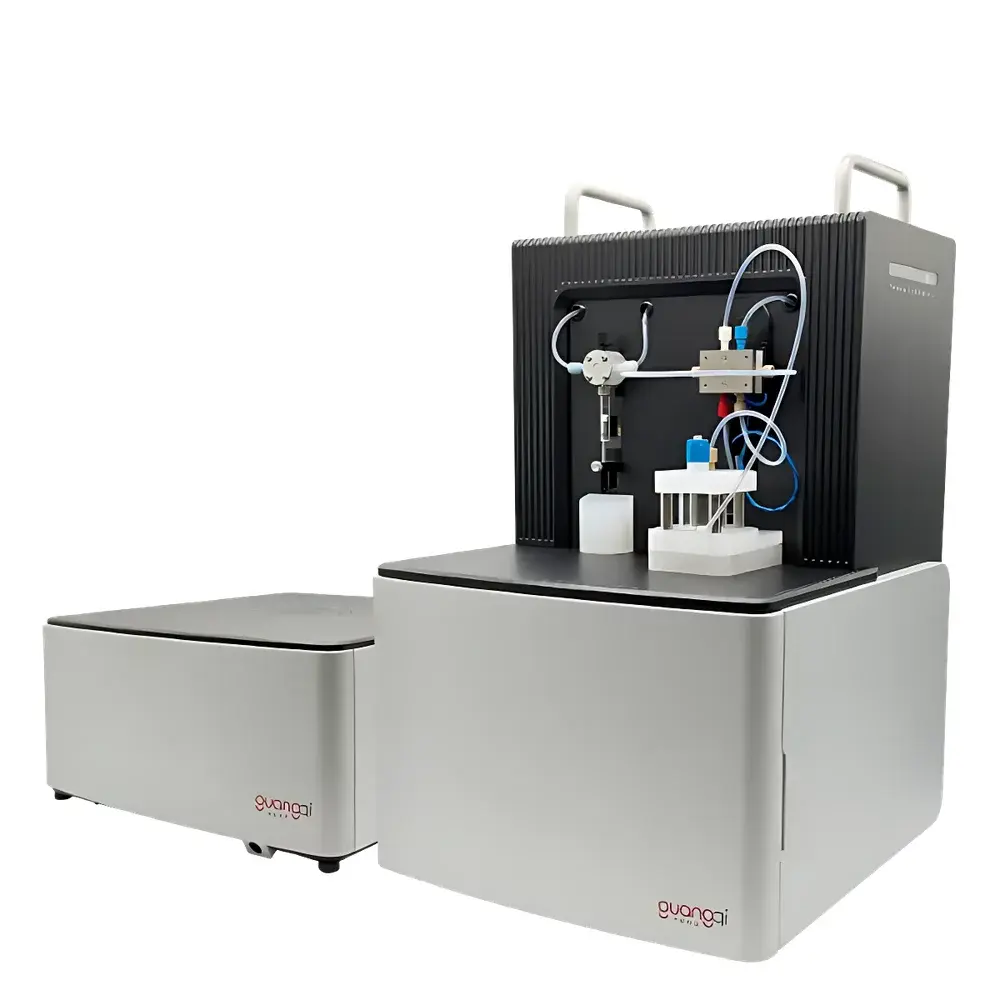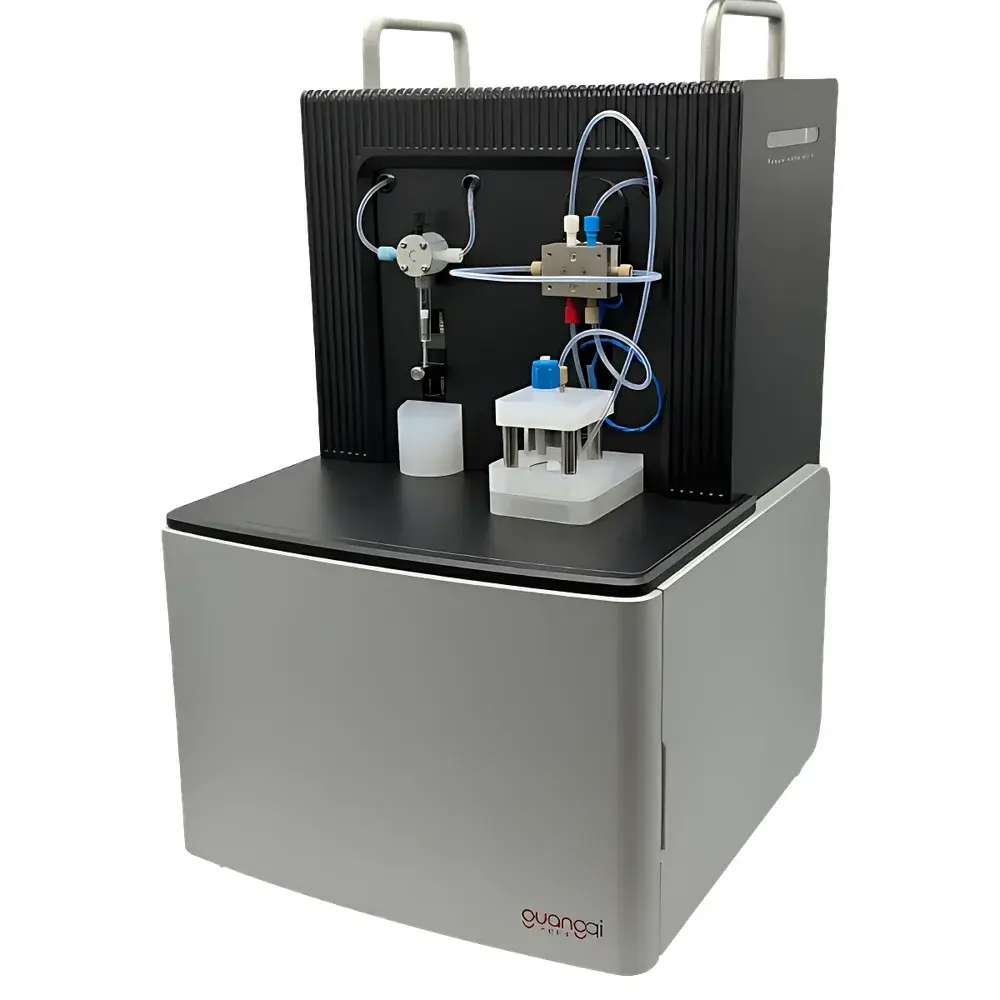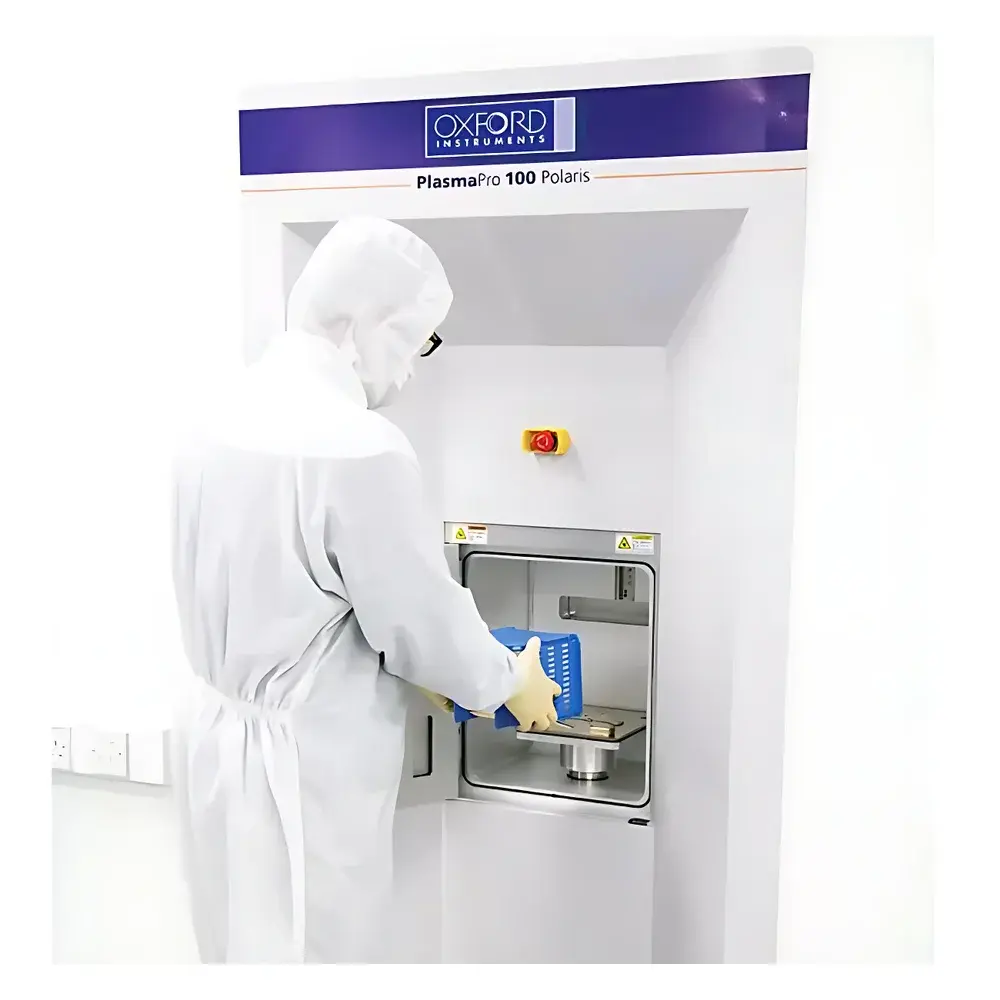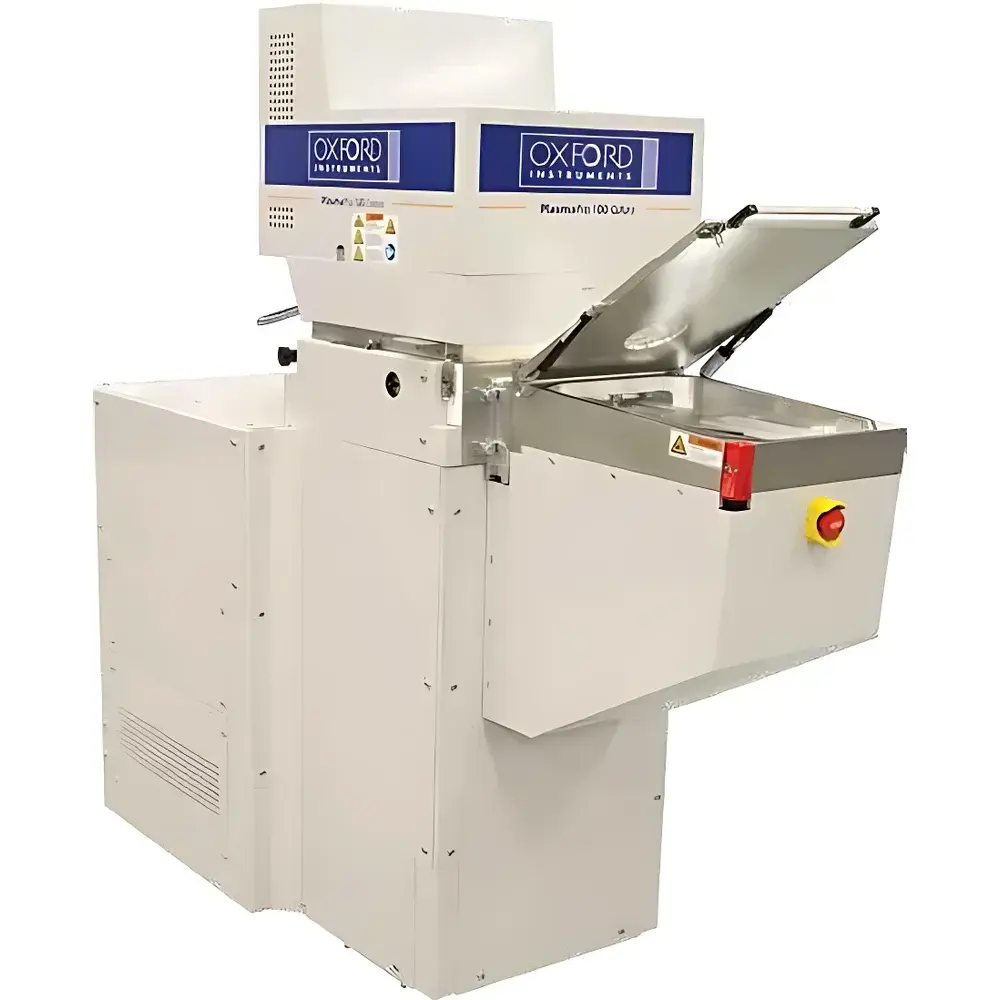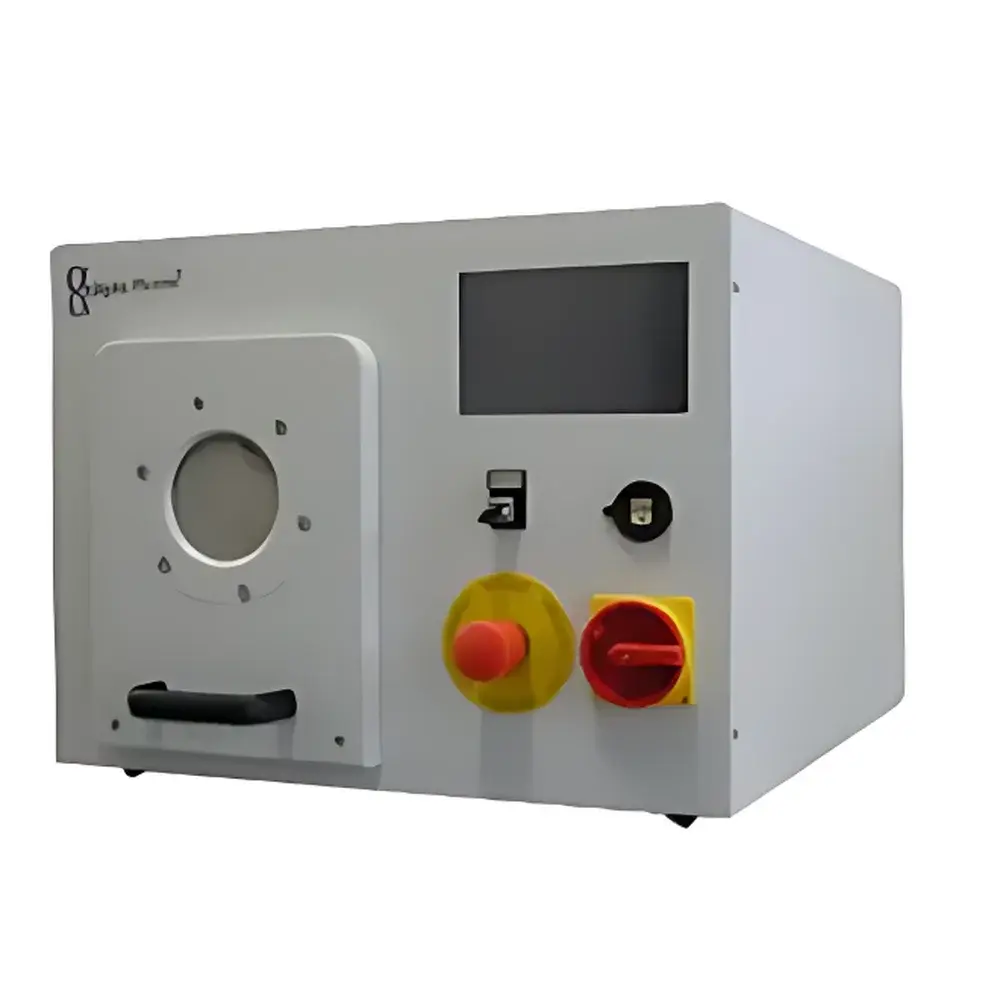
Alpha Plasma Q235 Microwave Plasma Resist Stripper
| Brand | Alpha Plasma |
|---|---|
| Origin | Germany |
| Model | Q235 (Q-Series) |
| Type | Benchtop Microwave Plasma Asher/Stripper |
| Application Domain | Semiconductor Fabrication, MEMS Processing, R&D Cleanroom Environments |
| Compliance | CE-marked, ISO 14644-1 Class 5 compatible installation, ESD-safe chamber design |
| Power Supply | 230 V AC, 50/60 Hz, 16 A |
| Microwave Frequency | 2.45 GHz |
| Max Chamber Volume | 12 L |
| Process Gas Compatibility | O₂, CF₄, SF₆, Ar/O₂ mixtures |
| Vacuum System | Integrated dry scroll pump (base pressure < 5 × 10⁻² mbar) |
| RF/Plasma Monitoring | Real-time forward/reflected power metering with auto-tuning impedance matching network |
Overview
The Alpha Plasma Q235 is a compact, fully integrated microwave plasma resist stripper engineered for high-fidelity photoresist and polymer residue removal in semiconductor front-end and MEMS fabrication processes. Operating at the industrial standard 2.45 GHz microwave frequency, the system generates stable, high-density non-thermal plasma without electrode erosion or UV-induced substrate damage—enabling clean, isotropic ashing of hardened resists (e.g., post-high-dose ion implantation resists), SU-8, and sacrificial polymers while preserving underlying Si, SiO₂, SiN, metal stacks, and low-k dielectrics. Unlike capacitively coupled plasma (CCP) or downstream radical sources, the Q235’s waveguide-coupled resonant cavity delivers uniform plasma distribution across 150 mm wafers (or equivalent mask/substrate carriers), minimizing edge effects and ensuring process repeatability critical for R&D scalability and pilot-line transfer.
Key Features
- Resonant cavity microwave plasma source delivering electron densities >1 × 10¹¹ cm⁻³ at low ion energy (<5 eV), preventing sputtering or surface charging on sensitive structures.
- Benchtop footprint (W600 × D720 × H650 mm) with front-loading quartz chamber and quick-release lid—designed for Class 5 cleanroom integration and tool-of-record qualification.
- Programmable multi-step recipe control (up to 99 steps) with independent regulation of microwave power (0–800 W), gas flow (0–200 sccm per line), process time (0.1–9999 s), and chamber pressure (10–500 mTorr).
- Integrated dry scroll vacuum pump with oil-free operation and automatic venting sequence—eliminating hydrocarbon contamination and enabling rapid chamber recovery between runs.
- Real-time plasma diagnostics including forward/reflected microwave power monitoring, chamber pressure feedback loop, and optional optical emission spectroscopy (OES) port for endpoint detection.
- CE-compliant safety architecture: interlocked chamber door, emergency stop circuitry, plasma arc suppression, and continuous gas leak detection per IEC 61000-6-4 EMC standards.
Sample Compatibility & Compliance
The Q235 accommodates bare and patterned silicon wafers up to 150 mm diameter, photomasks, glass substrates, ceramic carriers, and MEMS devices on carriers. It supports both blanket stripping and selective residue removal after wet etch (e.g., HF-cleaned surfaces), dry etch (Cl₂/BCl₃-based), or lift-off processes. The system meets requirements for GLP-compliant process documentation when paired with optional audit-trail-enabled software (see Software & Data Management). All wetting parts contacting process gases are electropolished stainless steel or high-purity alumina; chamber liners are replaceable fused quartz. Compliant with SEMI S2-0216 (safety) and SEMI F47-0217 (voltage sag immunity); suitable for use under ISO 9001-certified quality systems.
Software & Data Management
The embedded controller runs on a real-time Linux OS with a 7″ capacitive touchscreen HMI. Recipes are stored locally with timestamped execution logs (start/end time, power profile, pressure trace, gas flows). Optional Ethernet/IP interface enables SCADA integration via Modbus TCP or SECS/GEM protocol. For regulated environments, the Alpha Plasma Q235 can be configured with 21 CFR Part 11-compliant software add-on—including electronic signatures, role-based access control (admin/operator/technician), and immutable audit trails archived to external NAS or SQL database. Raw sensor data export is supported in CSV and HDF5 formats for offline statistical process control (SPC) analysis.
Applications
- Removal of carbonized, cross-linked photoresist following high-energy ion implantation (≥1 × 10¹⁶ cm⁻²) without undercutting gate oxides or damaging FinFET sidewalls.
- Clean stripping of SU-8 thick-film resists (≥100 µm) used in microfluidics and MEMS packaging—avoiding thermal stress cracking associated with thermal ashers.
- Post-RIE residue clearance from Al, Cu, TiN, and Co interconnect layers prior to barrier deposition or CMP.
- Sacrificial layer (e.g., polyimide, PMMA) release in surface-micromachined actuators and sensors—preserving mechanical integrity of released structures.
- Decontamination of lithography masks and reticles from organic contaminants and halogenated etch byproducts.
- Surface activation and hydrophilicity enhancement of PDMS and cyclic olefin copolymer (COC) substrates prior to bonding.
FAQ
What plasma generation method does the Q235 use, and why is it preferred over RF plasma?
The Q235 employs microwave-excited plasma in a TE₁₀₂ resonant cavity—delivering higher electron density and lower ion bombardment energy than typical 13.56 MHz RF systems, reducing physical sputtering and charge buildup on insulating layers.
Can the Q235 handle 200 mm wafers?
No—the standard configuration supports substrates up to 150 mm. Custom chamber extensions are available under OEM agreement but require full requalification per SEMI E10.
Is ozone generation a concern during O₂ plasma operation?
The integrated catalytic ozone destruct unit reduces ambient ozone emissions to <0.05 ppm at 30 cm distance, complying with OSHA PEL and EU Directive 2004/108/EC.
Does the system support automated cassette-to-cassette loading?
Not natively—but the Q235 is compatible with third-party load-port modules (e.g., Brooks AutoLoader) via SECS/GEM handshake; integration requires site-specific validation.
What maintenance intervals are recommended for the microwave generator and vacuum pump?
Microwave magnetron lifetime exceeds 10,000 hours; preventive replacement advised at 8,000 hours. Dry scroll pump oil-free operation eliminates lubricant changes—only periodic filter replacement (every 6 months) and vibration monitoring are required.