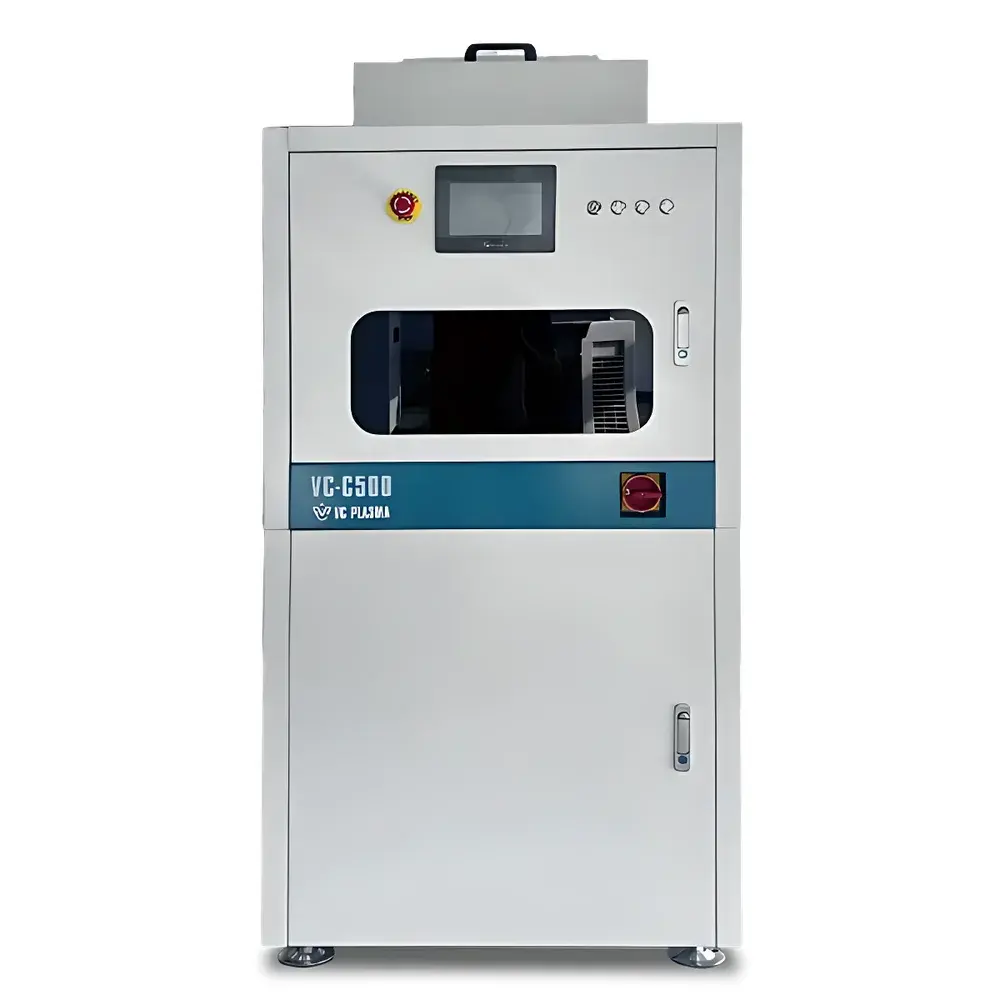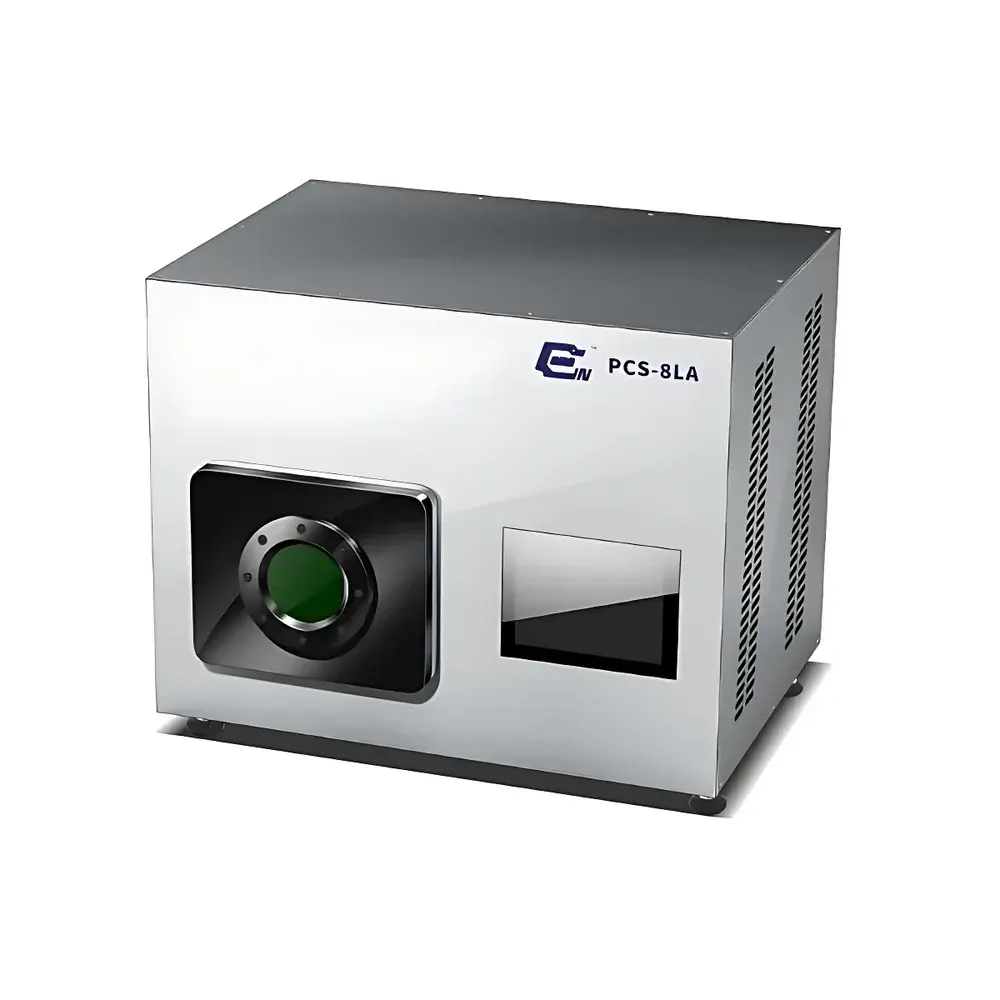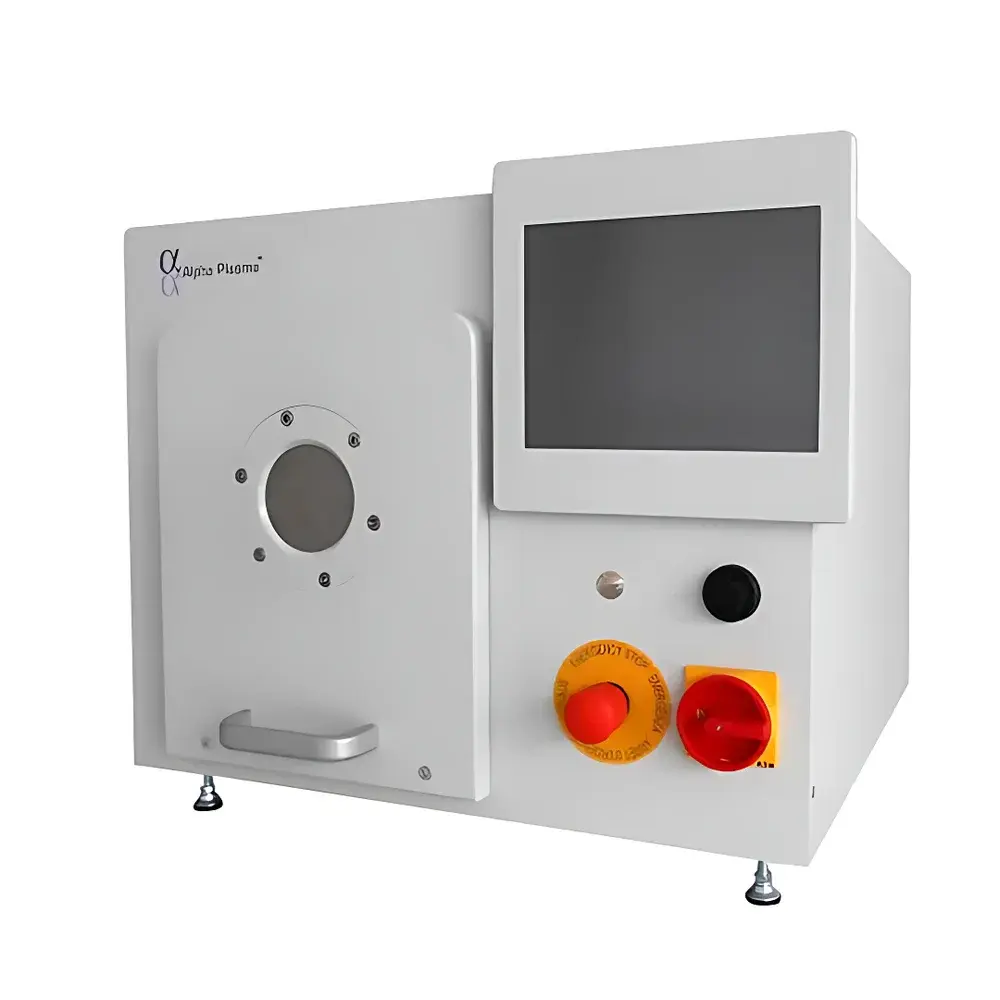
Alpha Plasma Q235 Microwave Plasma Resist Stripper
| Brand | Alpha Plasma |
|---|---|
| Origin | Germany |
| Model | Q235/Q240 |
| Plasma Source | 2.45 GHz microwave, 600 W |
| Chamber Material | Quartz |
| Chamber Dimensions | Ø235 mm × 260 mm L |
| Maximum Wafer Size | 200 mm (8") |
| Footprint | 460 mm × 590 mm × 550 mm H |
| Gas Inlets | Standard 2-channel with digital MKS mass flow controllers |
| Chamber Door | Drawer-type with UV- and microwave-shielded viewport |
| Human-Machine Interface | 7" resistive touchscreen GUI running Windows CE |
| Optional | Dry pump package (with foreline trap & vibration isolation), Faraday cage, quartz boat, tri-color status beacon, up to 4 gas lines, export-grade crating and freight logistics |
Overview
The Alpha Plasma Q235 is a benchtop microwave plasma resist stripper engineered for precision photoresist removal in semiconductor R&D, pilot-line fabrication, and academic cleanroom environments. It operates on the principle of 2.45 GHz microwave-excited plasma generation in low-pressure reactive gas environments (e.g., O₂, CF₄, or O₂/CF₄ mixtures), enabling highly anisotropic, non-damaging ashing of organic photoresists without substrate heating or ion bombardment effects typical of RF-based systems. Unlike capacitively coupled plasma (CCP) tools, the Q235 employs waveguide-coupled microwave energy to produce high-density, uniform electron populations (>10¹⁰ cm⁻³) within the quartz chamber—ensuring rapid, repeatable resist decomposition via radical-driven oxidation and fluorination pathways. Its compact footprint and modular architecture make it suitable for Class 100–1000 cleanrooms where space, safety, and process traceability are critical.
Key Features
- 2.45 GHz microwave plasma source delivering stable 600 W power output with automatic impedance matching for consistent plasma ignition and maintenance across varying gas compositions and pressures.
- Quartz chamber (Ø235 mm × 260 mm) optimized for thermal stability and plasma uniformity; compatible with wafers up to 200 mm (8 inches) and standard quartz boats for batch processing of multiple substrates.
- Temperature-regulated electrostatic chuck (ESC) with closed-loop PID control, supporting wafer temperature setpoints from ambient to 120 °C—critical for residue-free stripping of hardened resists and post-etch polymer removal.
- Drawer-style front access door with integrated UV-blocking and microwave-shielded borosilicate viewport (λ < 200 nm cutoff), enabling real-time visual monitoring without compromising operator safety or process integrity.
- Dual-gas inlet system with digitally controlled MKS mass flow controllers (MFCs), offering ±1% full-scale accuracy and reproducible gas ratio tuning; optional expansion to four independent MFC channels for complex multi-step recipes.
- 7-inch industrial-grade resistive touchscreen HMI running Windows CE OS, preloaded with recipe management, parameter logging, and event-driven alarm handling compliant with GLP audit requirements.
Sample Compatibility & Compliance
The Q235 accommodates silicon, SiC, GaN, glass, and quartz wafers up to 200 mm diameter, as well as discrete substrates such as MEMS devices, photomasks, and compound semiconductor test chips. All wet-processed or etched samples with residual PR, BARC, or spin-on carbon hardmasks can be effectively stripped without undercutting or surface oxidation beyond specification limits. The system meets IEC 61000-6-3 (EMC emission), IEC 61000-6-4 (industrial immunity), and EN 61010-1 (electrical safety) standards. Vacuum interlocks, pressure sensors, and door-open detection circuits satisfy SEMI S2-0215 human safety requirements. Optional Faraday cage integration ensures electromagnetic compatibility in shared lab environments with adjacent metrology tools.
Software & Data Management
The embedded Windows CE platform supports secure user authentication (three-tier access: Operator, Engineer, Administrator), timestamped parameter logging (gas flows, power, pressure, temperature, duration), and CSV export via USB 2.0 port. All process logs include unique run IDs, operator credentials, and system health diagnostics—enabling full traceability per ISO 9001 and FDA 21 CFR Part 11 Annex 11 guidelines when paired with networked time servers and electronic signature modules. No cloud connectivity is included by default; local data retention complies with GDPR and ITAR-controlled environment policies.
Applications
- Photoresist ashing after lithography, etch, or implant steps in Si, SOI, and wide-bandgap semiconductor processes.
- Cleaning of photomasks and reticles prior to inspection or re-coating.
- Removal of lift-off residues following metal deposition.
- Surface activation and pre-bond cleaning of wafer-level packaging substrates.
- Development of low-damage plasma chemistries for advanced node resist systems (e.g., EUV resists, metal-organic hybrids).
FAQ
What vacuum level is required for stable plasma ignition?
Typical operating pressure range is 10–100 mTorr; base pressure ≤5 mTorr is recommended before gas introduction.
Can the Q235 handle high-aspect-ratio resist profiles?
Yes—microwave plasma provides superior radical diffusion into trenches compared to RF sources, though aspect ratio limits depend on gas chemistry and dwell time.
Is remote monitoring supported?
Local Ethernet port enables Modbus TCP read-only access to live parameters; full remote control requires optional OPC UA gateway add-on.
What maintenance intervals are specified for the microwave generator?
Waveguide and magnetron require no scheduled replacement under normal operation; annual calibration of MFCs and pressure transducers is advised.
Does the system support automated recipe loading via SECS/GEM?
Not natively—but RS-232 and TCP/IP interfaces allow integration into factory host systems using custom middleware.
Related Products