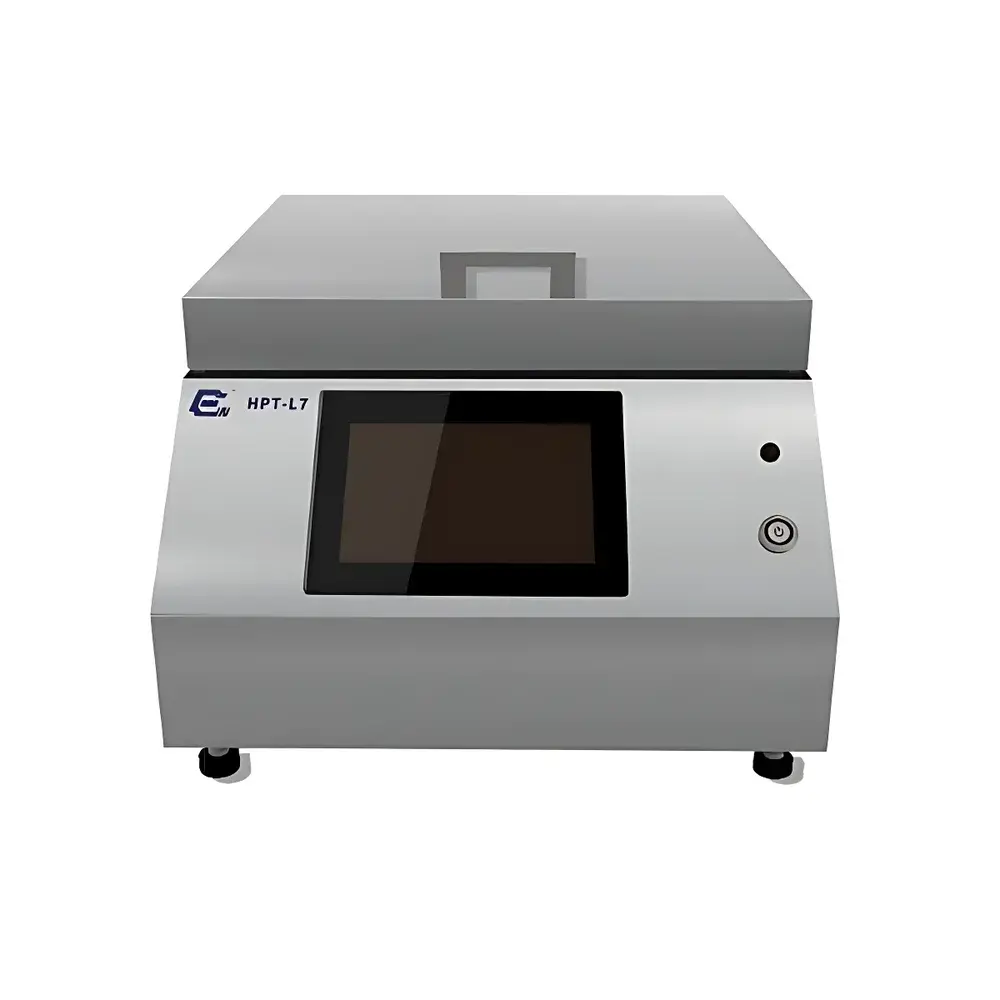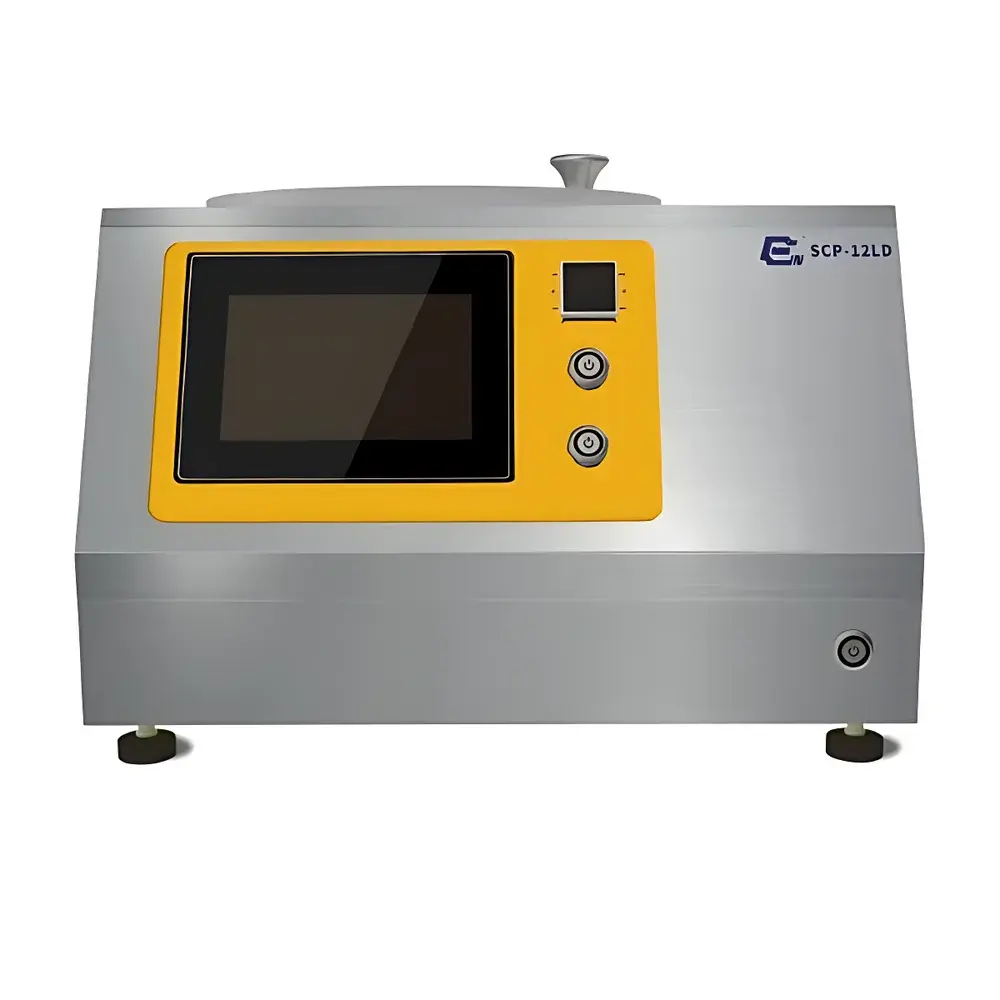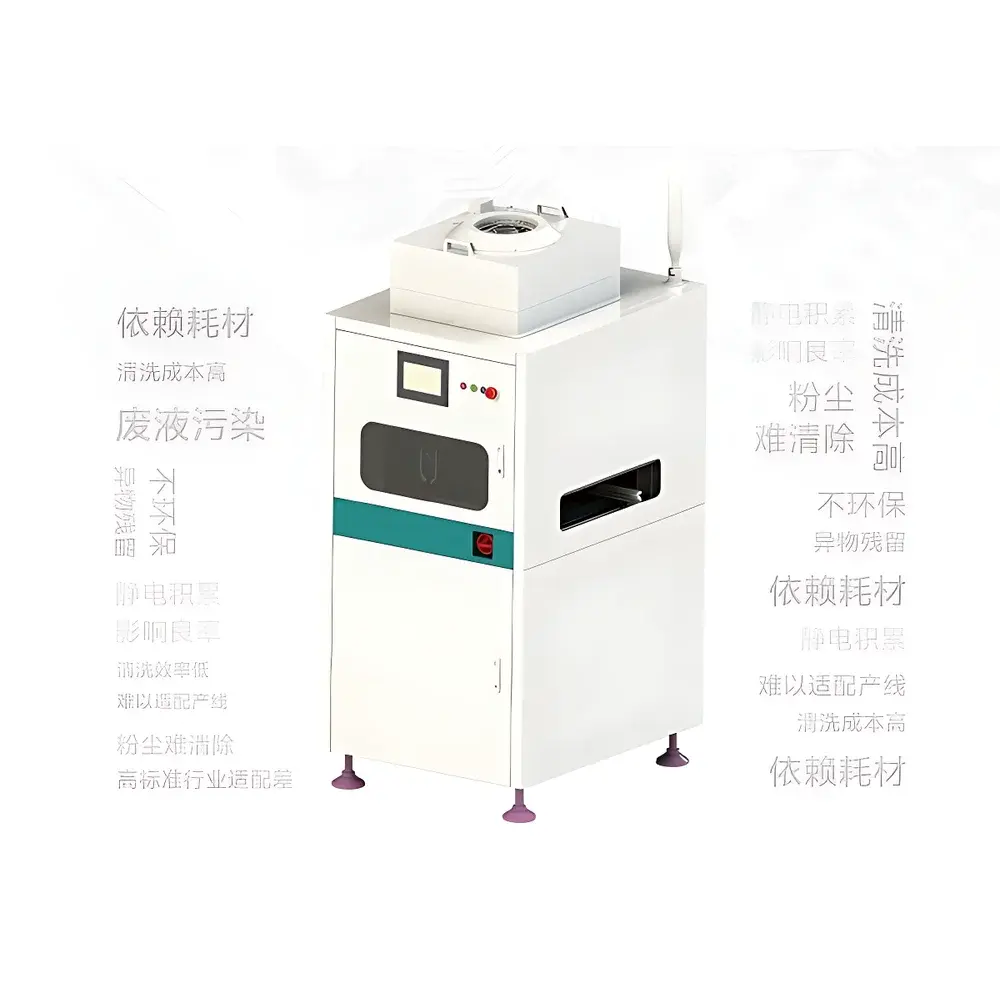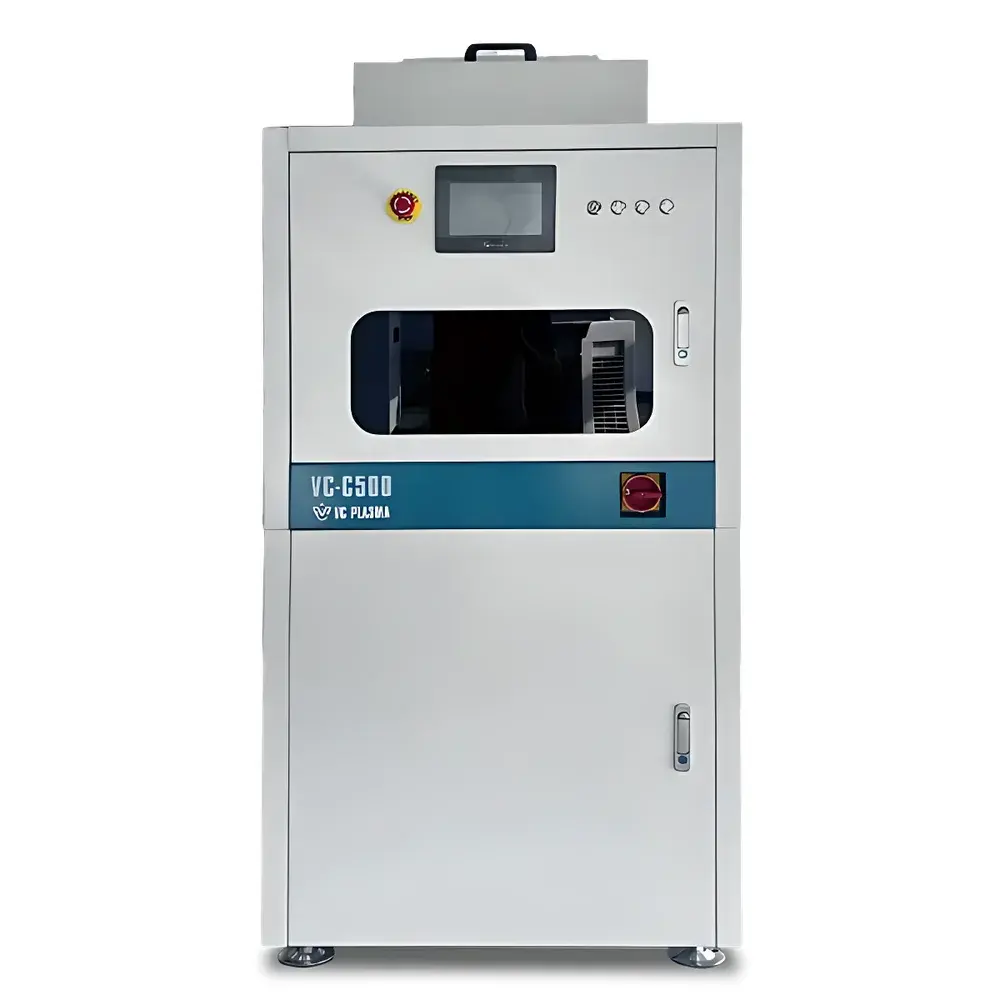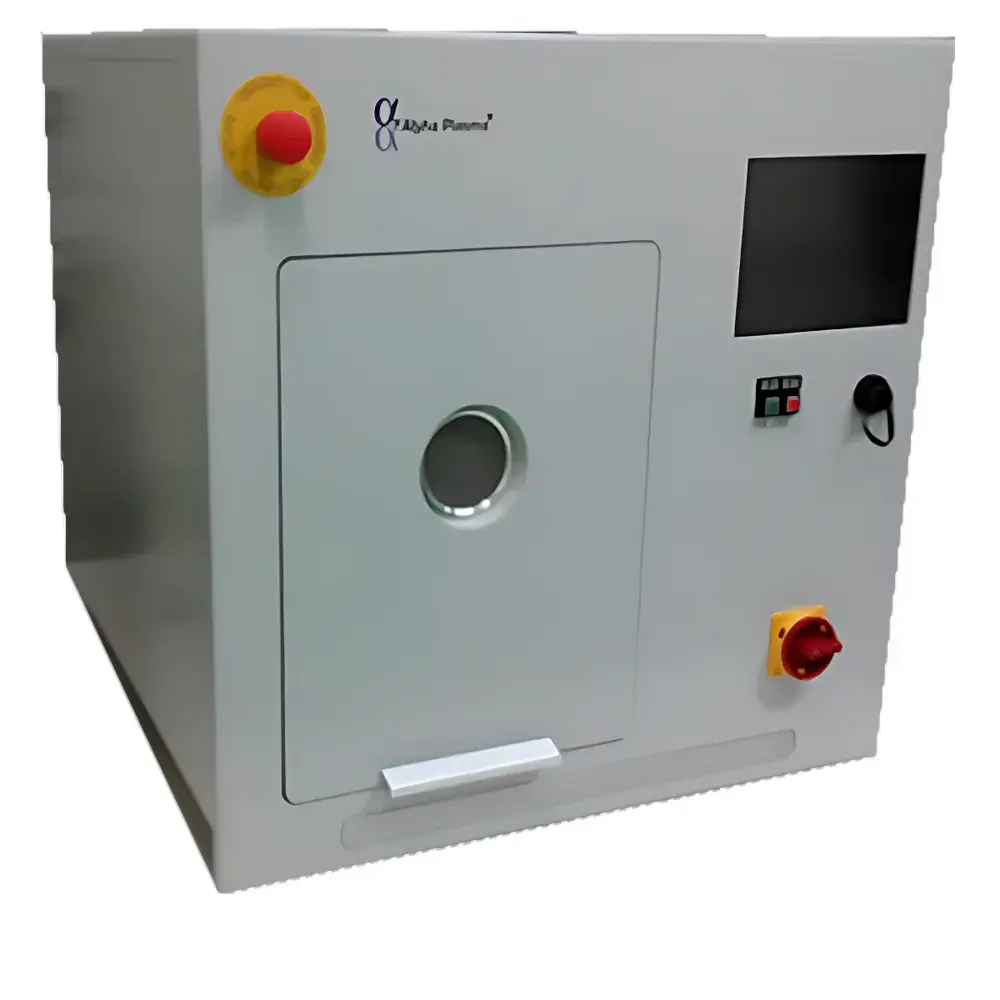
ALPHA Q240 Microwave Plasma Resist Stripper
| Brand | Alpha Plasma |
|---|---|
| Origin | Germany |
| Model | Q240 |
| Plasma Source | 2.45 GHz microwave, 1200 W |
| Chamber | Quartz, Ø240 mm × 460 mm (21 L), max. 200 mm wafer capacity |
| Dimensions (L×W×H) | 760 × 775 × 775 mm |
| Gas Control | 3-channel digital MKS mass flow controllers |
| Vacuum Door | Drawer-type with UV/microwave-shielded viewport |
| Human-Machine Interface | 10.4" touchscreen GUI, Windows CE OS |
Overview
The ALPHA Q240 is a high-reliability microwave plasma resist stripper engineered for precision photoresist removal in semiconductor fabrication, MEMS development, and advanced microfabrication laboratories. Operating at 2.45 GHz, its magnetron-driven microwave plasma source generates stable, uniform, and low-damage reactive species—primarily atomic oxygen and fluorine radicals—enabling highly selective, residue-free ashing of organic resists without compromising underlying metallization, dielectric layers, or delicate device structures. Unlike RF-based systems, the Q240’s waveguide-coupled microwave design eliminates electrode erosion and minimizes ion bombardment energy, resulting in superior surface integrity and process repeatability across wafer batches. Its 21-liter quartz chamber supports full 200 mm (8-inch) wafers and accommodates multi-wafer carriers or custom fixtures, making it equally suitable for high-throughput production environments and low-volume R&D workflows requiring rapid process iteration.
Key Features
- 2.45 GHz microwave plasma source with 1200 W nominal power output, delivering high-density, low-temperature plasma with minimal substrate heating
- Quartz process chamber (Ø240 mm × 460 mm, 21 L volume) optimized for uniform plasma distribution and chemical inertness to aggressive etchants
- Temperature-controlled electrostatic chuck (ESC) with integrated thermal regulation for precise wafer temperature management (±1 °C stability)
- Drawer-style vacuum door with borosilicate viewport featuring dual-layer shielding: UV-absorbing coating + conductive mesh for microwave containment (Faraday cage compliance)
- Three independent digital MKS mass flow controllers enabling reproducible gas dosing for O₂, CF₄, SF₆, or N₂/O₂ mixtures; expandable to four gas lines via optional module
- 10.4-inch industrial-grade touchscreen HMI running Windows CE OS, supporting recipe storage, real-time parameter logging, and password-protected user access levels
- Modular vacuum interface compatible with oil-free dry pump systems (optional), ensuring Class 1 cleanroom compatibility and eliminating hydrocarbon backstreaming risks
Sample Compatibility & Compliance
The Q240 processes silicon, SOI, GaAs, SiC, and glass substrates up to 200 mm diameter, including patterned wafers, MEMS devices with suspended structures, and SU-8 or epoxy-based thick-film resists. It supports critical pre- and post-etch cleaning steps—including removal of hardened photoresist after dry etch, descum prior to metal lift-off, and sacrificial layer stripping in surface-micromachined MEMS fabrication. The system meets SEMI S2-0201 safety guidelines and conforms to IEC 61000-6-3 (EMC emission) and IEC 61000-6-4 (industrial immunity) standards. Optional Faraday cage integration enables full RF/EMI isolation in shared cleanroom facilities. All hardware and software components are designed for traceability under GLP and GMP frameworks, with audit-ready event logs and user action tracking compliant with FDA 21 CFR Part 11 when paired with validated software extensions.
Software & Data Management
The embedded Windows CE platform hosts a dedicated process control application with intuitive navigation, multilingual UI support (English, German, Japanese), and hierarchical recipe management. Each process record includes timestamped parameters (power, pressure, gas flows, chuck temperature, duration), chamber sensor feedback (reflected power, chamber pressure), and operator ID. Data export is supported via USB 2.0 or Ethernet (TCP/IP) in CSV or XML format for integration into MES or SPICE-compatible analysis tools. Optional data archiving modules provide automated daily backups with SHA-256 checksum verification and retention policies aligned with ISO/IEC 17025 documentation requirements.
Applications
- Photoresist stripping after lithography, etch, or ion implantation steps in CMOS, Power Device, and RF IC manufacturing
- Residue removal following deep reactive ion etching (DRIE) of silicon MEMS structures
- Post-development descum for high-aspect-ratio SU-8 patterning in microfluidics and bio-MEMS
- Cleaning of stencil masks and reticles in mask shop environments
- Surface activation and functionalization of polymers and oxides prior to bonding or metallization
- Low-damage removal of carbonaceous contamination from optical components and sensor surfaces
FAQ
What wafer sizes does the Q240 support?
The standard configuration accommodates up to 200 mm (8-inch) wafers; custom carriers enable handling of smaller substrates (100 mm, 150 mm) or non-circular samples such as diced dies or ceramic packages.
Is the system compatible with corrosive process gases like NF₃ or Cl₂?
While the base configuration supports O₂, CF₄, SF₆, and Ar, compatibility with highly corrosive chemistries requires optional quartz-lined gas manifolds and Hastelloy wetted parts—available as factory-installed upgrades.
Can the Q240 be integrated into an automated cluster tool environment?
Yes—the system provides SECS/GEM-compliant RS-232 and Ethernet interfaces with standardized message protocols for host communication, FOUP/SMIF load port interfacing, and interlock signaling per SEMI E15.1.
Does the touch interface support remote monitoring and diagnostics?
Remote desktop access is enabled via secure RDP over isolated network segments; predictive maintenance alerts (e.g., pump performance drift, chamber wall coating thickness estimation) are available through optional cloud-connected analytics firmware.
What validation documentation is provided for regulated environments?
Alpha Plasma supplies IQ/OQ documentation templates, FAT/SAT reports, and calibration certificates traceable to PTB (Physikalisch-Technische Bundesanstalt); full 21 CFR Part 11 validation packages are available upon request.
Related Products