
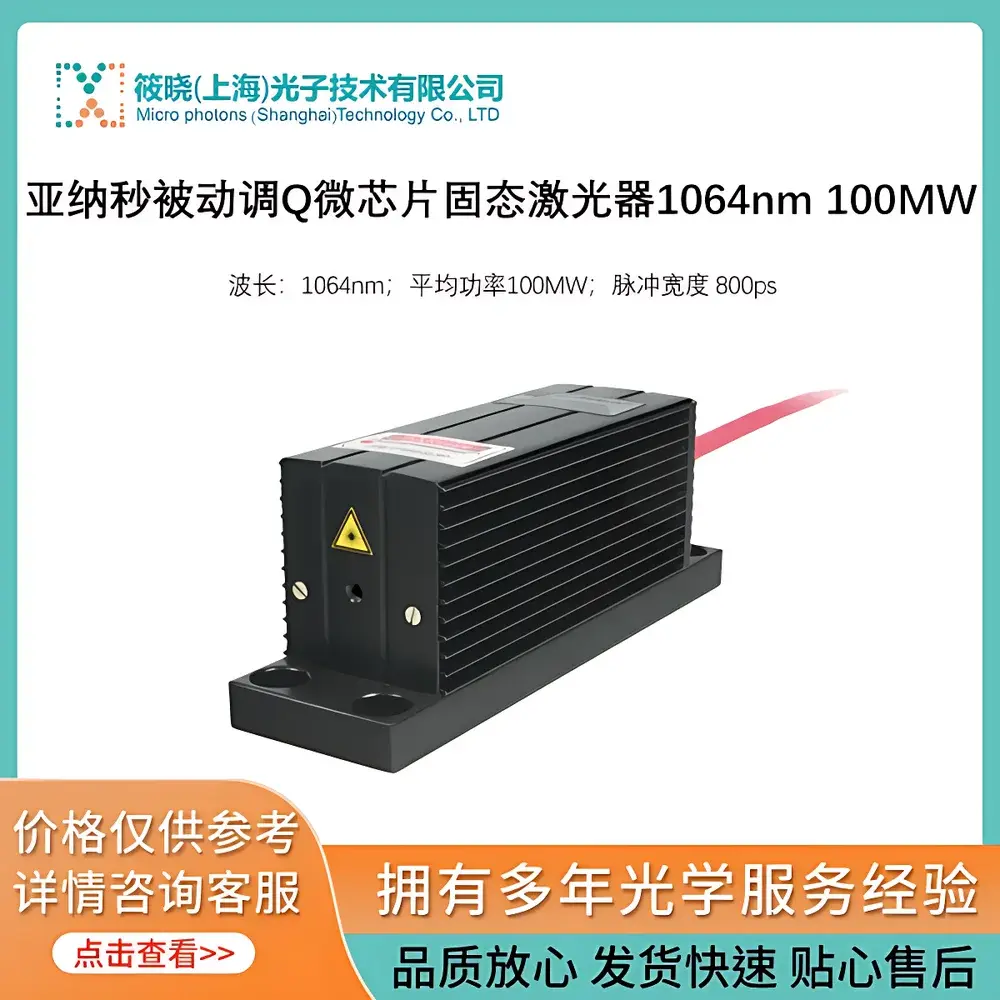
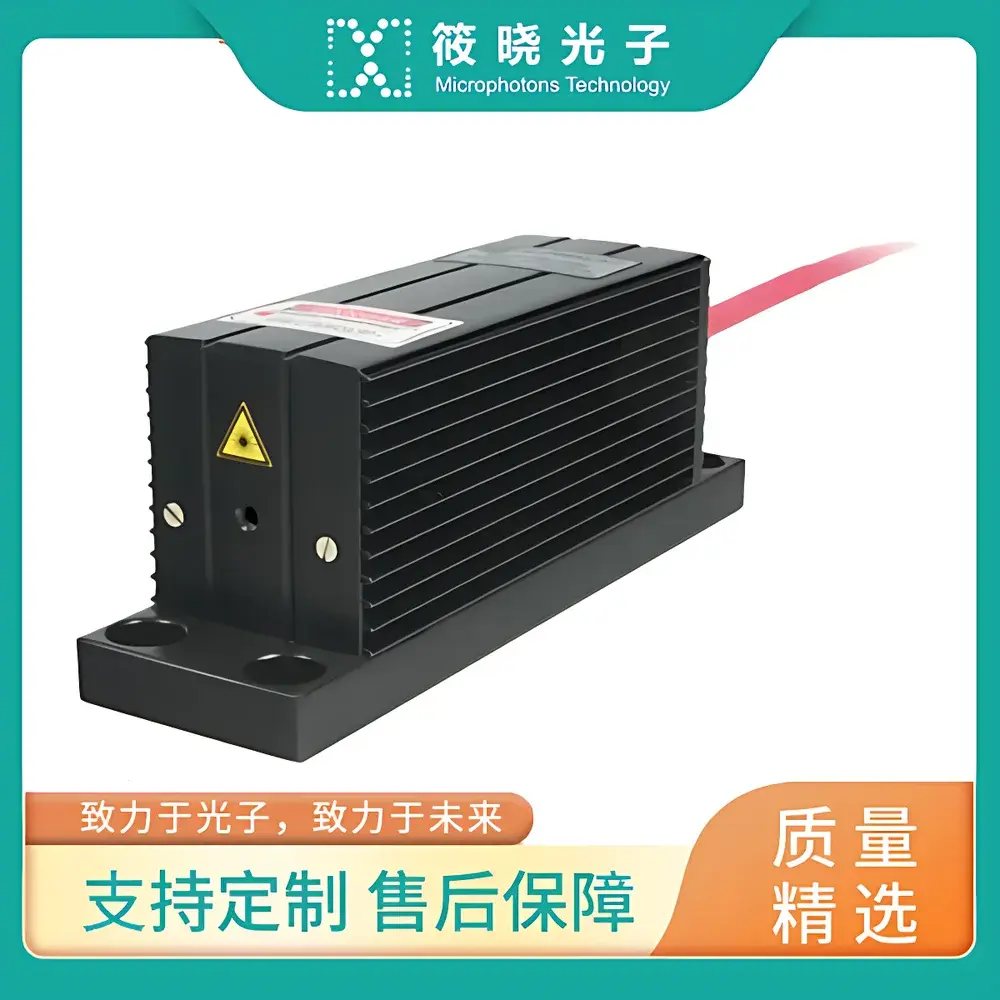
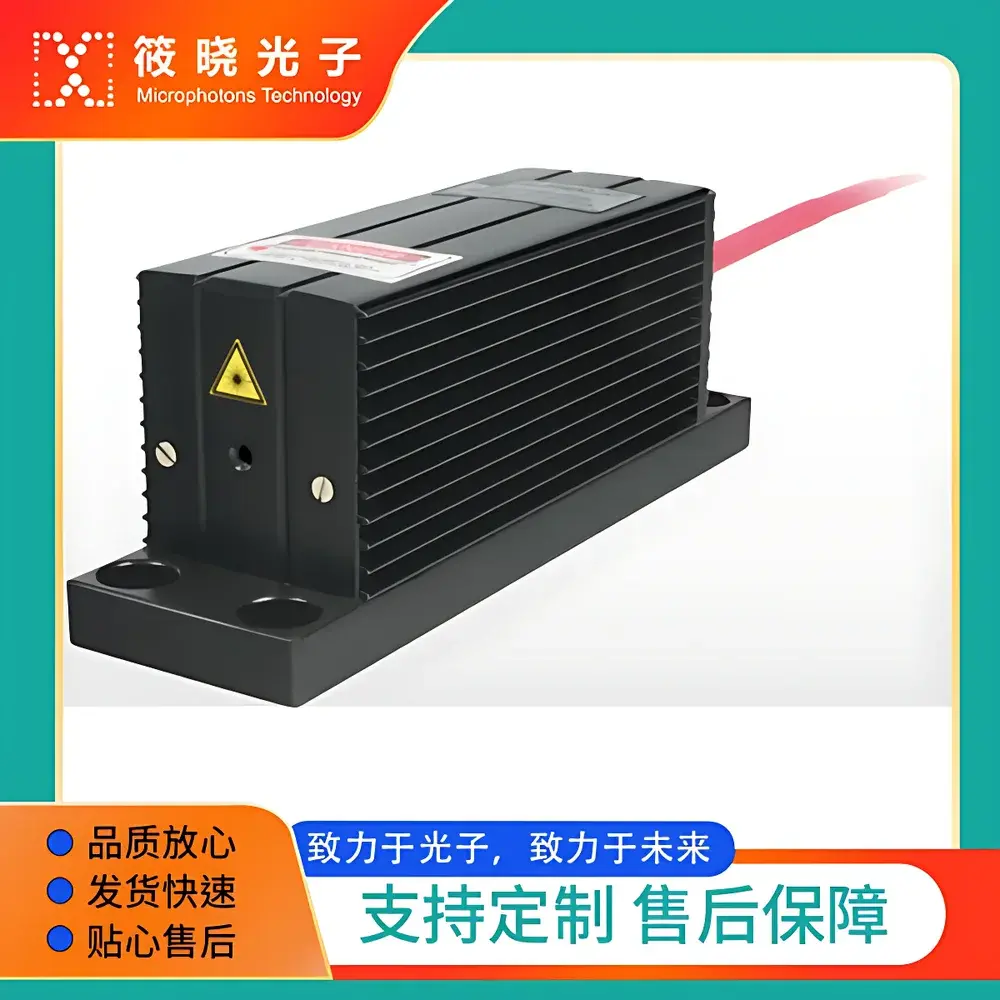
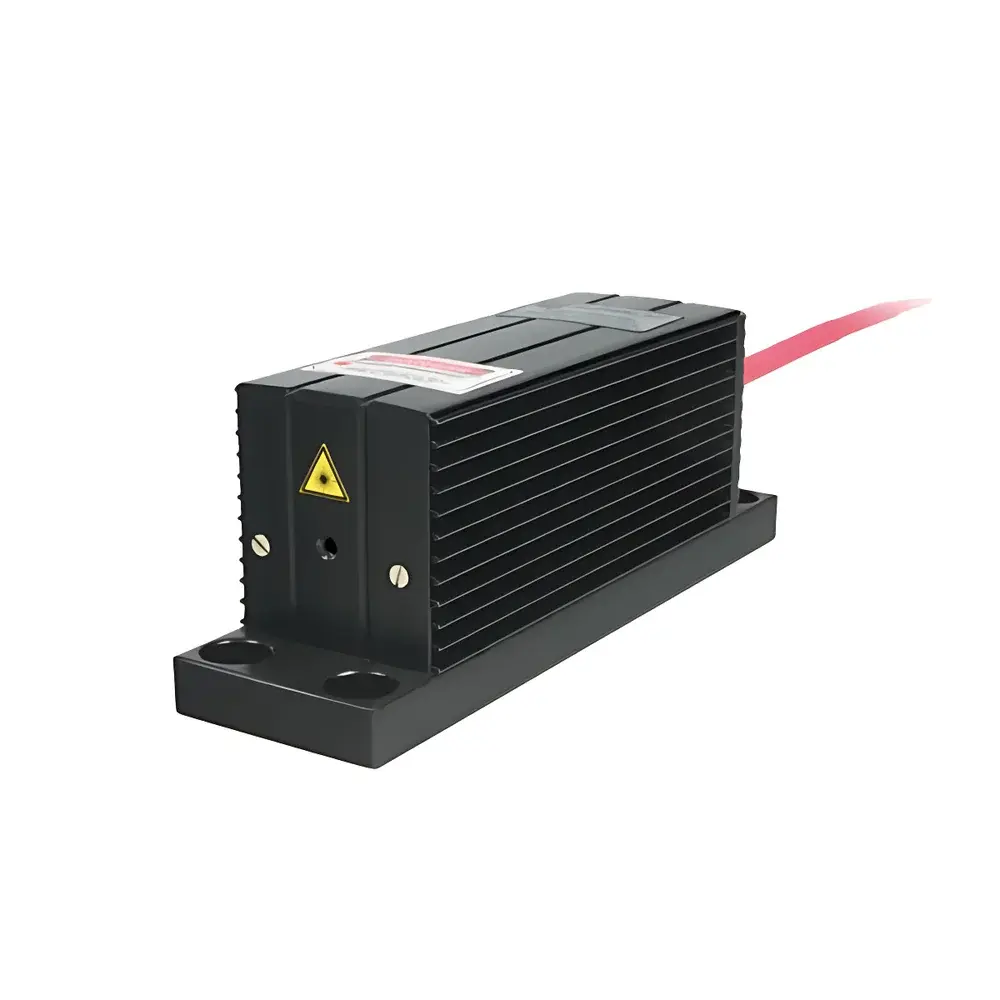
AlphaLas PULSELAS-P-1064-100 Passively Q-Switched Sub-Nanosecond Microchip Solid-State Laser
| Brand | AlphaLas |
|---|---|
| Origin | Germany |
| Model | PULSELAS-P-1064-100 |
| Wavelength | 1064 nm |
| Pulse Width | <1 ns (sub-nanosecond) |
| Peak Power | 100 MW |
| Laser Type | Diode-Pumped Passive Q-Switched Microchip Solid-State Laser |
| Output | TEM₀₀, Polarized, Collimated Free-Space Beam |
| Repetition Rate | Up to 100 kHz (model-dependent) |
| Pulse Energy | Up to 10 µJ (typical at 10 kHz) |
| Beam Diameter | ~0.8 mm (1/e²) |
| Divergence | <2 mrad |
| Cooling | Conductive (thermoelectric or passive) |
| Compliance | CE, RoHS, IEC 60825-1:2014 Class 4 Laser Product |
Overview
The AlphaLas PULSELAS-P-1064-100 is a compact, diode-pumped, passively Q-switched microchip solid-state laser engineered for high-repetition-rate, sub-nanosecond pulsed operation at the fundamental Nd:YAG wavelength of 1064 nm. Its monolithic microchip architecture integrates the gain medium (Nd:YVO₄ or Nd:YAG), saturable absorber (typically Cr⁴⁺:YAG), and HR/OC mirrors into a single bonded crystal element—eliminating alignment sensitivity and ensuring long-term stability under thermal and mechanical stress. This design enables intrinsic pulse duration control below 1 ns (typically 400–800 ps), with peak powers exceeding 100 MW and pulse energies up to 10 µJ at repetition rates spanning 1 kHz to 100 kHz. The laser delivers diffraction-limited (TEM₀₀) output with linear polarization, low pointing instability (<5 µrad/°C), and excellent pulse-to-pulse amplitude stability (<1.5% RMS over 8 hours). It operates without external cavity optics or active electronics for Q-switching, relying solely on passive saturable absorption dynamics—a key advantage for reliability in embedded OEM systems and field-deployable instrumentation.
Key Features
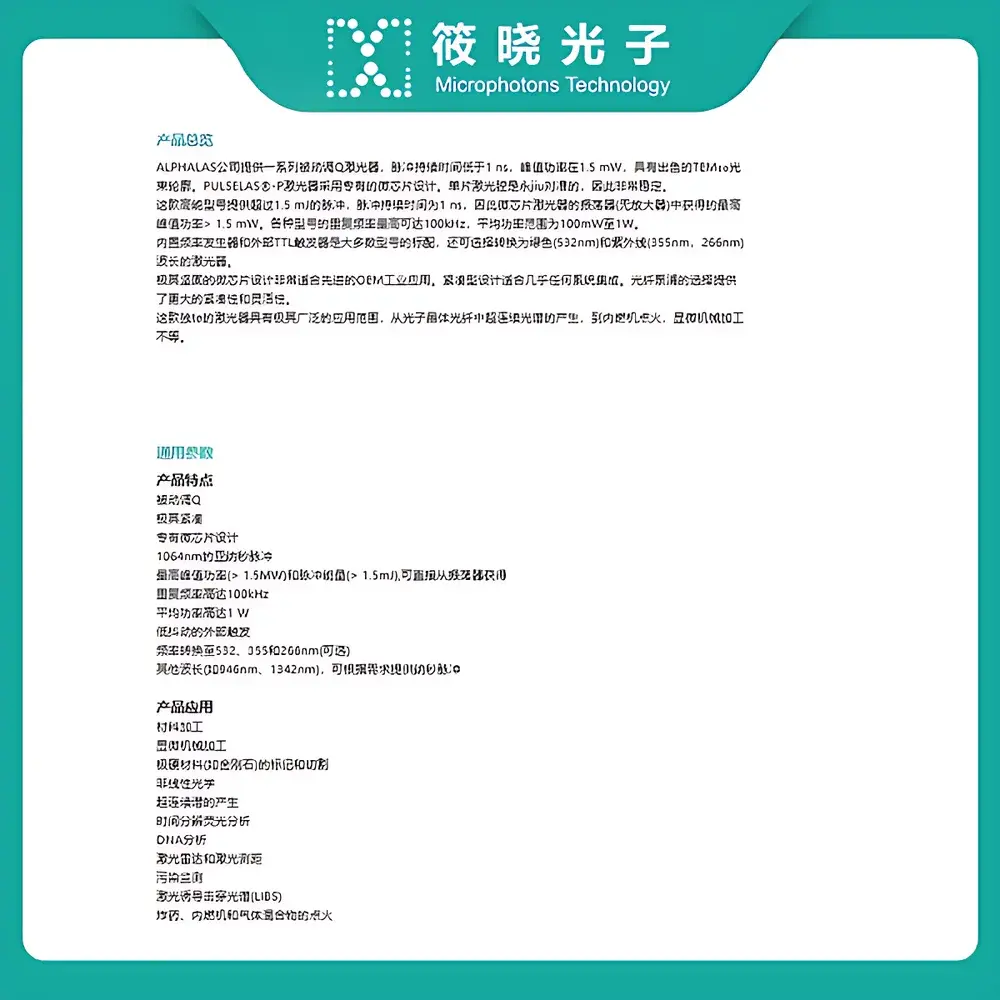
- Sub-nanosecond pulse width: 400–800 ps typical, enabling time-resolved fluorescence lifetime measurements and high-resolution laser-induced breakdown spectroscopy (LIBS)
- Monolithic microchip design: No moving parts, no optical realignment required; robust against vibration and thermal drift
- High peak power: >100 MW at 1064 nm supports nonlinear frequency conversion (e.g., SHG to 532 nm, THG to 355 nm) and efficient ablation
- Compact footprint: <50 × 35 × 15 mm laser head; designed for integration into space-constrained platforms including portable spectrometers and endoscopic probes
- Low timing jitter: <30 ps RMS (trigger-to-pulse), critical for pump-probe experiments and time-of-flight applications
- Conductive cooling only: No forced air or water cooling required; compatible with thermoelectric coolers for ambient-stable operation from 15–35 °C
- Compliant with IEC 60825-1:2014 Class 4 safety requirements; includes integrated shutter interlock interface and emission indicator LED
Sample Compatibility & Compliance
The PULSELAS-P-1064-100 is suitable for irradiating optically transparent, scattering, and absorbing samples—including semiconductors, polymers, biological tissues, and thin-film coatings—without requiring beam expansion or harmonic generation for many analytical tasks. Its near-infrared output minimizes photodamage in live-cell imaging and enables deeper penetration in turbid media compared to visible or UV sources. The system complies with EU Directive 2014/30/EU (EMC), 2011/65/EU (RoHS), and laser safety standard IEC 60825-1:2014. Full documentation—including Declaration of Conformity, test reports for beam parameter product verification (M² < 1.1, divergence <2 mrad), and aging test data (10,000-hour operational validation)—is supplied with each unit. It meets essential requirements for use in ISO/IEC 17025-accredited laboratories when operated within specified environmental conditions (humidity <70% RH non-condensing, ambient temperature ±1 °C stability).
Software & Data Management
While the PULSELAS-P-1064-100 operates as a stand-alone analog device, it features TTL-compatible trigger input (negative edge, 5 V logic) and sync output for synchronization with oscilloscopes, gated detectors, or data acquisition systems. Optional AlphaLas Control Software (Windows-based) provides remote monitoring of diode current, thermistor readings, and internal photodiode feedback—enabling closed-loop intensity stabilization via external modulation. All firmware updates are delivered via USB-C interface and adhere to secure boot protocols. Audit trails for configuration changes, calibration timestamps, and operational logs are exportable in CSV format—supporting compliance with GLP and FDA 21 CFR Part 11 requirements when deployed in regulated QC/QA environments.
Applications
- Laser-induced breakdown spectroscopy (LIBS) for elemental analysis in metallurgy and geoscience
- Time-resolved photoluminescence (TRPL) and fluorescence lifetime imaging microscopy (FLIM)
- Micro-machining of dielectrics and thin-film solar cell scribing
- Seed source for picosecond amplifier systems and optical parametric oscillators (OPOs)
- Calibration of ultrafast photodetectors and streak cameras
- Nonlinear optical characterization (e.g., two-photon absorption cross-section measurement)
- Atmospheric LIDAR backscatter profiling using eye-safe 1064 nm illumination
FAQ
What is the typical pulse energy at 50 kHz repetition rate?
At 50 kHz, pulse energy is typically 4–6 µJ, depending on operating temperature and drive current—measured with calibrated thermopile sensors traceable to NIST standards.
Can this laser be fiber-coupled?
Yes—optional free-space-to-fiber coupling modules (FC/APC or SMA905) are available, achieving >70% coupling efficiency into 105/125 µm multimode fiber with minimal pulse broadening (<10% FWHM increase).
Is the output polarization ratio specified?
Yes—linear polarization extinction ratio exceeds 100:1 (measured at 1064 nm with Glan-Taylor prism); orientation is marked on the housing per ISO 11146.
Does the laser support external cavity harmonic generation?
No—the microchip design is intrinsically single-frequency and not optimized for external resonant doubling; however, intracavity SHG modules are available as factory-installed options yielding >1.5 W at 532 nm.
What maintenance is required during the warranty period?
None—no consumables, no alignment, no periodic recalibration. Annual verification of pulse width and energy output using accredited metrology equipment is recommended for GMP/GLP workflows but not mandatory for functional operation.



