
AlphaLas UPD Series Ultrafast Photodetectors
| Brand | AlphaLas |
|---|---|
| Origin | Germany |
| Model | UPD Series Ultrafast Photodetectors |
| Rise Time | 15 ps – 75 ns |
| Bandwidth | DC to 25 GHz |
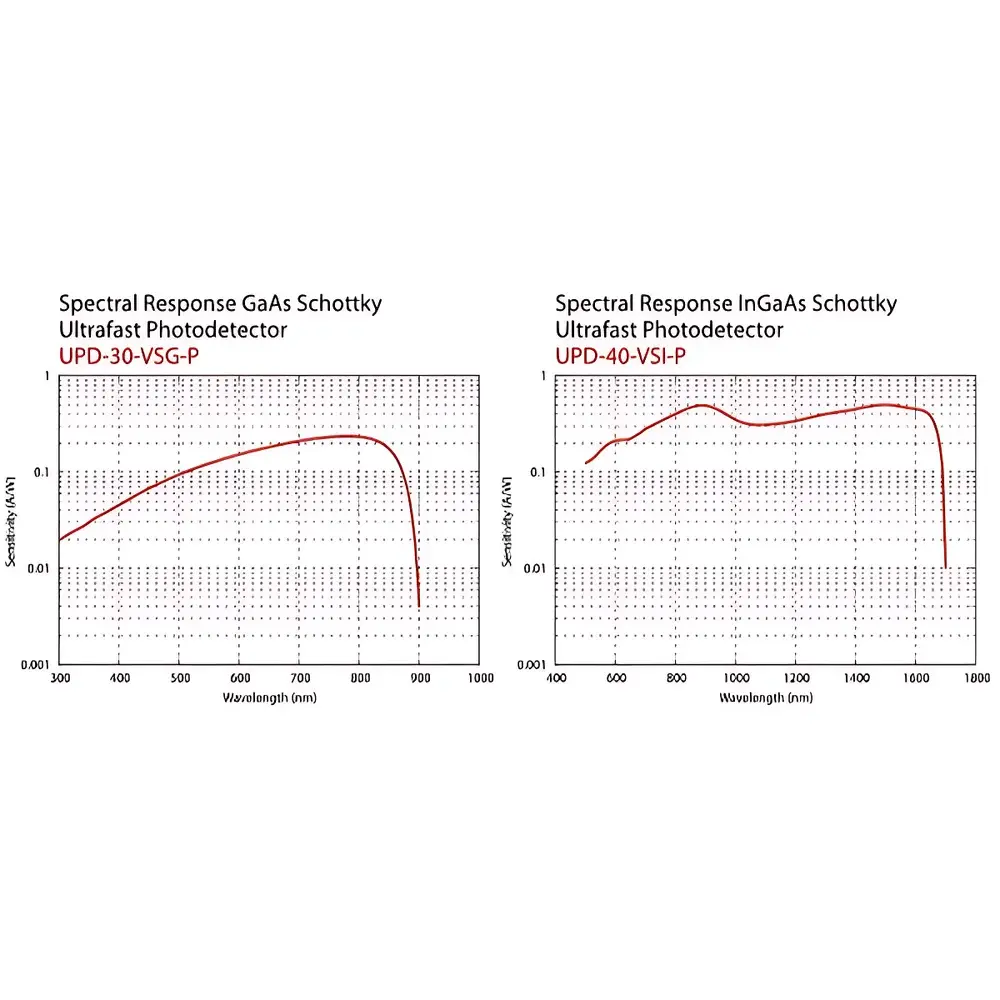
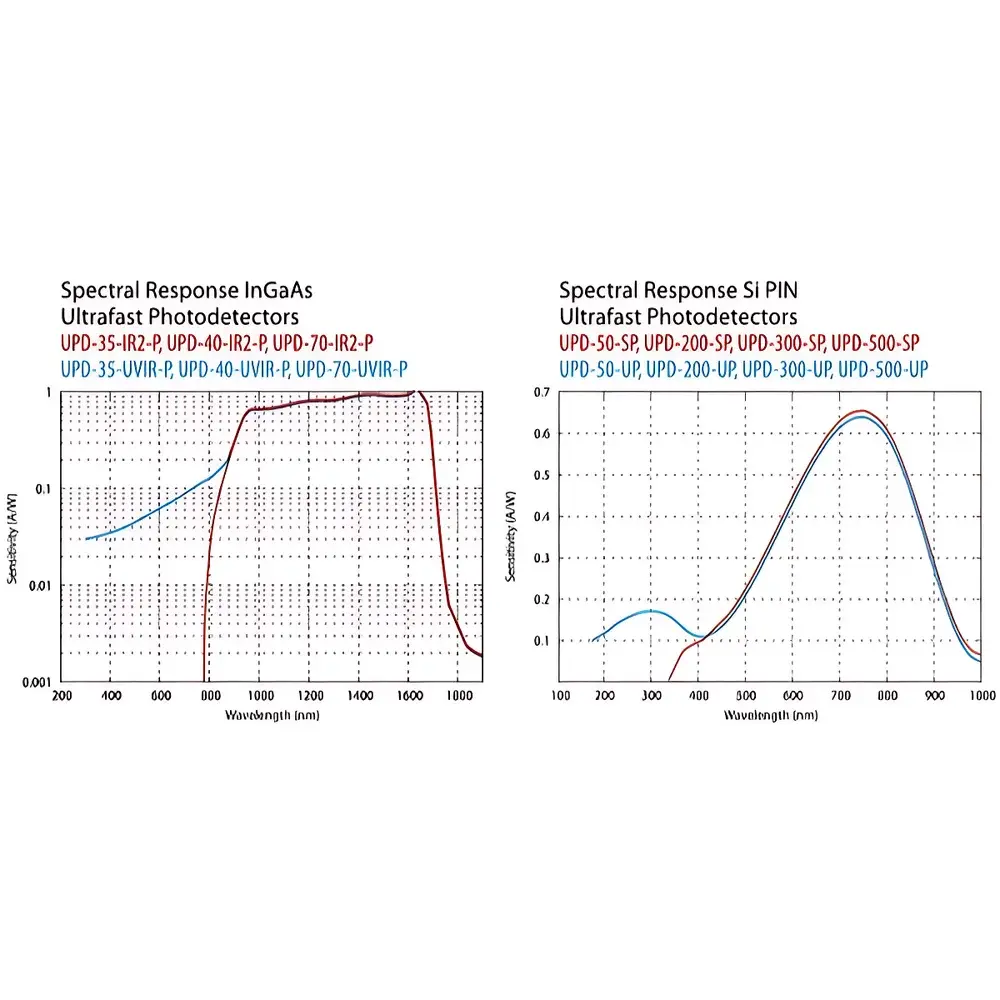
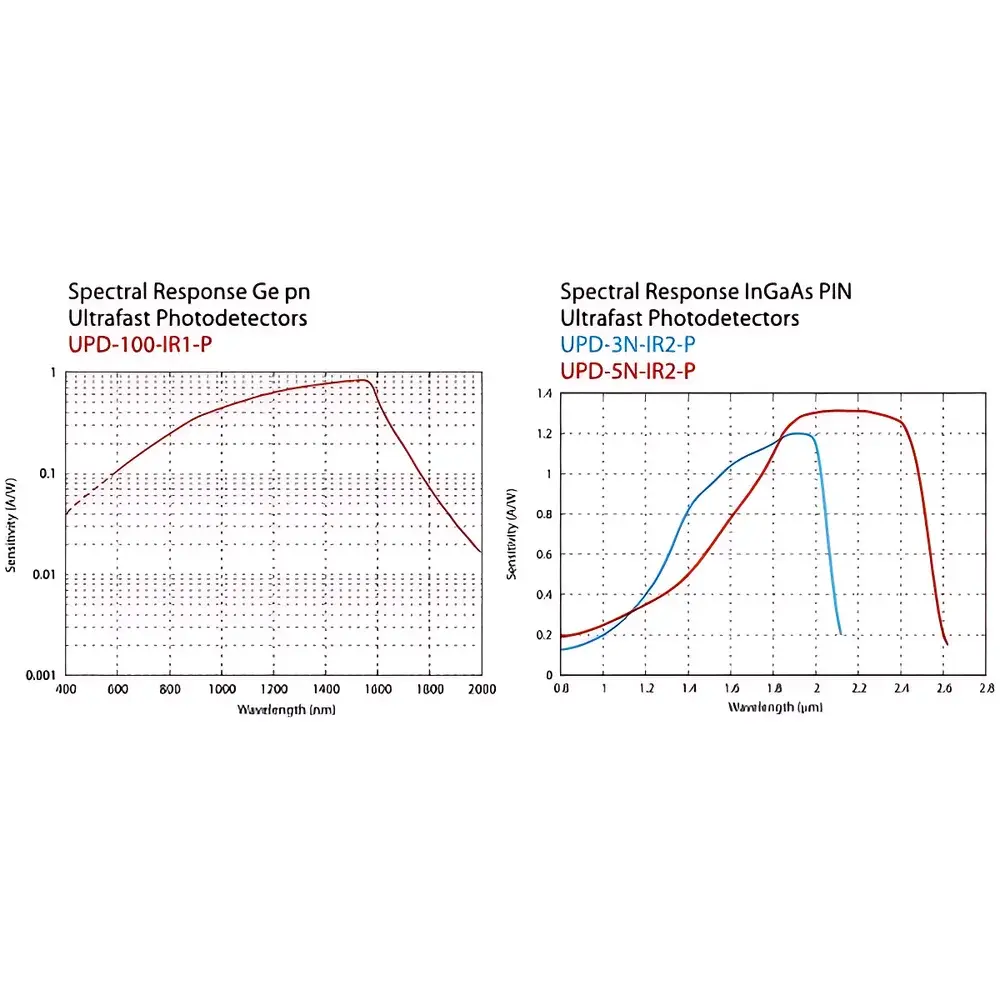
| Spectral Range | 170–2600 nm |
| Detector Materials | Si, GaAs, InGaAs, Ge |
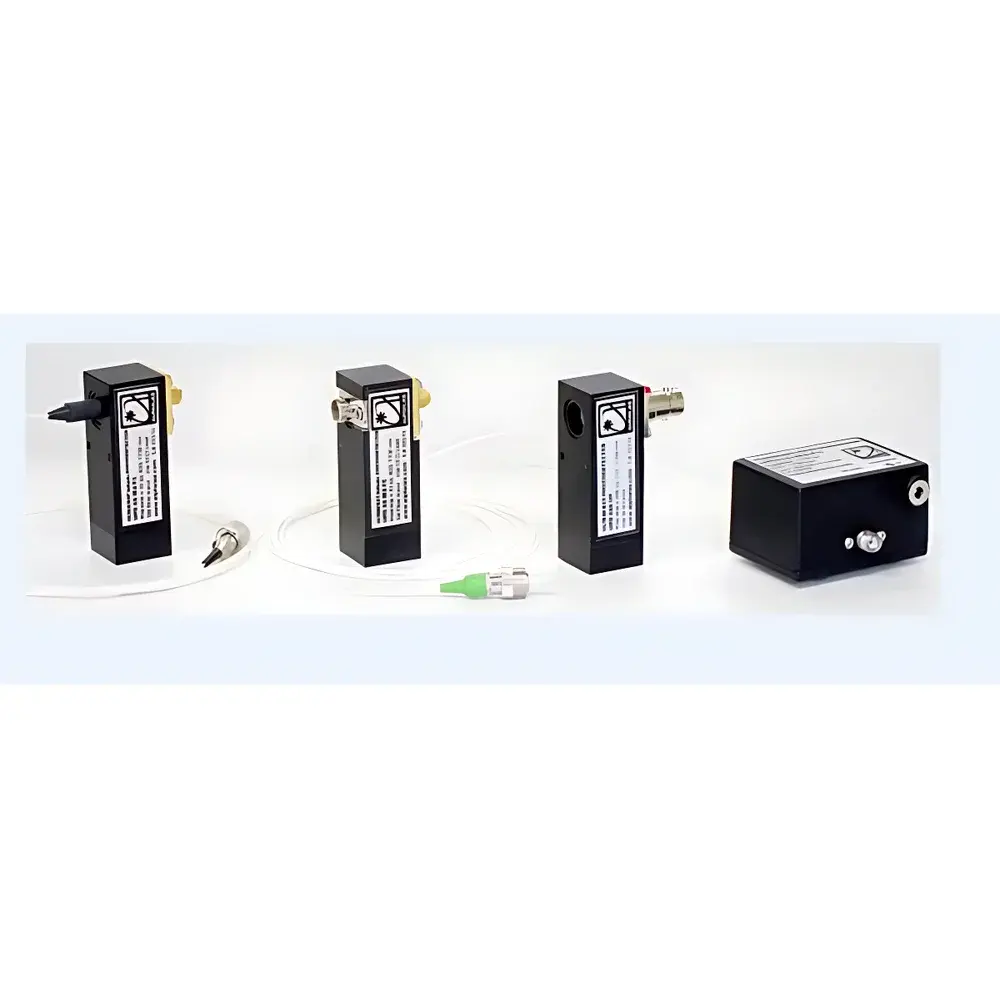
| Output Interface | SMA or BNC |
| Housing | Anodized Aluminum |
| Power Supply | Battery or External DC |
Overview
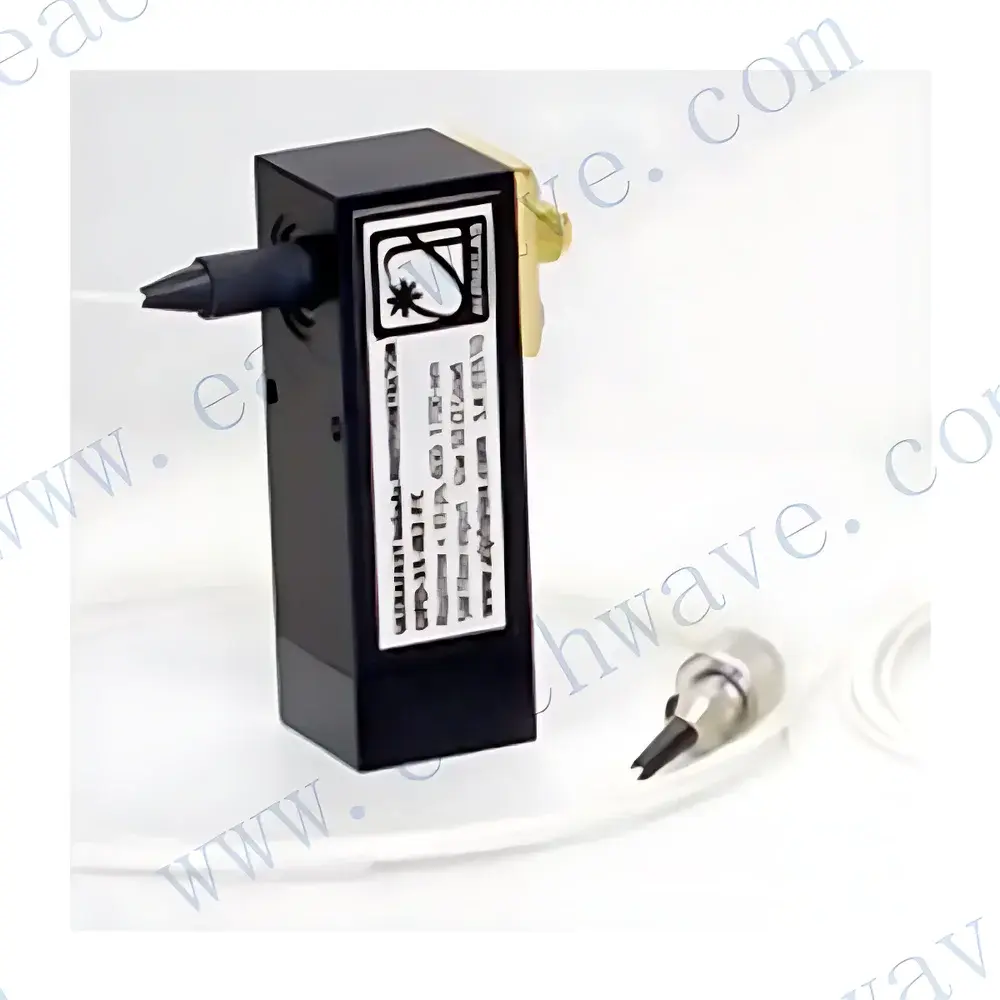
The AlphaLas UPD Series Ultrafast Photodetectors are high-bandwidth, free-space or fiber-coupled photodiodes engineered for time-resolved optical measurement in research and industrial photonics laboratories. Based on optimized PIN photodiode architectures with integrated microwave packaging, these detectors operate on the principle of ultrafast carrier extraction under reverse bias, enabling faithful temporal reconstruction of optical transients. With rise times as low as 15 ps and bandwidths extending to 25 GHz, the UPD series supports direct time-domain characterization of femtosecond-to-nanosecond laser pulses without requiring external amplification in many configurations. The devices cover an exceptionally broad spectral range—from deep ultraviolet (170 nm) through visible and near-infrared to short-wave infrared (2600 nm)—achieved via material-specific detector elements: UV-enhanced silicon (Si), gallium arsenide (GaAs), indium gallium arsenide (InGaAs), and germanium (Ge). All units feature hermetically sealed, anodized aluminum housings for mechanical stability and EMI shielding, and are compatible with standard 50 Ω measurement systems while supporting high-impedance operation for maximum voltage output.
Key Features
- Ultrafast response: Rise times from 15 ps to 75 ns across model variants, validated per IEC 61280-2-9 and IEEE Std 1476
- DC-coupled broadband operation: Frequency response from DC to 25 GHz (depending on model), supporting pulse shape fidelity and jitter-free timing analysis
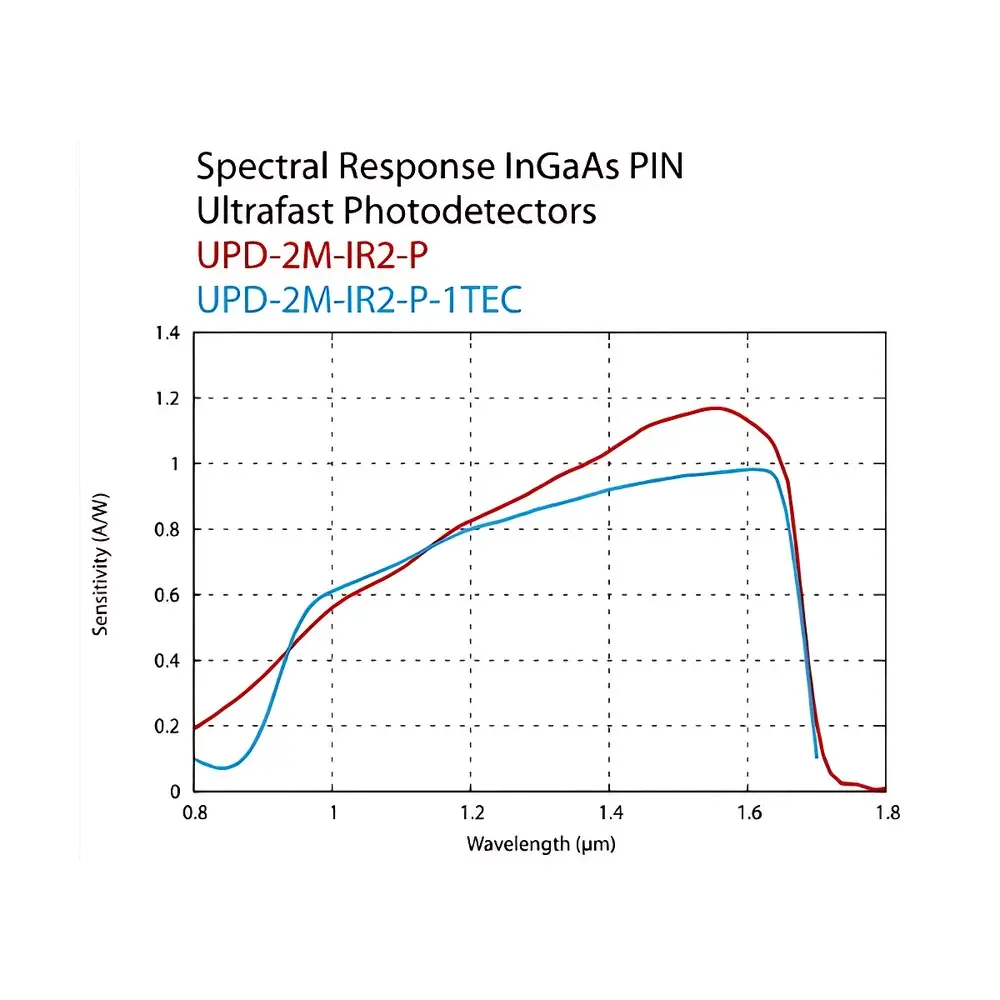
- Multi-material spectral coverage: 170–1100 nm (Si), 320–1700 nm (InGaAs), 800–2600 nm (extended InGaAs/Ge), with optional MgF₂ or quartz windows for UV/VIS transmission
- Flexible input configuration: Free-space (polished/diffuse aperture), FC/PC receptacle, or fiber-pigtailed versions (FC/APC) with mode-field matched coupling
- Low-noise design: Typical NEP values from 1.0 × 10⁻¹⁵ W/√Hz (InGaAs) to 3.5 × 10⁻¹⁵ W/√Hz (Si), with dark currents < 1 nA (Si) and < 2 nA (InGaAs) at room temperature
- Modular power options: Operable via internal battery (for portable or ground-loop-free setups) or regulated external DC supply (±5 V typical)
- Standard RF interfaces: SMA (for sub-10 GHz models) and BNC (for higher-capacitance, lower-frequency variants), fully impedance-matched to 50 Ω systems
Sample Compatibility & Compliance
The UPD series is designed for integration into ISO/IEC 17025-accredited optical test benches and complies with key electromagnetic compatibility and safety standards including EN 61326-1 (measurement equipment EMC) and EN 61010-1 (safety requirements for electrical equipment). Its compact, grounded metal housing meets MIL-STD-810G shock/vibration specifications for laboratory-grade robustness. Detector active areas range from 100 µm to 2 mm diameter, accommodating Gaussian beams (M² ≤ 1.3), multimode fibers (up to 105 µm core), and collimated free-space beams up to 10 mm Ø. All UV-sensitive models utilize MgF₂-coated windows certified to ASTM F1256-22 for solar-blind UV transmission stability. The series supports GLP-compliant traceability when paired with calibrated reference sources (e.g., NIST-traceable pulsed LEDs or Ti:sapphire oscillators) and is routinely deployed in environments adhering to FDA 21 CFR Part 11 for electronic record integrity where connected to compliant DAQ systems.
Software & Data Management
While the UPD detectors are analog front-end components (no embedded firmware or digital interface), they are fully interoperable with industry-standard oscilloscopes (Keysight Infiniium, Tektronix DPO70000SX), digitizers (Spectrum M4i), and lock-in amplifiers (Zurich Instruments HF2LI) supporting high-fidelity waveform capture. When integrated with AlphaLas’ optional BBA-series wideband amplifiers, the system enables real-time pulse parameter extraction—including full-width at half-maximum (FWHM), pulse delay, jitter (RMS < 100 fs over 1 kHz bandwidth), and amplitude stability (±0.2% over 8 hours). Data acquisition workflows comply with ISO/IEC 17025 clause 7.7 (data control) when using timestamped binary traces and metadata-tagged HDF5 or MATLAB .mat export formats. Audit trails for calibration history and configuration changes are maintained externally via LIMS integration or instrument control scripts (Python/LabVIEW).
Applications
- Direct time-domain characterization of ultrafast laser pulses (Ti:sapphire, Yb-fiber, OPOs) for oscillator optimization and amplifier diagnostics
- Mode-hop detection and cavity length stabilization in tunable diode lasers via zero-crossing timing analysis
- Heterodyne and homodyne interferometry for optical frequency comb offset measurement and RF photonics signal analysis
- Pulse width monitoring in industrial picosecond laser micromachining systems (ISO 11146-1 beam profiling validation)
- Synchronization trigger generation for pump-probe experiments with sub-10 ps timing uncertainty
- Optical time-domain reflectometry (OTDR) receiver stages in telecom R&D and component testing
- Quantum optics applications including single-photon avalanche diode (SPAD) benchmarking and coincidence counting reference channels
FAQ
What is the difference between SMA and BNC output interfaces on UPD detectors?
SMA connectors are used for high-frequency models (≥ 5 GHz bandwidth) to maintain impedance integrity and minimize signal reflection; BNC is employed on slower, higher-capacitance variants (≤ 3 GHz) where mechanical robustness and legacy oscilloscope compatibility are prioritized.
Can UPD detectors be used with pulsed lasers exceeding 100 mW average power?
Yes—provided peak power density remains below damage thresholds (typically 100 MW/cm² for nanosecond pulses, 1 GW/cm² for femtosecond pulses); users must verify fluence against datasheet limits and consider thermal lensing effects in continuous-wave or high-repetition-rate operation.
Is calibration traceable to national standards available?
AlphaLas provides factory calibration certificates (traceable to PTB and NIST) for responsivity (A/W) vs. wavelength and rise time verification; full calibration packages including uncertainty budgets are available upon request for ISO/IEC 17025 compliance.
How does impedance matching affect measurement fidelity?
50 Ω termination preserves signal integrity and minimizes ringing for bandwidths > 1 GHz; high-impedance loads increase output voltage but reduce bandwidth and introduce overshoot—selection must align with oscilloscope input specs and application timing requirements.
Are custom spectral filters or fiber pigtails supported?
Yes—AlphaLas offers OEM customization including bandpass interference filters (FWHM 5–50 nm), polarization-maintaining fiber pigtails (PM980/PM1550), and vacuum-compatible housings (CF flange options) under NRE agreement.





