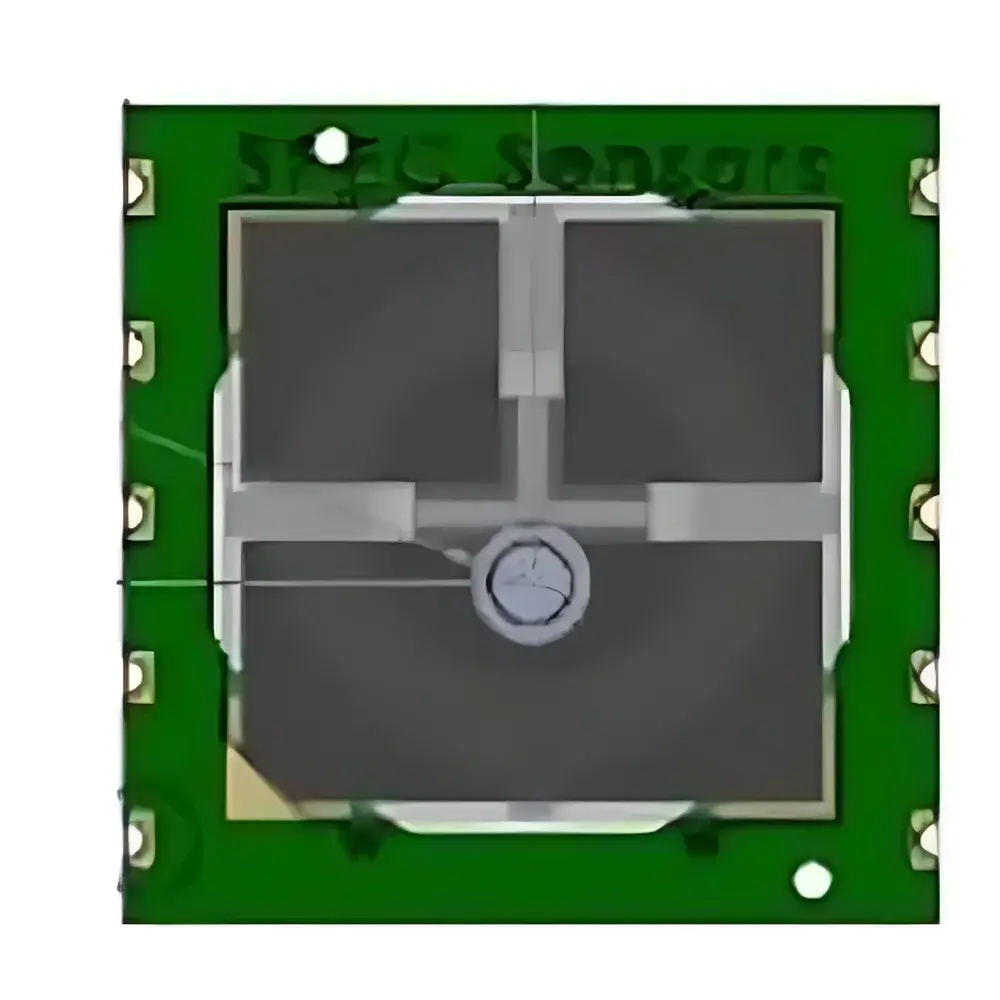
Alphasense 3SP-Ethanol-1000 Electrochemical Alcohol Sensor
| Brand | Alphasense (UK) |
|---|---|
| Origin | United Kingdom |
| Model | 3SP-Ethanol-1000 |
| Measurement Range | 0–1000 ppm |
| Overload Capacity | 2000 ppm |
| Response Time (t₉₀) | ≤30 s |
| Sensitivity | 14 ±5 nA/ppm |
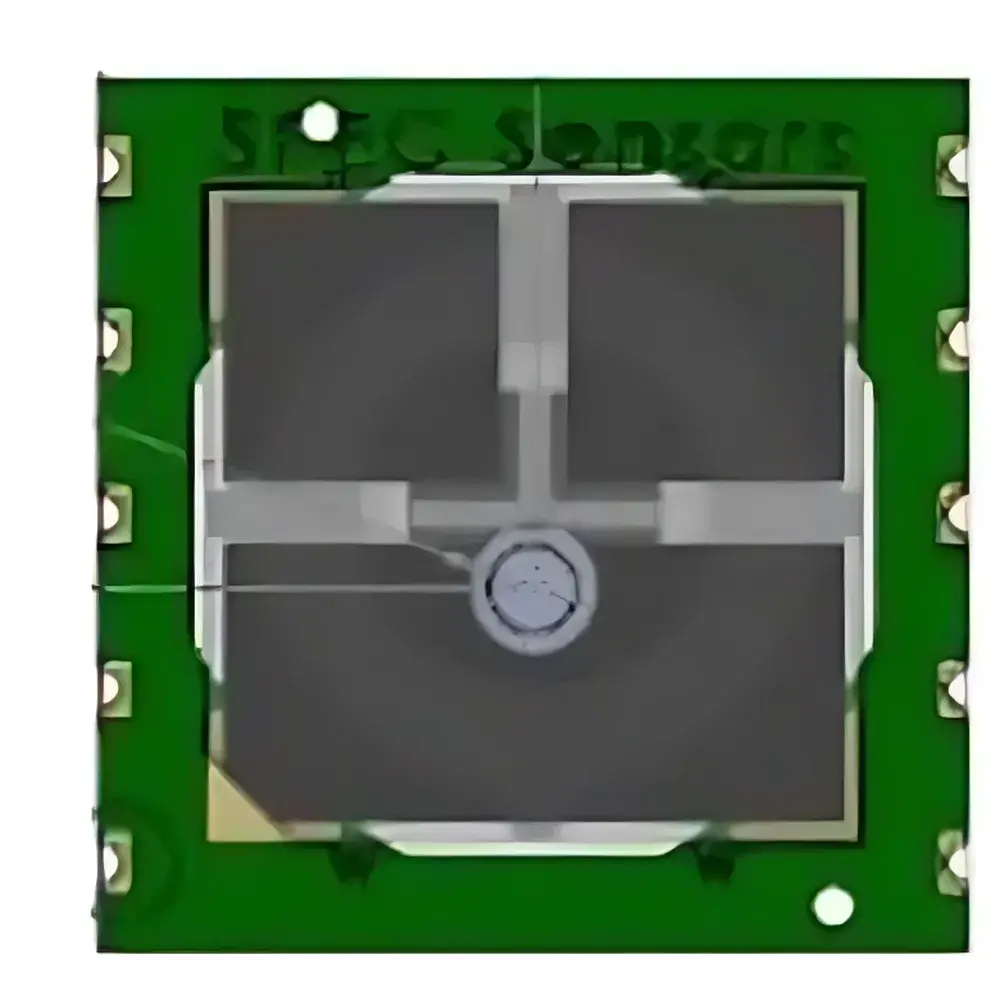
| Dimensions | 15 × 15 × 3.8 mm |
Overview
The Alphasense 3SP-Ethanol-1000 is a miniaturized, three-electrode electrochemical sensor engineered for the selective and stable detection of ethanol vapor in ambient air. Based on amperometric transduction, it operates via controlled-potential electrolysis of ethanol at the working electrode surface, generating a current proportional to gas concentration. Its design adheres to fundamental electrochemical sensor principles—optimized catalyst loading, diffusion-limited current response, and integrated hydrophobic membrane for humidity and interferent rejection. This sensor is not a standalone instrument but a core sensing element intended for integration into certified breath alcohol testing devices, portable evidential analyzers, and roadside enforcement systems requiring trace-level ethanol quantification under variable environmental conditions.
Key Features
- Compact footprint (15 × 15 × 3.8 mm) enabling high-density PCB mounting and space-constrained device integration
- Fast t₉₀ response time ≤30 seconds across the full 0–1000 ppm range, supporting rapid sequential breath sampling protocols
- Stable baseline and low zero-current drift (<±2 nA/month), minimizing recalibration frequency in field-deployed instruments
- Three-electrode architecture (working, counter, reference) with built-in temperature compensation circuitry for improved signal fidelity across –10 °C to +40 °C operating range
- Integrated PTFE membrane providing selective permeability to ethanol while rejecting common interferents including acetone, methanol, and isopropanol at typical breath concentrations
- Designed for long-term operation (>24 months typical service life) when operated within specified humidity (15–90% RH non-condensing) and temperature limits
Sample Compatibility & Compliance
The 3SP-Ethanol-1000 is calibrated and validated for use with human breath samples delivered at controlled flow rates (typically 0.5–1.0 L/min) and temperature (32–36 °C). It complies with key performance criteria outlined in ISO 8532:2022 (Breath alcohol analyzers — Requirements and test methods) and supports conformance pathways for devices seeking UK Home Office Type Approval or US NHTSA certification. While the sensor itself is not a certified measuring instrument, its metrological characteristics—including linearity (R² >0.999 over 0–500 ppm), repeatability (CV <3% at 200 ppm), and cross-sensitivity profile—are documented per Alphasense’s internal QA protocol and referenced in OEM validation dossiers. It meets RoHS 2011/65/EU and REACH SVHC compliance requirements for hazardous substances.
Software & Data Management
As a transducer-level component, the 3SP-Ethanol-1000 outputs an analog current signal (nA) directly proportional to ethanol concentration. Integration requires external signal conditioning—including low-noise current-to-voltage conversion, cold-junction compensation, and digital filtering—implemented via microcontroller-based firmware. Alphasense provides comprehensive integration guides, including recommended op-amp configurations, ADC resolution guidelines (≥16-bit recommended), and calibration routines aligned with ISO/IEC 17025 traceable standards. For regulatory-grade instrumentation, the host system must implement audit-trail functionality, user-access controls, and data integrity safeguards compliant with FDA 21 CFR Part 11 and EU Annex 11 when used in forensic or evidential contexts.
Applications
- Evidential breath alcohol testers deployed by law enforcement agencies for legally admissible results
- Portable personal breathalyzers with clinical-grade accuracy for occupational health screening (e.g., transportation, healthcare, manufacturing)
- Integrated modules in connected workplace safety platforms for real-time impairment monitoring
- Research-grade instrumentation for pharmacokinetic studies of ethanol metabolism and exhalation dynamics
- OEM integration into smart wearable prototypes evaluating breath biomarkers beyond ethanol, leveraging the sensor’s stable baseline and low power consumption (~80 µA quiescent current)
FAQ
Is the 3SP-Ethanol-1000 suitable for direct connection to a microcontroller without signal conditioning?
No. It requires precision current-to-voltage conversion, temperature compensation, and analog filtering. Refer to Alphasense Application Note AN-3SP-ETH for recommended circuit topologies.
What is the recommended calibration interval for forensic-grade instruments using this sensor?
Per ISO 8532:2022, daily pre-use calibration with certified ethanol gas standard (e.g., 0.20 mg/L) is mandatory; full multi-point verification every 30 days is advised.
Does the sensor require a warm-up period before achieving specified accuracy?
Yes. A minimum 60-second stabilization period after power-on is required to reach thermal equilibrium and stable baseline current.
Can the sensor be exposed to condensation or high-humidity exhaled breath without degradation?
It tolerates up to 90% RH non-condensing. Direct exposure to liquid condensate will compromise membrane integrity and invalidate calibration; use of hydrophobic breath filters and heated sample lines is strongly recommended.
Is there documentation available for regulatory submissions (e.g., FDA 510(k), CE IVD)?
Alphasense supplies technical files, performance test reports, and RoHS/REACH declarations. Final device-level conformity assessment remains the responsibility of the OEM manufacturer.