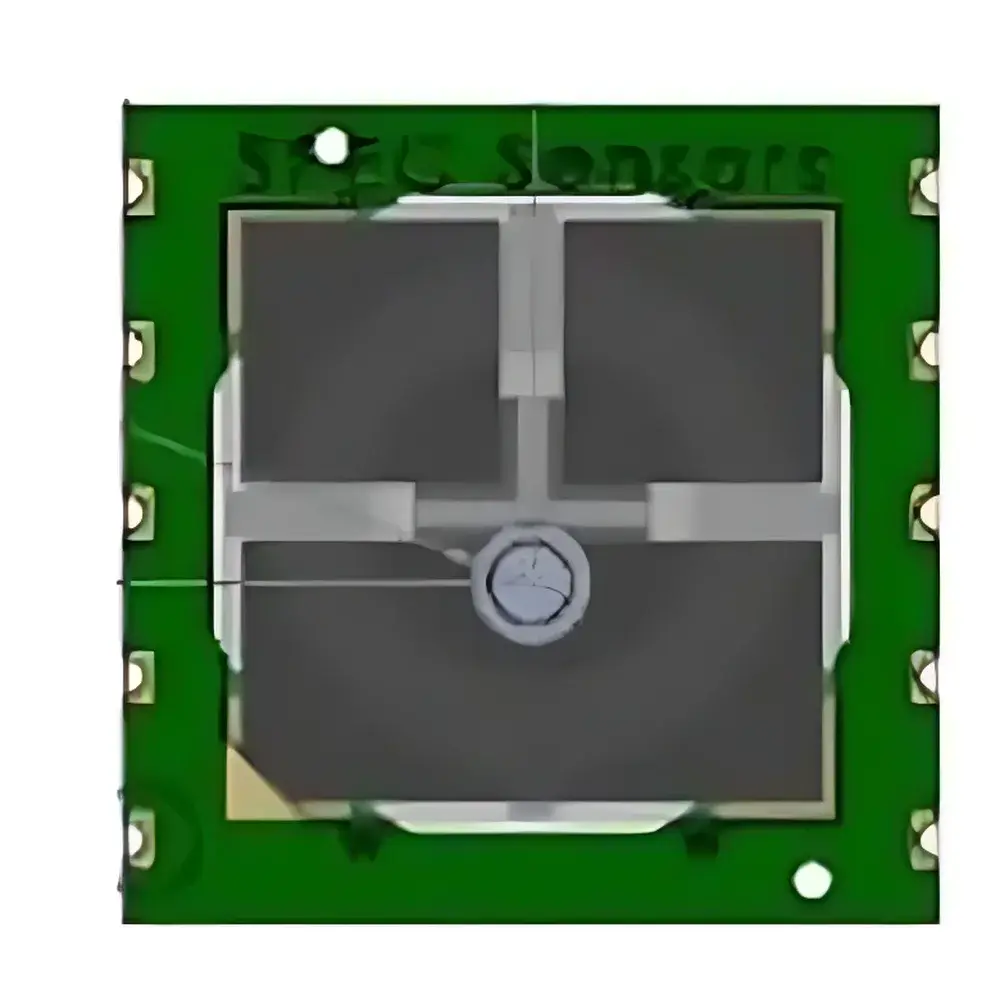
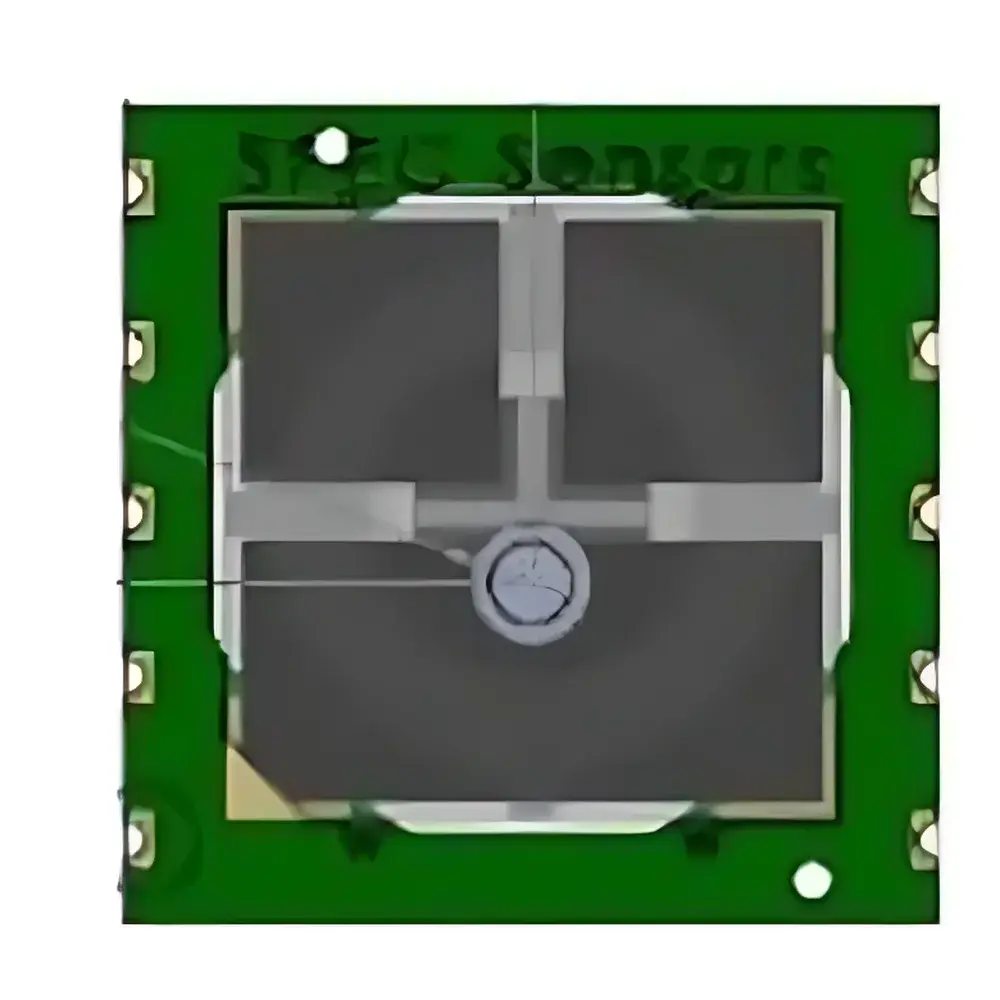
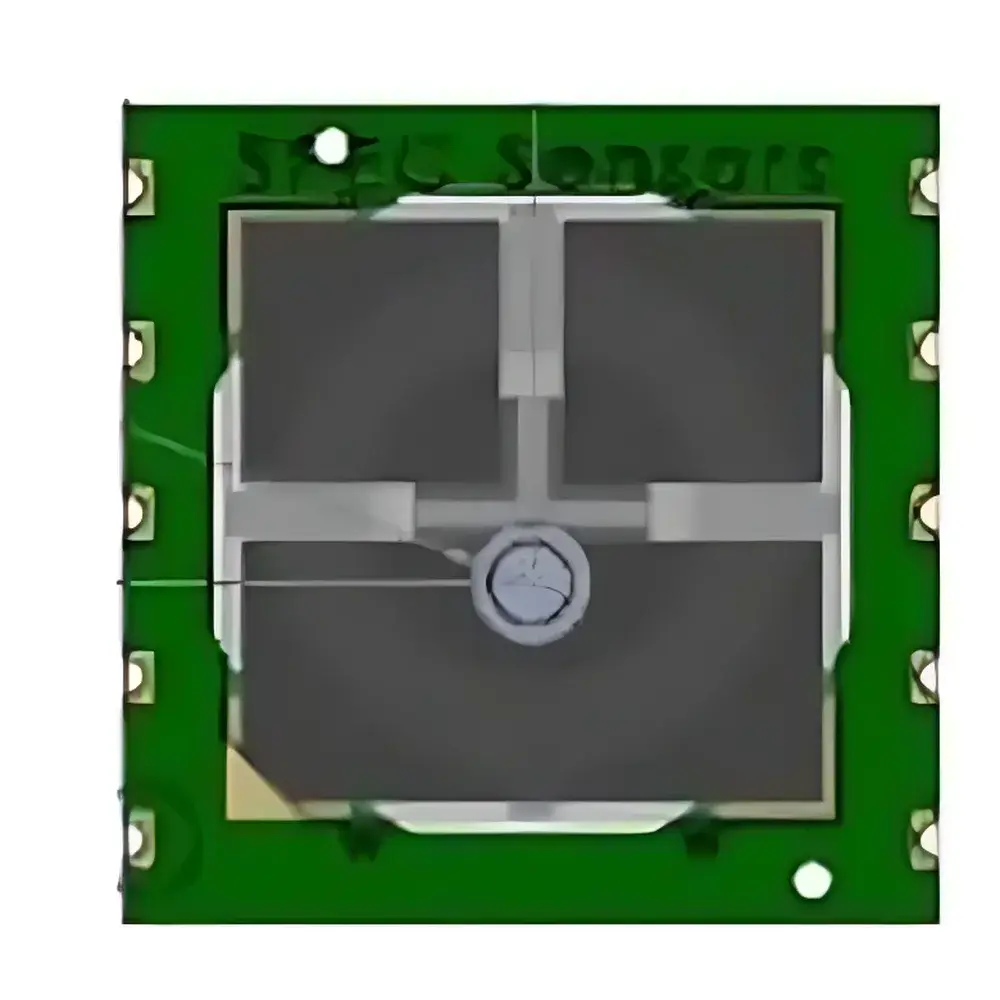
Alphasense 3SP_H2S_50 Electrochemical Hydrogen Sulfide (H₂S) Gas Sensor
| Brand | Alphasense (UK) |
|---|---|
| Origin | United Kingdom |
| Model | 3SP_H2S_50 |
| Measurement Range | 0–50 ppm |
| Overload Capacity | 100 ppm |
| Response Time (t₉₀) | <30 s |
| Dimensions | 15 × 15 × 3.8 mm |
| Sensitivity | 250 ± 50 nA/ppm |
| Operating Temperature | −30 to +50 °C |
| Operating Humidity | 15–90 % RH (non-condensing) |
| Zero Current | <±5 nA |
| Long-Term Drift | <2 %/month (typical) |
| Expected Service Life | ≥24 months (in clean air, 23 °C, 50 % RH) |
Overview
The Alphasense 3SP_H2S_50 is a miniature, three-electrode electrochemical gas sensor engineered for the selective and stable detection of hydrogen sulfide (H₂S) in ambient air. Based on amperometric transduction, the sensor operates via diffusion-controlled oxidation of H₂S at the working electrode, generating a current linearly proportional to gas concentration within its specified range (0–50 ppm). Its compact footprint (15 × 15 × 3.8 mm), low power consumption, and inherent immunity to common interferents—including CO, NO₂, SO₂, and ethanol—make it suitable for integration into battery-powered, space-constrained instrumentation where long-term reliability and field-deployable robustness are critical. Designed and manufactured in the UK under ISO 9001-certified processes, the 3SP_H2S_50 complies with international performance benchmarks for electrochemical gas sensors, including EN 45544-1 and IEC 60079-29-1, and meets functional safety requirements for use in SIL 2-capable systems when deployed with appropriate supporting electronics.
Key Features
- Three-electrode architecture with integrated reference and counter electrodes for enhanced baseline stability and reduced zero drift
- Optimized catalytic electrode formulation delivering high selectivity against cross-sensitivity from CO, NO₂, SO₂, H₂, and VOCs
- Stable sensitivity of 250 ± 50 nA/ppm across operating temperature (−30 to +50 °C) and humidity (15–90 % RH, non-condensing)
- Fast response time (t₉₀ < 30 s) enabling real-time exposure assessment in occupational health and safety applications
- Low zero current (< ±5 nA) and minimal long-term drift (< 2 % per month under standard conditions), reducing calibration frequency requirements
- 24-month nominal service life under typical storage and operational conditions, validated per Alphasense accelerated aging protocols
- RoHS-compliant construction with lead-free soldering compatibility and conformal coating options available for harsh environments
Sample Compatibility & Compliance
The 3SP_H2S_50 is intended for continuous or intermittent measurement of H₂S in ambient air, industrial workspaces, and indoor/outdoor environmental monitoring networks. It is not designed for direct immersion, high-particulate streams, or corrosive process gases without upstream filtration (e.g., hydrophobic PTFE membrane, activated carbon scrubber). The sensor conforms to key regulatory and industry standards applicable to fixed and portable gas detection systems, including EN 50104 (H₂S-specific detectors), ATEX Directive 2014/34/EU (for use in Zone 1/21 when integrated into certified assemblies), and IECEx Scheme requirements. While the sensor itself does not carry intrinsic certification, it is widely adopted in devices certified to UL 2075, CSA C22.2 No. 152, and IEC 61508 for functional safety up to SIL 2. It supports compliance with OSHA PEL (10 ppm TWA) and NIOSH REL (10 ppm ceiling) monitoring frameworks when implemented with traceable calibration and documented maintenance procedures.
Software & Data Management
The 3SP_H2S_50 outputs a raw analog current signal (nA), requiring external signal conditioning—including transimpedance amplification, temperature compensation, and digital conversion—for quantitative readout. When integrated into OEM instruments, it supports full audit-trail data logging compatible with GLP/GMP workflows. Firmware-level calibration routines—span and zero—can be executed via serial command sets (e.g., UART or I²C interfaces using Alphasense’s standard AT-command protocol). Sensor-specific calibration coefficients (sensitivity, zero offset, temperature coefficient) are stored in non-volatile memory during manufacturing and accessible via host software. For regulated environments, integration with platforms compliant with FDA 21 CFR Part 11 is achievable through secure user authentication, electronic signatures, and immutable event logging—provided the host system implements required controls.
Applications
- Personal and area monitoring devices for oil & gas, wastewater treatment, and mining operations
- Indoor air quality (IAQ) analyzers deployed in municipal buildings, schools, and healthcare facilities
- Fixed-point environmental monitoring stations for urban H₂S mapping and odor impact assessment
- Portable breath analyzers for clinical research into volatile sulfur compound (VSC) profiles in halitosis studies
- OEM integration into smart ventilation controllers, leak detection systems, and IoT-enabled air quality nodes
- Calibration verification tools and reference sensors in metrology laboratories supporting ISO/IEC 17025-accredited testing
FAQ
What is the recommended calibration interval for the 3SP_H2S_50?
Alphasense recommends initial calibration upon installation, followed by functional checks every 3–6 months depending on exposure history and regulatory requirements. Full recalibration is advised before deployment in safety-critical applications.
Can the sensor operate in high-humidity or condensing environments?
The device is rated for 15–90 % RH non-condensing operation. Prolonged exposure to condensation may cause electrolyte dilution and irreversible performance loss; use of a hydrophobic membrane filter is strongly advised in humid outdoor or industrial settings.
Does the 3SP_H2S_50 require a warm-up period before stable readings?
Yes—a stabilization period of 24–48 hours after power-on is recommended to achieve thermal and electrochemical equilibrium, particularly after storage or transport.
Is temperature compensation mandatory for accurate measurements?
Yes. Sensitivity varies with temperature; accurate quantification requires real-time temperature measurement and application of the sensor’s published temperature correction algorithm (provided in the datasheet).
How should the sensor be stored when not in use?
Store in original packaging at 23 ± 3 °C and 30–50 % RH, away from strong oxidizers, solvents, and H₂S sources. Do not store in sealed containers without air exchange—electrochemical sensors require ambient oxygen for stable baseline recovery.