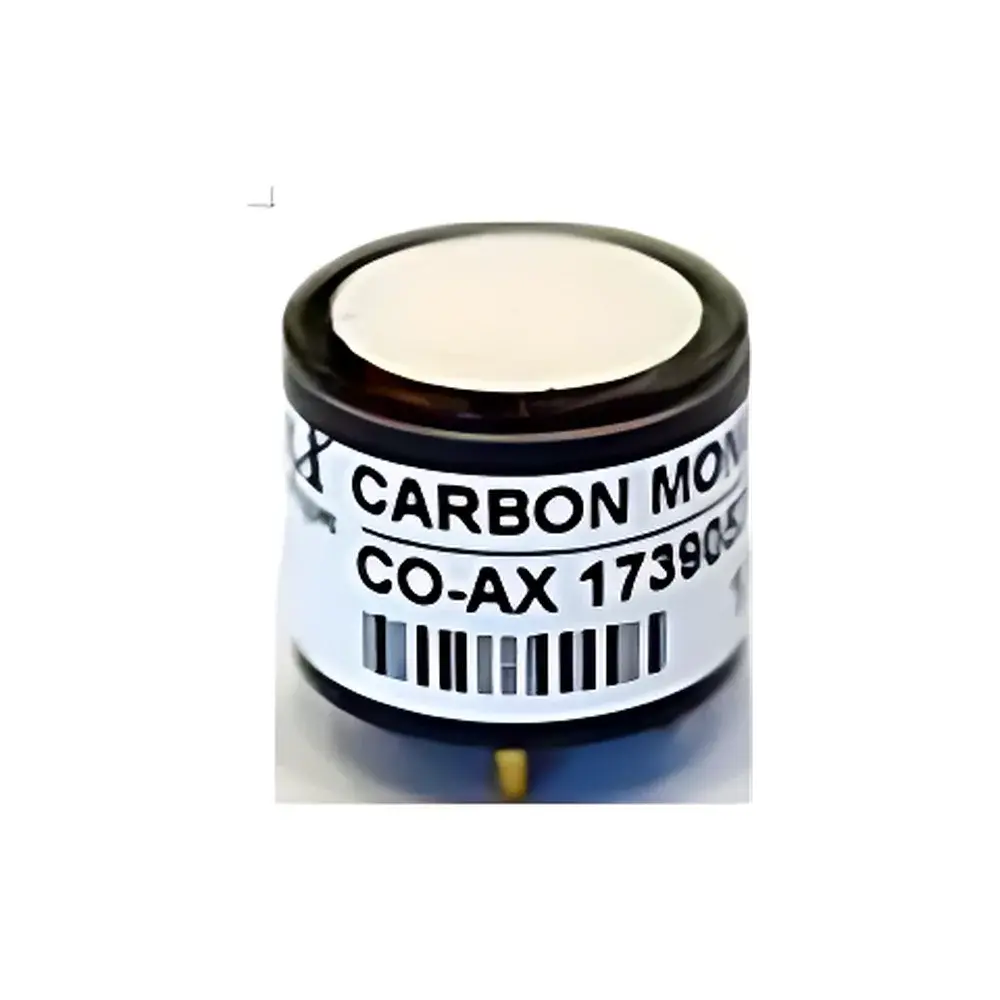
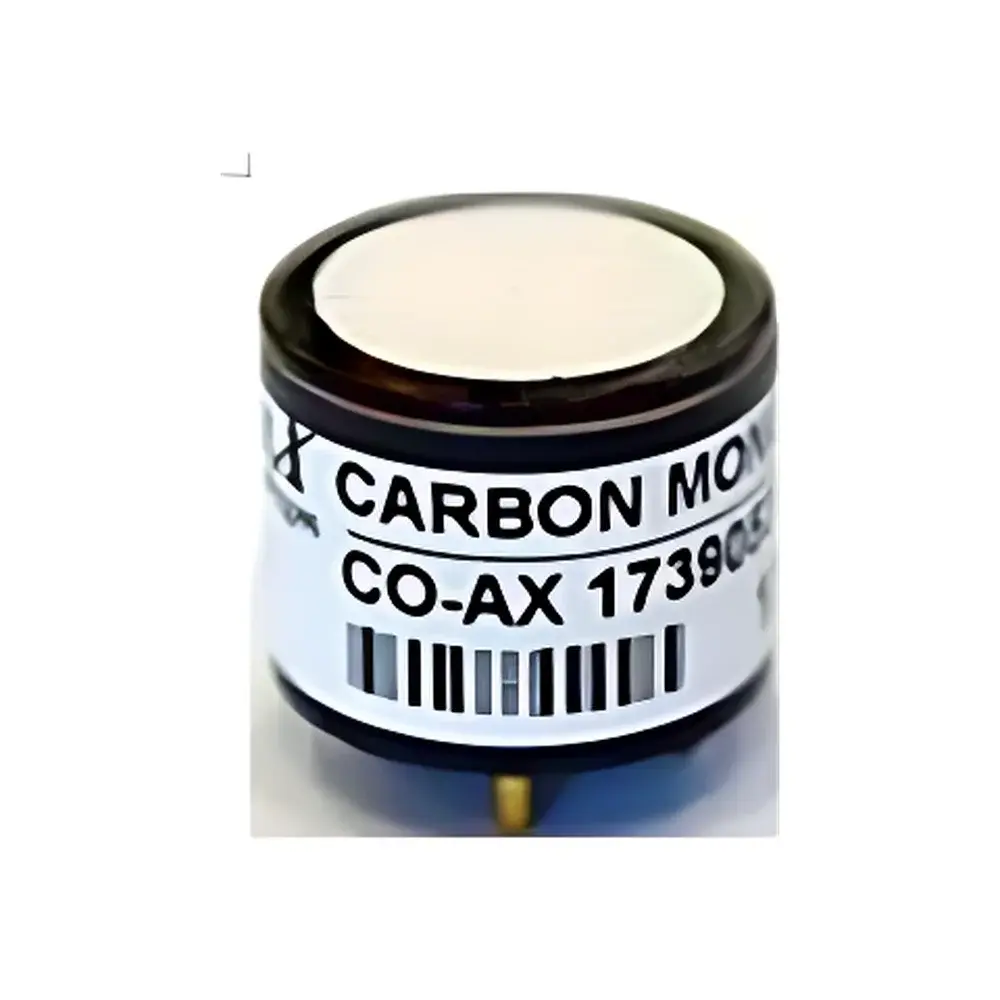
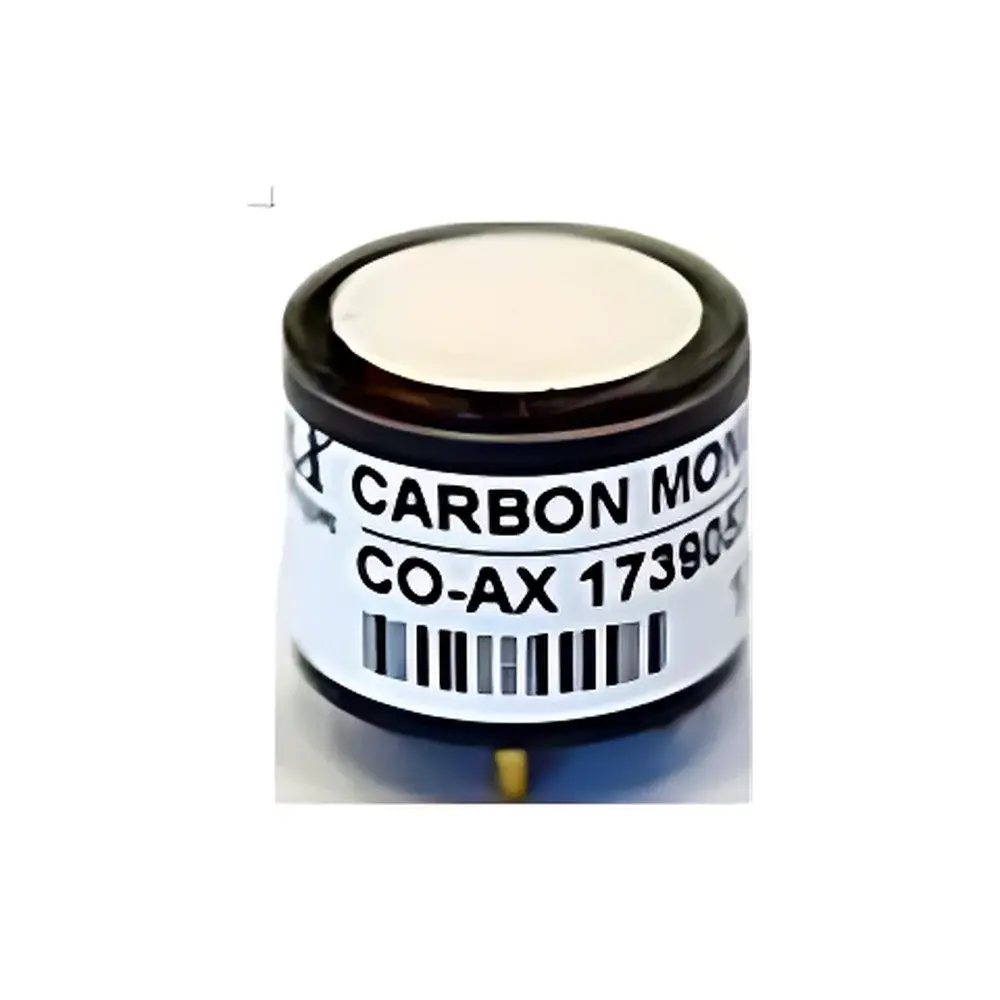
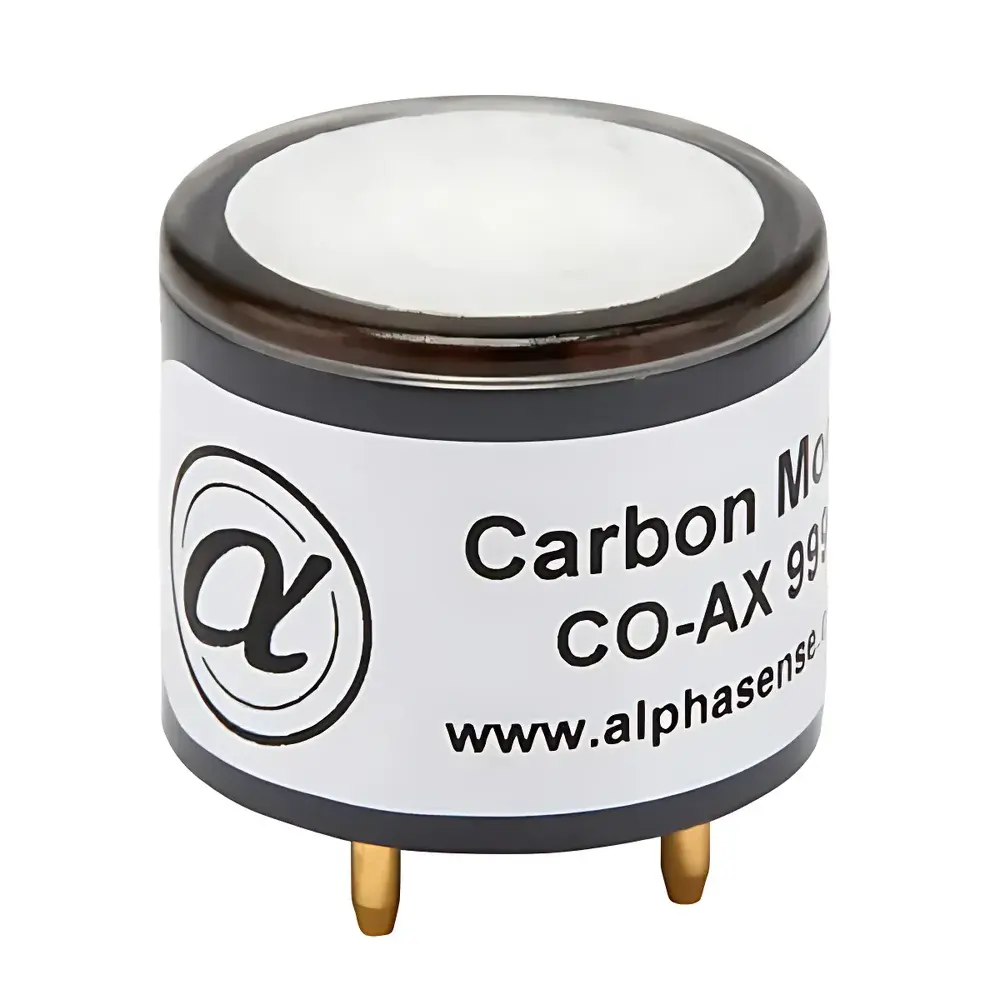
Alphasense CO-AX Hydrogen-Resistant Electrochemical Carbon Monoxide Sensor
| Brand | Alphasense |
|---|---|
| Origin | UK |
| Model | CO-AX |
| Measurement Principle | Amperometric Electrochemistry |
| Range | 0–2000 ppm CO |
| Sensitivity | 55–90 nA/ppm |
| Response Time (t₉₀) | <30 s |
| Linearity Error | ≤ ±40 ppm |
| Overload Capacity | 4000 ppm |
| Resolution | 0.5 ppm |
| Dimensions | Ø20.2 × 16.5 mm |
| Expected Operational Life | 24 months |
| Storage Shelf Life | 6 months |
| Operating Temperature | −30 to +50 °C |
| Operating Humidity | 15–90 % RH (non-condensing) |
| Load Resistance | 10–47 Ω |
| H₂ Interference Rejection | Engineered for stable operation in H₂-rich environments (up to 10,000 ppm H₂) |
Overview
The Alphasense CO-AX is a precision-engineered electrochemical gas sensor designed specifically for reliable carbon monoxide (CO) detection in hydrogen (H₂)-challenged environments. Utilizing a three-electrode amperometric cell architecture with proprietary catalyst formulation and diffusion barrier optimization, the CO-AX delivers stable, low-drift current output proportional to CO concentration — even when exposed to high background levels of hydrogen up to 10,000 ppm. Unlike standard CO sensors that exhibit significant positive cross-sensitivity to H₂, the CO-AX integrates selective membrane chemistry and electrode surface passivation to suppress H₂ oxidation at the working electrode, thereby maintaining measurement integrity in industrial settings where both gases coexist — such as blast furnace off-gas monitoring, coke oven gas analysis, syngas purification, and hydrogen production facilities. Its compact cylindrical form factor (Ø20.2 × 16.5 mm) enables seamless integration into portable safety instruments, fixed gas detection systems, and OEM emission analyzers requiring long-term field stability under variable thermal and humidity conditions.
Key Features
- Hydrogen-resistant electrochemical design validated for continuous operation in H₂ concentrations up to 10,000 ppm without signal drift or false positives
- High sensitivity range of 55–90 nA/ppm CO, optimized for low-concentration detection and full-scale linearity across 0–2000 ppm
- Rapid response time (t₉₀ < 30 seconds), enabling real-time process feedback and personnel safety alerts
- Stable baseline performance with linearity error ≤ ±40 ppm over full scale — suitable for regulatory-grade ambient and occupational exposure monitoring
- Robust mechanical construction using laser-welded stainless-steel housing and hydrophobic PTFE membrane for ingress protection (IP67-equivalent sealing)
- Extended operational life of 24 months under typical industrial conditions, supported by factory calibration traceable to NPL (UK National Physical Laboratory) standards
- Wide environmental tolerance: functional from −30 °C to +50 °C and 15–90 % RH (non-condensing), with integrated temperature compensation circuitry
Sample Compatibility & Compliance
The CO-AX sensor is compatible with standard 3-electrode electrochemical signal conditioning circuits and supports analog current output (nA-level) interfacing via external load resistors (10–47 Ω). It requires no internal power supply — operating solely on the electrochemical potential generated during CO oxidation. The sensor complies with IEC 60079-29-1:2016 for flammable gas detection performance, meets EN 45544-1:2019 requirements for workplace CO monitoring, and is referenced in ASTM D6204 for portable combustible gas analyzer validation protocols. While not intrinsically safe on its own, it is routinely deployed in ATEX/IECEx-certified transmitters (e.g., Category 1G, Zone 0) when integrated per manufacturer’s interface guidelines. No hazardous substance restrictions apply per RoHS 2011/65/EU and REACH Annex XIV.
Software & Data Management
As a raw transducer element, the CO-AX does not include embedded firmware or digital communication interfaces. However, when integrated into host instrumentation, it supports full audit-trail capability when paired with microcontroller-based signal chains compliant with FDA 21 CFR Part 11 (for pharmaceutical cleanroom air quality systems) or ISO 17025-accredited calibration workflows. Recommended calibration intervals are every 6 months for critical applications, with zero/span verification logs exportable via RS-485 or Modbus RTU in compliant host platforms. Alphasense provides full technical documentation including temperature/humidity compensation coefficients, cross-sensitivity matrices (H₂, NO₂, SO₂, Cl₂), and accelerated aging test reports for GMP validation packages.
Applications
- Real-time CO monitoring in steelmaking processes — especially hot-blast stoves, blast furnace top gas recovery, and basic oxygen furnace (BOF) off-gas streams
- Hydrogen infrastructure: leak detection in electrolyzer enclosures, fueling station vent stacks, and PEM stack exhaust lines
- OEM integration into multi-gas portable detectors (e.g., 4-gas LEL/O₂/CO/H₂S units) for confined space entry compliance (OSHA 1910.146)
- Ambient air quality networks targeting urban CO emissions near industrial corridors with concurrent H₂ emissions
- Research-grade gas chromatography detector pre-screening modules and catalytic converter efficiency testing rigs
FAQ
What distinguishes the CO-AX from standard CO electrochemical sensors?
The CO-AX employs a modified catalyst layer and asymmetric diffusion barrier to kinetically suppress hydrogen oxidation at the working electrode, reducing H₂-induced current by >95% compared to conventional CO sensors.
Can the CO-AX be used in oxygen-deficient environments?
Yes — it operates effectively down to 5% O₂ volume; however, below this threshold, response time increases and sensitivity decreases due to limited oxidant availability at the counter electrode.
Is factory calibration certificate included with each unit?
Each CO-AX ships with a unique serial-numbered calibration report indicating sensitivity, zero current, and temperature-dependent response deviation — traceable to UKAS-accredited reference standards.
Does the sensor require periodic bump testing?
Bump testing with certified 100 ppm CO gas is recommended before each use in life-safety applications, per IEC 61511 and ISA-84.00.01 guidance.
How should the CO-AX be stored when not in use?
Store upright in original sealed foil pouch at 20–25 °C and 30–50 % RH; avoid freezing or prolonged exposure to >90 % RH — maximum shelf life is six months from date of manufacture.