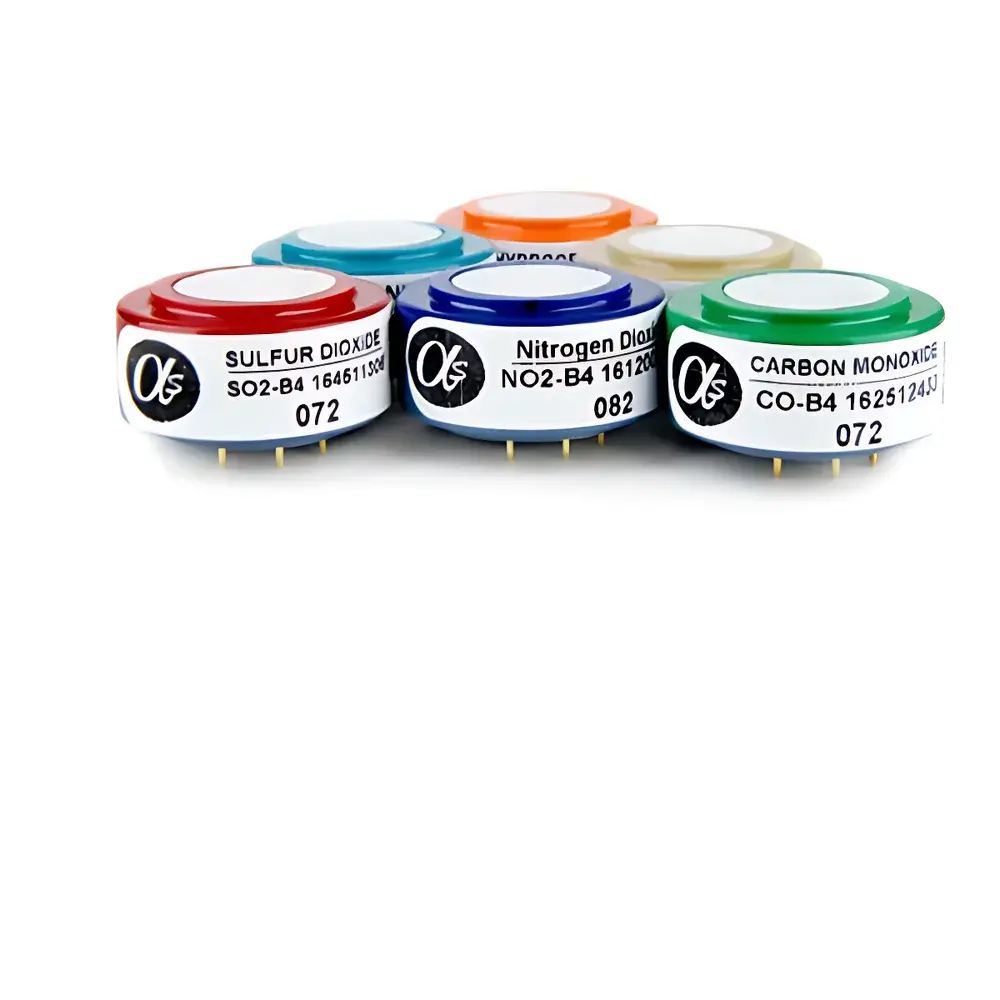
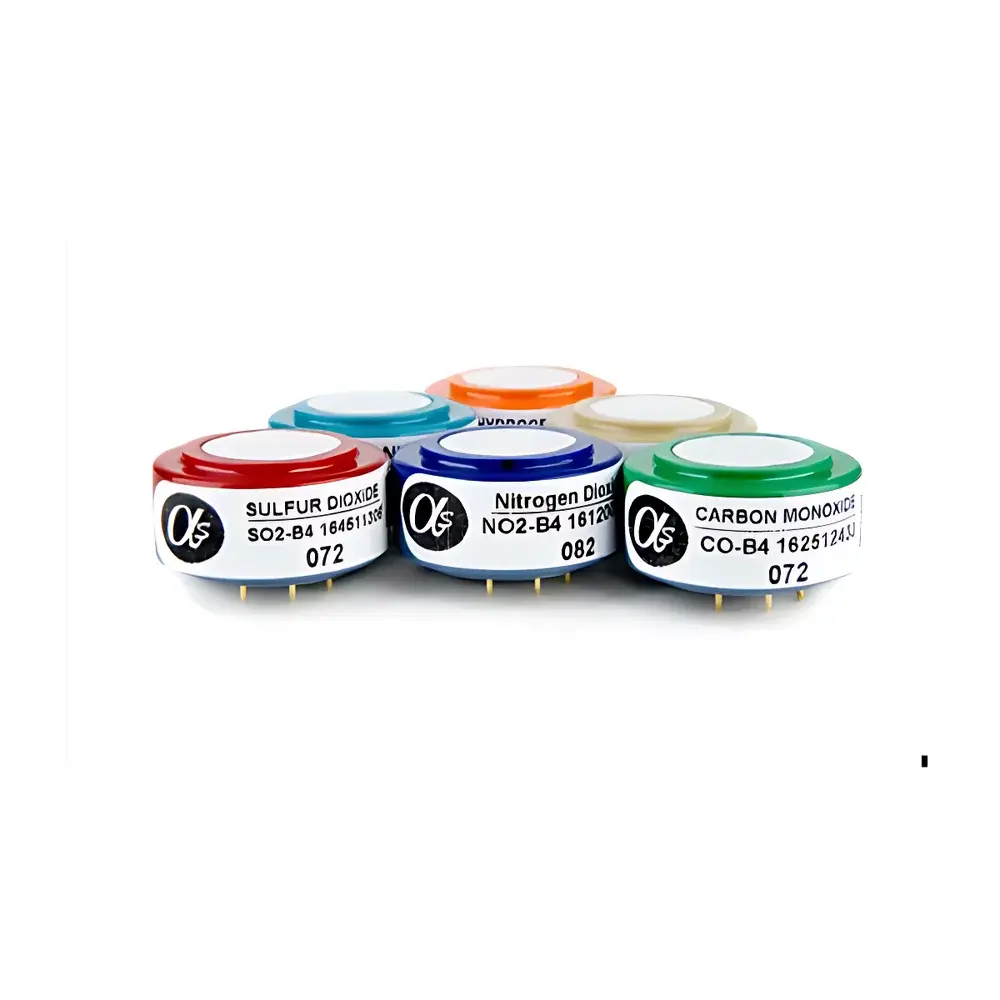
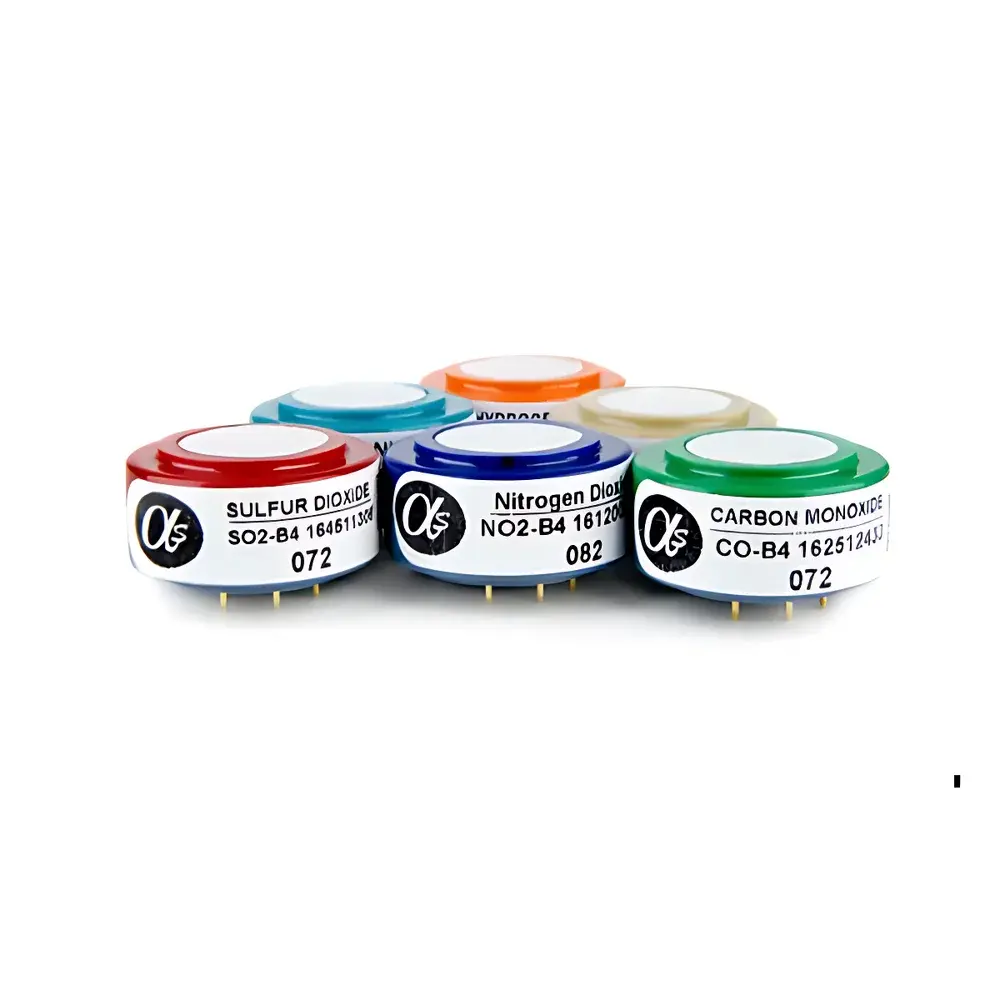
Alphasense B4 Series Four-Electrode ppb-Level Electrochemical Gas Sensors
| Brand | Alphasense (UK) |
|---|---|
| Origin | United Kingdom |
| Model | B4 Series |
| Detection Limit | <10 ppb |
| Operating Principle | Amperometric Electrochemistry with Auxiliary Electrode Compensation |
| Electrode Configuration | 4-Electrode (Working, Counter, Reference, Auxiliary) |
| Typical Response Time (t90) | <30 s |
| Zero Current Compensation | Yes |
| Interference Rejection | Enhanced via Auxiliary Electrode |
| Application Environment | Ambient Air, Indoor Air, Stack Emissions, Portable & Fixed Monitoring Systems |
| Compliance Context | Designed for use in systems compliant with EN 14625, ISO 12039, and EPA Method IO-3.2 (for ambient O₃, NO₂, SO₂, H₂S, CO) |
Overview
The Alphasense B4 Series represents a generation of high-sensitivity electrochemical gas sensors engineered for trace-level detection in ambient air quality monitoring, indoor environmental assessment, and low-concentration industrial emission analysis. Unlike conventional three-electrode electrochemical sensors, the B4 architecture incorporates a dedicated auxiliary electrode to actively monitor and compensate for zero-current drift—arising from temperature fluctuations, electrolyte aging, or background redox activity. This fourth electrode enables continuous real-time correction of baseline offset without requiring periodic manual zeroing or external calibration gases. The sensor operates on amperometric principles: target gas diffuses through a selective membrane into the aqueous electrolyte, undergoes oxidation or reduction at the working electrode surface, and generates a current linearly proportional to gas concentration. With intrinsic resolution below 10 ppb for key pollutants—including nitrogen dioxide (NO₂), sulfur dioxide (SO₂), ozone (O₃), hydrogen sulfide (H₂S), and carbon monoxide (CO)—the B4 series delivers stable, reproducible signals across wide operating temperatures (−20 °C to +50 °C) and relative humidity ranges (15–90% RH, non-condensing).
Key Features
- Four-electrode configuration with integrated auxiliary electrode for dynamic zero-current compensation
- Sub-10 ppb detection limit for multiple toxic and criteria air pollutants
- Typical t90 response time under 30 seconds for rapid transient detection
- Enhanced selectivity and reduced cross-sensitivity to common interferents (e.g., NO for NO₂ sensing; humidity-induced signal artifacts)
- Low power consumption (<80 µA average operating current), suitable for battery-powered portable analyzers
- Robust PTFE membrane and optimized electrode geometry for long-term stability (>24 months typical service life)
- Standard 10-pin DIL footprint compatible with OEM signal conditioning modules and multi-gas board designs
Sample Compatibility & Compliance
The B4 series is validated for continuous operation in gaseous matrices representative of urban ambient air, indoor office environments, and diluted flue gas streams (post-dilution sampling). It is not intended for direct insertion into hot, corrosive, or particulate-laden stacks without appropriate sample conditioning (e.g., Nafion dryers, particle filters, thermal mass flow controllers). When integrated into certified ambient air monitoring systems, B4-based analyzers may support compliance with European Standard EN 14625 (for O₃), ISO 12039 (for SO₂), and U.S. EPA Trace-Level Method IO-3.2. While the sensor itself is not individually certified, its performance characteristics align with requirements for Class I or II reference-equivalent instruments under EU Directive 2008/50/EC when deployed in appropriately validated system architectures.
Software & Data Management
B4 sensors interface via analog output (typically 0–100 mV or 0–200 mV full-scale) or digital I²C variants (B4-D models), enabling seamless integration with data loggers, microcontroller-based transmitters, and cloud-connected edge devices. Alphasense provides comprehensive technical documentation—including temperature/humidity compensation coefficients, cross-sensitivity matrices, and lifetime degradation profiles—for OEMs developing firmware with automatic baseline correction algorithms. For regulated applications, system integrators may implement audit-trail-enabled calibration logging, sensor health diagnostics (e.g., reference electrode potential monitoring), and data integrity safeguards consistent with FDA 21 CFR Part 11 and ISO/IEC 17025 requirements—provided the host instrument platform supports secure user authentication and immutable event logging.
Applications
- Urban and roadside air quality networks (AQMesh, GIoTS, and similar low-cost sensor platforms)
- Indoor air quality (IAQ) monitors for schools, offices, and healthcare facilities
- Personal exposure assessment devices for occupational hygiene studies
- Pre-concentrator-coupled systems for ultra-trace detection (e.g., ppq-range SO₂ in cleanroom environments)
- Mobile monitoring platforms mounted on vehicles, drones, or bicycles
- Calibration transfer standards in laboratory reference setups where traceable zero/span verification is required
FAQ
What gases can the B4 series detect?
The B4 platform is available in dedicated configurations for NO₂, SO₂, O₃, H₂S, CO, Cl₂, NH₃, and PH₃—each optimized for sensitivity, selectivity, and lifetime in its target application.
Does the B4 sensor require external zero gas for calibration?
No. The auxiliary electrode enables electronic zero compensation; however, periodic span calibration with certified gas standards remains necessary for quantitative accuracy per ISO 17025 traceability protocols.
Can B4 sensors be used in high-humidity environments?
Yes—provided condensation is prevented. Integrated hydrophobic membranes and optional humidity-compensated firmware mitigate signal drift up to 90% RH.
What is the expected operational lifetime?
Typically 24–36 months under continuous operation at 25 °C and 50% RH; lifetime decreases predictably with elevated temperature, pollutant loading, and extreme humidity cycling.
Is the B4 series compatible with regulatory-grade monitoring systems?
It serves as a core sensing element in Type-Approved systems (e.g., UK’s AEAP, Germany’s QAL1-certified analyzers) when embedded in fully validated instrument designs meeting EN 15267 and MCERTS requirements.