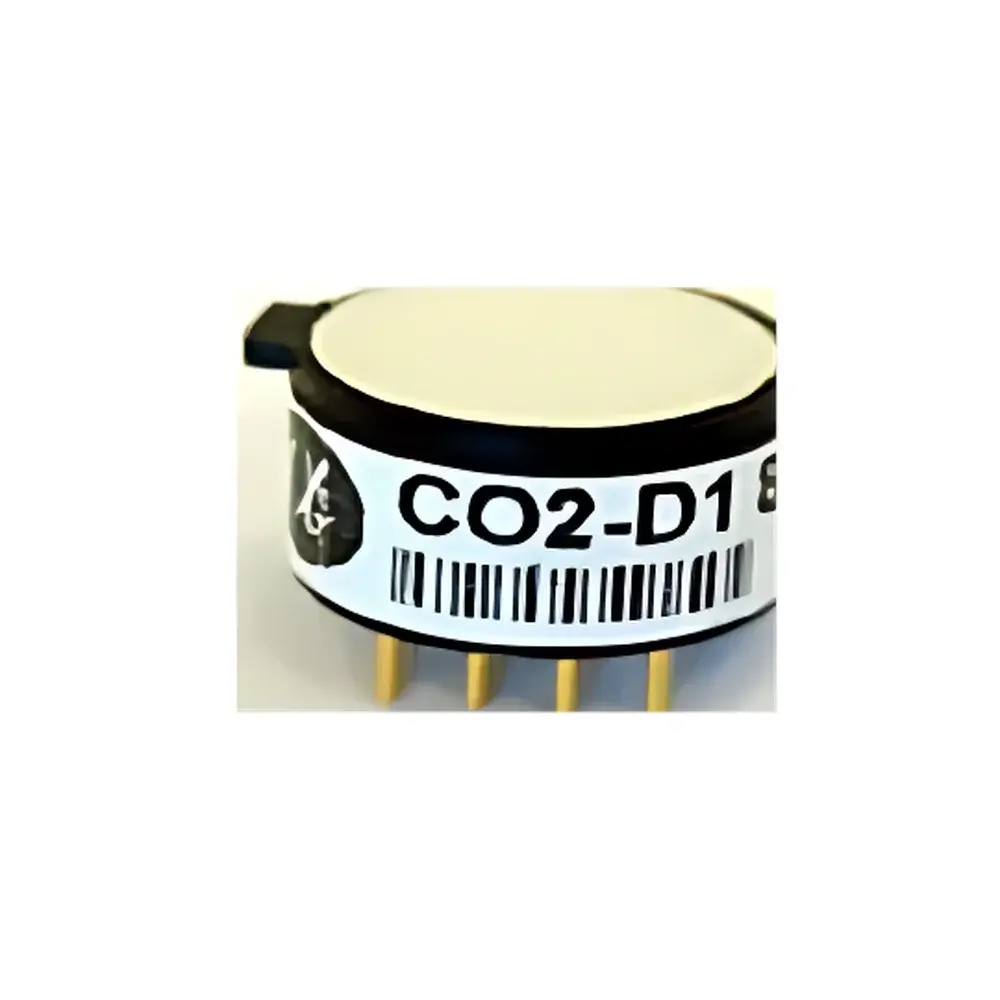
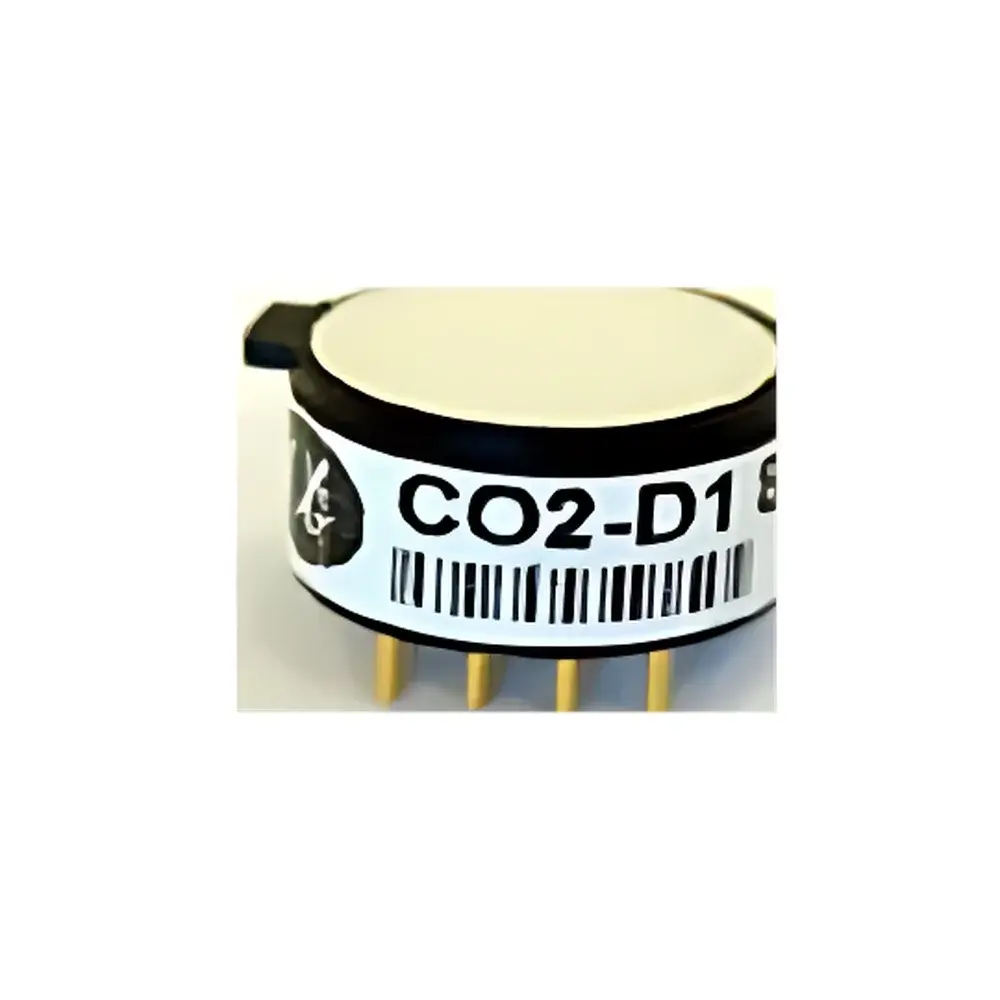
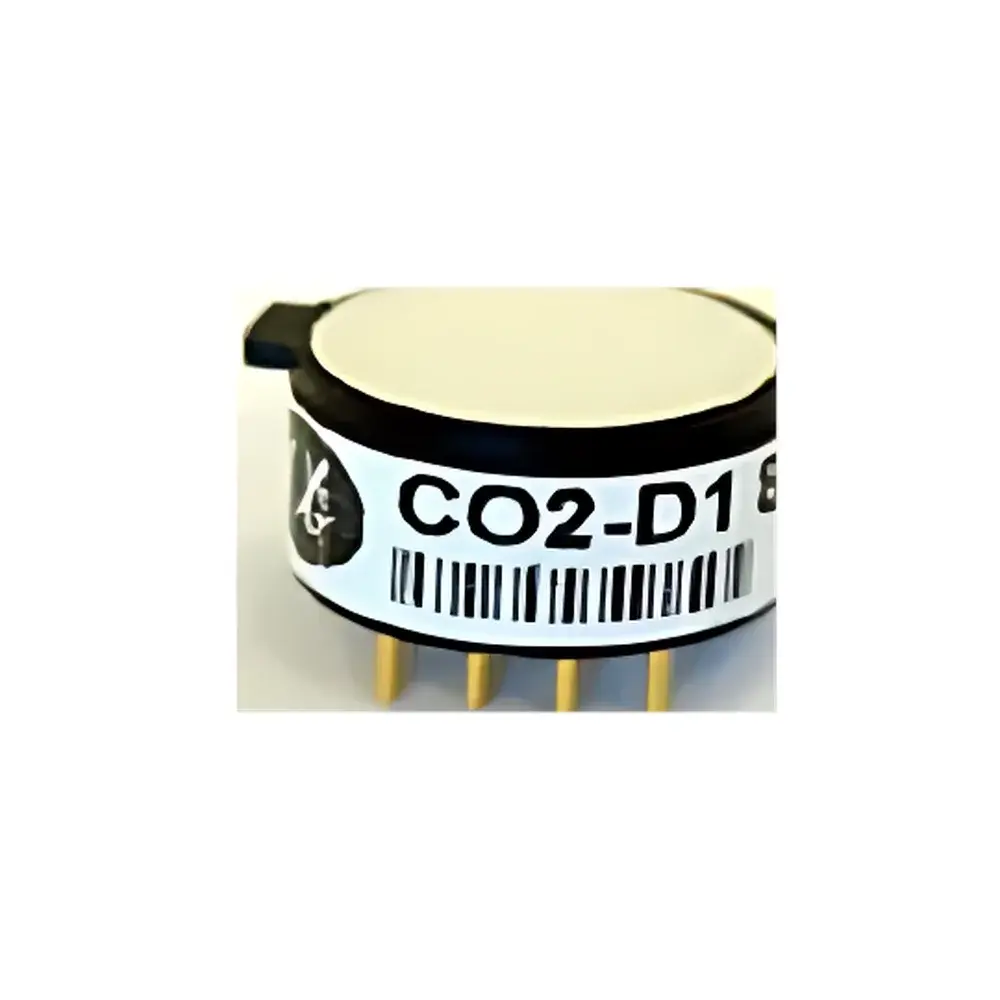
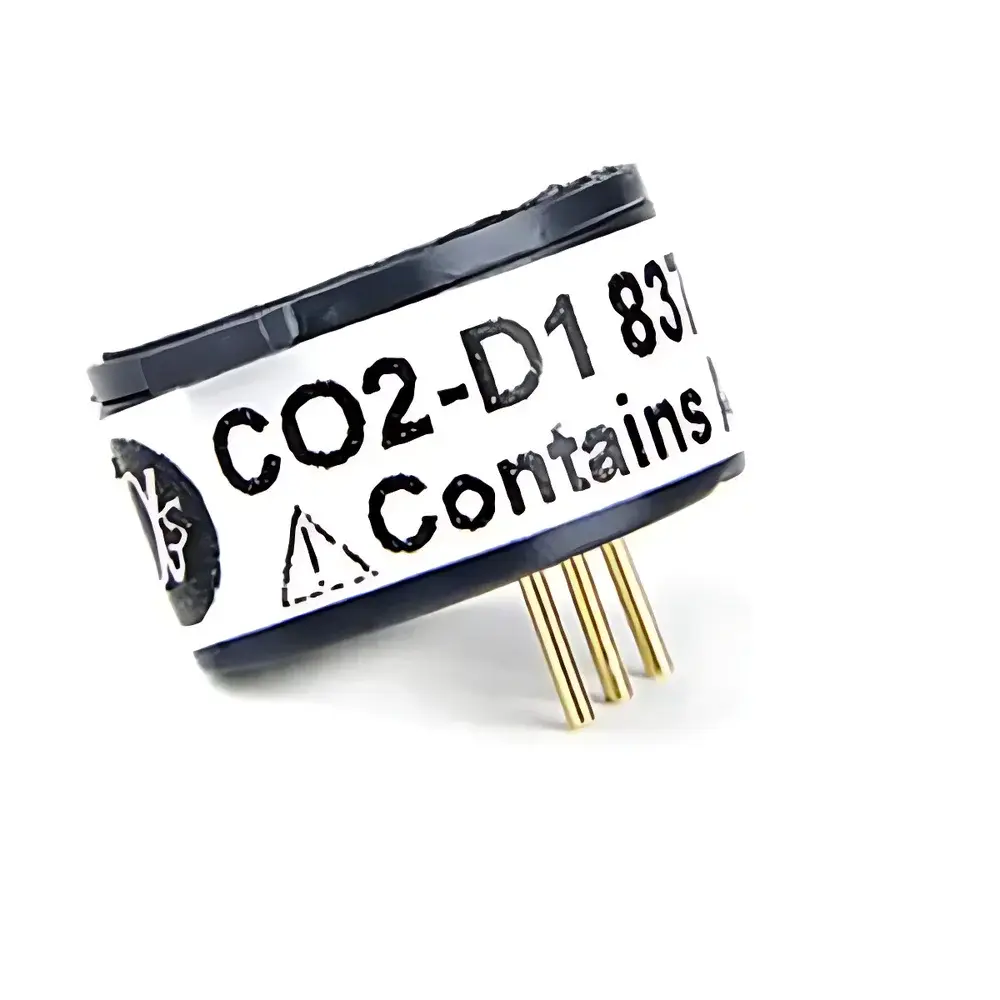
Alphasense CO2-D1 Solid Electrolyte Carbon Dioxide Sensor
| Brand | Alphasense (UK) |
|---|---|
| Origin | United Kingdom |
| Model | CO2-D1 |
| Detection Range | 0.2–95% CO₂ (v/v) |
| Output Signal | Logarithmic mV output |
| Response Time (t₉₀) | 2–4 minutes |
| Operating Temperature | 10–35 °C |
| Power Requirement | Self-powered (no external supply required) |
| Dimensions | Compact form factor |
| Application Domains | Combustion analysis, industrial process monitoring, safety gas detection |
Overview
The Alphasense CO2-D1 is a solid electrolyte-based electrochemical sensor engineered for reliable, maintenance-free measurement of carbon dioxide (CO₂) concentration across a wide dynamic range—from 0.2% to 95% by volume. Unlike NDIR or metal oxide semiconductor sensors, the CO2-D1 operates on a potentiometric principle: CO₂ diffuses through a hydrophobic membrane into a solid-state zirconia-based electrolyte cell, where it participates in a reversible electrochemical reaction at noble metal electrodes. This generates a stable, temperature-dependent open-circuit voltage proportional to the logarithm of CO₂ partial pressure. The sensor requires no external power source—its operation is thermodynamically self-sustaining under ambient conditions—making it uniquely suited for battery-constrained or passive monitoring applications in harsh or remote environments.
Key Features
- True solid electrolyte architecture with yttria-stabilized zirconia (YSZ) ceramic core, eliminating liquid electrolyte leakage and evaporation risks
- Self-powered operation: zero quiescent current draw; ideal for long-term deployment in energy-harvesting or ultra-low-power systems
- Wide linear-log response range (0.2–95% CO₂), supporting both low-level ambient air monitoring and high-concentration combustion exhaust analysis
- Compact footprint (standard 20 mm diameter TO-5 package) compatible with OEM integration into portable analyzers, burner management systems, and fixed gas detectors
- Stable baseline performance over time: minimal drift (<2% FS/month) when operated within specified temperature limits (10–35 °C)
- No internal heaters or temperature compensation circuitry required—reduces system complexity and thermal mass effects
Sample Compatibility & Compliance
The CO2-D1 is designed for direct sampling of dry or moderately humid gas streams. It exhibits negligible cross-sensitivity to common interferents including CO, NOₓ, SO₂, H₂, CH₄, and water vapor below 80% RH. For optimal accuracy, inlet gas should be filtered to remove particulates >1 µm and condensable organics. The sensor complies with IEC 60079-29-1 for use in Group II hazardous areas when integrated into certified instrument housings. While not intrinsically safe as a standalone component, its zero-power operation significantly simplifies system-level ATEX/IECEx certification pathways. It supports GLP-aligned documentation packages and meets traceability requirements per ISO/IEC 17025 when calibrated using NIST-traceable CO₂ standards.
Software & Data Management
As an analog mV-output sensor, the CO2-D1 interfaces directly with standard 16-bit or higher ADC circuits. Its logarithmic output necessitates linearization via firmware-based calibration curves—Alphasense provides detailed application notes and polynomial coefficients (e.g., E(mV) = a + b·ln[CO₂]) for embedded implementation. The sensor is compatible with industry-standard data acquisition platforms including National Instruments DAQmx, Keysight PathWave, and open-source frameworks such as Python-based PyDAQmx or Arduino-compatible analogRead() with appropriate signal conditioning. Raw voltage readings can be logged with timestamped metadata to support FDA 21 CFR Part 11-compliant audit trails when deployed in regulated manufacturing or environmental monitoring systems.
Applications
- Combustion efficiency optimization in boilers, furnaces, and incinerators via real-time flue gas CO₂ analysis
- Confined space safety monitoring for CO₂ accumulation in breweries, cold storage facilities, and fermentation tanks
- OEM integration into portable breath alcohol analyzers (where CO₂ serves as a flow-rate and exhalation quality proxy)
- Process endpoint detection in modified atmosphere packaging (MAP) lines
- Low-cost, high-reliability CO₂ sensing in HVAC demand-controlled ventilation (DCV) controllers
- Academic research on soil respiration and biogas composition where passive, long-duration deployment is critical
FAQ
Does the CO2-D1 require a reference gas or zero-air calibration?
No—its potentiometric design enables true zero-current, reference-free operation. However, periodic span calibration using certified CO₂ gas standards is recommended every 6–12 months depending on exposure history.
Can the sensor operate outside the 10–35 °C range?
Performance degrades significantly below 10 °C (increased response time, nonlinearity) and above 35 °C (accelerated electrolyte aging). Extended operation beyond this range voids warranty and compromises long-term stability.
Is humidity compensation necessary?
The CO2-D1 incorporates an integrated hydrophobic PTFE membrane that minimizes humidity-induced signal perturbation up to 80% RH. For applications exceeding this threshold, inline desiccant or active humidity control upstream is advised.
What is the typical service life under continuous operation?
Under nominal conditions (25 °C, 24 months functional lifetime with <10% sensitivity loss—verified per Alphasense accelerated aging protocols (IEC 61249-2-21).