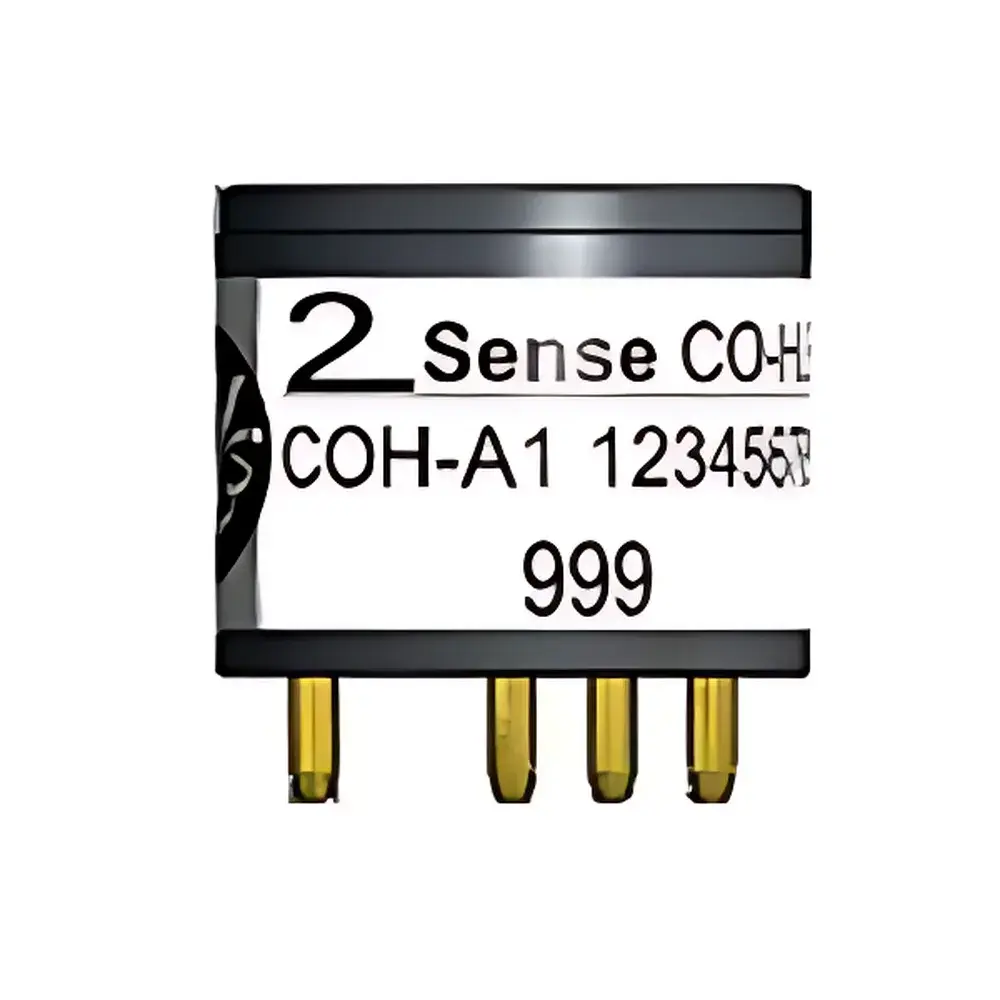
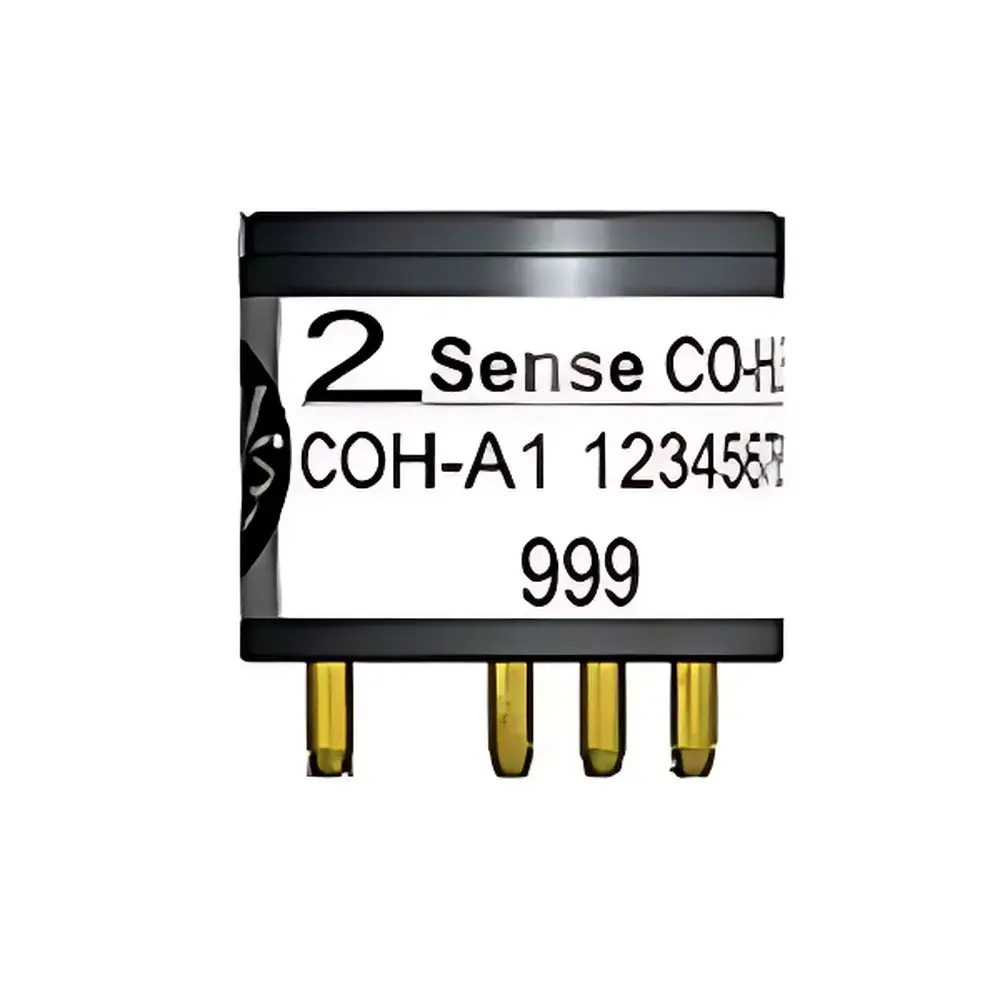
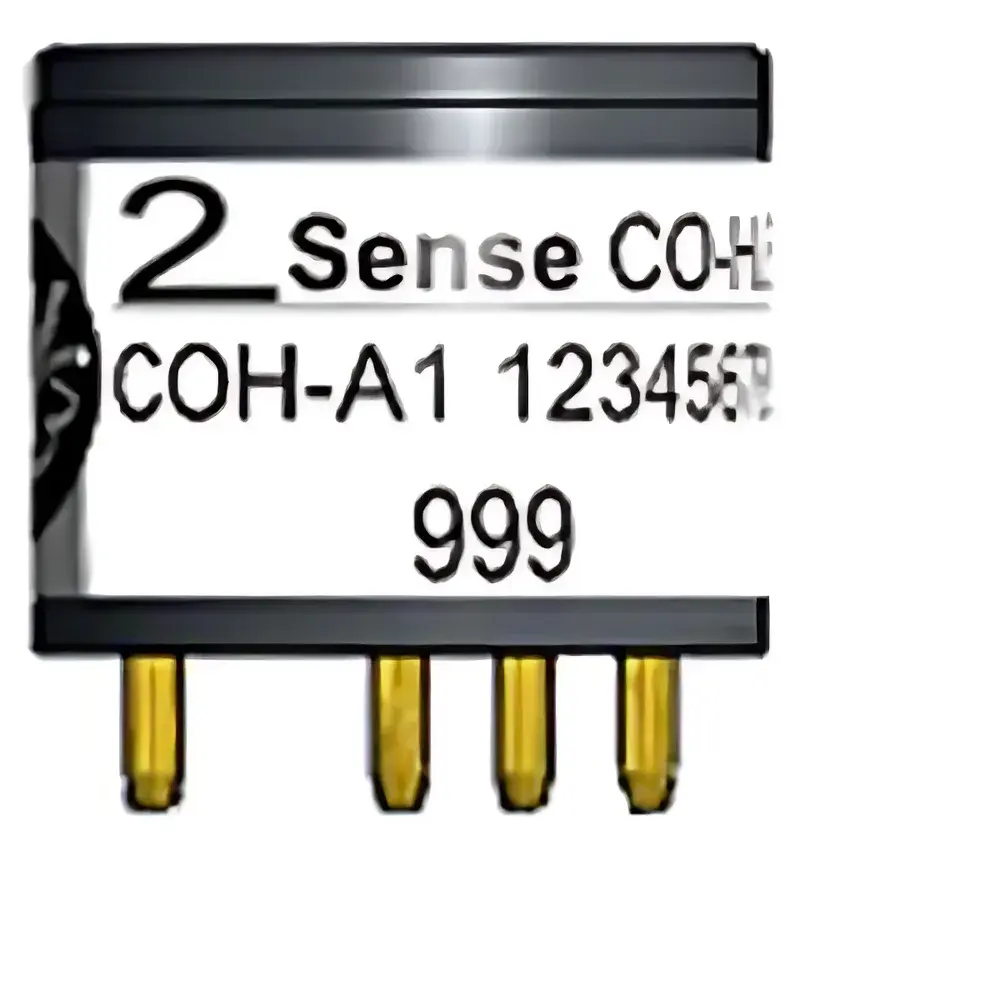
Alphasense COH-A1 Dual-Gas Electrochemical Sensor for Carbon Monoxide and Hydrogen Sulfide
| Brand | Alphasense (UK) |
|---|---|
| Origin | United Kingdom |
| Model | COH-A1 |
| Detection Principle | Electrochemical |
| Target Gases | CO & H₂S |
| CO Range | 0–2000 ppm |
| H₂S Range | 0–200 ppm |
| CO Resolution | 0.5 ppm |
| H₂S Resolution | 0.05 ppm |
| CO t90 | <25 s |
| H₂S t90 | <30 s |
| CO Sensitivity | 55–90 nA/ppm (at 400 ppm) |
| H₂S Sensitivity | 550–875 nA/ppm (at 20 ppm) |
| CO Zero Current | −4 to +2 ppm |
| H₂S Zero Current | 0 to −0.3 ppm |
| CO Linearity | 0–400 ppm |
| H₂S Linearity | 0–20 ppm |
| CO Overload Capacity | 5000 ppm (stable pulse response) |
Overview
The Alphasense COH-A1 is a compact, dual-gas electrochemical sensor engineered for simultaneous, selective detection of carbon monoxide (CO) and hydrogen sulfide (H₂S) in portable and fixed gas monitoring systems. Based on proven three-electrode electrochemical cell architecture, the COH-A1 integrates proprietary electrode design and advanced chemical filtration to achieve exceptional cross-sensitivity suppression—particularly eliminating interference from H₂S, SO₂, NO₂, and acidic gases in the CO measurement channel. This selectivity is achieved via a high-capacity diffusion barrier and catalytic filter positioned directly over the CO working electrode, ensuring stable baseline performance and long-term calibration integrity under real-world ambient conditions. Designed for industrial hygiene, confined space entry, leak detection, and environmental compliance applications, the COH-A1 meets the functional requirements of EN 45544-1, IEC 60079-29-1, and ISO 16000-25 for electrochemical toxic gas sensors.
Key Features
- True dual-gas detection in a single 20 mm × 16.5 mm cylindrical package with standardized pin layout (compatible with Alphasense B4 and C series interfaces)
- CO channel featuring integrated high-efficiency acid-gas filter—reducing H₂S cross-response to <1% at 10 ppm H₂S and eliminating measurable SO₂/NO₂ interference up to 5 ppm
- Stable zero-current performance: CO channel drift <±1.5 ppm over 30 days; H₂S channel drift <±0.1 ppm under constant 25°C/50% RH conditions
- Fast dynamic response: t90 ≤25 s for CO (0–100 ppm step), t90 ≤30 s for H₂S (0–5 ppm step), enabling reliable real-time exposure assessment
- Wide operational tolerance: functional across −20°C to +50°C and 15–90% RH (non-condensing); optional integrated temperature compensation circuit available
- Long service life: >24 months typical field lifetime when operated within specified environmental and concentration limits
Sample Compatibility & Compliance
The COH-A1 is intended for use in ambient air sampling and requires no sample conditioning beyond particulate filtration (recommended 5 µm inline filter). It is compatible with standard 4–20 mA, 0–5 V, or digital UART output signal conditioning modules. The sensor complies with RoHS 2011/65/EU and REACH Annex XVII restrictions on hazardous substances. Its electrochemical performance has been validated per ISO 12032:2012 (electrochemical sensor test methods) and referenced against NIST-traceable gas standards. For occupational safety applications, it supports OSHA PEL and ACGIH TLV® verification workflows and is suitable for integration into systems requiring conformity with FDA 21 CFR Part 11 (when paired with audit-trail-capable host firmware) and EU Medical Device Regulation (MDR) Annex I essential requirements for Class IIa auxiliary devices.
Software & Data Management
While the COH-A1 itself is an analog/digital transducer without embedded firmware, its signal output is fully supported by Alphasense’s open-architecture calibration and diagnostics suite (SensorLink v3.2+). Host systems may implement automated baseline validation, span adjustment logging, and drift trend analysis using timestamped current readings (nA) and internal thermistor data. When deployed in networked multi-sensor platforms, the COH-A1 enables synchronized gas concentration reporting with configurable alarm thresholds, event-triggered data capture, and GLP-compliant audit trails—including operator ID, calibration date/time, zero/span gas lot numbers, and environmental metadata. All calibration records are exportable in CSV and PDF formats compliant with ISO/IEC 17025 documentation requirements.
Applications
- Portable multi-gas detectors for oil & gas upstream operations, wastewater treatment plant maintenance, and municipal utility inspection
- Fixed-site ambient air quality monitors deployed near landfills, biogas facilities, and sulfur-processing units
- Indoor air quality (IAQ) systems in laboratories, pharmaceutical cleanrooms, and semiconductor fabrication fabs where CO/H₂S co-emission risks exist
- Research-grade exposure chambers requiring trace-level, dual-analyte resolution for toxicology and inhalation studies
- OEM integration into ventilation control systems for automatic purge activation upon threshold exceedance (e.g., H₂S >5 ppm triggers HVAC override)
FAQ
What is the recommended calibration frequency for the COH-A1 in continuous monitoring mode?
For critical safety applications, bump testing is recommended before each shift; full two-point (zero/span) calibration every 30 days or after exposure to concentrations exceeding 80% of full scale.
Can the COH-A1 be exposed to high-humidity environments without condensation?
Yes—operational humidity range is 15–90% RH non-condensing; prolonged exposure above 90% RH may accelerate electrolyte evaporation and require recalibration.
Is the COH-A1 compatible with PID or MOS-based multi-sensor arrays?
It is electrically and mechanically interoperable with common OEM sensor boards supporting 0.9–1.3 V bias and 10–100 kΩ load impedance, though signal conditioning must preserve electrochemical linearity and avoid ground-loop interference.
Does Alphasense provide NIST-traceable calibration certificates with each COH-A1 unit?
Certificates are available upon request at time of order (fee applies); standard shipment includes factory calibration report with batch-specific sensitivity and zero-current values.
How does the COH-A1 handle transient gas pulses, such as those from intermittent leaks?
Its fast t90 response and overload tolerance up to 5000 ppm CO ensure accurate peak capture and recovery without saturation-induced hysteresis or baseline shift.