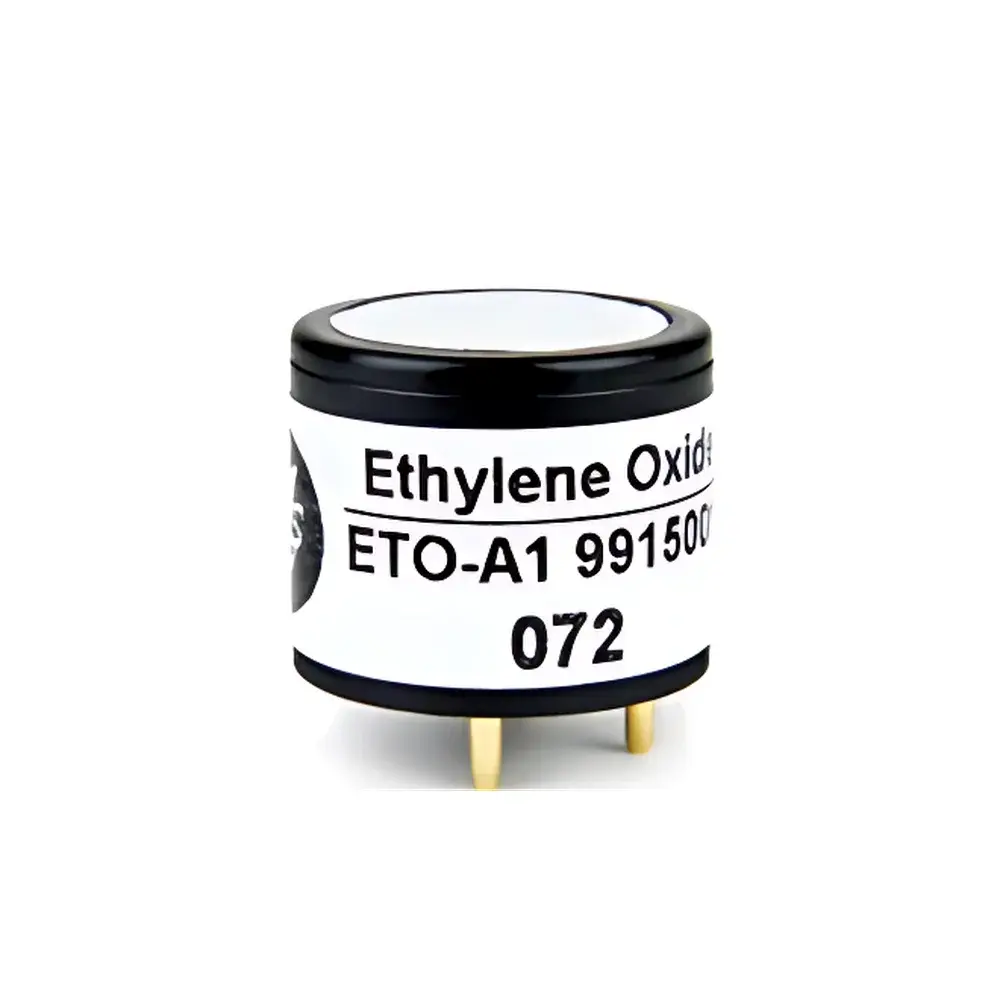
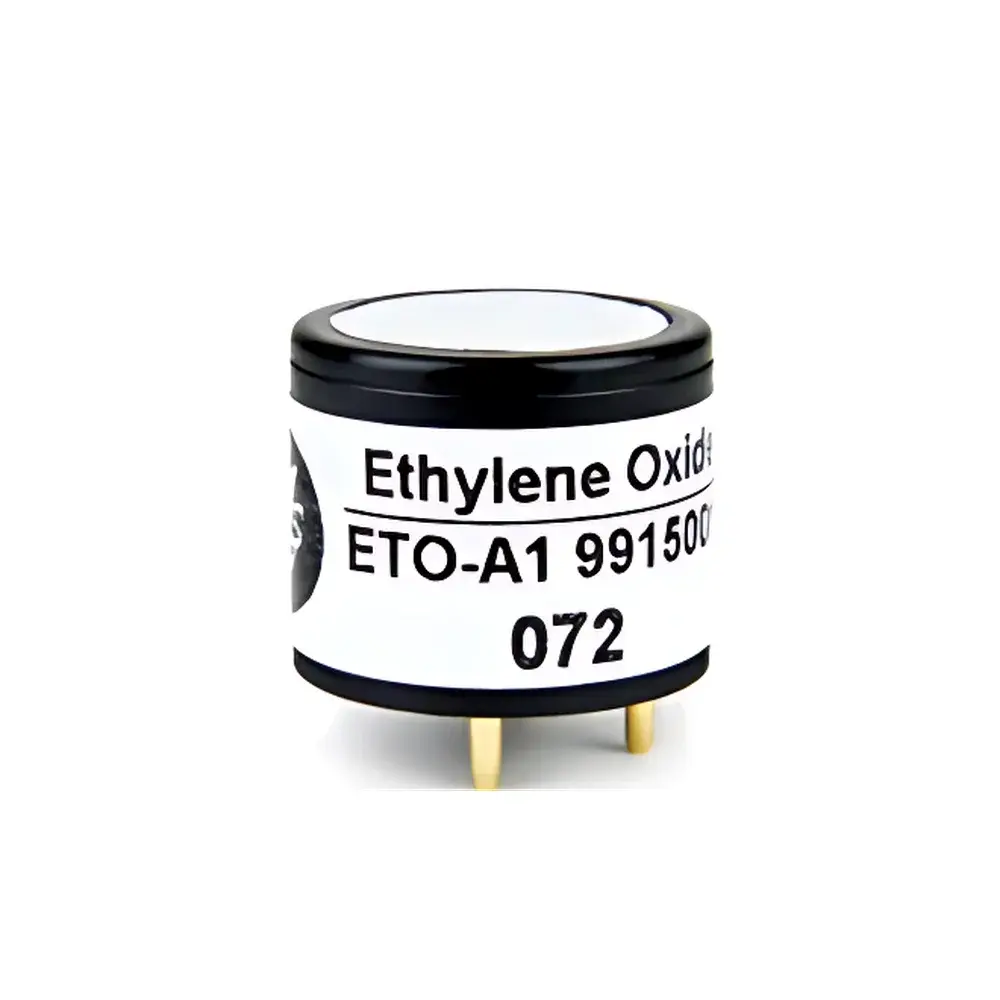
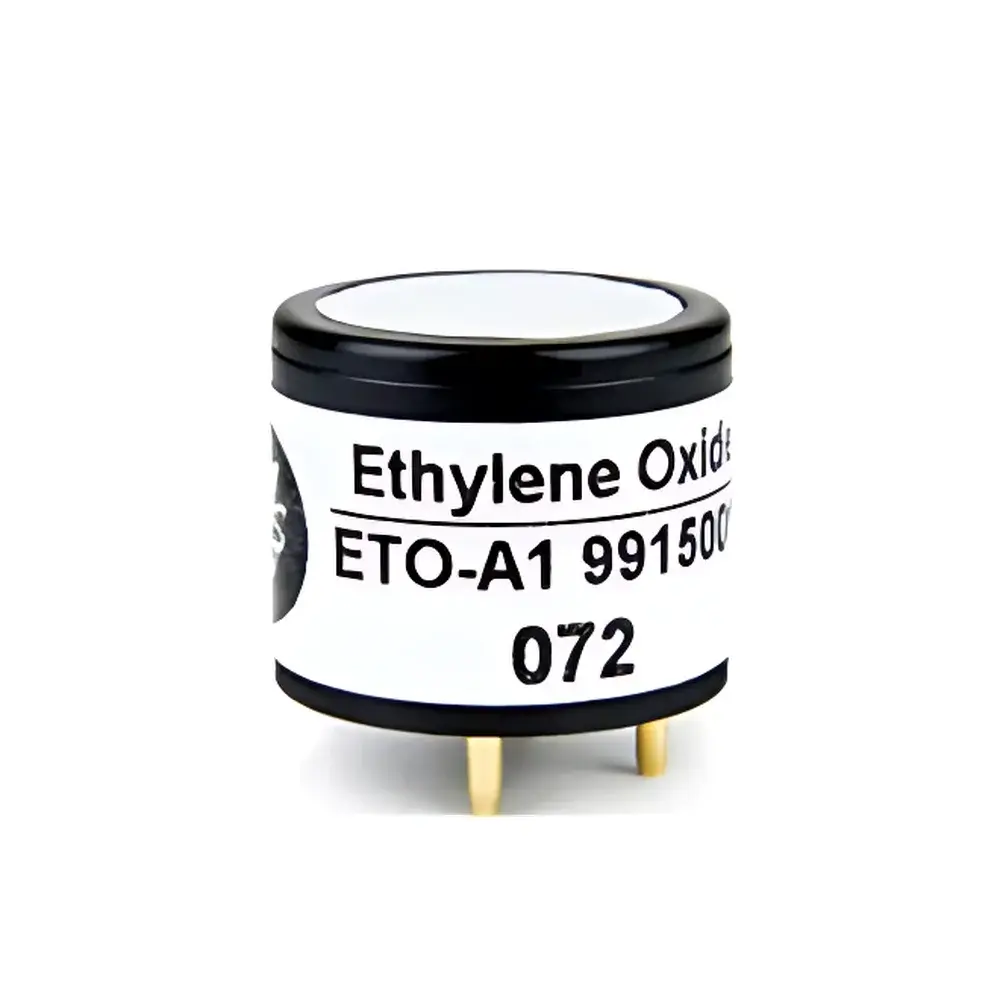
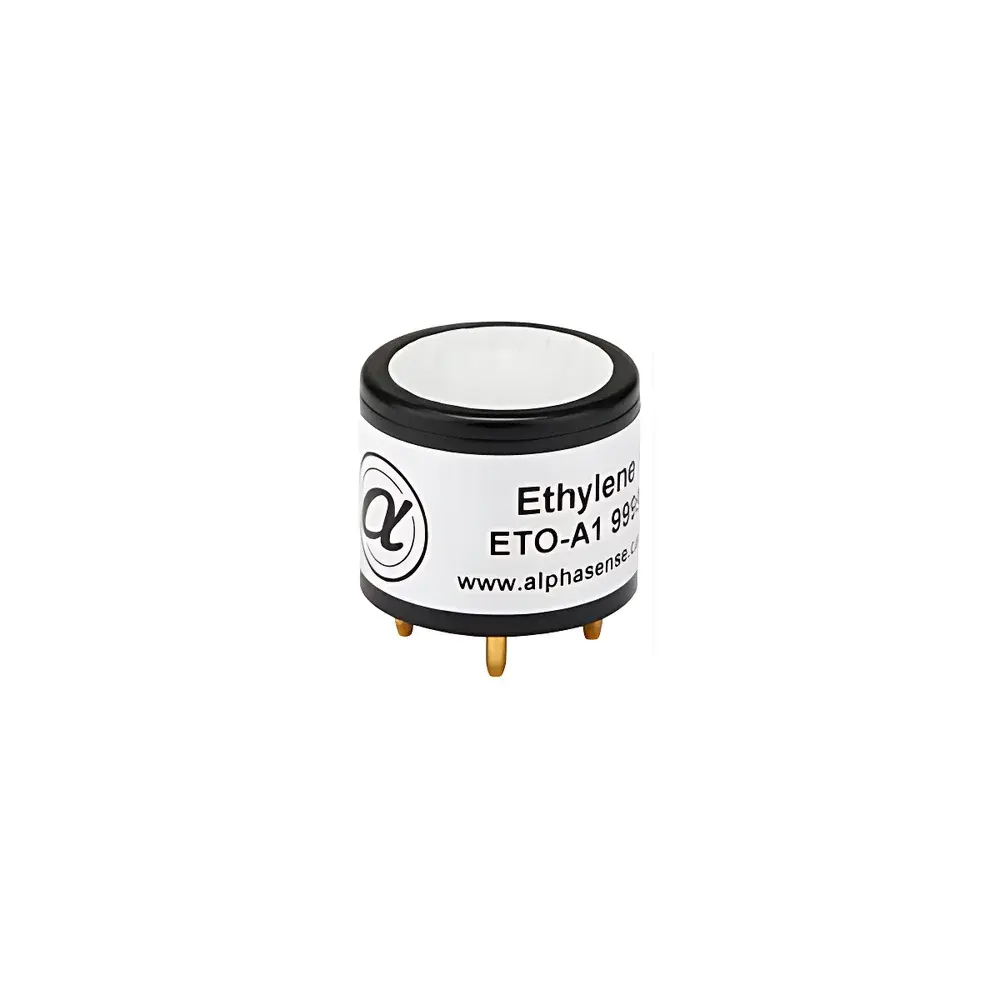
Alphasense ETO-A1 Electrochemical Ethylene Oxide Gas Sensor
| Brand | Alphasense (UK) |
|---|---|
| Origin | United Kingdom |
| Model | ETO-A1 |
| Measurement Principle | Amperometric Electrochemistry |
| Detection Range | 0–100 ppm |
| Sensitivity | 2000–3200 nA/ppm |
| Response Time (t90) | <150 s |
| Linear Range | 0–40 ppm |
| Full-Scale Error | ±5–10 ppm |
| Overload Capacity | 200 ppm |
| Resolution | <0.1 ppm |
| Dimensions | Ø20.2 × 16.5 mm |
| Operating Temperature | −30 to +50 °C |
| Operating Humidity | 15–90 %RH (non-condensing) |
| Load Resistance | 10–47 Ω |
| Expected Service Life | 24 months |
| Storage Shelf Life | 6 months |
Overview
The Alphasense ETO-A1 is a high-performance, diffusion-type electrochemical gas sensor engineered for the selective and stable detection of ethylene oxide (C₂H₄O) in ambient air. Designed in accordance with ISO 16000-23 and aligned with occupational exposure monitoring requirements under OSHA PEL (1 ppm TWA) and ACGIH TLV (0.1 ppm STEL), the ETO-A1 operates on the principle of amperometric electrochemistry: target gas diffuses through a hydrophobic membrane into an aqueous electrolyte, where it undergoes oxidation at the working electrode, generating a current proportional to concentration. Its compact cylindrical form factor (Ø20.2 × 16.5 mm) and low-power analog output make it suitable for integration into portable monitors, fixed-point gas detection systems, sterilization chamber leak detectors, and environmental health & safety (EHS) compliance instrumentation.
Key Features
- Optimized selectivity for ethylene oxide with minimal cross-sensitivity to common interferents including CO, H₂S, SO₂, NO₂, and ethanol—validated per Alphasense Application Note AN-003.
- Stable baseline performance over temperature extremes (−30 to +50 °C) and humidity ranges (15–90 %RH, non-condensing), supported by integrated thermal compensation circuitry.
- Fast t90 response time of less than 150 seconds enables timely detection during sterilization cycle validation and workplace leak surveys.
- High-resolution analog output (<0.1 ppm equivalent) facilitates accurate quantification across both regulatory action levels (e.g., 0.1 ppm STEL) and process control thresholds.
- Robust construction using PTFE membrane and gold-plated electrodes ensures long-term stability and resistance to poisoning in industrial environments.
- Compliant with RoHS 2011/65/EU and REACH SVHC guidelines; CE-marked per EN 61000-6-3 (EMC) and EN 61000-6-2 (immunity).
Sample Compatibility & Compliance
The ETO-A1 is intended for continuous or intermittent sampling of ambient air, filtered process exhaust streams, and headspace analysis in medical device sterilization facilities. It is not designed for direct contact with liquid-phase ETO, high-concentration vapor (>200 ppm), or corrosive atmospheres containing chlorine or ozone above 0.1 ppm. The sensor meets functional safety prerequisites for SIL-2 capable systems when deployed within certified host instruments per IEC 61508. Its calibration traceability aligns with NIST-traceable reference gas standards (ISO 6141), and its performance documentation supports GLP-compliant validation protocols required under FDA 21 CFR Part 820 for medical device manufacturing environments.
Software & Data Management
While the ETO-A1 itself delivers a linear 0–200 mV or 4–20 mA analog signal (configurable via external load resistor), its integration into digital platforms enables full auditability. When paired with host controllers supporting Modbus RTU or CAN bus, raw sensor data—including temperature-compensated output, diagnostic flags (e.g., low electrolyte warning), and runtime hours—can be logged with timestamped metadata. Firmware-enabled zero/span verification routines support routine bump testing per OSHA 1910.120 and NFPA 72 requirements. Data export formats (CSV, JSON) are compatible with LIMS and EHS reporting dashboards, and electronic records comply with FDA 21 CFR Part 11 when deployed with appropriate user access controls and audit trail configuration.
Applications
- Real-time monitoring of ethylene oxide concentrations in hospital sterilization rooms and pharmaceutical cleanrooms.
- Leak detection in EO sterilizer chambers, piping manifolds, and aeration room ventilation ducts.
- Portable personal exposure meters used by industrial hygienists conducting TWA and STEL assessments.
- Integration into automated environmental monitoring systems (EMS) for ISO 13485-certified medical device manufacturers.
- Validation support for ISO 11135:2014 sterilization process qualification and residual analysis workflows.
- Research-grade exposure studies requiring trace-level ETO quantification in controlled laboratory settings.
FAQ
What is the recommended calibration frequency for the ETO-A1 sensor?
Calibration is advised prior to first use, after any exposure exceeding 200 ppm, and at intervals not exceeding 6 months under normal operation—per ISO 12032 and manufacturer guidance.
Can the ETO-A1 be operated continuously in high-humidity environments?
Yes, provided relative humidity remains below 90 %RH without condensation; prolonged exposure to saturated conditions may accelerate electrolyte depletion.
Does the sensor require external temperature compensation?
No—the ETO-A1 incorporates onboard thermistor-based compensation; however, host system firmware must apply the published temperature correction algorithm (provided in Alphasense Technical Datasheet TD-ETO-A1 Rev. 4).
Is the ETO-A1 suitable for use in explosion-hazardous areas?
Not intrinsically safe by itself; it must be installed within an approved hazardous-area-rated enclosure or associated safety barrier compliant with ATEX Directive 2014/34/EU or IECEx System Certificate.
How is sensor end-of-life determined?
End-of-life is indicated by ≥30 % sensitivity loss versus initial calibration, excessive baseline drift (>±10 ppm equivalent), or failure to respond within specification during functional check—documented per internal QA procedures.