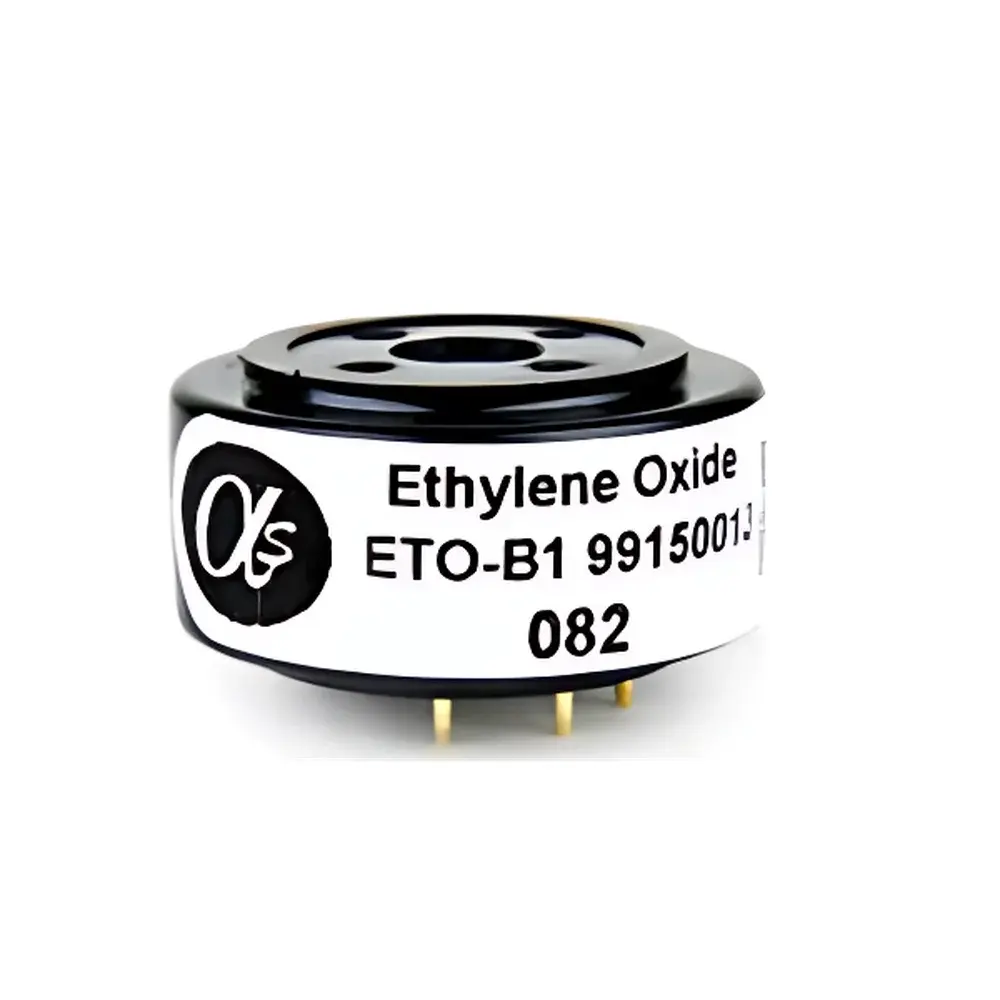
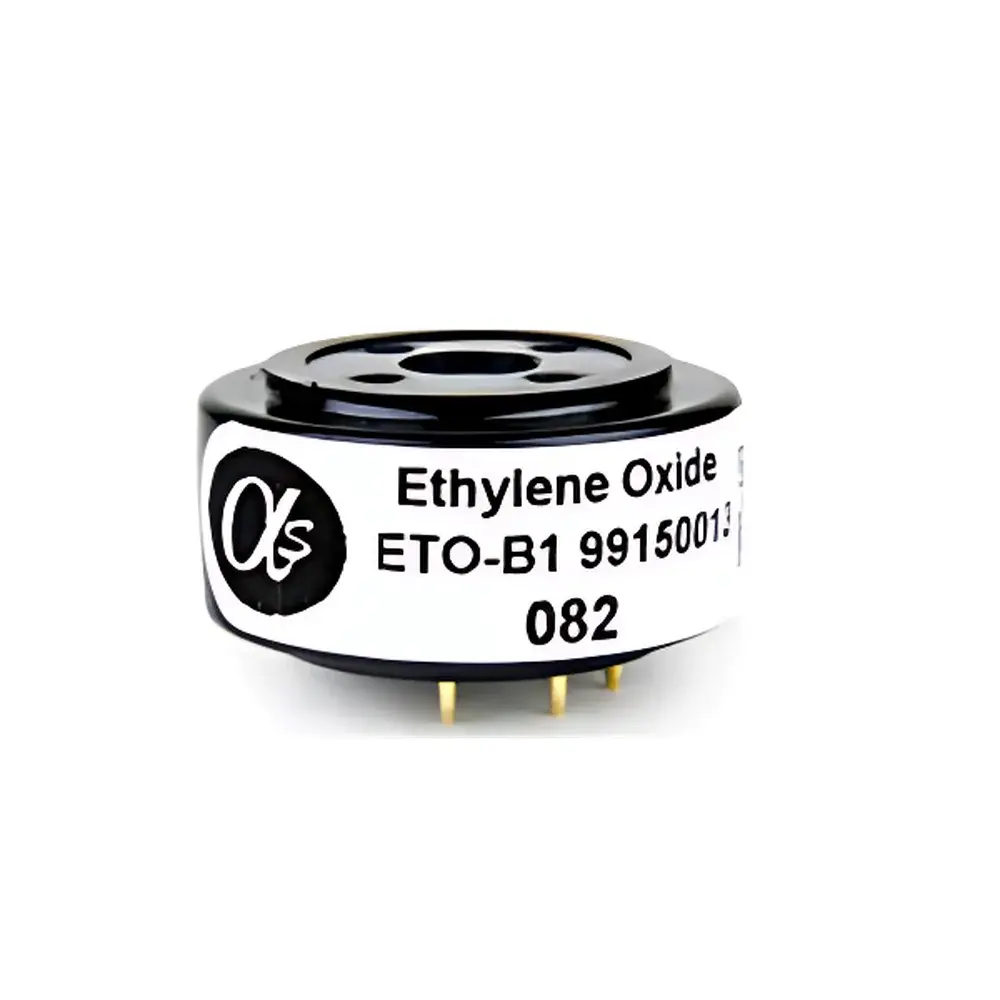
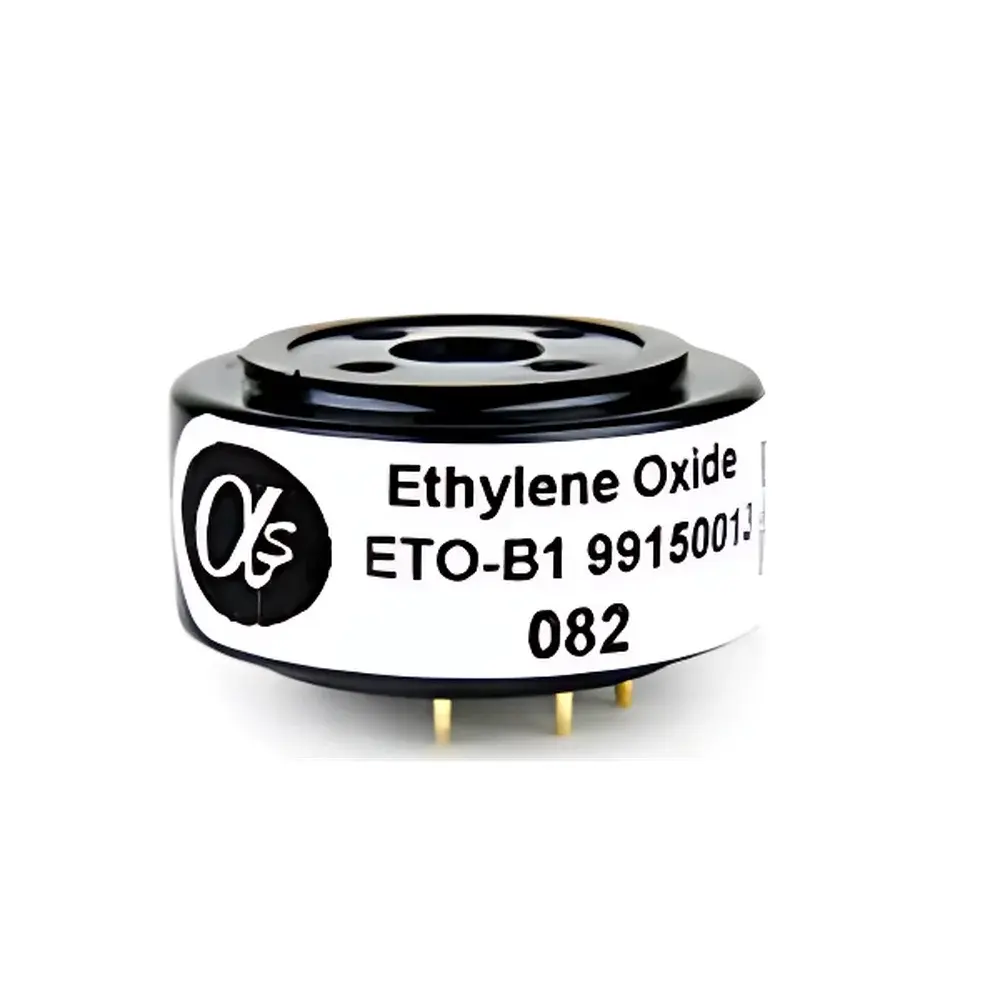
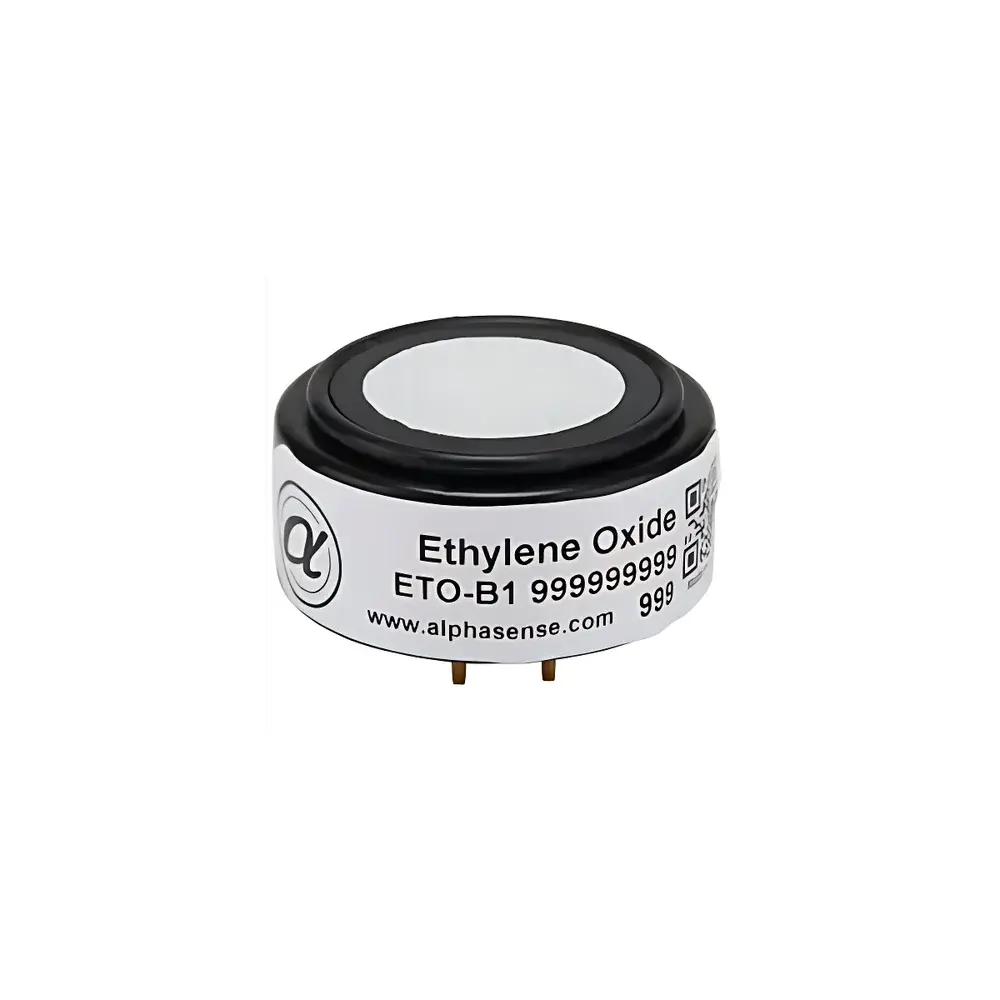
Alphasense ETO-B1 Electrochemical Ethylene Oxide (ETO) Gas Sensor
| Brand | Alphasense |
|---|---|
| Origin | United Kingdom |
| Model | ETO-B1 |
| Measurement Range | 0–100 ppm |
| Sensitivity | 2000–3400 nA/ppm |
| Response Time (t90) | <200 s |
| Linear Range | 0–40 ppm |
| Linearity Error | ±5–10 ppm |
| Overload Capacity | 500 ppm |
| Resolution | <0.1 ppm |
| Dimensions | Ø32.3 × 16.5 mm |
| Operating Temperature | −30 to +50 °C |
| Operating Humidity | 15–90 %RH (non-condensing) |
| Load Resistance | 10–33 Ω |
| Expected Service Life | 24 months |
| Storage Shelf Life | 6 months |
Overview
The Alphasense ETO-B1 is a high-stability, diffusion-type electrochemical gas sensor engineered specifically for the selective detection of ethylene oxide (C2H4O) in ambient air and industrial process environments. Based on a three-electrode amperometric cell architecture, the sensor operates via controlled oxidation of ETO at the working electrode, generating a current proportional to gas concentration. This principle ensures robust performance under variable environmental conditions while maintaining low cross-sensitivity to common interferents such as ethanol, acetaldehyde, and carbon monoxide—critical for applications in sterilization validation, occupational health monitoring, and cleanroom environmental control. The ETO-B1 complies with the fundamental design requirements outlined in IEC 60079-29-1 for gas detection systems and is intended for integration into fixed or portable instrumentation platforms certified to ATEX, UL, or IECEx standards.
Key Features
- Optimized electrochemical cell geometry for consistent diffusion-limited response across the full 0–100 ppm measurement range
- High intrinsic sensitivity (2000–3400 nA/ppm) enabling reliable detection at sub-ppm levels when paired with low-noise signal conditioning circuitry
- Fast t90 response time (<200 seconds), supporting real-time leak detection and chamber purge verification workflows
- Linear output over 0–40 ppm with typical linearity error ≤±8 ppm (as defined per ISO 12032:2019 for electrochemical gas sensors)
- Robust mechanical construction using PTFE hydrophobic membrane and sintered stainless steel filter, rated IP67 for particulate and moisture resistance
- Stable baseline and low zero drift (<20 nA/month) under continuous operation, reducing calibration frequency in GLP-compliant monitoring systems
- Wide operational envelope: functional from −30 °C to +50 °C and 15–90% RH (non-condensing), validated per EN 50104:2018 Annex B environmental testing protocols
Sample Compatibility & Compliance
The ETO-B1 is designed for direct sampling of ambient air or diluted process streams without pre-conditioning. It exhibits minimal interference from CO (≤1.5% signal equivalent), H2S (≤0.8%), and NO2 (≤2.2%) at concentrations up to 10× their respective TLVs—making it suitable for use in multi-gas analyzers deployed in hospital sterilization facilities and pharmaceutical manufacturing suites. The sensor meets the material and traceability requirements of ISO 9001:2015 and is manufactured under Alphasense’s ISO 13485-certified quality management system. While the sensor itself is not CE-marked as a standalone device, it conforms to the essential health and safety requirements referenced in Directive 2014/30/EU (EMC) and 2014/35/EU (LVD) when integrated into compliant host instrumentation.
Software & Data Management
When interfaced with Alphasense’s standard analog output modules (e.g., B4C or B4C-LCD), the ETO-B1 supports 4–20 mA or 0–5 V linear output with built-in temperature compensation. For digital integration, the sensor is compatible with the company’s ASC (Alphasense Sensor Communication) protocol over UART, enabling real-time diagnostics including end-of-life estimation, electrolyte depletion alerts, and internal temperature logging. Host firmware implementing this protocol can be configured to generate audit trails compliant with FDA 21 CFR Part 11 when deployed in regulated environments. Raw current output allows integration with third-party DAQ systems supporting IEEE 1451.2 TEDS templates for automatic sensor identification and calibration coefficient loading.
Applications
- Validation and routine monitoring of ethylene oxide sterilization chambers (ISO 11135-1:2014)
- Occupational exposure assessment in healthcare and medical device manufacturing (OSHA PEL = 1 ppm TWA; NIOSH REL = 0.1 ppm STEL)
- Environmental monitoring in pharmaceutical cleanrooms and isolators (EU GMP Annex 1, §8.42)
- Leak detection in ETO storage and distribution infrastructure (NFPA 56E compliance support)
- Integration into portable personal monitors for field technicians performing sterilization cycle verification
- Research-grade quantification in atmospheric chemistry studies involving volatile organic compound (VOC) speciation
FAQ
What is the recommended calibration interval for the ETO-B1 sensor?
Calibration should be performed before first use and at least every 6 months thereafter; more frequent calibration (e.g., quarterly) is advised in high-humidity or high-concentration exposure environments.
Can the ETO-B1 be exposed to condensing humidity?
No—operation outside the specified 15–90% RH non-condensing range may cause electrolyte dilution or membrane saturation, leading to irreversible signal drift.
Is the ETO-B1 compatible with catalytic bead or PID-based multi-gas instruments?
It is not electrically or mechanically compatible with pellistor or photoionization detector modules; integration requires dedicated electrochemical signal conditioning hardware.
Does the sensor require a warm-up period prior to stable operation?
Yes—a minimum 24-hour stabilization period at operating temperature is required after storage or transportation to achieve specified accuracy and repeatability.
How is sensor lifetime defined, and what factors accelerate degradation?
Lifetime is defined as the period during which zero current remains within ±100 nA and sensitivity retains ≥80% of initial value; exposure to >500 ppm ETO, temperatures >50 °C, or continuous operation above 90% RH will reduce service life.