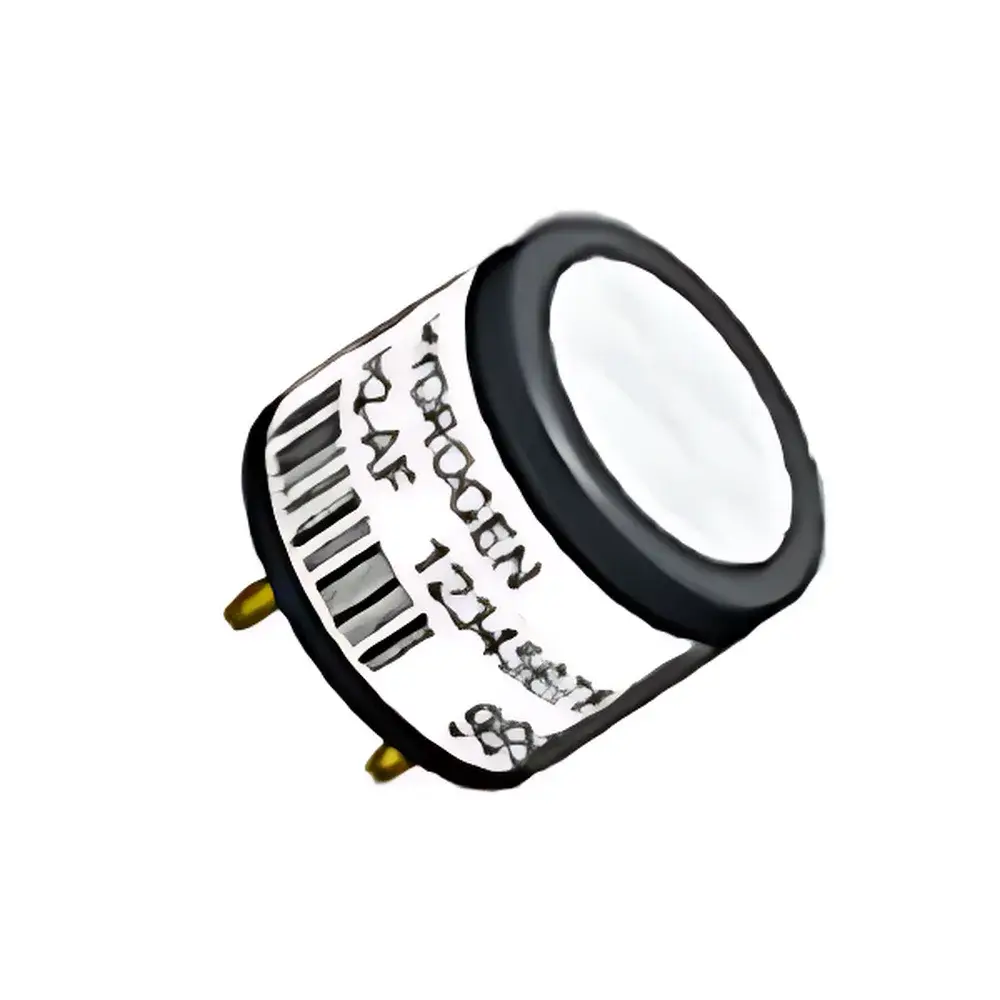
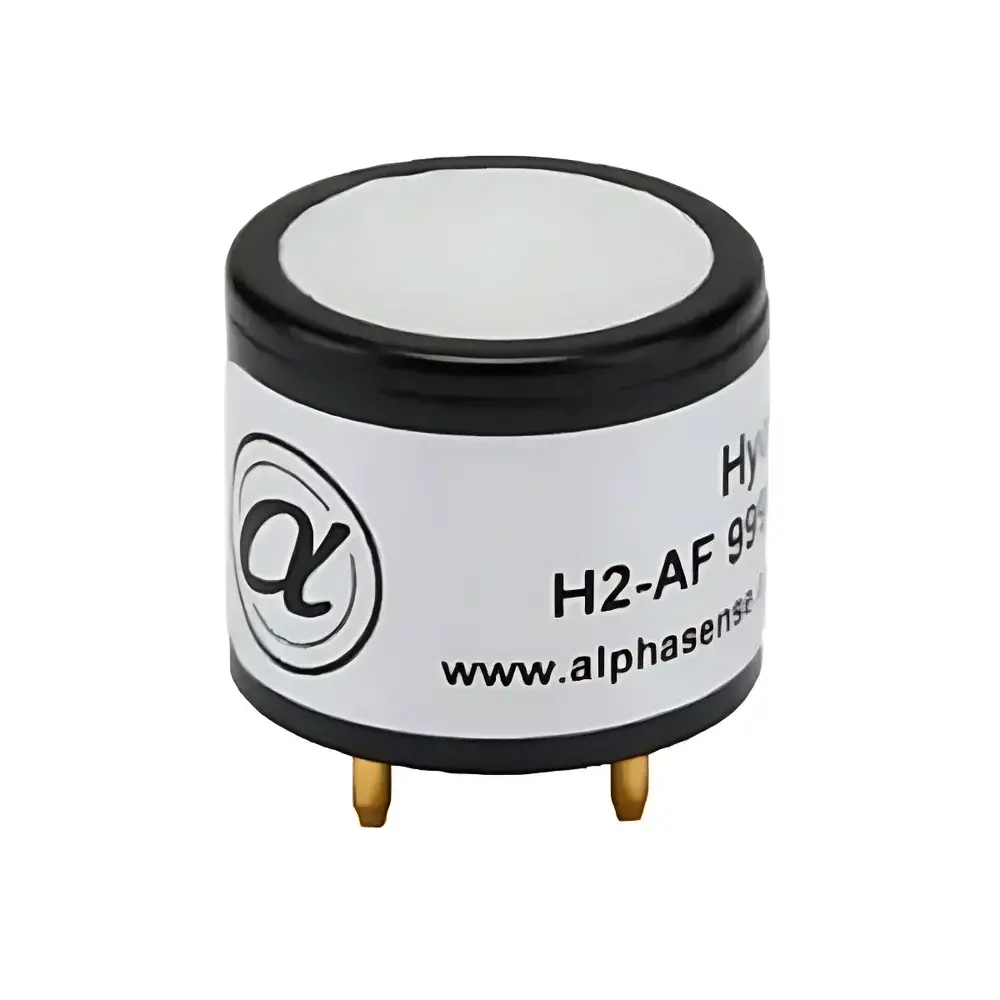
Alphasense H2-AF Electrochemical Hydrogen Gas Sensor
| Brand | Alphasense (UK) |
|---|---|
| Origin | United Kingdom |
| Model | H2-AF |
| Sensitivity | 10–25 nA/ppm |
| Overload Limit | 5000 ppm |
| Response Time (t₉₀) | <100 s |
| Detection Range | 0–2000 ppm H₂ |
| Dimensions | Ø20.2 × 16.5 mm |
| Sensor Type | Three-Electrode Electrochemical |
| Operating Temperature | −20 °C to +50 °C |
| Operating Humidity | 15–90 % RH (non-condensing) |
| Expected Lifetime | ≥24 months (in air) |
| Zero Current | <±5 nA |
| Baseline Stability | <2 nA/week |
Overview
The Alphasense H2-AF is a precision-engineered, three-electrode electrochemical sensor designed for reliable, low-power detection of hydrogen gas (H₂) in ambient air. Based on amperometric transduction, the sensor operates via controlled oxidation of H₂ at the working electrode in an acidic electrolyte environment, generating a linear current output proportional to gas concentration. Its robust cell architecture—featuring a hydrophobic PTFE diffusion barrier, gold-plated counter electrode, and acid-stable reference system—ensures stable baseline performance and minimal cross-sensitivity to common interferents such as CO, NO₂, and ethanol. The H2-AF is optimized for integration into portable safety monitors, fixed-gas detection systems, and industrial hydrogen leak detection platforms where long-term stability, low power consumption (<100 µW), and rapid field deployment are critical design requirements.
Key Features
- Linear amperometric output (10–25 nA/ppm) traceable to NIST-calibrated standards
- Fast t₉₀ response time under 100 seconds across full 0–2000 ppm range
- High selectivity against CO, CH₄, H₂S, and VOCs—validated per IEC 60079-29-1 test protocols
- Compact cylindrical form factor (Ø20.2 × 16.5 mm) compatible with standard 12-pin gas sensor sockets
- Integrated temperature compensation circuitry enabling operation from −20 °C to +50 °C
- Factory-calibrated with individual serial-numbered calibration certificate (H₂ in synthetic air, 23 °C, 50 % RH)
- No external power supply required beyond bias voltage (typically +300 mV vs. reference)
Sample Compatibility & Compliance
The H2-AF sensor is intended for use in ambient air sampling applications and is not rated for direct exposure to process streams, high-pressure environments, or corrosive atmospheres containing Cl₂, SO₂, or NH₃ above 1 ppm. It complies with RoHS Directive 2011/65/EU and REACH Regulation (EC) No. 1907/2006. For functional safety integration, the sensor meets the hardware fault tolerance requirements of SIL 2 (IEC 61508) when deployed within certified transmitter architectures. It supports compliance with OSHA 1910.120 (HAZWOPER), ATEX Category II 2G (Ex d ib IIC T4 Gb), and IECEx Zone 1 certification when embedded in appropriately rated host devices. Calibration intervals should follow ISO 14644-3 guidance and be verified quarterly under GLP conditions where used in regulated QC/QA workflows.
Software & Data Management
While the H2-AF is an analog-output sensor requiring external signal conditioning, it is fully supported by Alphasense’s open-interface ecosystem—including the B4 and B5 evaluation boards, which provide programmable gain, offset correction, and digital I²C output via onboard ADC. Raw sensor data integrates seamlessly with industry-standard SCADA platforms (e.g., Ignition, Siemens Desigo, Honeywell Experion) through Modbus RTU or 4–20 mA loop configurations. Firmware updates and calibration logging are managed via Alphasense SensorLink™ software (v4.2+), which maintains audit-trail records compliant with FDA 21 CFR Part 11 for electronic signatures and data integrity in pharmaceutical and energy-sector deployments.
Applications
- Hydrogen fueling station safety interlocks and perimeter monitoring
- In-situ leak detection in PEM electrolyzer and fuel cell stack enclosures
- Portable H₂ monitors for laboratory fume hood verification and battery R&D facilities
- Fixed-system integration in semiconductor cleanroom HVAC for ultra-high-purity gas line integrity checks
- Hydrogen blending ratio verification in natural gas distribution networks (up to 20 % vol)
- Academic research on catalytic H₂ generation, metal hydride storage, and electrochemical hydrogen evolution reaction (HER) kinetics
FAQ
What is the recommended operating humidity range for the H2-AF?
The sensor is specified for continuous operation at 15–90 % relative humidity (non-condensing); prolonged exposure below 15 % RH may accelerate electrolyte drying and reduce sensitivity.
Can the H2-AF be exposed to hydrogen sulfide (H₂S)?
No—H₂S concentrations exceeding 0.5 ppm cause irreversible poisoning of the platinum working electrode; use of an H₂S scrubber filter is mandatory in biogas or refinery environments.
Is factory calibration sufficient for regulatory compliance?
Factory calibration provides initial traceability, but end-user site calibration using certified H₂-in-air standards (e.g., NIST SRM 2629) is required prior to commissioning and at intervals defined by ISO 6141 and local safety authority mandates.
Does the H2-AF require a zero-gas purge for baseline reset?
No—its three-electrode design maintains inherent zero stability; however, periodic zero-checks in certified zero air are recommended every 30 days in critical applications.
How does temperature affect measurement accuracy?
The built-in thermistor enables real-time compensation; uncompensated drift is ≤0.15 % FS/°C outside the compensated range, validated per ISO 12039 Annex B.