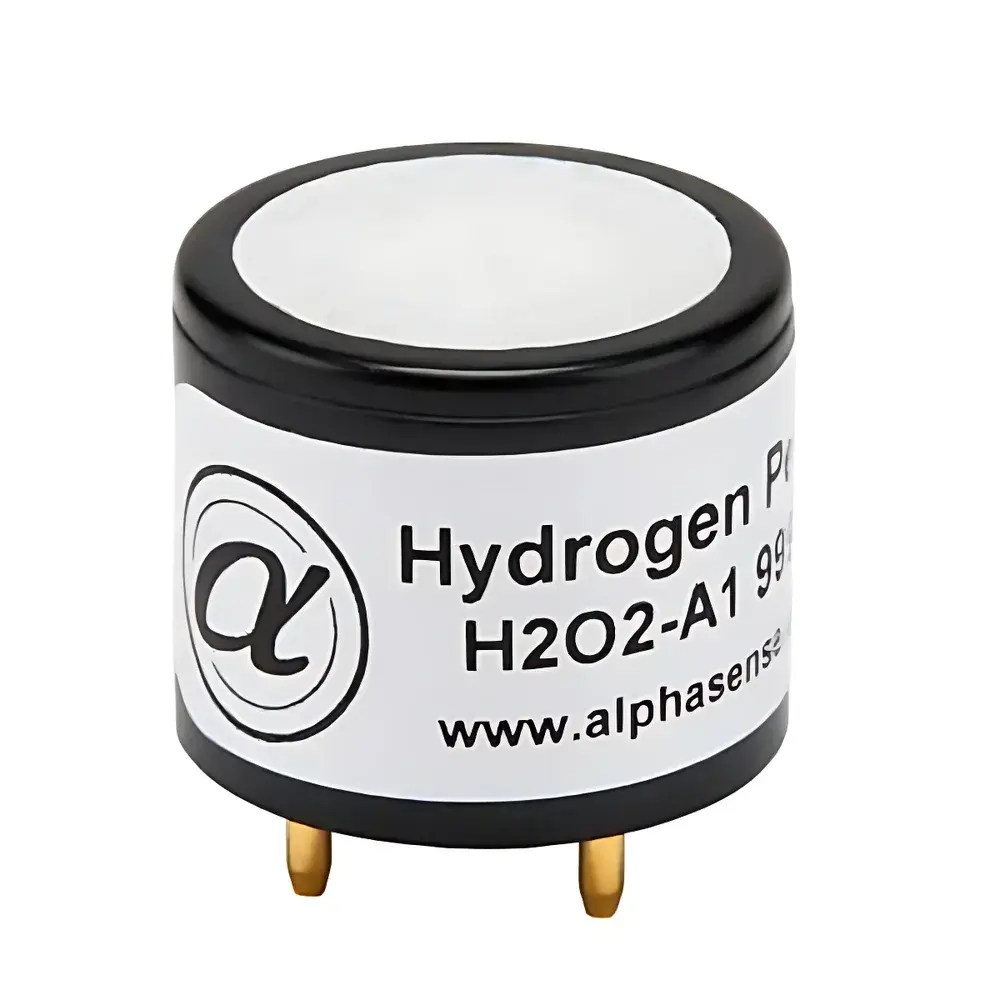
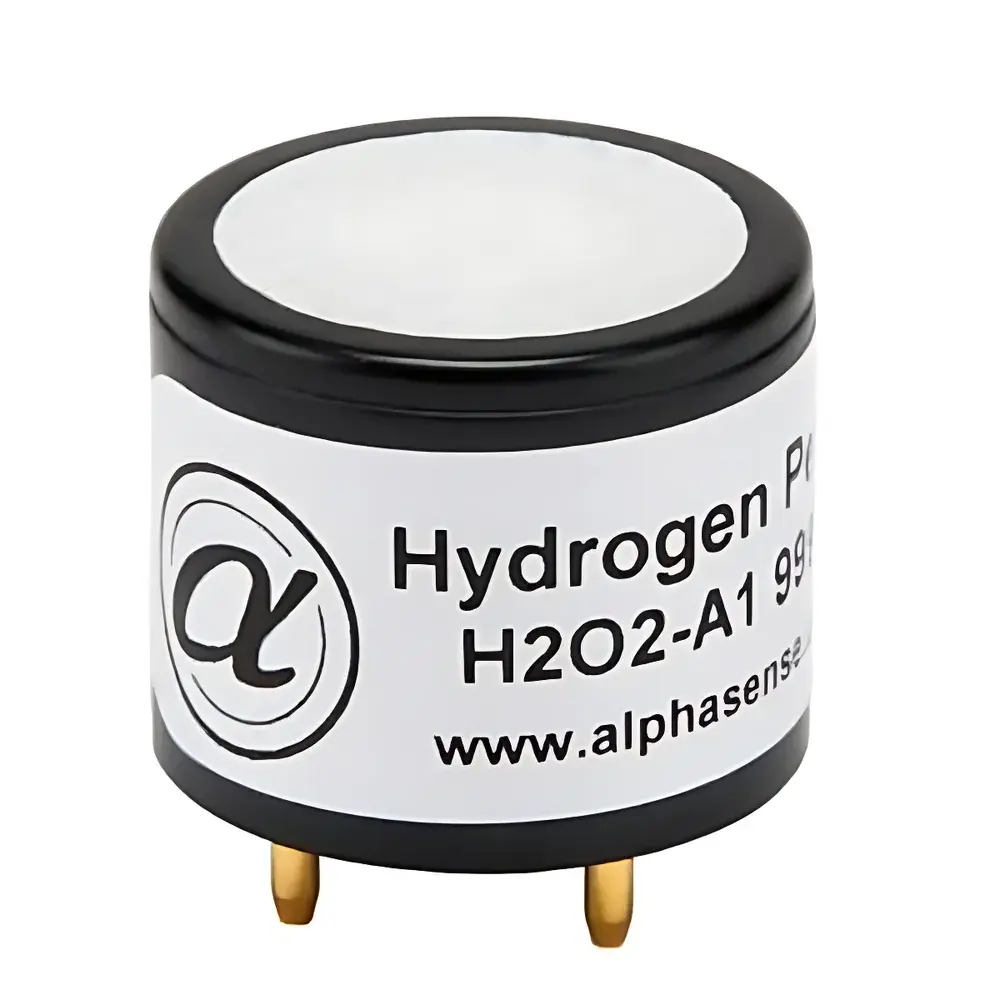
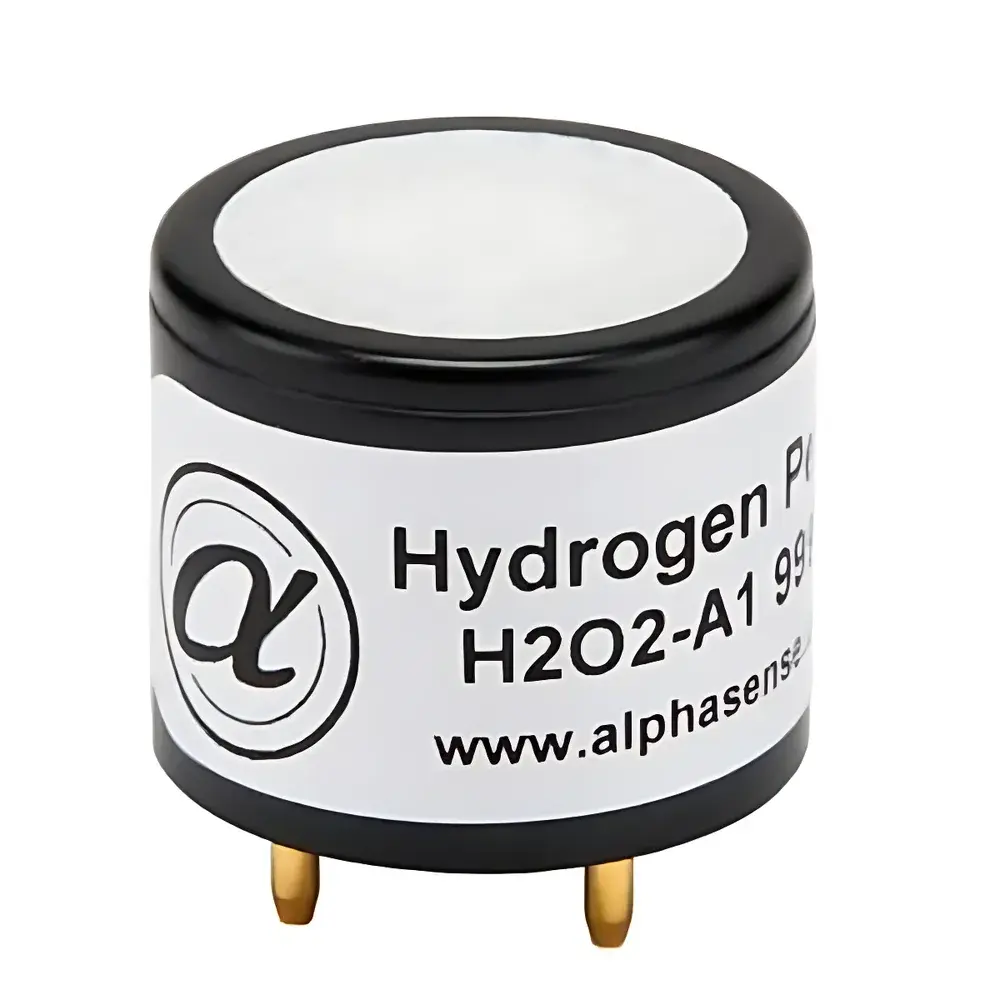
Alphasense H202-B1 Electrochemical Hydrogen Peroxide Gas Sensor
| Brand | Alphasense |
|---|---|
| Origin | United Kingdom |
| Model | H202-B1 |
| Sensor Type | Electrochemical |
| Target Gas | Hydrogen Peroxide (H₂O₂) vapor |
| Operating Principle | Amperometric detection |
| Output Signal | Linear current output (nA/ppm) |
| Typical Range | 0–10 ppm (configurable) |
| Resolution | <0.01 ppm |
| Response Time (T90) | <60 s |
| Operating Temperature | −20 °C to +50 °C |
| Humidity Range | 15–90 % RH (non-condensing) |
| Expected Lifetime | ≥24 months (in ambient air) |
| Compliance | CE marked, RoHS compliant, ATEX/IECEx optional variants available |
Overview
The Alphasense H202-B1 is a precision electrochemical gas sensor engineered for the selective and stable detection of hydrogen peroxide (H₂O₂) vapor in ambient air. Designed for integration into fixed or portable gas monitoring systems—including analyzers, alarm panels, and data loggers—the H202-B1 operates on amperometric principle: H₂O₂ diffuses through a hydrophobic membrane into an aqueous electrolyte, where it undergoes oxidation at the working electrode, generating a current proportional to gas concentration. This measurement architecture delivers high specificity against common interferents (e.g., Cl₂, NO₂, O₃), low cross-sensitivity to humidity fluctuations, and long-term baseline stability—critical attributes for applications requiring regulatory-grade reliability in sterilization validation, cleanroom environmental monitoring, and pharmaceutical manufacturing process control.
Key Features
- High-selectivity electrochemical transduction optimized for gaseous H₂O₂ (not liquid-phase or aerosol)
- Linear current output (typically 100–200 nA per ppm) compatible with standard 3-electrode signal conditioning circuits
- Integrated temperature compensation circuitry enabling consistent performance across −20 °C to +50 °C
- Robust PTFE membrane barrier minimizing particulate fouling and electrolyte evaporation
- Factory-calibrated with traceable NIST-traceable reference standards; zero and span verification supported via certified gas challenges
- Compliant with IEC 60079-29-1 for flammable atmosphere safety (ATEX/IECEx variants available upon request)
Sample Compatibility & Compliance
The H202-B1 is intended for continuous monitoring of H₂O₂ vapor concentrations in non-aggressive, non-condensing environments typical of vaporized hydrogen peroxide (VHP®) decontamination cycles, isolator atmospheres, and ISO Class 5–8 cleanrooms. It is not suitable for direct exposure to liquid H₂O₂, high-concentration (>50 ppm) saturated vapor, or corrosive acid mists. The sensor meets RoHS Directive 2011/65/EU and carries CE marking under the Electromagnetic Compatibility (EMC) Directive 2014/30/EU. When integrated into validated systems, it supports compliance with FDA 21 CFR Part 11 (via audit-trail-capable host instrumentation), ISO 14644-3 for cleanroom classification, and EU GMP Annex 1 requirements for environmental monitoring of sterile manufacturing zones.
Software & Data Management
As a component-level sensor, the H202-B1 does not include embedded firmware or user-facing software. Its analog output requires connection to third-party instrumentation—such as Alphasense’s B4 series gas analyzers, Crowcon T4 or GasBadge Pro controllers, or custom OEM data acquisition modules—with configurable sampling intervals (1–60 s), digital filtering, and linearization algorithms. Host systems supporting H202-B1 integration typically provide real-time concentration display, time-stamped logging (CSV/Excel export), alarm thresholds (pre-set or user-defined), and calibration event tracking. For regulated environments, validated host platforms may implement electronic signatures, change control logs, and 21 CFR Part 11-compliant audit trails—ensuring full traceability from raw sensor signal to final report.
Applications
- Vaporized hydrogen peroxide (VHP®) cycle validation and real-time endpoint determination in isolators and transfer hatches
- Environmental monitoring of H₂O₂ residual levels post-decontamination in pharmaceutical aseptic processing suites
- Occupational exposure assessment in hospitals, laboratories, and biotech facilities using low-temperature sterilization systems
- OEM integration into portable leak detectors, handheld survey meters, and fixed-area monitors for cleanroom HVAC interlocks
- Research applications involving oxidative stress modeling, plasma medicine, and advanced oxidation process (AOP) development
FAQ
What is the recommended calibration frequency for the H202-B1?
Initial calibration is performed at the factory. Field calibration is advised every 3–6 months depending on exposure history and criticality of application; more frequent verification (e.g., daily bump tests) is required in GMP-regulated settings.
Can the H202-B1 be used in high-humidity environments?
Yes—it is rated for operation up to 90% RH non-condensing. However, prolonged exposure above 85% RH may slightly elevate zero drift; use of desiccant filters or heated sample lines is recommended for long-term stability.
Is the sensor compatible with ozone (O₃) or chlorine dioxide (ClO₂) monitoring systems?
No. The H202-B1 is chemically tuned for H₂O₂ only. Cross-sensitivity to O₃ and ClO₂ is intentionally minimized; separate dedicated sensors (e.g., O3-A4, ClO2-A4) must be used for those gases.
Does Alphasense provide technical support for system integration?
Yes—Alphasense offers detailed application notes, circuit schematics for 3-electrode interfacing, and engineering consultation for OEM integrators. Full datasheets, calibration certificates, and safety data sheets (SDS) are accessible via registered account on alphasense.com.