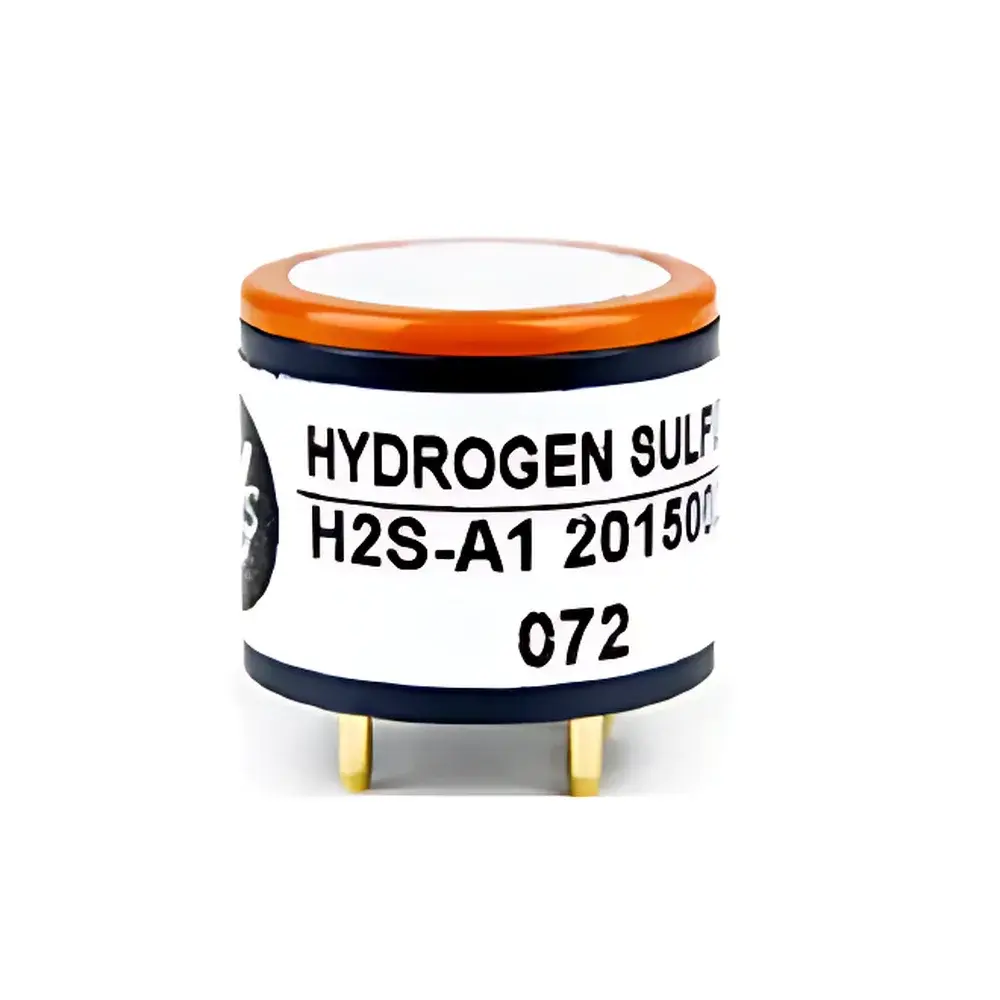
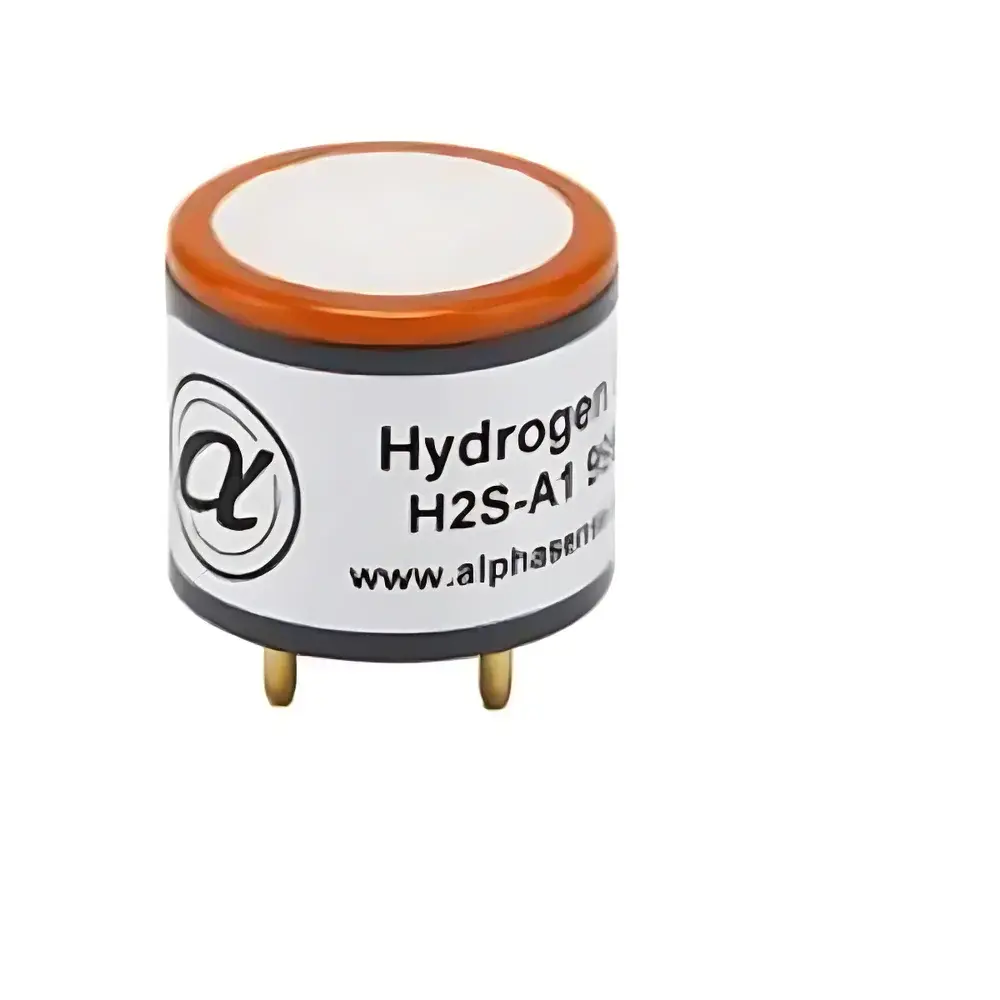
Alphasense H2S-A1 Electrochemical Hydrogen Sulfide Gas Sensor
| Brand | Alphasense (UK) |
|---|---|
| Origin | United Kingdom |
| Model | H2S-A1 |
| Measurement Range | 0–100 ppm |
| Sensitivity | 550–900 nA/ppm |
| Response Time (t₉₀) | <25 s |
| Linear Range | 0–20 ppm |
| Full-Scale Linearity Error | ±4 ppm |
| Overload Capacity | 500 ppm |
| Resolution | <0.05 ppm |
| Dimensions | 20.2 × 16.5 mm |
| Operating Temperature | −30 to +50 °C |
| Operating Humidity | 15–90 %RH (non-condensing) |
| Load Resistance | 10–47 Ω |
| Expected Service Life | 24 months |
| Storage Shelf Life | 6 months |
Overview
The Alphasense H2S-A1 is a high-performance, diffusion-type electrochemical gas sensor engineered for the selective and stable detection of hydrogen sulfide (H₂S) in ambient air. Based on a three-electrode amperometric cell architecture, it operates via controlled electrochemical oxidation of H₂S at the working electrode, generating a current proportional to gas concentration. The sensor incorporates a proprietary acid electrolyte and optimized catalyst layer to ensure low baseline drift, high signal reproducibility, and resistance to common interferents including CO, SO₂, NO₂, and humidity fluctuations within its specified operating range. Designed for integration into fixed-gas monitoring systems, portable safety instruments, and environmental emission analyzers, the H2S-A1 meets the fundamental performance criteria required for occupational health compliance (e.g., OSHA PEL, ACGIH TLV) and industrial process safety applications.
Key Features
- Stable three-electrode electrochemical design with gold working electrode and platinum counter electrode for enhanced longevity and signal fidelity
- No external filter membrane required — integrated hydrophobic barrier minimizes particulate ingress while maintaining rapid gas diffusion kinetics
- Calibration-ready output: linear current response (nA) directly traceable to H₂S concentration across 0–20 ppm; full-scale operation up to 100 ppm
- Low-power operation compatible with battery-powered and low-voltage instrumentation platforms (typical operating current <100 µA)
- Robust mechanical construction: stainless-steel mesh housing and epoxy-sealed body rated for continuous exposure in harsh industrial environments
- Factory pre-calibrated with NIST-traceable H₂S reference gas; supports two-point calibration (zero and span) using standard gas cylinders or permeation tubes
Sample Compatibility & Compliance
The H2S-A1 is intended for use in clean, non-corrosive air matrices. It is not recommended for direct exposure to high concentrations of reducing vapors (e.g., mercaptans), strong oxidizers (e.g., chlorine), or condensing moisture. When deployed in certified gas detection systems, the sensor contributes to compliance with IEC 60079-29-1 (explosive atmospheres), EN 45544-1/-2 (workplace gas detection), and ISO 16000-25 (indoor air quality monitoring). Its 24-month service life and defined storage shelf life (6 months at 20 °C, sealed in original packaging) align with GLP-aligned maintenance protocols for calibrated measurement devices.
Software & Data Management
While the H2S-A1 itself is an analog transducer (current output), it is routinely interfaced with microcontroller-based signal conditioning circuits that implement temperature compensation (via onboard thermistor), digital filtering, and linearization algorithms. When embedded in OEM analyzers compliant with FDA 21 CFR Part 11 or EU Annex 11, the host system typically provides audit-trail functionality, calibration history logging, and electronic signature support. Alphasense supplies comprehensive technical documentation—including cross-sensitivity tables, temperature compensation coefficients, and aging characterization data—to facilitate traceable firmware development and validation.
Applications
- Fixed-site H₂S monitoring in oil & gas production facilities, refineries, and biogas plants
- Personal portable gas detectors for confined-space entry and upstream field operations
- Indoor air quality (IAQ) monitoring in wastewater treatment headworks and sludge handling areas
- Environmental fence-line monitoring near landfills and agricultural digesters
- OEM integration into multi-gas analyzers for regulatory reporting under EPA Method 28 or EN 14181
FAQ
What is the recommended zero and span calibration frequency for the H2S-A1?
For critical safety applications, quarterly calibration is advised; for general environmental monitoring, semi-annual calibration is acceptable — always verified against documented drift thresholds per IEC 62040.
Can the H2S-A1 be used in high-humidity environments?
Yes, provided relative humidity remains below 90 %RH and condensation is avoided; prolonged exposure above 95 %RH may accelerate electrolyte depletion.
Does the sensor require a warm-up period before stable readings?
A 30-minute stabilization period after power-on is recommended to achieve thermal equilibrium and minimize initial offset drift.
Is the H2S-A1 compatible with common analog input modules (e.g., 0–5 V, 4–20 mA)?
Yes — when paired with a precision load resistor (e.g., 10 Ω) and op-amp transimpedance amplifier, the sensor’s current output can be converted to standard voltage or current signals without loss of resolution.
How does the H2S-A1 handle interference from carbon monoxide?
Cross-sensitivity to CO is less than 3 % of H₂S response at 100 ppm CO; negligible at typical workplace exposure levels (<50 ppm).