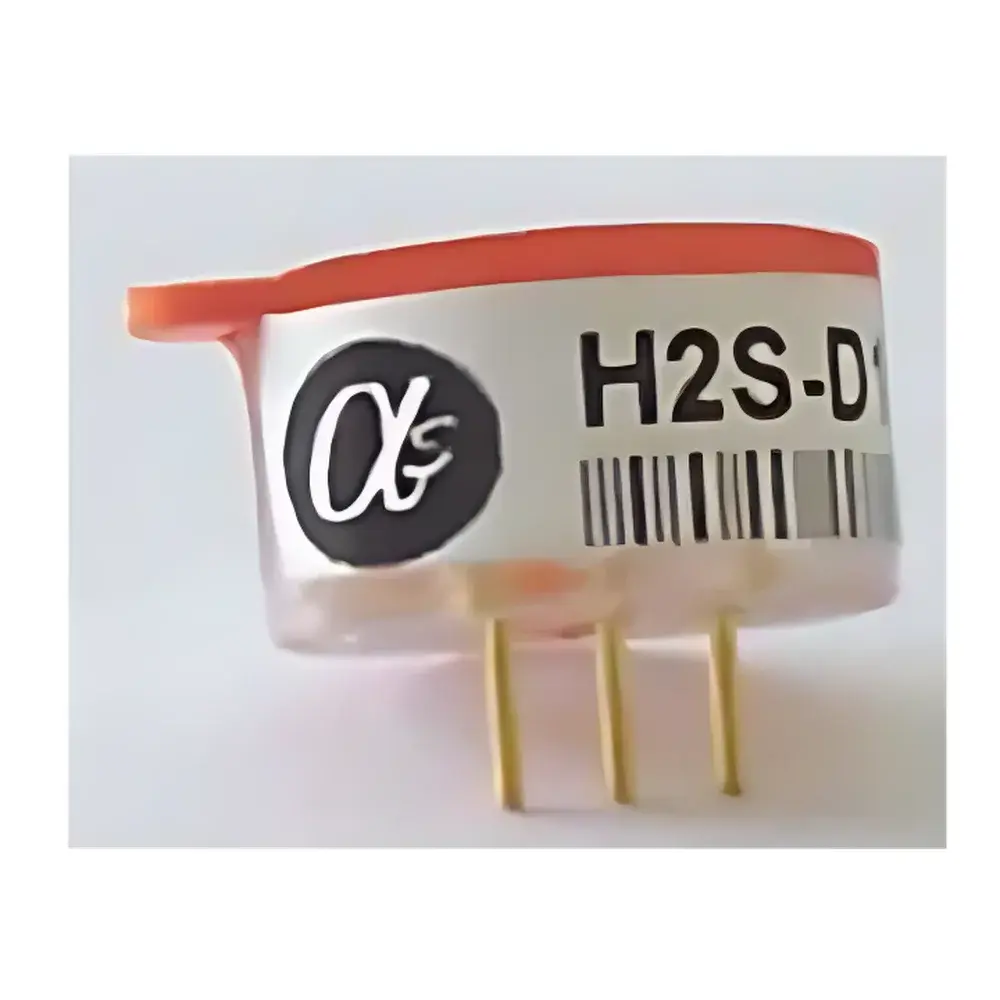
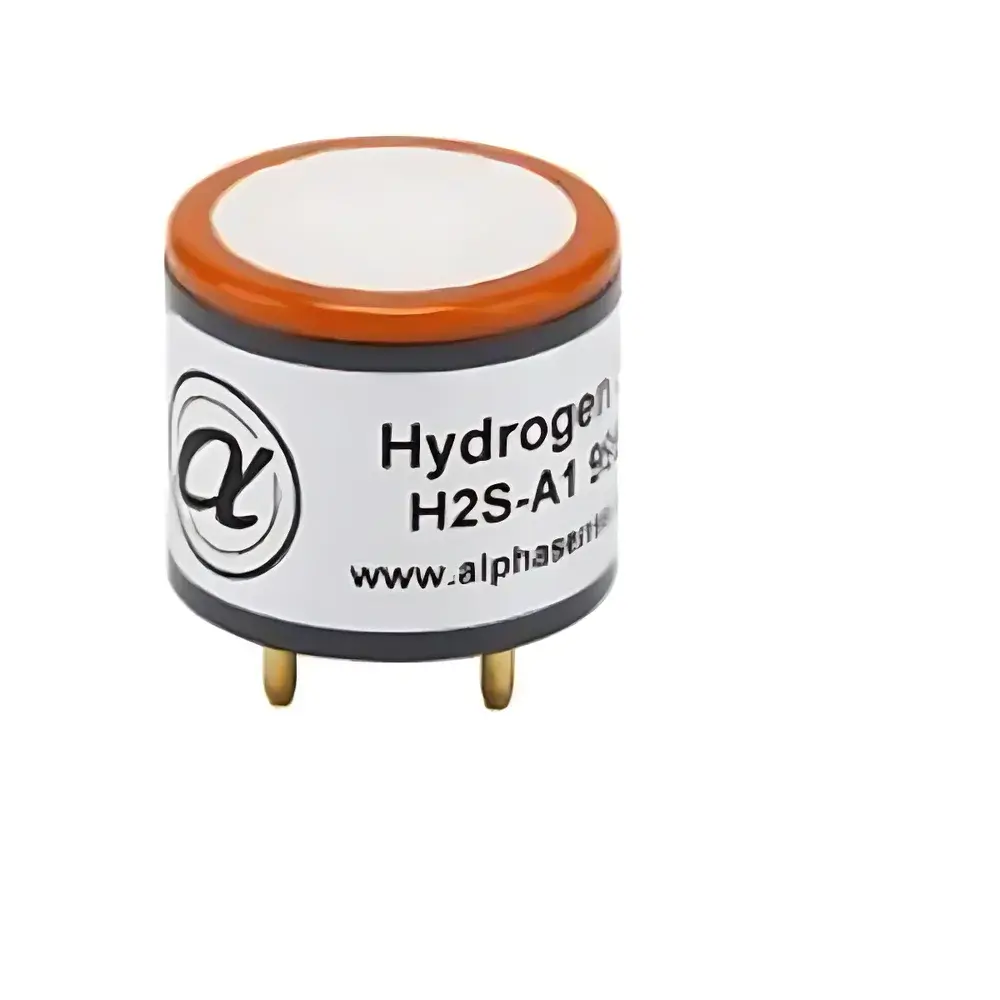
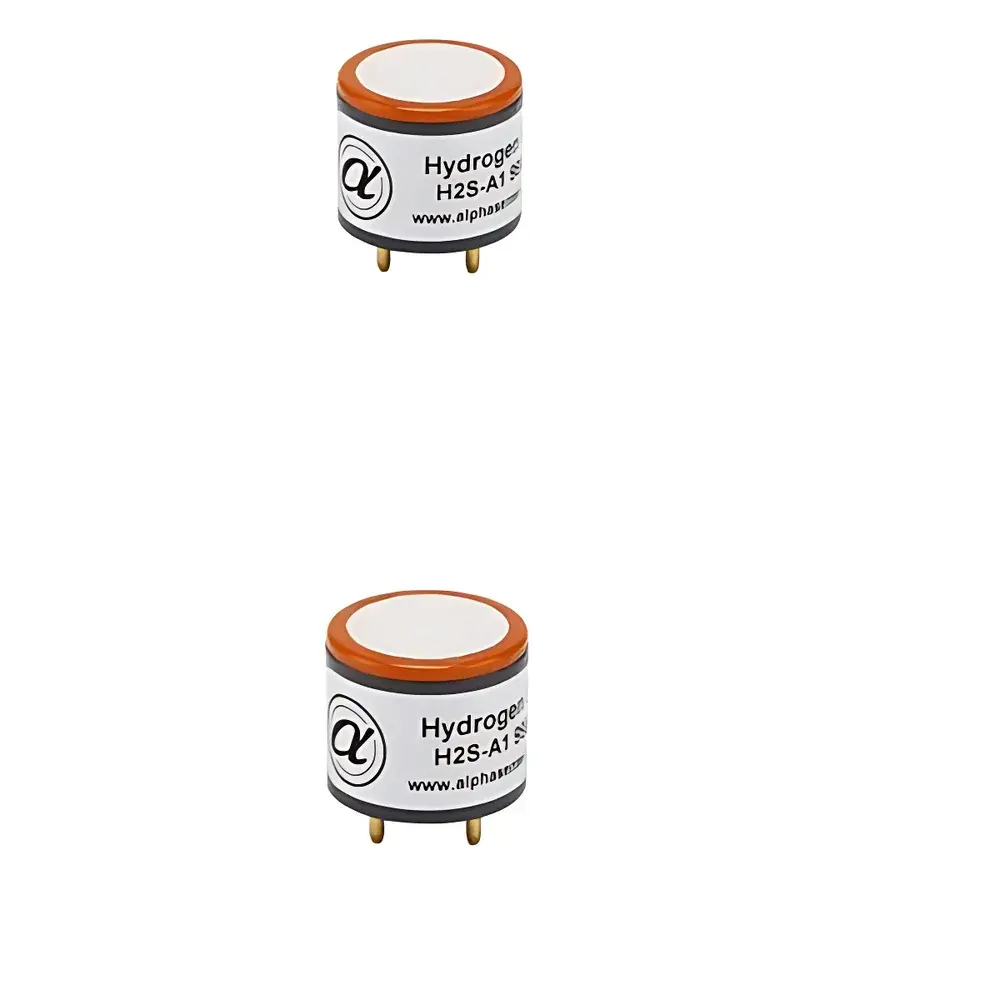
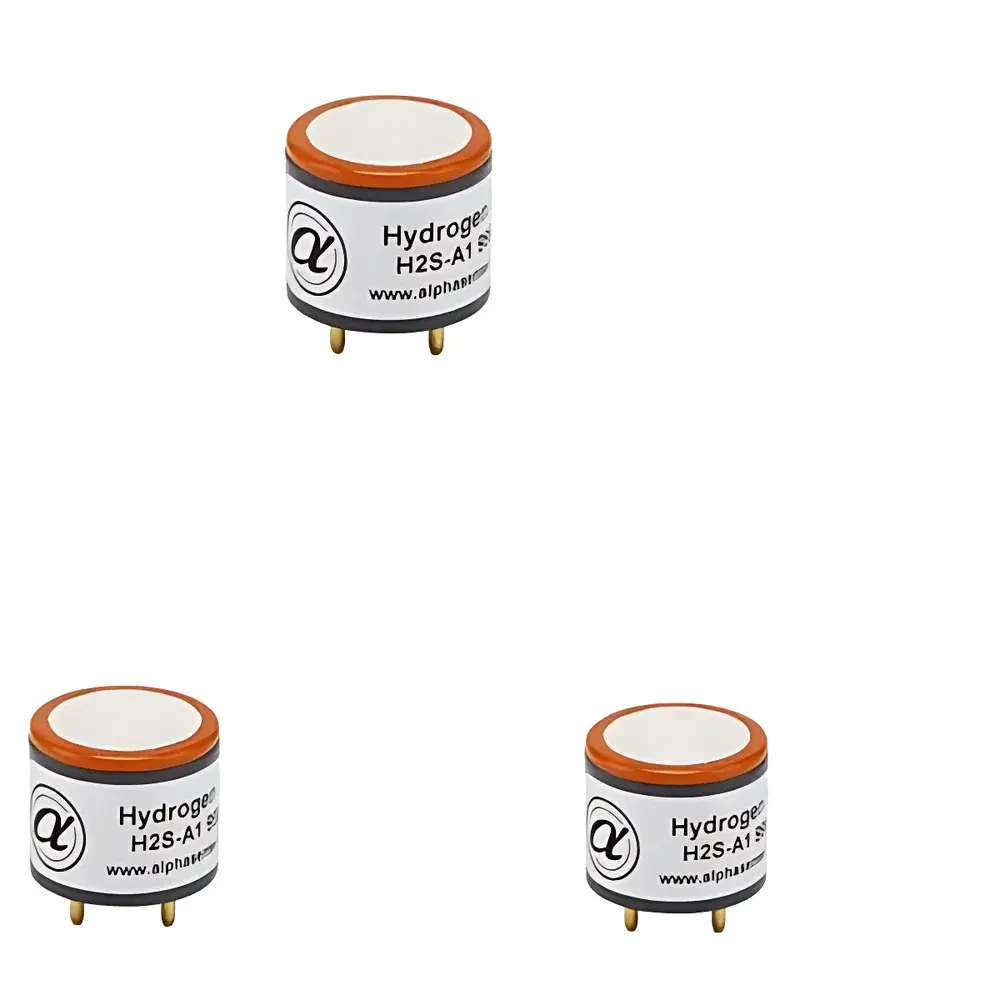
Alphasense H2S-D1 Miniature Electrochemical Hydrogen Sulfide Sensor
| Brand | Alphasense (UK) |
|---|---|
| Origin | United Kingdom |
| Model | H2S-D1 |
| Overload | 200 ppm |
| Response Time (t₉₀) | <20 s |
| Dimensions | Ø14.5 × 8.4 mm |
| Measurement Range | 0–100 ppm |
| Sensitivity | 110–160 nA/ppm |
| Expected Operational Life | 24 months |
| Output Type | Linear current output (nA) proportional to H₂S concentration |
Overview
The Alphasense H2S-D1 is a miniature, high-stability electrochemical sensor engineered for reliable detection of hydrogen sulfide (H₂S) in ambient air at parts-per-million (ppm) concentrations. Based on a three-electrode electrochemical cell architecture, the sensor operates via controlled oxidation of H₂S at the working electrode, generating a diffusion-limited current linearly proportional to gas concentration. Its compact cylindrical form factor (Ø14.5 × 8.4 mm) enables seamless integration into space-constrained portable monitors, fixed gas detection systems, and OEM instrumentation where low power consumption, rapid response, and long-term baseline stability are critical. Designed and manufactured in the UK under ISO 9001-certified processes, the H2S-D1 complies with IEC 60079-29-1 for performance classification of electrochemical gas sensors and meets key requirements for use in industrial hygiene, confined space entry, and environmental monitoring applications.
Key Features
- Miniaturized footprint optimized for high-density PCB mounting and ultra-portable device design
- Stable, linear current output (110–160 nA/ppm) with low temperature coefficient (<0.15 %/°C)
- Fast t₉₀ response time of less than 20 seconds across the full 0–100 ppm range
- Rated operational life of up to 24 months under standard environmental conditions (23 °C, 50 % RH, continuous exposure ≤10 ppm H₂S)
- Built-in integrated filter to suppress interference from common cross-sensitivities (e.g., CO, NO₂, SO₂, Cl₂) per Alphasense specification documents
- No internal potentiostat required — compatible with standard 3-electrode readout circuits using external biasing
- RoHS-compliant construction with lead-free solderable terminals
Sample Compatibility & Compliance
The H2S-D1 is intended for continuous or intermittent sampling of ambient air containing hydrogen sulfide at concentrations between 0 and 100 ppm. It is not designed for use in inert atmospheres, high-humidity environments (>95 % RH), or in the presence of silicones, halogenated hydrocarbons, or high concentrations of acidic gases (e.g., >5 ppm SO₂), which may accelerate electrolyte depletion or cause irreversible electrode poisoning. The sensor conforms to EN 45544-1:2019 for electrochemical toxic gas detectors and supports system-level compliance with OSHA PEL (10 ppm TWA), NIOSH REL (10 ppm ceiling), and ACGIH TLV (1 ppm TWA). When integrated into certified instruments, it contributes to adherence with IEC 61508 SIL 2 functional safety requirements when deployed with appropriate diagnostic firmware and redundant sensing architecture.
Software & Data Management
As a transducer-level component, the H2S-D1 does not include embedded firmware or digital interfaces. Its analog current output requires conditioning via external circuitry — typically a precision transimpedance amplifier followed by ADC conversion. Alphasense provides comprehensive calibration protocols, zero/span verification procedures, and temperature compensation coefficients in its official Technical Note TN-ALP-H2S-D1. For traceable calibration, users are advised to perform two-point calibration (zero air + certified 25 ppm H₂S standard) at operating temperature prior to field deployment. When integrated into data-logging platforms compliant with FDA 21 CFR Part 11, the sensor’s output supports audit-trail-capable calibration records, drift trending analysis, and predictive maintenance scheduling based on accumulated exposure hours and sensitivity decay metrics.
Applications
- Personal portable H₂S monitors for oil & gas field technicians, wastewater treatment operators, and refinery maintenance personnel
- OEM integration into multi-gas detection badges and fixed-area monitors for real-time workplace exposure assessment
- Environmental air quality stations measuring fugitive emissions near landfills, biogas facilities, and pulp & paper mills
- Research-grade instrumentation for laboratory studies on H₂S toxicity kinetics and catalytic scrubber efficiency validation
- Smart city infrastructure nodes supporting municipal odor management programs in sewer network monitoring
FAQ
What is the recommended operating temperature range for the H2S-D1?
The sensor is specified for continuous operation between −20 °C and +50 °C, with optimal performance between 15 °C and 35 °C.
Does the H2S-D1 require periodic recalibration?
Yes — Alphasense recommends functional verification every 30 days and full two-point calibration every 3–6 months depending on exposure history and regulatory requirements.
Can the H2S-D1 be used in oxygen-deficient environments?
No. Electrochemical sensors require ambient oxygen as the counter electrode reactant; operation below 10 % O₂ vol will result in signal loss and accelerated degradation.
Is the H2S-D1 compatible with printed circuit board reflow soldering?
Yes — it supports lead-free reflow profiles per IPC/JEDEC J-STD-020, with peak temperature ≤245 °C for ≤60 seconds.
How is long-term stability verified during instrument qualification?
Stability is assessed via 30-day baseline drift testing (±5 % max deviation) and sensitivity retention testing (≥90 % of initial value after 1,000 ppm·hr cumulative exposure).