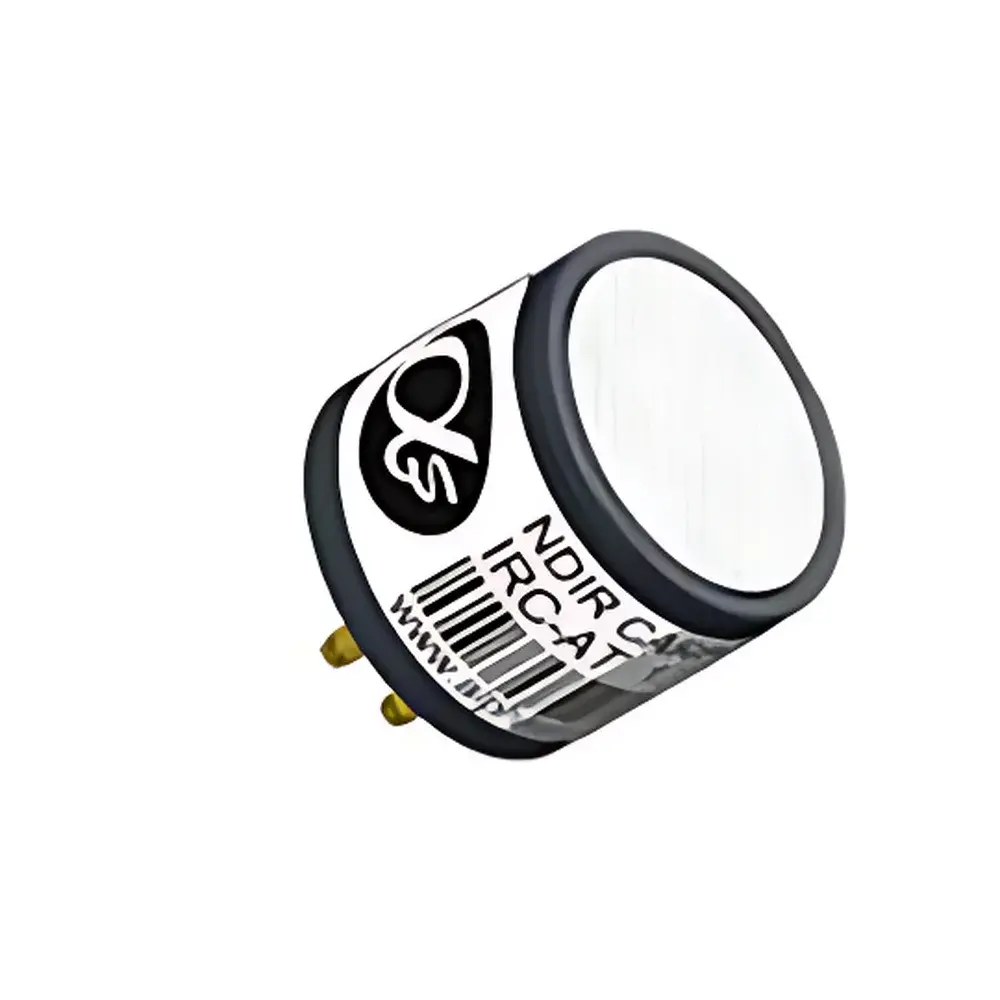
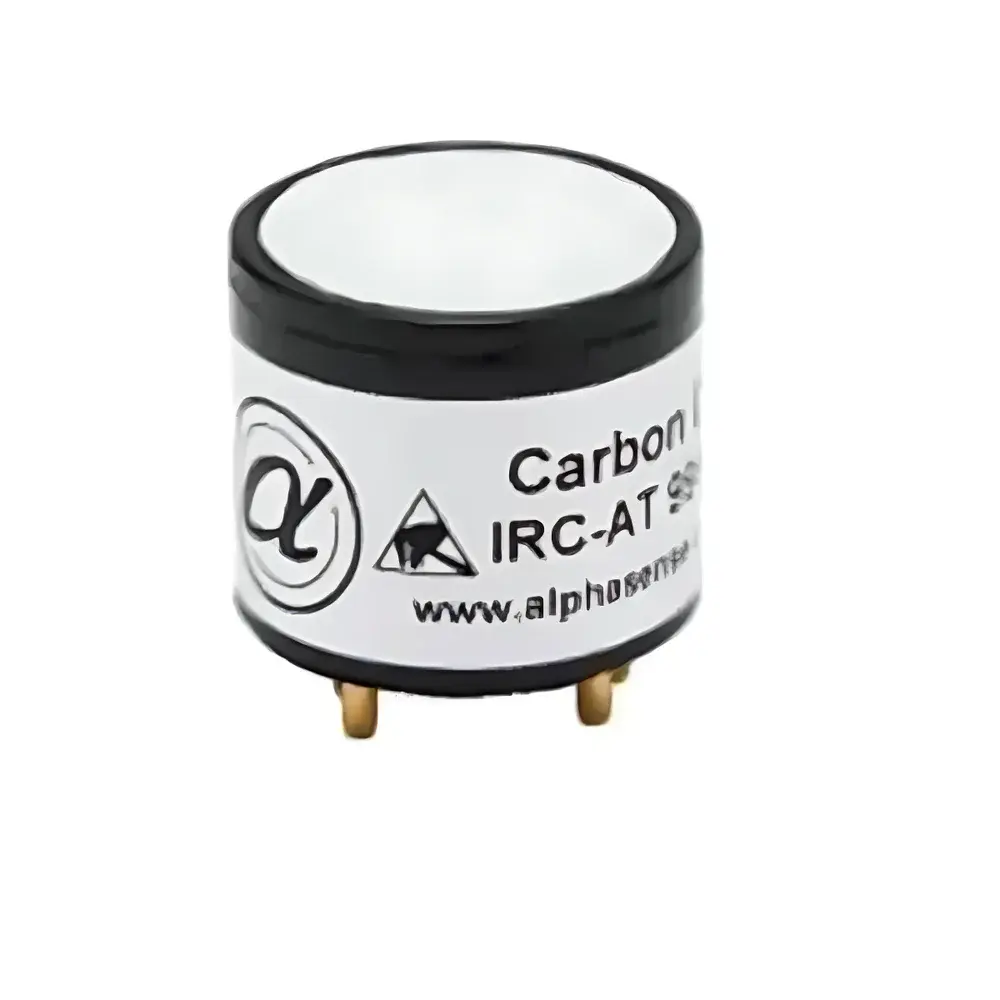
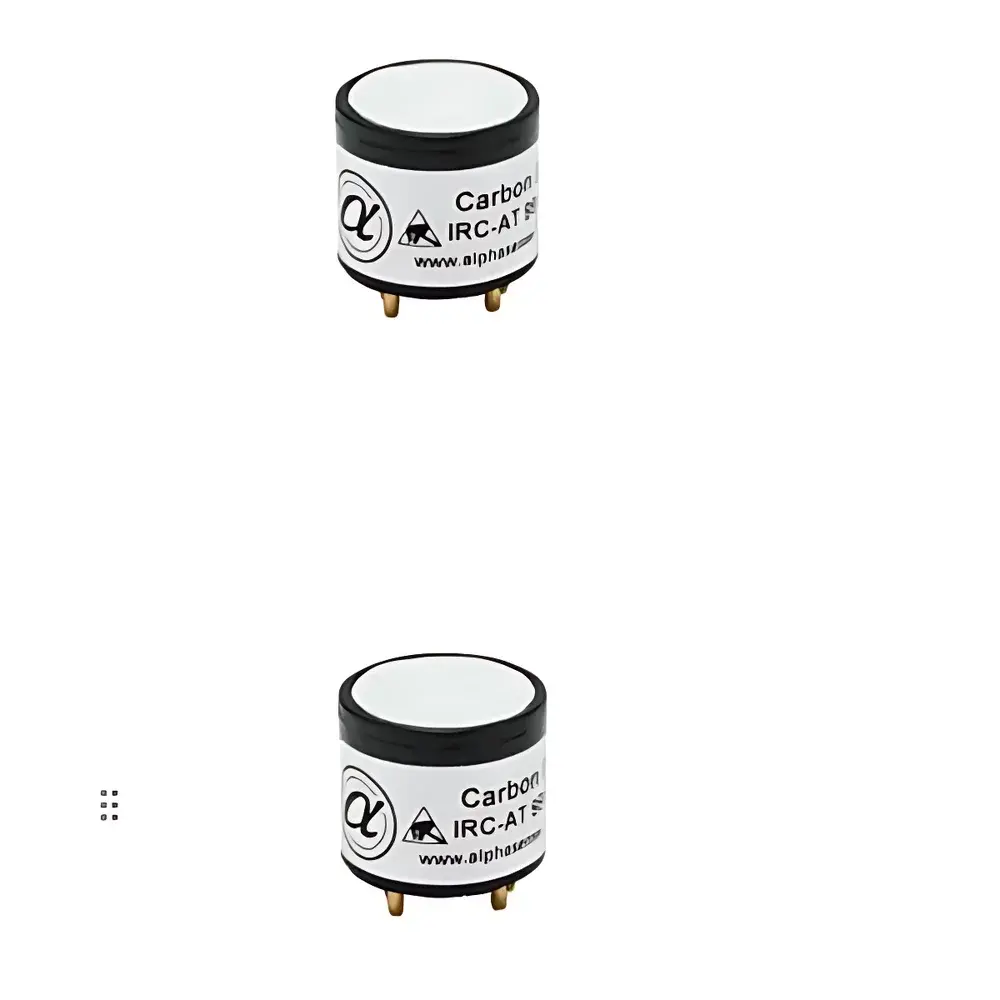
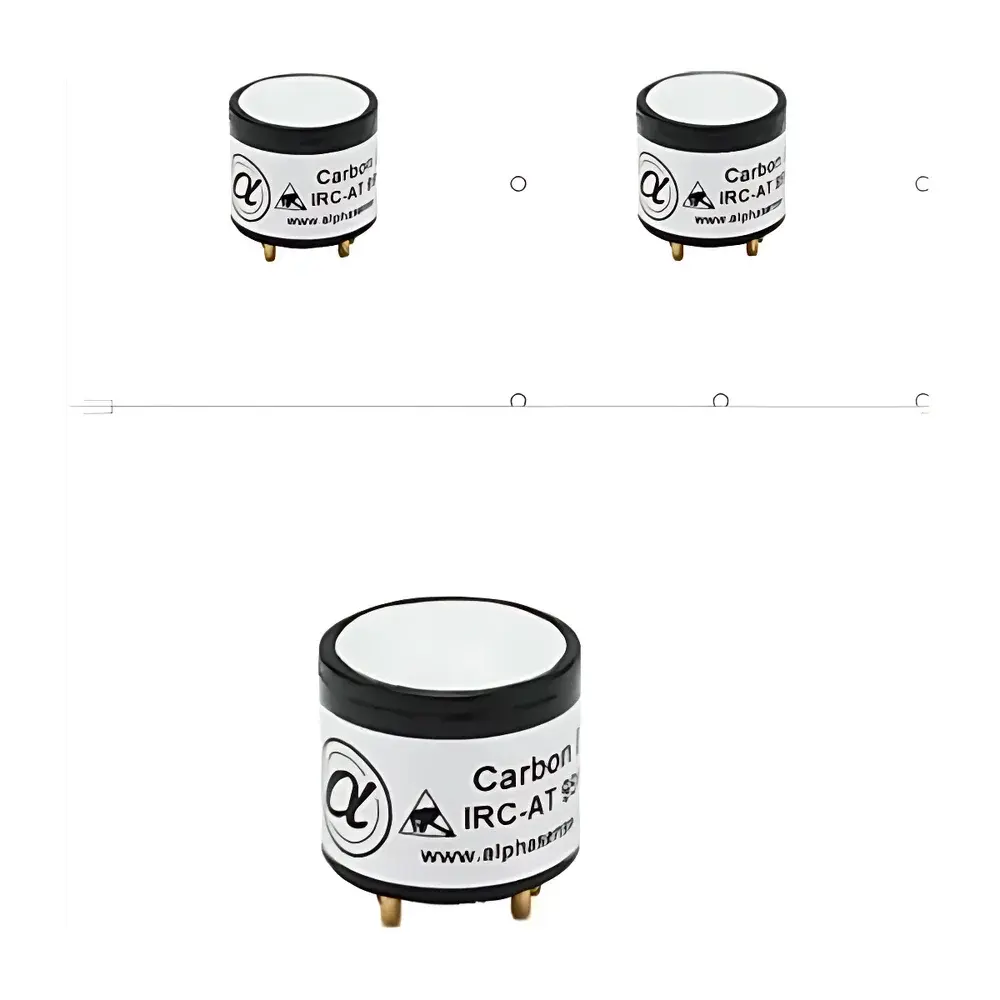
Alphasense IRC-AT NDIR Carbon Dioxide Sensor
| Brand | Alphasense (UK) |
|---|---|
| Origin | United Kingdom |
| Model | IRC-AT |
| Measurement Principle | Non-Dispersive Infrared (NDIR) |
| Range | 0–5000 ppm / 0–5% vol / 0–20% vol |
| Resolution | 25 ppm / 250 ppm / 0.4% vol |
| Accuracy | ±1.5% FS / ±2.5% FS (depending on range) |
| Response Time (t₉₀) | <40 s |
| Operating Temperature | −20 °C to +50 °C |
| Expected Service Life | >5 years |
| Dimensions | Ø20.0 × 16.5 mm |
Overview
The Alphasense IRC-AT is a compact, high-stability NDIR (Non-Dispersive Infrared) carbon dioxide sensor engineered for continuous, low-drift CO2 monitoring in demanding industrial, environmental, and indoor air quality (IAQ) applications. Based on dual-wavelength differential absorption spectroscopy, the IRC-AT employs a thermopile detector and integrated optical filter to isolate the characteristic 4.26 µm absorption band of CO2. Its proprietary dual-channel architecture—comprising an active measurement channel and a reference channel—enables real-time compensation for thermal drift, humidity-induced baseline shift, and aging effects. This design eliminates reliance on external zero-gas calibration cycles and significantly extends recalibration intervals without compromising long-term metrological integrity. The sensor operates without consumables or moving parts, delivering robust performance across wide temperature gradients and variable ambient conditions.
Key Features
- True NDIR detection with built-in dual-channel compensation for zero-point stability and thermal drift mitigation
- Three selectable full-scale ranges: 0–5000 ppm (for IAQ and HVAC), 0–5% vol (for fermentation and modified atmosphere packaging), and 0–20% vol (for safety monitoring and combustion analysis)
- High signal-to-noise ratio enabled by optimized infrared source modulation and synchronous detection circuitry
- Hermetically sealed metal-can housing with integrated optical path, rated IP67 for dust and moisture resistance
- Low power consumption (<80 mW typical), compatible with battery-operated and energy-constrained IoT platforms
- Factory-calibrated with traceable NIST-traceable gas standards; calibration certificate provided per unit
- Compliant with RoHS 3 and REACH directives; lead-free soldering and halogen-free PCB construction
Sample Compatibility & Compliance
The IRC-AT is designed for direct integration into gas sampling systems where CO2 is present in dry or moderately humid air matrices (up to 95% RH non-condensing). It exhibits minimal cross-sensitivity to common interferents including CO, CH4, NOx, SO2, and hydrocarbons—validated per ISO 12039 and EN 14625 test protocols. While not intrinsically safe certified, the sensor meets IEC 61000-4 electromagnetic compatibility requirements for industrial environments. For regulated applications—including occupational exposure monitoring and building automation systems—the device supports configuration and data logging in accordance with ISO 16000-23 (indoor air CO2 measurement) and ASHRAE Standard 62.1 ventilation control guidelines.
Software & Data Management
The IRC-AT outputs analog voltage (0.4–2.0 V) or digital I²C signals, enabling seamless interfacing with OEM data acquisition modules, PLCs, and embedded microcontrollers. Alphasense provides open-source firmware libraries (C/C++ and Python) supporting automatic gain adjustment, temperature compensation lookup tables, and linearization algorithms compliant with ASTM D6281 for infrared gas sensors. All output data streams are timestamped and support optional audit-trail metadata tagging—critical for GLP/GMP-aligned validation workflows. When deployed in networked sensor arrays, the IRC-AT supports Modbus RTU over RS-485 for centralized calibration status reporting and remote diagnostics, satisfying FDA 21 CFR Part 11 requirements for electronic record integrity when paired with validated host software.
Applications
- Indoor air quality (IAQ) monitoring in smart buildings, schools, and healthcare facilities per EN 13779 and ASHRAE 62.1
- CO2-controlled ventilation systems and demand-controlled ventilation (DCV) logic engines
- Portable and wearable occupational hygiene instruments for workplace exposure assessment
- Process monitoring in food packaging lines (MAP), bioreactors, and anaerobic digestion plants
- Environmental research stations measuring atmospheric CO2 gradients and urban emission profiling
- OEM integration into HVAC controllers, air purifiers, and CO2 incubators requiring compact, maintenance-free sensing
FAQ
What is the recommended calibration interval for the IRC-AT under continuous operation?
Alphasense recommends field verification every 12 months using certified span gas; zero-point stability typically exceeds 18 months in stable ambient conditions.
Does the IRC-AT require periodic zero-gas exposure?
No—its dual-channel architecture enables passive zero-point stabilization without external zero gas or mechanical shutter mechanisms.
Can the IRC-AT operate in condensing humidity environments?
It is rated for up to 95% RH non-condensing; prolonged exposure to condensation will degrade optical window transmission and is not supported.
Is the sensor compatible with explosive atmospheres?
The IRC-AT itself is not ATEX or IECEx certified; it must be installed within an approved explosion-proof enclosure if used in Zone 1/2 hazardous areas.
How does temperature variation affect measurement accuracy?
Internal temperature compensation corrects for thermal effects across the full −20 °C to +50 °C operating range, maintaining stated accuracy specifications without user intervention.