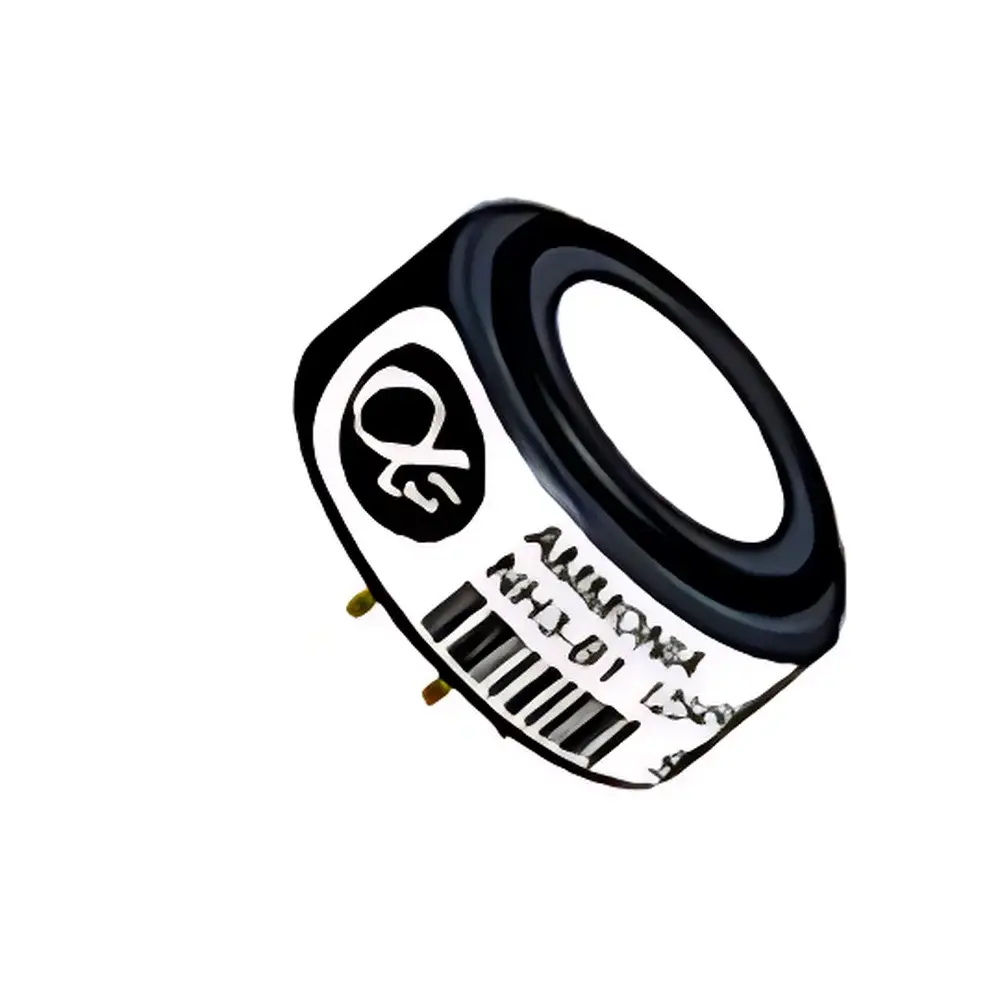
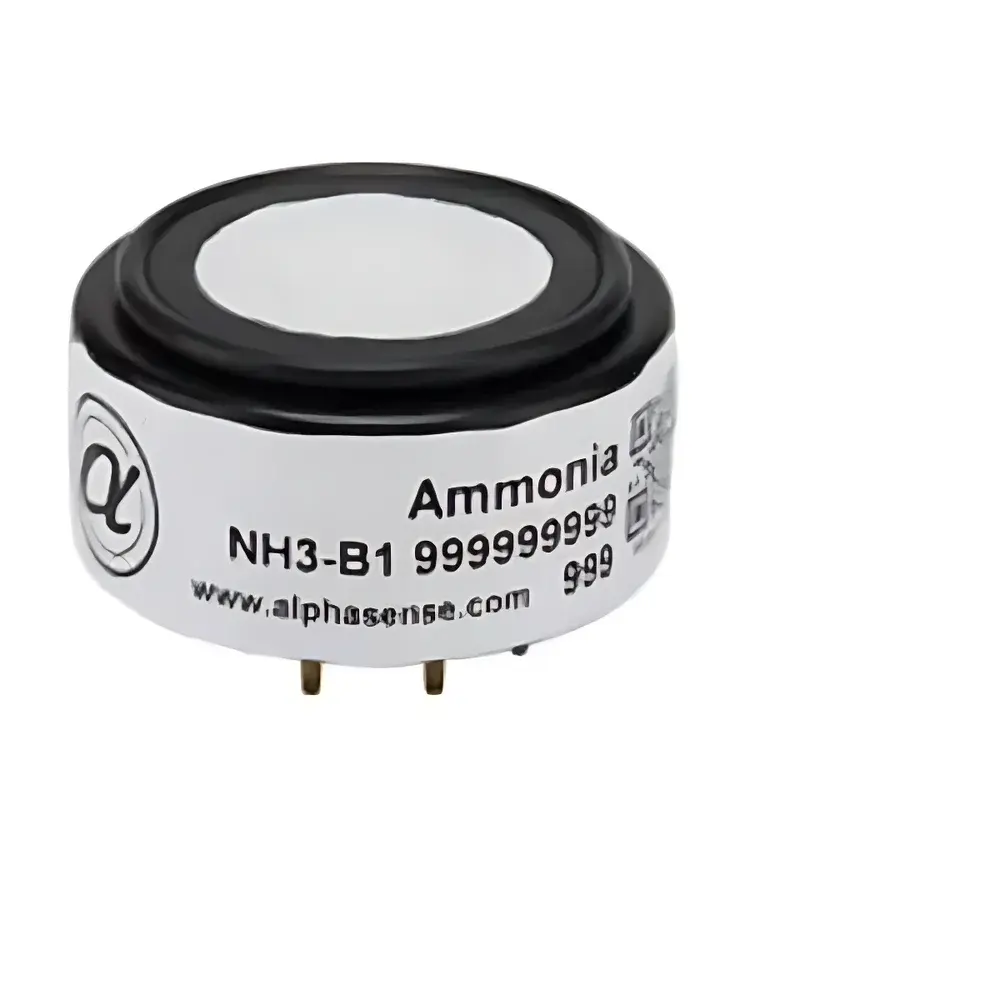
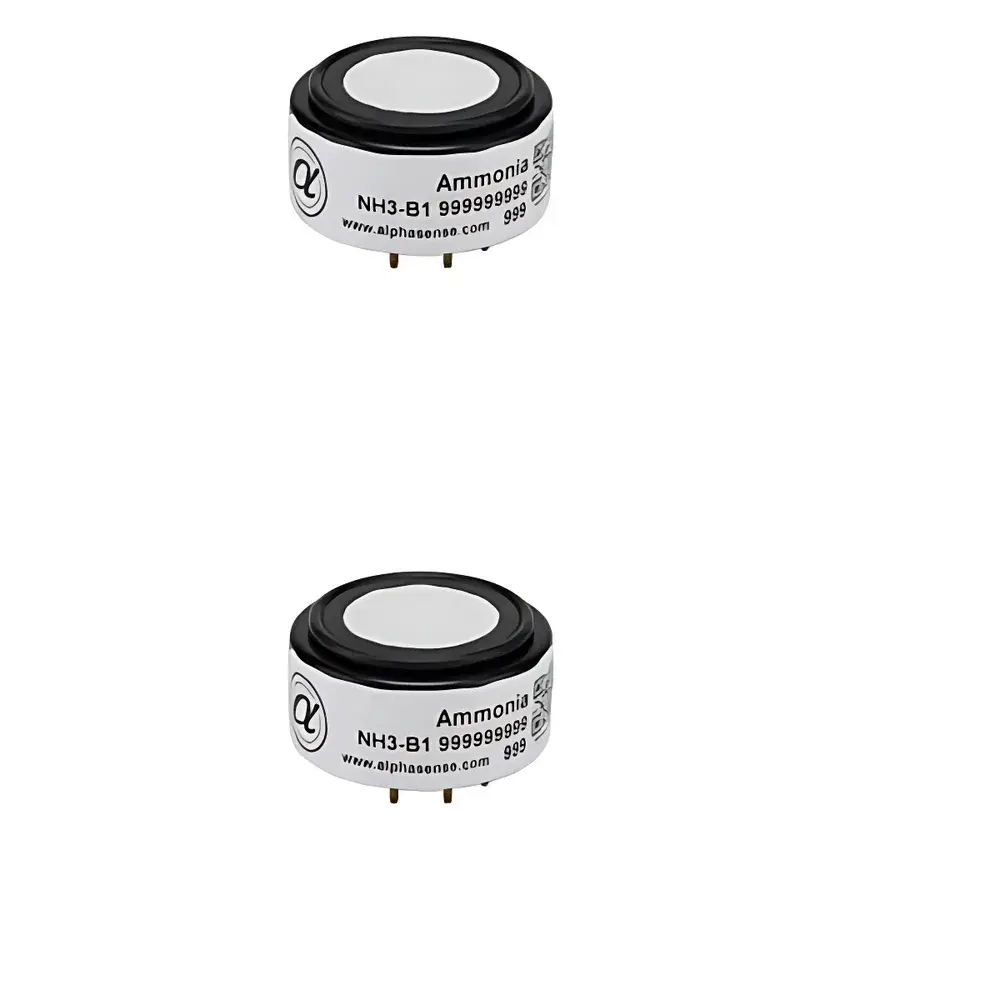
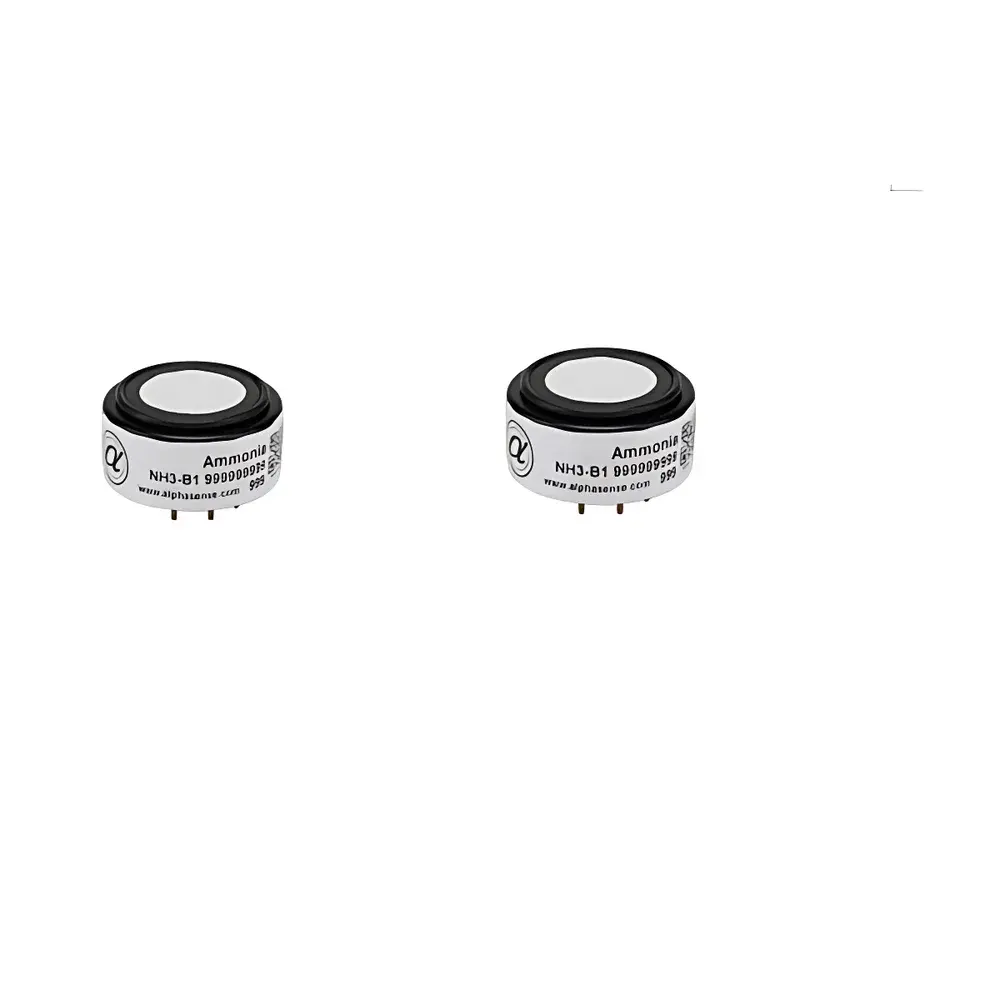
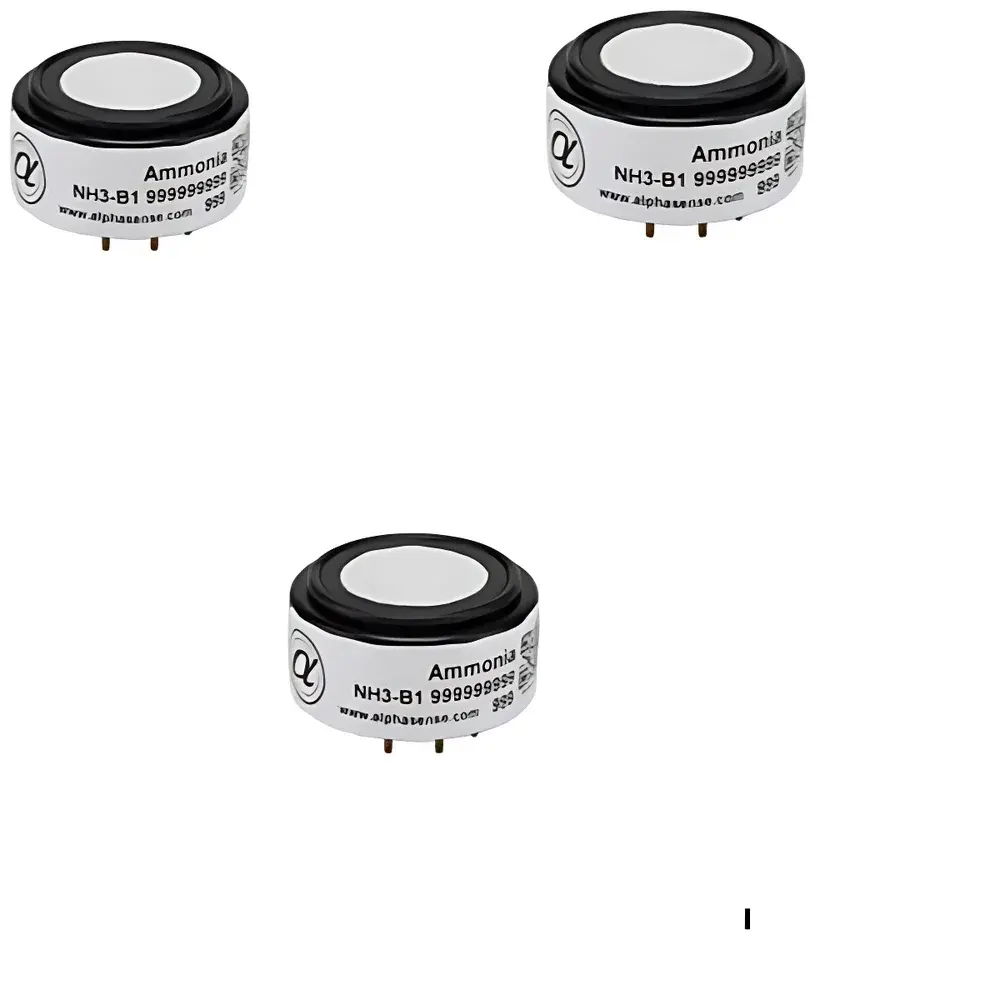
Alphasense NH3-B1 Electrochemical Ammonia Gas Sensor
| Brand | Alphasense (UK) |
|---|---|
| Origin | United Kingdom |
| Model | NH3-B1 |
| Detection Range | 0–100 ppm |
| Overload Limit | 200 ppm |
| Zero Current | < +10 nA |
| Response Time (t90) | < 150 s |
| Sensitivity | 20–60 nA/ppm |
| Dimensions | Ø32.3 × 16.5 mm |
| Sensor Type | Three-Electrode Electrochemical |
| Operating Temperature | −20 °C to +50 °C |
| Storage Temperature | −40 °C to +70 °C |
| Humidity Range | 15–90 % RH (non-condensing) |
| Expected Lifetime | ≥24 months (in air) |
| Compliance | RoHS, REACH, CE marked per EN 50291-1:2019 |
Overview
The Alphasense NH3-B1 is a high-stability, three-electrode electrochemical sensor engineered for selective and reliable detection of ammonia (NH₃) gas in ambient air. Based on amperometric transduction, the sensor operates via diffusion-controlled oxidation of NH₃ at the working electrode in an acidic electrolyte, generating a current proportional to gas concentration. Its robust cell architecture—featuring a proprietary hydrophobic membrane, optimized catalyst layer, and integrated reference/counter electrodes—ensures consistent baseline stability, low zero-current drift, and minimal cross-sensitivity to common interferents such as CO, NO₂, H₂S, and VOCs. Designed for integration into fixed or portable gas monitoring systems, the NH3-B1 complies with international safety and performance benchmarks for indoor air quality (IAQ), industrial hygiene, agricultural emissions control, and refrigeration leak detection.
Key Features
- Three-electrode electrochemical design for enhanced signal stability and reduced drift over time
- Linear output response across the full 0–100 ppm measurement range with sensitivity of 20–60 nA/ppm
- Fast t90 response time of less than 150 seconds under standard conditions (23 °C, 50 % RH)
- Low zero-current specification (< +10 nA) enabling accurate low-level detection and improved signal-to-noise ratio
- Overload tolerance up to 200 ppm without permanent performance degradation
- Compact cylindrical form factor (Ø32.3 × 16.5 mm) compatible with industry-standard sensor housings and PCB-mounting fixtures
- Rated operational lifetime of ≥24 months when stored and operated within specified environmental limits
- RoHS- and REACH-compliant construction; CE marked per EN 50291-1:2019 for domestic and commercial gas alarm applications
Sample Compatibility & Compliance
The NH3-B1 is intended for use in clean, non-corrosive, non-condensing gaseous environments. It is not suitable for direct exposure to high-humidity condensation, organic solvents, silicone vapors, or strongly oxidizing agents (e.g., chlorine, ozone), which may compromise membrane integrity or electrode performance. The sensor meets the essential requirements of the EU Gas Appliances Regulation (EU) 2016/426 and carries CE marking under EN 50291-1:2019 for carbon monoxide and toxic gas alarms. While not intrinsically safe certified, it may be deployed in Zone 2/22 hazardous areas when integrated into appropriately rated system enclosures meeting IEC 60079-0 and IEC 60079-11 standards. For regulated industries—including pharmaceutical manufacturing, food processing, and wastewater treatment—the sensor supports traceable calibration protocols aligned with ISO/IEC 17025 and GLP documentation practices.
Software & Data Management
The NH3-B1 delivers analog current output (typically 0–100 nA per ppm) and requires external signal conditioning, including transimpedance amplification, temperature compensation, and analog-to-digital conversion. Alphasense provides comprehensive technical documentation—including datasheets, calibration certificates, and application notes—for integration with third-party data acquisition platforms (e.g., National Instruments DAQ, Advantech ADAM modules) and embedded microcontroller systems (ARM Cortex-M, ESP32). When deployed in networked monitoring systems compliant with ISO 14644-1 (cleanroom classification) or USP (analytical method validation), the sensor’s output can be logged with audit-trail-capable software supporting FDA 21 CFR Part 11 electronic record requirements. Firmware-level compensation algorithms—based on onboard thermistor readings—are recommended to correct for thermal drift across the −20 °C to +50 °C operating range.
Applications
- Fixed-point ammonia monitoring in livestock barns, poultry houses, and manure storage facilities per EPA Method TO-15 and EN 14662
- Portable personal exposure monitors for occupational health and safety compliance (OSHA PEL: 50 ppm; NIOSH REL: 25 ppm TWA)
- Refrigeration system leak detection in cold storage warehouses and supermarket HVAC infrastructure
- Indoor air quality (IAQ) assessment in laboratories, schools, and healthcare facilities where ammonium-based cleaning agents are used
- Process gas monitoring in chemical synthesis units, fertilizer production lines, and catalytic converter testing rigs
- Integration into smart building management systems (BMS) for real-time ventilation control based on NH₃ threshold triggers
FAQ
What is the recommended calibration frequency for the NH3-B1 sensor?
Calibration should be performed before initial deployment and at least every 6 months thereafter—or more frequently in high-exposure or variable-temperature environments—using certified NH₃ span gas (e.g., 25 ppm in air) traceable to NIST standards.
Can the NH3-B1 be exposed to high humidity or condensation?
No. Continuous operation above 90 % RH or exposure to condensation will degrade the hydrophobic membrane and accelerate electrolyte loss. Use only in non-condensing environments; consider active desiccant filtration if ambient RH exceeds 85 %.
Does the sensor require a warm-up period before stable readings?
Yes. Allow a minimum 24-hour stabilization period after power-on or storage to achieve thermal and electrochemical equilibrium; optimal stability is reached after 48 hours.
Is the NH3-B1 compatible with PID or MOS-based sensor arrays?
It is not designed for hybrid array integration due to differing output modalities and response kinetics; however, it may be co-located with complementary sensors (e.g., CO, NO₂) in multi-gas platforms using independent signal chains and dedicated calibration routines.
How is long-term drift characterized and corrected?
Drift is quantified during periodic zero/span verification; linear correction coefficients may be applied in firmware, but physical recalibration is required if zero shift exceeds ±5 ppm or sensitivity deviation exceeds ±15 % of nominal value.