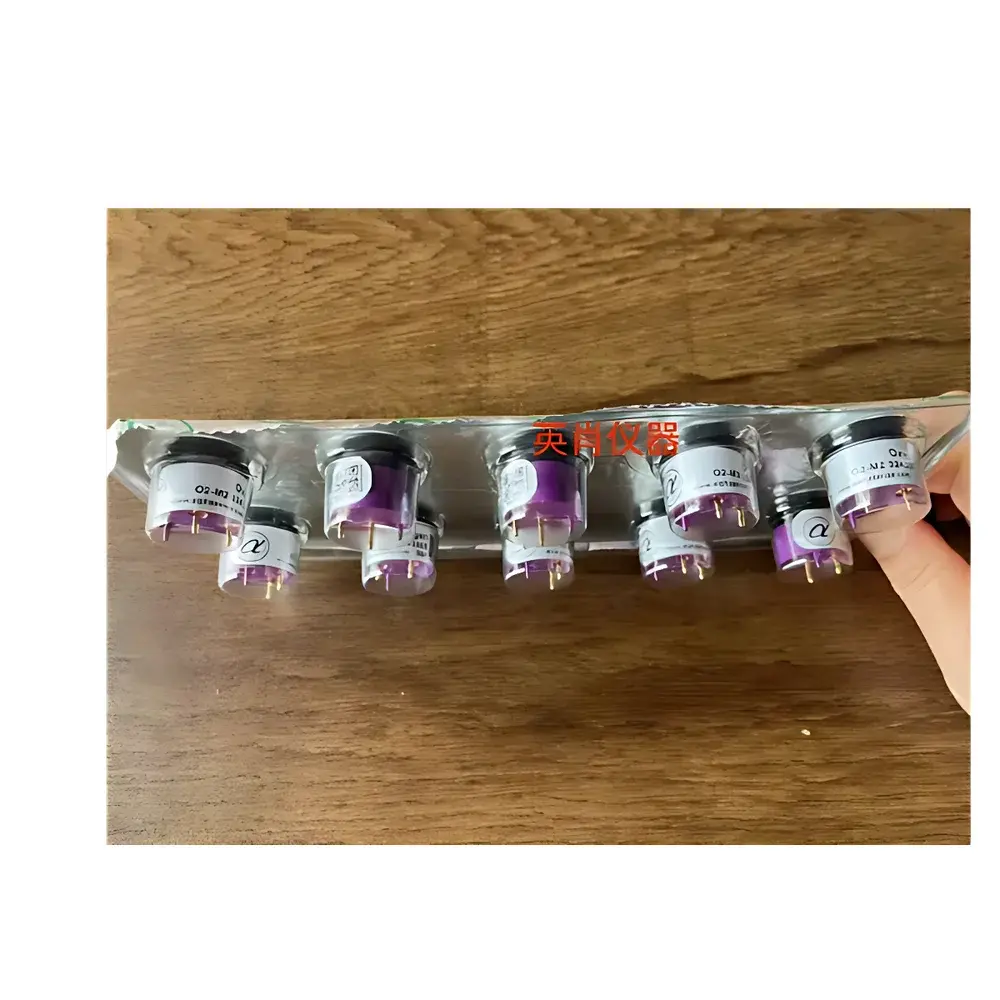
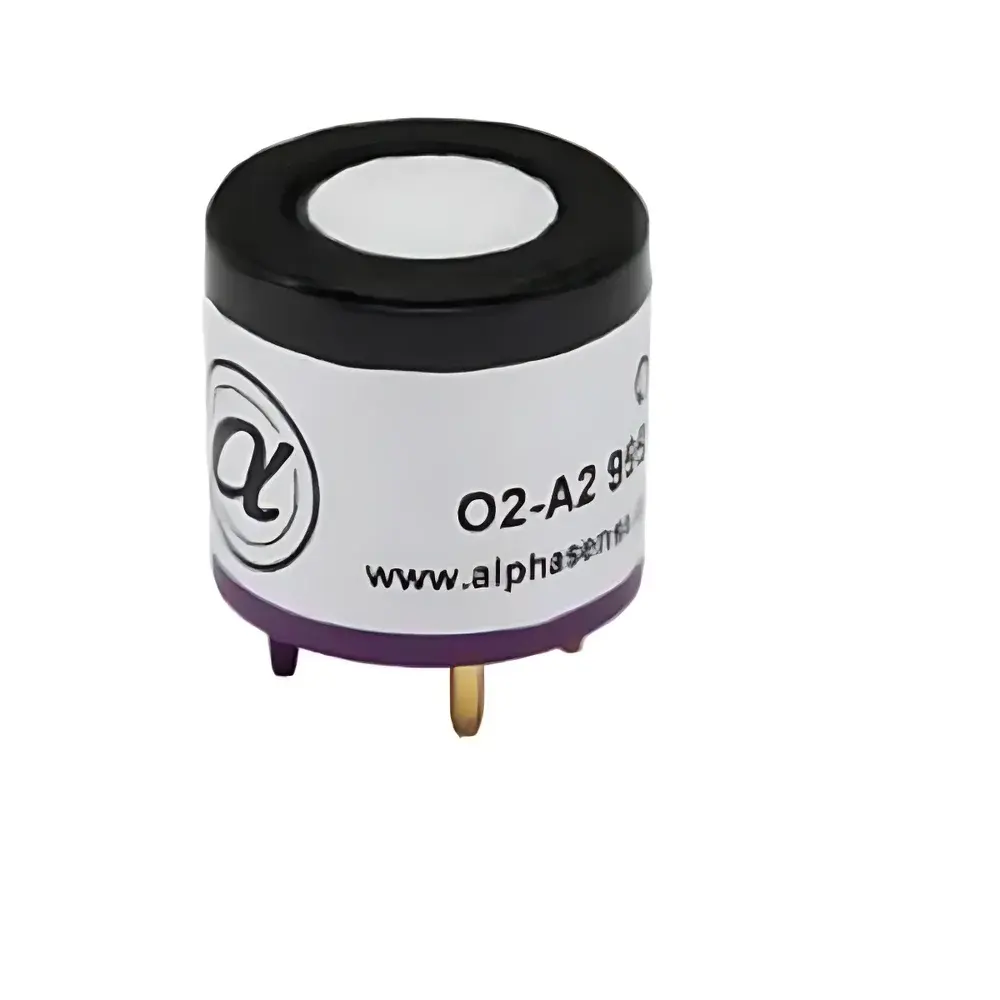
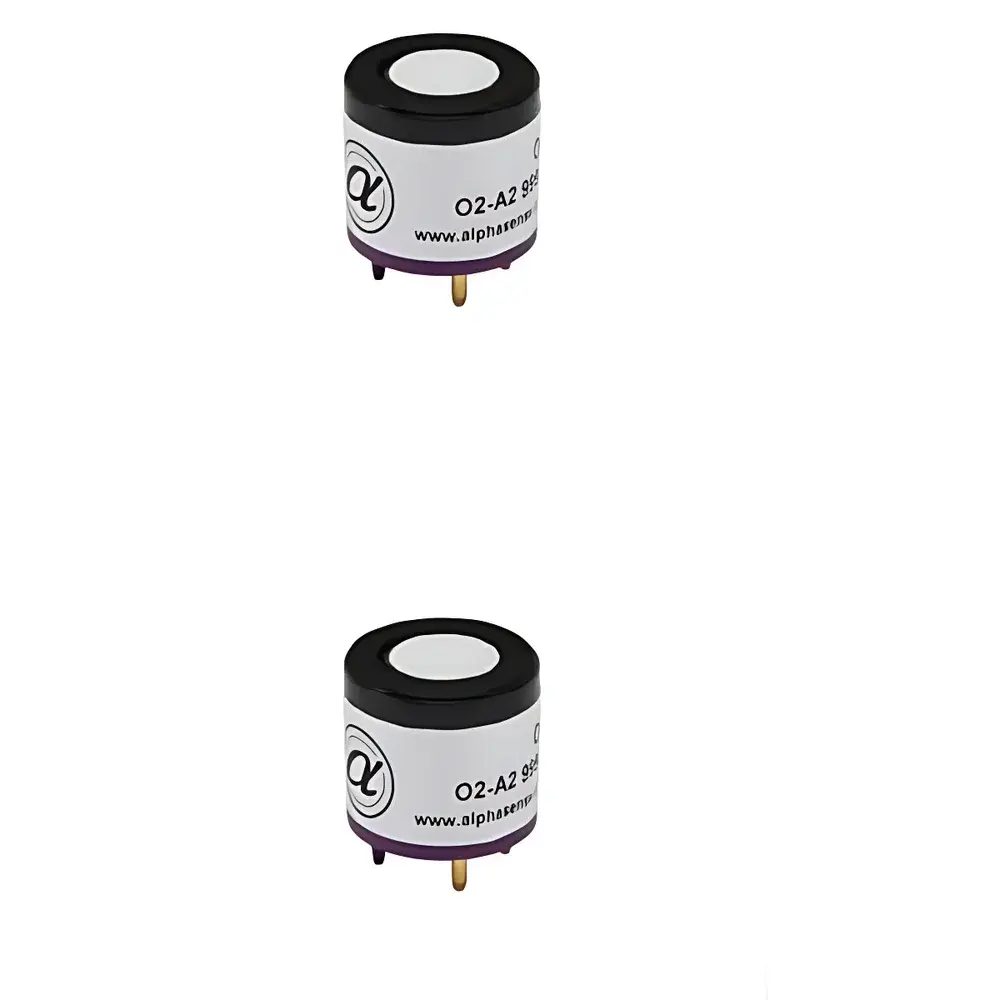
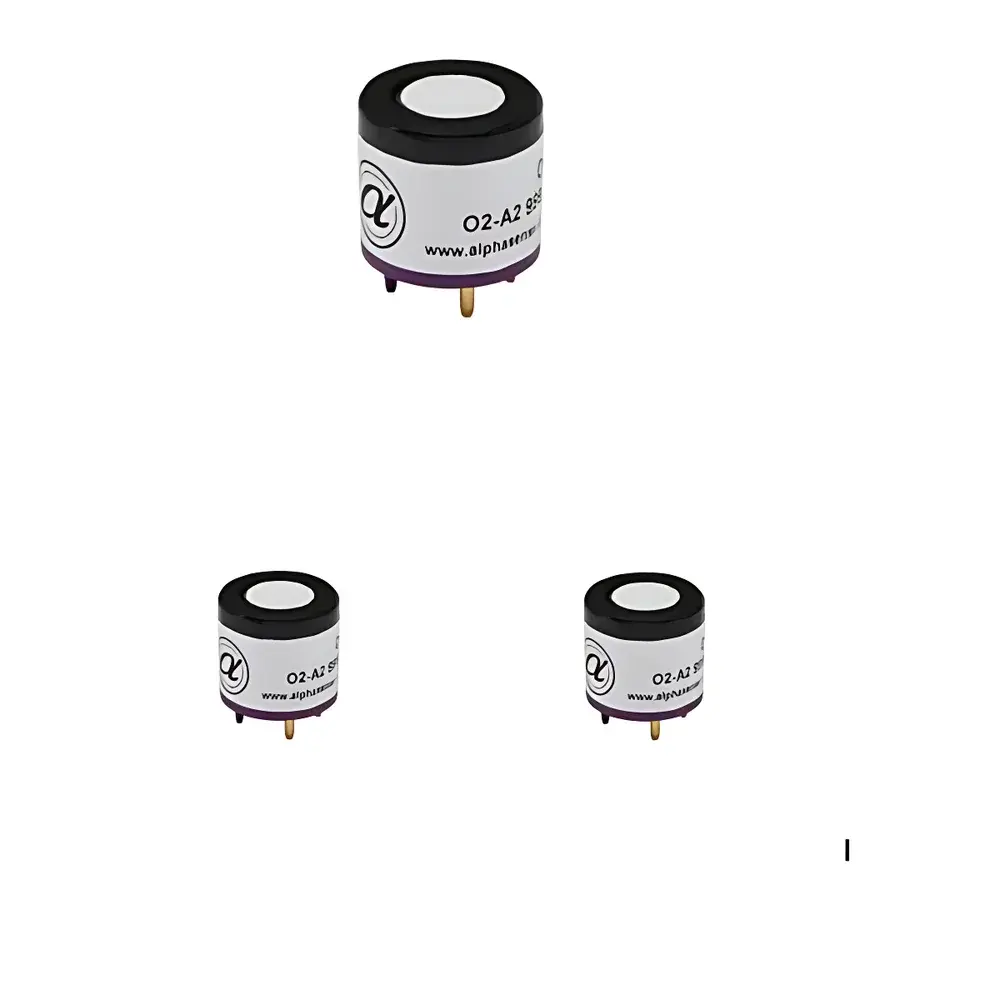
Alphasense O2-A2 Electrochemical Oxygen Sensor
| Brand | Alphasense (UK) |
|---|---|
| Origin | United Kingdom |
| Model | O2-A2 |
| Measurement Range | 0–30% O₂ (v/v) |
| Operating Life | >24 months to 85% of initial output |
| Dimensions | Ø20.3 × 16.8 mm |
| Output Current | 80–120 µA @ 22°C, 20.9% O₂ |
| Response Time (t₉₀) | <15 s (20.9% → 0% O₂, 47 Ω load) |
| Linearity Error | <±0.6 ppm (full scale, zero & 400 ppm points) |
| Weight | <16 g |
| Operating Temperature | −30 to +55 °C |
| Pressure Range | 80–120 kPa |
| Relative Humidity | 5–95% RH (non-condensing) |
| Storage Duration | 6 months at 3–20 °C |
| Load Resistance | 47–100 Ω |
Overview
The Alphasense O2-A2 is a high-stability, electrochemical oxygen sensor engineered for continuous ambient and industrial oxygen monitoring in fixed or portable gas detection systems. Based on the principle of galvanic cell electrochemistry, the O2-A2 operates without external power—oxygen diffuses through a hydrophobic membrane into an aqueous electrolyte, where it undergoes reduction at the cathode, generating a current proportional to the partial pressure of O₂. This passive, diffusion-limited design ensures intrinsic safety, low power consumption, and long-term baseline stability—critical for compliance with occupational health standards (e.g., OSHA 1910.134, EN 50123-2) and confined space entry protocols. Unlike conventional sensors prone to electrolyte leakage and dry-out, the O2-A2 incorporates Alphasense’s proprietary sealed gel-electrolyte architecture and optimized electrode geometry, eliminating liquid migration while maintaining consistent mass transport characteristics across its operational lifetime.
Key Features
- Galvanic electrochemical operation—no bias voltage required, enabling use in intrinsically safe (IS) and battery-powered instrumentation
- Extended service life exceeding 24 months while retaining ≥85% of initial sensitivity under typical environmental conditions
- Compact cylindrical form factor (Ø20.3 × 16.8 mm) designed for integration into multi-gas detectors, process analyzers, and HVAC air quality monitors
- Rapid t₉₀ response (<15 s) from air to nitrogen purge, supporting dynamic alarm triggering and real-time ventilation control
- High linearity (<±0.6 ppm error over full scale at zero and 400 ppm reference points), minimizing calibration drift and reducing field maintenance frequency
- Wide operational envelope: −30 to +55 °C ambient temperature, 80–120 kPa absolute pressure, and 5–95% RH non-condensing humidity
- Robust mechanical construction with stainless steel casing and PTFE diffusion membrane, resistant to particulate fouling and moderate chemical exposure
Sample Compatibility & Compliance
The O2-A2 is intended for measurement of molecular oxygen (O₂) in clean, non-corrosive gas matrices—including ambient air, inert gas blankets (N₂, Ar), medical breathing circuits, and fermentation headspace. It is not suitable for use in reducing atmospheres containing H₂S, SO₂, Cl₂, NOₓ, or high-concentration CO₂ (>5%), which may poison the lead anode or alter electrolyte pH. The sensor complies with IEC 60079-29-1 (gas detection—performance requirements) and meets key elements of ISO 12032 (gas analyzers—specification and testing). When integrated into certified instruments, it supports adherence to OSHA 1910.146 (confined space entry), NFPA 70E (electrical safety), and EU Directive 2014/34/EU (ATEX) when used within approved system-level safety boundaries.
Software & Data Management
As a transducer-level component, the O2-A2 delivers analog current output (80–120 µA at 20.9% O₂, 22°C) compatible with standard 4–20 mA or 0–5 V signal conditioning circuits. For traceable calibration and audit readiness, integration with data acquisition platforms supporting NIST-traceable zero/span verification (e.g., using certified O₂/N₂ gas mixtures per ISO 6141) is recommended. When embedded in instruments compliant with FDA 21 CFR Part 11, the sensor’s stable output enables reliable electronic record generation, including timestamped calibration logs, alarm events, and trended O₂ concentration history—with appropriate system-level audit trail and user access controls.
Applications
- Fixed gas detection systems for fire suppression monitoring (e.g., verifying O₂ depletion in inerted server rooms or transformer vaults)
- Portable multi-gas meters used by industrial hygienists during workplace exposure assessments
- Process control in pharmaceutical lyophilization, food packaging (modified atmosphere), and semiconductor annealing furnaces
- Environmental monitoring stations measuring atmospheric O₂ variability for climate research
- Medical device OEM integration—for ventilator O₂ feedback loops and incubator atmosphere regulation (subject to ISO 13485 system qualification)
- Marine and aviation cabin air quality management systems requiring low-power, fail-safe O₂ sensing
FAQ
What is the expected shelf life before installation?
The O2-A2 has a guaranteed storage life of six months when kept sealed in original packaging at 3–20 °C and <60% RH.
Does the sensor require periodic polarization or warm-up time?
No—being a galvanic cell, it produces stable output immediately upon exposure to oxygen; no warm-up or pre-conditioning is necessary.
Can the O2-A2 be used at altitudes above 2,000 m?
Yes, provided barometric pressure remains within the specified 80–120 kPa range; output scales linearly with partial pressure, so software compensation for altitude is recommended for %v/v reporting.
Is the sensor compatible with PID or IR-based multi-gas platforms?
Yes—its analog current output and mechanical footprint are standardized for drop-in replacement in existing 2-, 4-, or 5-gas detector designs meeting EN 45544-1 mechanical interface guidelines.
How often should calibration be performed in routine use?
Initial calibration at installation, followed by functional checks every 3–6 months using certified span gas (e.g., 18% or 25% O₂ in N₂); more frequent verification is advised in high-humidity or variable-pressure environments.