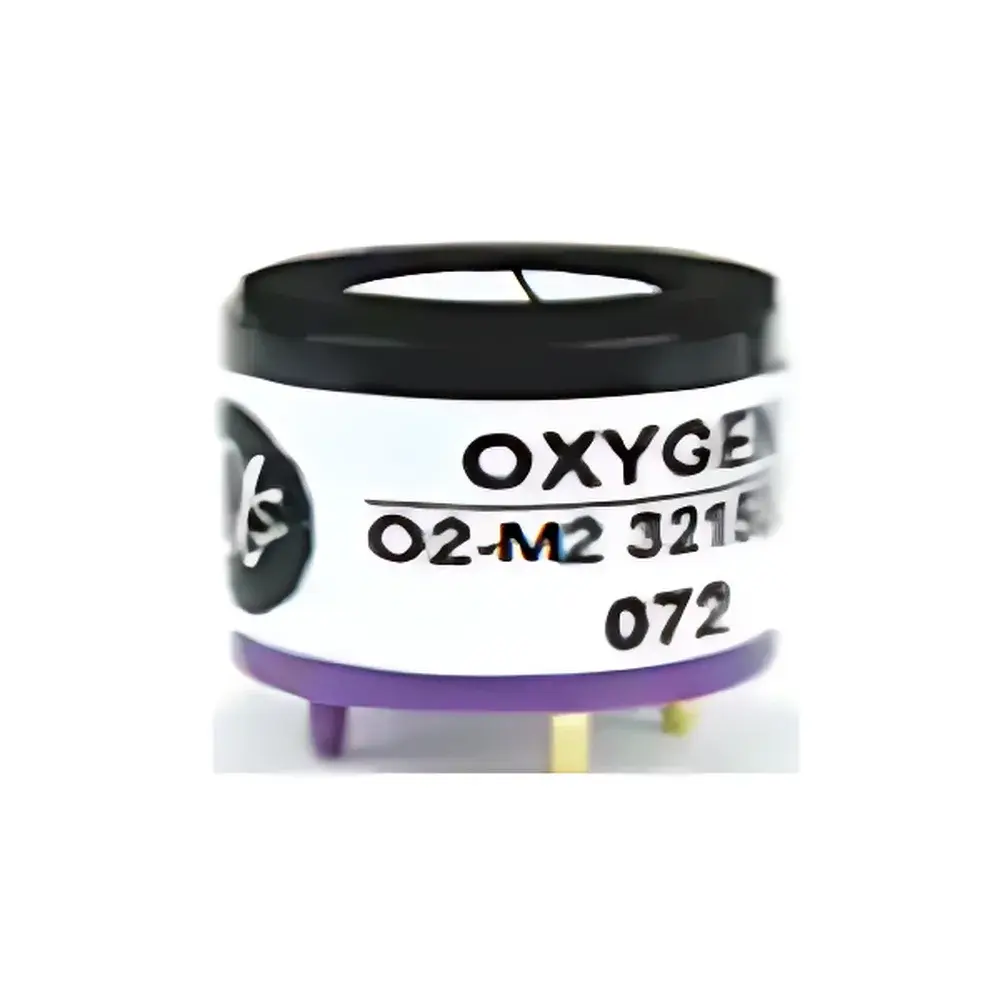
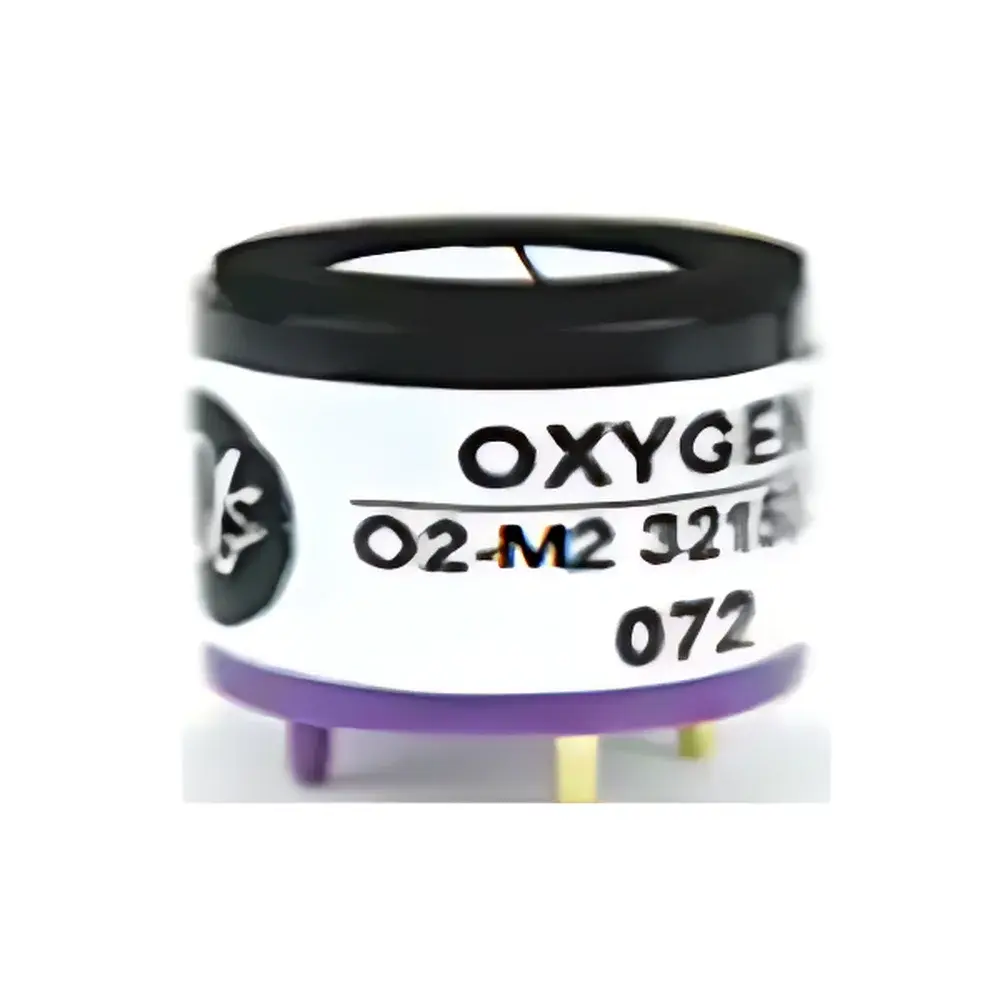
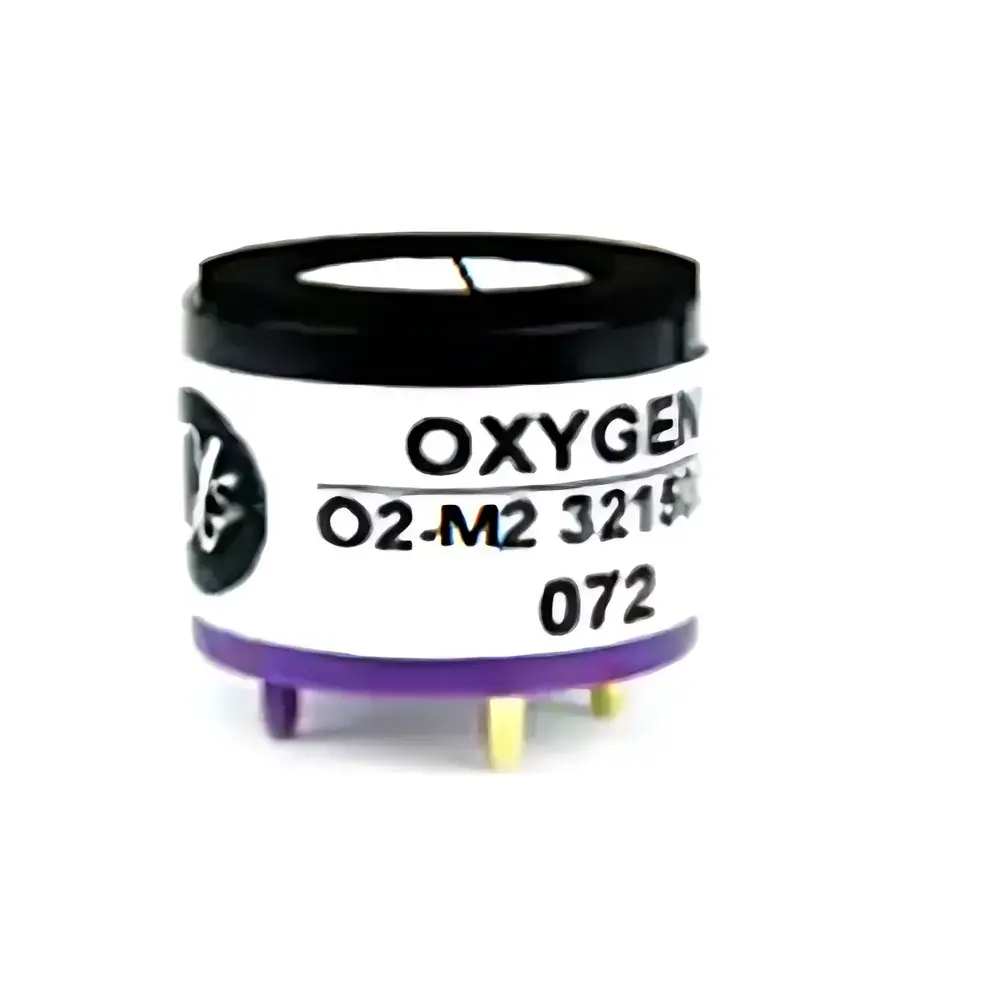
Alphasense O2-M2 Electrochemical Oxygen Sensor
| Brand | Alphasense (UK) |
|---|---|
| Origin | United Kingdom |
| Model | O2-M2 |
| Measurement Range | 0–30% O₂ (v/v) |
| Operating Life | >24 months (to 85% of initial output) |
| Dimensions | Ø20.3 × 16.8 mm |
| Typical Output | 80–120 nA @ 22°C, 20.9% O₂ |
| Response Time (t₉₀) | <15 s (20.9% → 0% O₂, 47 Ω load) |
| Linearity Error | <±0.6% FS (zero & 400 ppm points) |
| Weight | <16 g |
| Operating Temperature | −30 to +55°C |
| Pressure Range | 80–120 kPa |
| Relative Humidity Range | 5–95% RH (non-condensing) |
| Storage Stability | 6 months (unpowered, sealed) |
| Load Resistance | 47–100 Ω |
| Sensor Type | Potentiostatically controlled electrochemical cell |
Overview
The Alphasense O2-M2 is a high-stability, diffusion-limited electrochemical oxygen sensor engineered for continuous, low-power ambient oxygen monitoring in industrial safety, process control, and environmental instrumentation. Based on a three-electrode potentiostatic design with a proprietary electrolyte formulation and hydrophobic membrane, the O2-M2 operates via the electrochemical reduction of molecular oxygen at the working electrode, generating a current proportional to the partial pressure of O₂ in the sampled gas phase. This principle ensures inherent selectivity for oxygen without cross-sensitivity to common interferents such as CO₂, CO, NOₓ, or hydrocarbons—critical for reliable operation in complex gas matrices encountered in mining, metallurgy, petrochemical refineries, and medical gas analyzers. The sensor exhibits excellent long-term baseline stability and minimal zero drift, meeting the functional requirements of fixed-gas detection systems compliant with IEC 60079-29-1 (explosive atmospheres) and EN 50194 (domestic and commercial gas alarm systems).
Key Features
- Stable two-year operational lifetime (≥85% of initial output after 24 months under typical conditions), validated per ISO 12032 Annex B accelerated aging protocols
- Compact cylindrical form factor (Ø20.3 × 16.8 mm) optimized for integration into portable detectors, OEM gas analyzers, and multi-gas sampling modules
- Fast t₉₀ response time of <15 seconds when transitioning from air (20.9% O₂) to nitrogen-purged environment, enabling rapid alarm triggering in confined-space entry applications
- Wide operating temperature range (−30°C to +55°C) with integrated thermal compensation circuitry—no external temperature sensor required for ±2% O₂ accuracy across the full span
- Robust mechanical construction featuring laser-welded stainless-steel housing and PTFE-based diffusion barrier, resistant to vibration, condensation, and particulate ingress
- Low-power analog output (80–120 nA at 20.9% O₂, 22°C) compatible with standard 4–20 mA transmitter boards and microcontroller-based ADC interfaces (e.g., 24-bit sigma-delta converters)
Sample Compatibility & Compliance
The O2-M2 is designed for direct exposure to ambient air and non-corrosive gas streams. It is incompatible with reducing atmospheres containing >100 ppm H₂S, Cl₂, or SO₂, which may irreversibly poison the catalytic electrode surface. For use in inert blanketing or controlled-atmosphere furnaces, optional filter caps (e.g., activated charcoal or sintered metal) are recommended to mitigate organic vapor interference. The sensor conforms to RoHS 2011/65/EU and REACH SVHC criteria. Its performance characteristics support compliance with OSHA 1910.146 (permit-required confined spaces), MSHA Part 36 (mining equipment), and ASTM D6100 (standard test method for oxygen in inert gas systems). Calibration traceability is maintained to NIST-traceable gas standards (e.g., certified 20.9% O₂ in N₂).
Software & Data Management
While the O2-M2 is an analog-output sensor requiring external signal conditioning, it integrates seamlessly with Alphasense’s AEX Series evaluation boards and third-party data acquisition platforms supporting 4–20 mA or voltage-output conversion. When deployed in networked safety systems, raw current signals can be logged with timestamped metadata (temperature, pressure, humidity) to satisfy audit requirements under ISO 9001:2015 Clause 8.5.2 (identification and traceability) and FDA 21 CFR Part 11 (electronic records and signatures) when paired with validated firmware and secure database architecture. Linearization coefficients and temperature compensation parameters are supplied in manufacturer-provided calibration certificates for implementation in host firmware.
Applications
- Fixed and portable oxygen deficiency/enrichment monitors for confined space entry and tunnel ventilation control
- OEM integration into medical ventilators, anesthesia machines, and incubator atmosphere controllers (IEC 60601-1 compliant designs)
- Process monitoring in heat-treatment furnaces, glove boxes, and nitrogen-purged packaging lines
- Environmental monitoring of landfill gas composition and biogas upgrading facilities
- Quality assurance testing in pharmaceutical cleanrooms where oxygen levels impact sterility validation
FAQ
What is the recommended calibration frequency for the O2-M2 in continuous monitoring applications?
Calibration is advised every 3–6 months using certified zero (N₂) and span (20.9% O₂ in air) gases; more frequent checks are required in high-humidity or contaminated environments.
Can the O2-M2 be used at altitudes above 2,000 meters?
Yes—the sensor responds to partial pressure, so output scales linearly with barometric pressure; system-level software compensation is required for %v/v reporting.
Is the O2-M2 suitable for sub-zero storage?
Storage below 0°C is permissible if the sensor remains sealed in its original foil pouch; condensation must be avoided during unpacking and installation.
Does the O2-M2 require a warm-up period before stable readings?
No significant warm-up is needed; stable output is achieved within 60 seconds of power application under standard conditions.
How does humidity affect measurement accuracy?
The sensor is rated for 5–95% RH non-condensing; above 90% RH, minor signal attenuation (<1.5% FS) may occur due to water vapor diffusion resistance—this is accounted for in factory calibration data sheets.