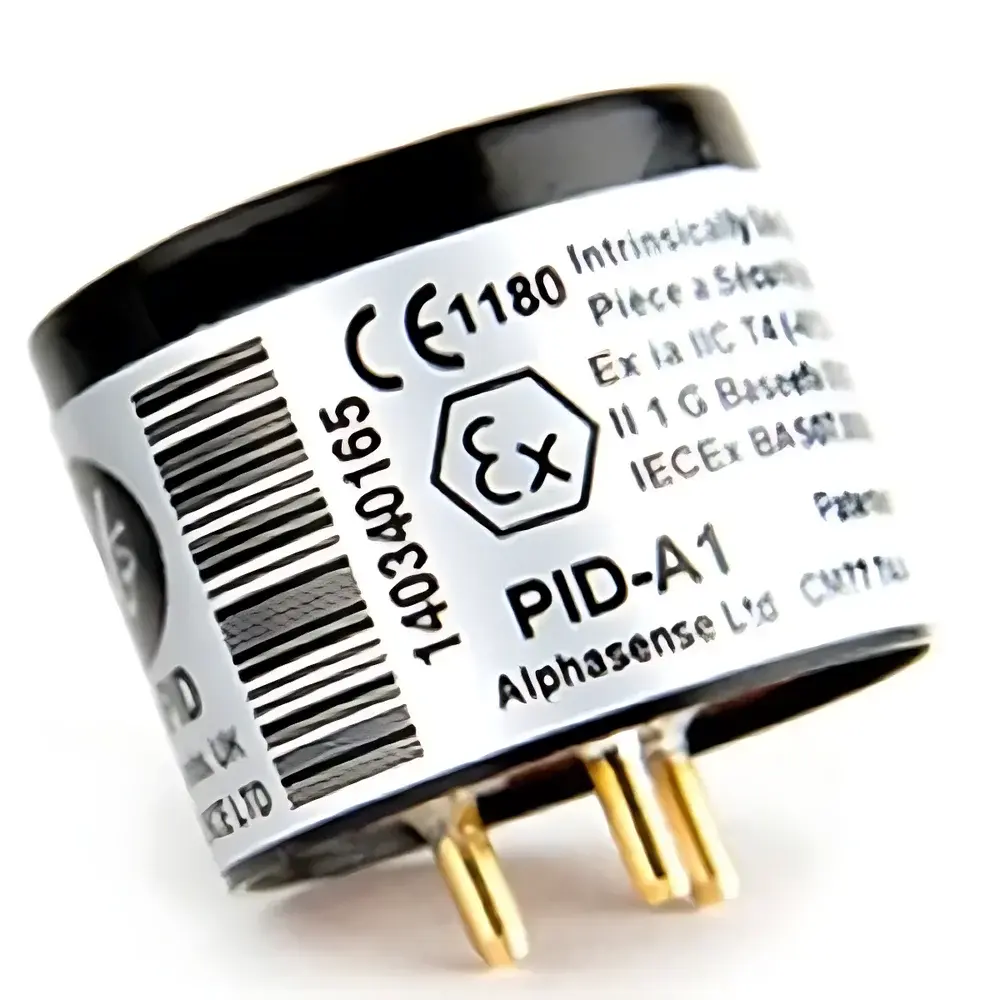
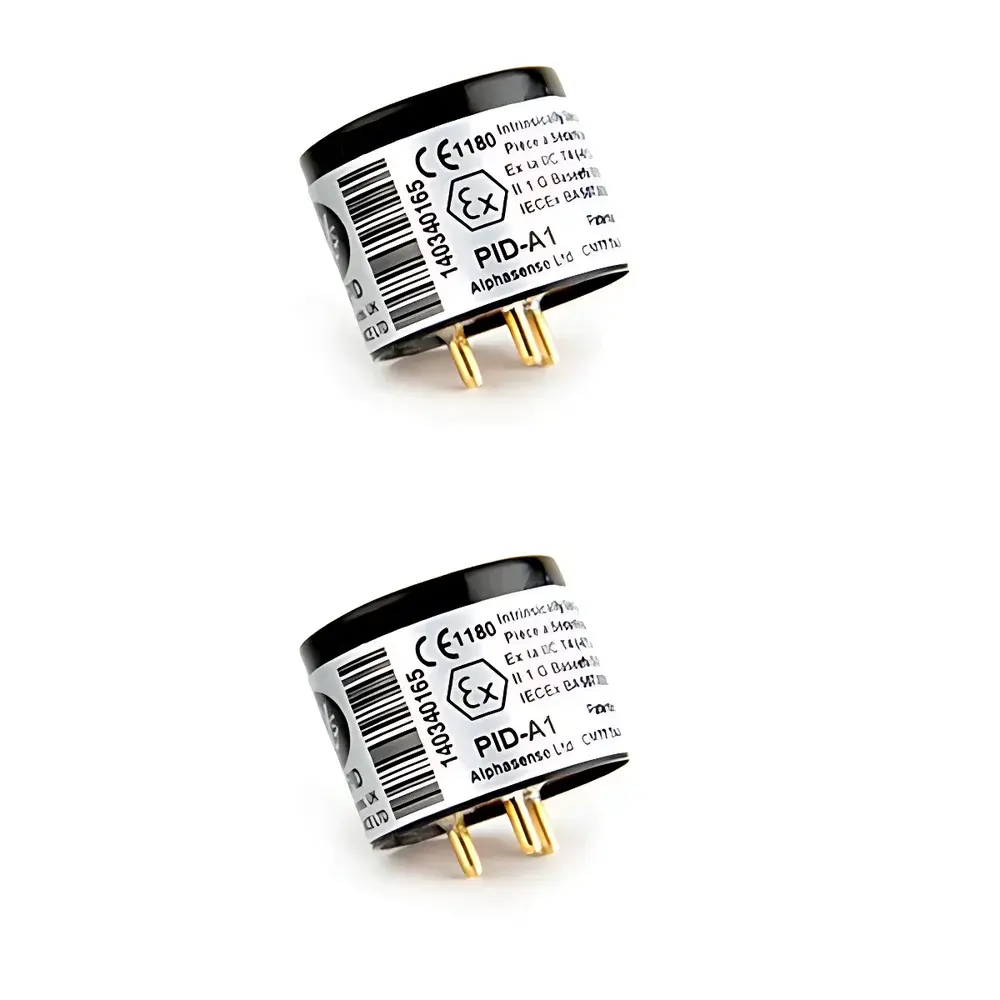
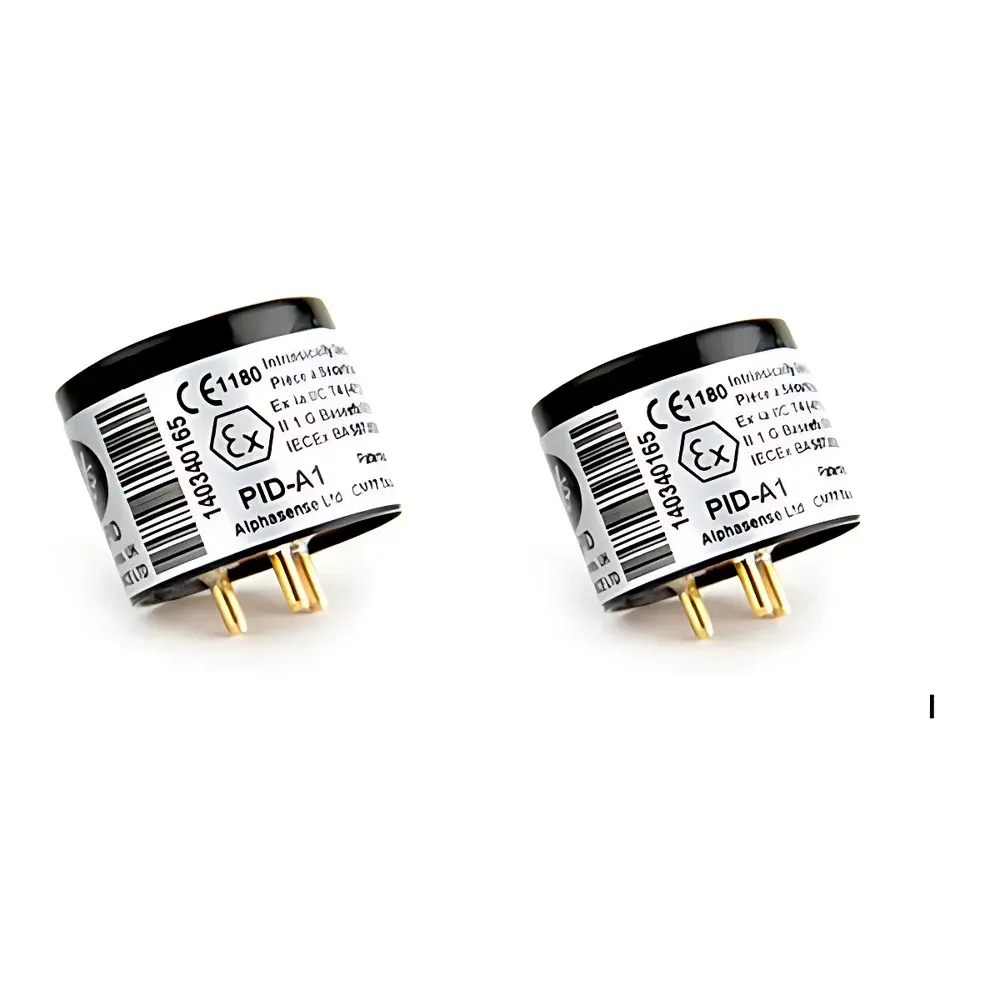
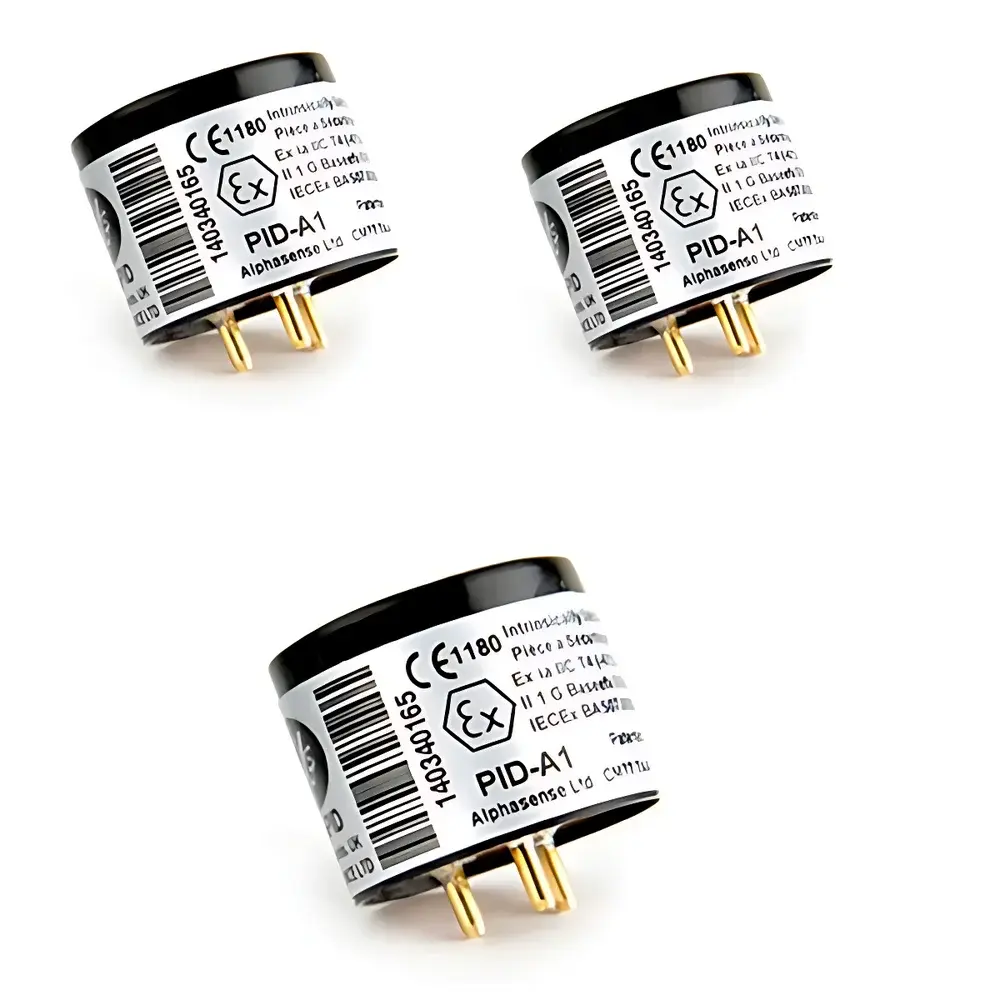
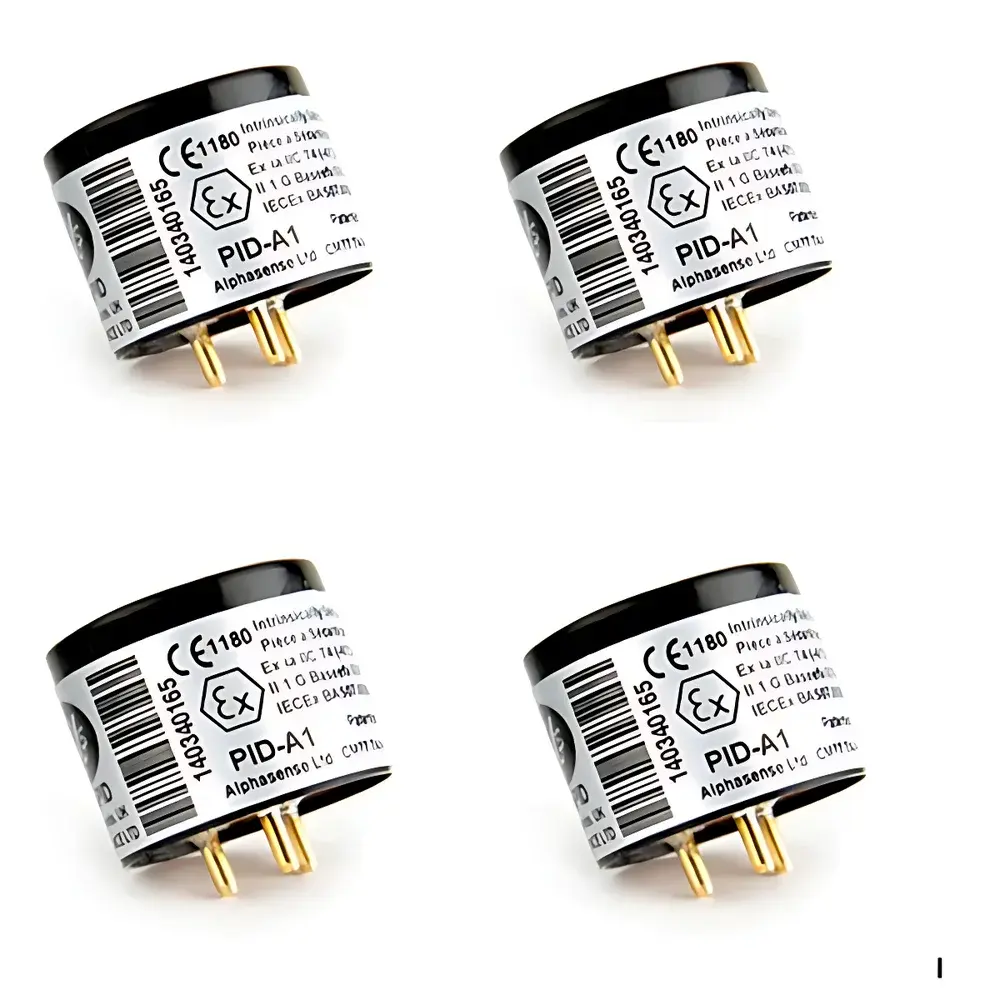
Alphasense PID-A1 High-Range Photoionization Detector (PID) Sensor
| Brand | Alphasense |
|---|---|
| Origin | United Kingdom |
| Model | PID-A1 (High-Range) |
| Detection Principle | Photoionization |
| Target Analytes | VOCs and select toxic gases |
| Typical Range | 50 ppb – 4000 ppm |
| Lamp Type | 10.6 eV UV lamp |
| Operating Environment | Diffusion or pumped sampling |
| Humidity Tolerance | Enhanced |
| Contamination Resistance | Optimized electrode housing |
| Electrode Assembly | Removable, pneumatically sealed |
| Output Signal | 4–20 mA analog |
| Warranty | 12 months (excludes lamp and grid) |
| Expected Service Life | >5 years |
| Diagnostic Capability | Lamp-off detection |
| Compliance | RoHS, CE, ATEX-certified variants available |
Overview
The Alphasense PID-A1 High-Range Photoionization Detector (PID) Sensor is an OEM-grade electrochemical gas sensing module engineered for continuous, real-time detection of volatile organic compounds (VOCs) and select inorganic toxic gases—including ammonia, hydrogen sulfide, and phosphine—within a broad dynamic concentration range of 50 parts-per-trillion (ppt) to 4000 parts-per-million (ppm). Based on the photoionization principle, the sensor employs a stable 10.6 eV ultraviolet (UV) lamp to ionize target molecules in the sample gas stream; liberated electrons are collected at a biased electrode, generating a current proportional to analyte concentration. Unlike metal-oxide or electrochemical sensors, PID technology delivers non-destructive, compound-class-selective response with high reproducibility across thousands of VOCs—including benzene, toluene, xylene (BTX), styrene, acetone, and chlorinated solvents—without cross-sensitivity to common interferents such as CO₂, methane, or water vapor. The PID-A1’s robust architecture supports integration into fixed monitoring systems, portable safety instruments, and process control analyzers where regulatory compliance, long-term stability, and low-maintenance operation are critical.
Key Features
- Extended measurement range: 50 ppt to 4000 ppm for VOCs—optimized for both trace-level leak detection and high-concentration industrial exposure monitoring.
- Stable 10.6 eV UV lamp with enhanced lifetime via upgraded driver IC and thermal management—reducing lamp replacement frequency without compromising ionization efficiency.
- Removable, pneumatically sealed electrode assembly—enables field maintenance, calibration verification, and contamination mitigation without full sensor replacement.
- Integrated lamp-off diagnostic circuitry—provides real-time status feedback to host systems, supporting predictive maintenance and GLP-compliant audit trails.
- Engineered for dual sampling modes: passive diffusion (for ambient air monitoring) and active pumped sampling (for duct, stack, or confined-space applications) with <30-second T₉₀ response and <60-second clearance time.
- Humidity-tolerant design with hydrophobic membrane and anti-fouling electrode geometry—maintains accuracy up to 95% RH without condensation-induced drift.
- 4–20 mA analog output with HART® protocol compatibility—facilitates seamless integration into DCS, SCADA, and PLC-based control infrastructures.
Sample Compatibility & Compliance
The PID-A1 demonstrates consistent sensitivity across aliphatic, aromatic, olefinic, and halogenated VOCs, including those with ionization potentials below 10.6 eV (e.g., isobutylene, methyl ethyl ketone, vinyl chloride). It is not responsive to compounds with IP >10.6 eV (e.g., formaldehyde, methanol, ethane), enabling selective detection in complex matrices. The sensor meets IEC 61241-11 (explosive atmospheres), RoHS Directive 2011/65/EU, and CE marking requirements. ATEX-certified versions (II 2G Ex ia IIC T4 Ga) are available for Zone 1 hazardous area deployment. While not intrinsically calibrated to ISO 16000-6 or ASTM D5197, its output is traceable to NIST-traceable calibration standards and supports method validation per OSHA 29 CFR 1910.120 and EPA Method TO-15 workflows when paired with certified reference gases.
Software & Data Management
As an analog-output OEM sensor, the PID-A1 does not include embedded firmware or onboard data logging. However, its 4–20 mA signal is fully compatible with third-party gas monitoring platforms that support HART® digital communication for configuration, diagnostics, and firmware updates. When integrated into systems compliant with FDA 21 CFR Part 11, the sensor’s lamp-on/off state, zero/span verification timestamps, and output stability metrics can be captured within electronic audit trails. Calibration history, drift compensation coefficients, and temperature-compensated response curves are managed externally—enabling full GxP alignment for pharmaceutical cleanroom monitoring, semiconductor fab ambient air quality control, and environmental remediation site reporting.
Applications
- Industrial hygiene monitoring: Real-time worker exposure assessment in petrochemical plants, paint manufacturing, and printing facilities per OELs defined in ACGIH TLVs® and EU-OELs.
- Hazardous materials response: First-responder portable detectors for rapid VOC plume mapping during chemical spills or railcar leaks.
- Environmental site assessment: Soil vapor intrusion screening and landfill gas monitoring per ASTM D6710 and EPA Region 9 protocols.
- Pharmaceutical facility qualification: Continuous monitoring of solvent residues in HVAC ducts and isolator purge streams during API synthesis.
- Waste treatment and biogas upgrading: Detection of siloxanes, terpenes, and sulfur-containing VOCs upstream of catalytic oxidation units.
FAQ
What gases can the PID-A1 detect?
The PID-A1 detects VOCs and select inorganic gases with ionization potentials ≤10.6 eV—including benzene, toluene, xylenes, styrene, acetone, MEK, chloroform, and hydrogen sulfide—provided they are present in the vapor phase and not chemically inhibited by matrix components.
Does the sensor require regular calibration?
Yes. Field calibration using certified zero air and span gas (e.g., isobutylene at 100 ppm) is recommended every 3–6 months depending on exposure history and regulatory requirements; daily bump testing is advised for safety-critical deployments.
Can the PID-A1 operate in high-humidity environments?
Yes—its hydrophobic membrane and optimized electrode geometry maintain performance up to 95% relative humidity without condensation-related signal drift or corrosion.
Is the UV lamp user-replaceable?
Yes. The lamp is a field-serviceable consumable with documented replacement procedures; lamp life typically exceeds 12,000 hours under continuous operation.
What certifications apply to the PID-A1?
Standard units comply with CE and RoHS; ATEX-certified variants (II 2G Ex ia IIC T4 Ga) are available for use in potentially explosive atmospheres classified under Directive 2014/34/EU.