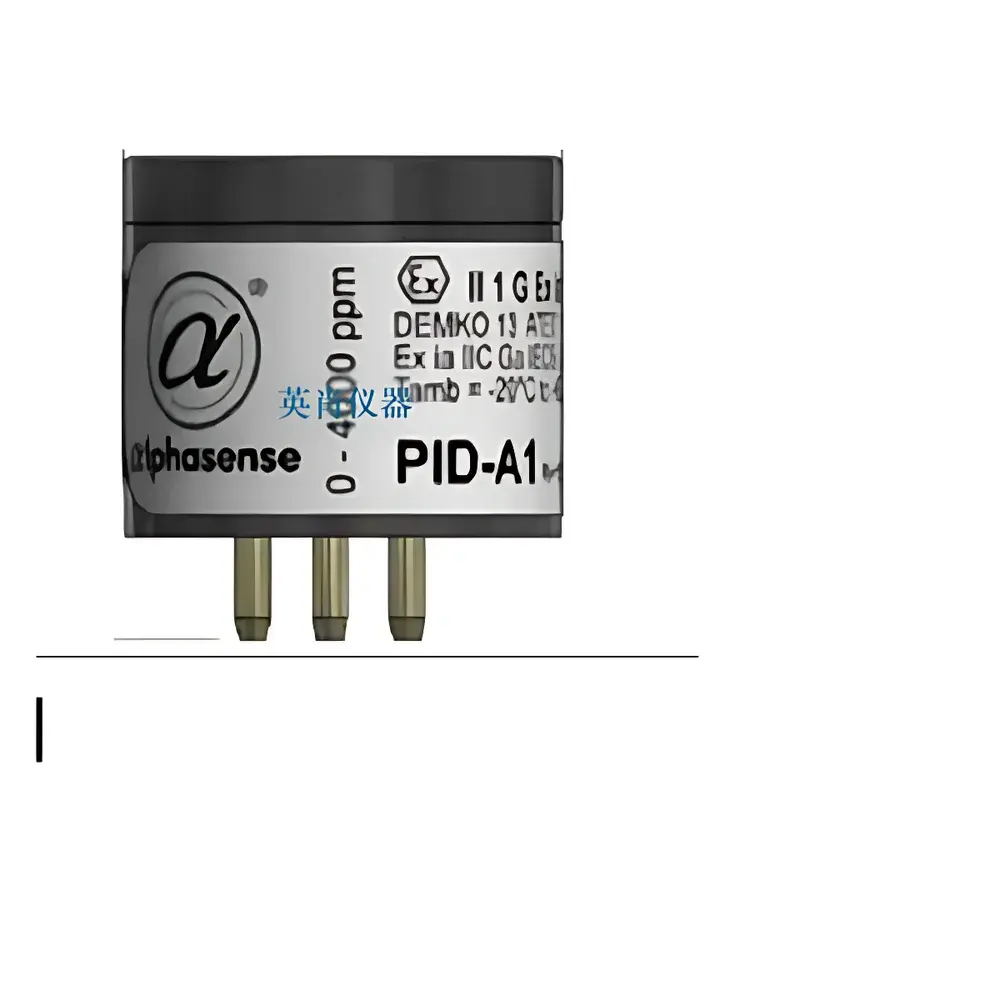
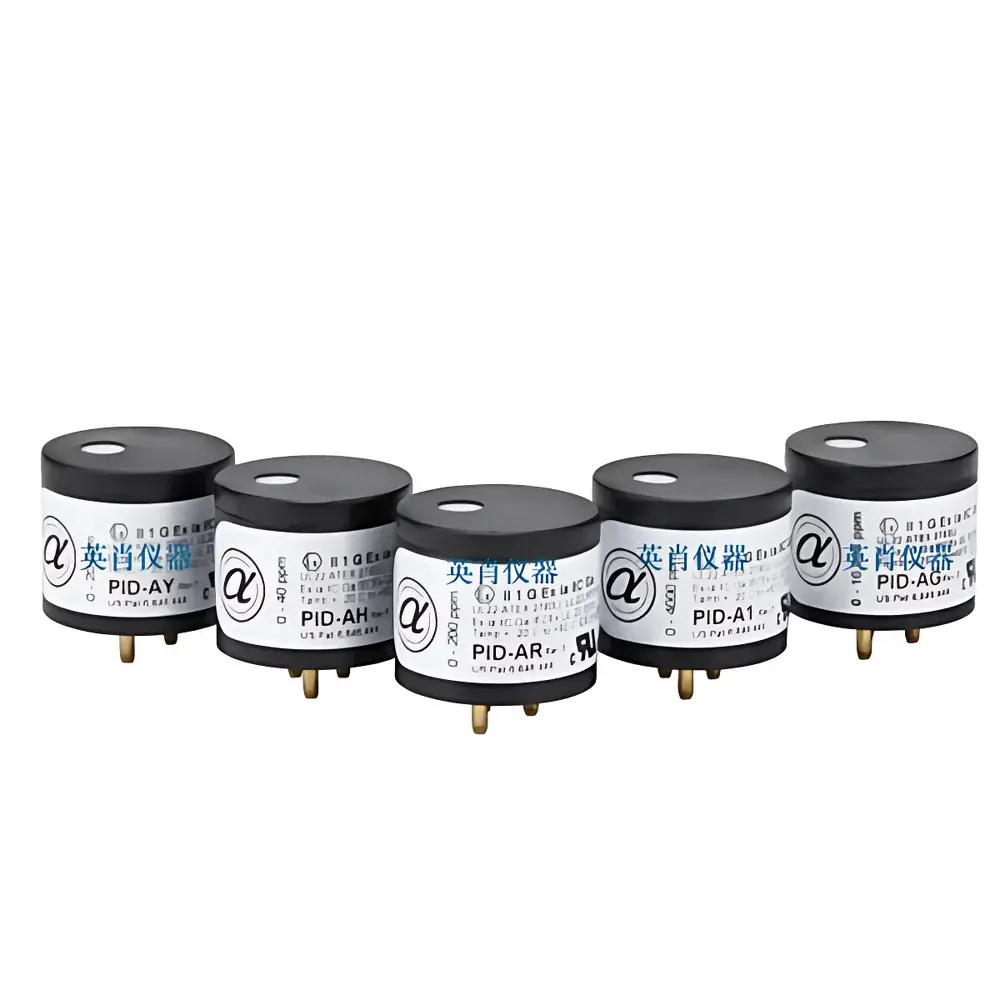
Alphasense PID-A15 Photoionization Detector (PID) Sensor for VOC and Toxic Gas Monitoring
| Brand | Alphasense |
|---|---|
| Origin | UK |
| Model | PID-A15 |
| Detection Range | 100 ppb – 4000 ppm (isobutylene equivalent) |
| Response Time (T90) | ≤2 s |
| Lamp Energy | 10.6 eV |
| Output Signal | 0.040–2.85 V |
| Operating Voltage | 3.2–5.5 VDC |
| Power Consumption | 80–200 mW |
| Sensitivity (typ.) | 1.1 mV/ppm isobutylene |
| Min. Detectable Level | 100 ppb isobutylene |
| Linear Range | 0–200 ppm isobutylene |
| Overload Capacity | 4000 ppm isobutylene |
| Operating Temperature | −20 °C to +60 °C |
| Relative Humidity | 0–95% RH (non-condensing) |
| Expected Sensor Lifetime | >5 years |
| Lamp Lifetime | 6000 h (10.6 eV) |
| Warranty | 12 months (sensor body), excluding lamp and grid |
| Certifications | ATEX, UL, IECEx, US Pat. No. 6,646,444, JP Pat. No. 3,793,757 |
Overview
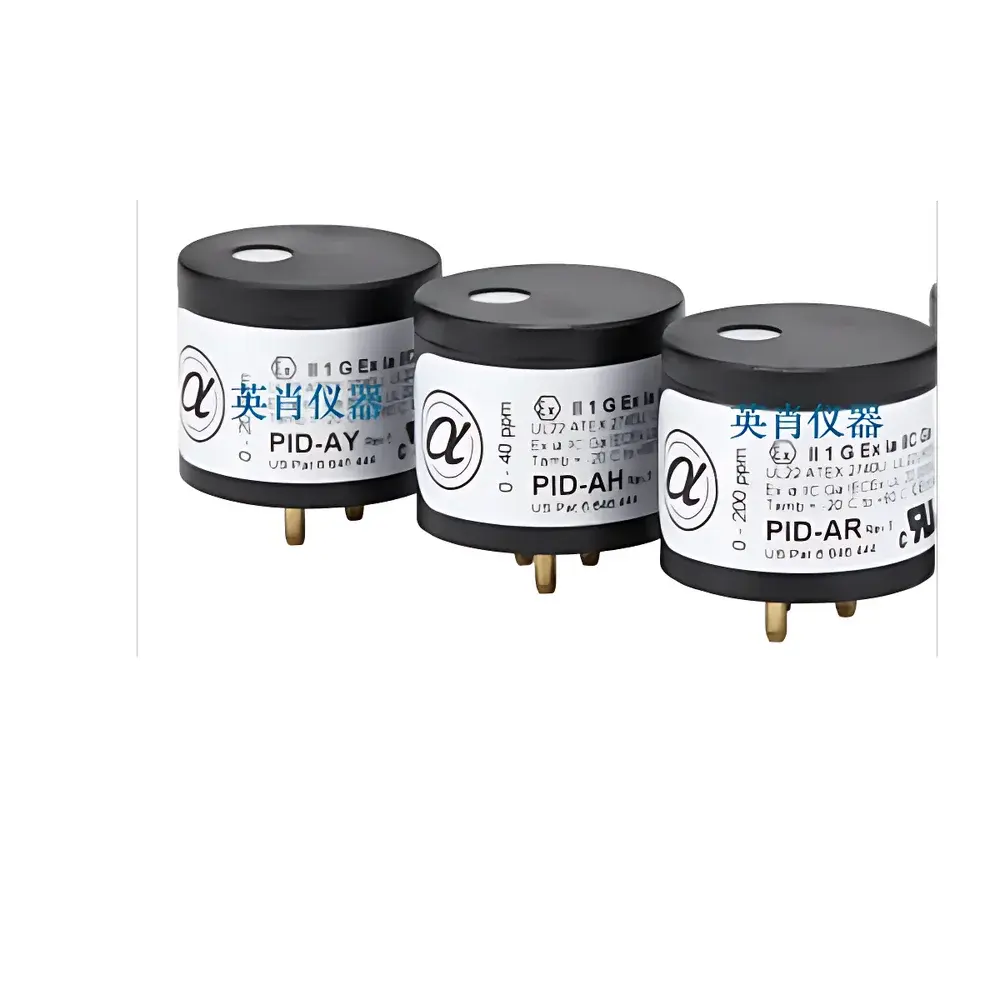
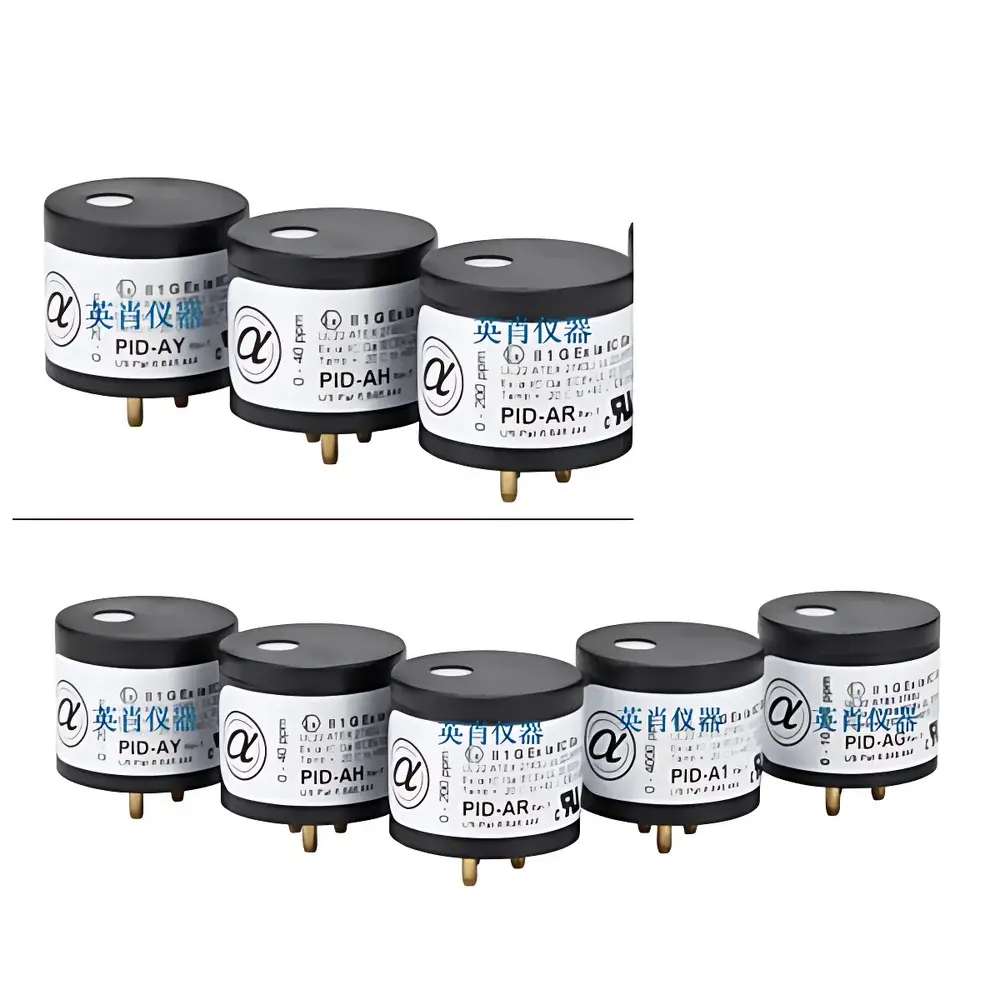
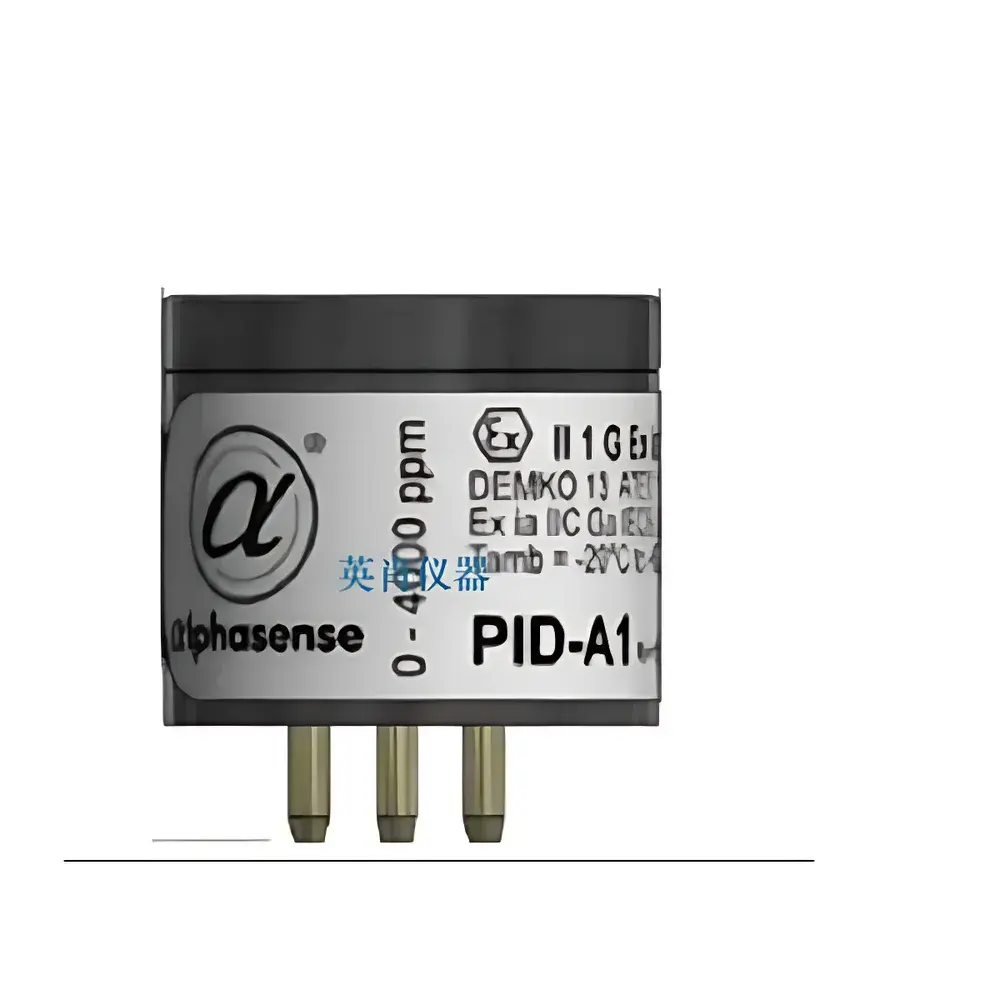
The Alphasense PID-A15 is a high-performance, OEM-grade photoionization detector (PID) sensor engineered for continuous, real-time monitoring of volatile organic compounds (VOCs) and select toxic gases in industrial safety, environmental compliance, and process control applications. Based on the fundamental principle of ultraviolet (UV) photoionization—where target molecules are ionized by photons from a 10.6 eV UV lamp—the PID-A15 generates an electrical current proportional to analyte concentration. This physical detection mechanism ensures broad-spectrum sensitivity across thousands of VOCs—including benzene, toluene, xylene, styrene, acetone, and chlorinated hydrocarbons—without requiring compound-specific calibration. Unlike electrochemical or metal-oxide sensors, the PID-A15 delivers inherently linear response within its 0–200 ppm isobutylene-equivalent range and maintains stable baseline performance even under dynamic sampling conditions. Its compact form factor and low-power architecture make it suitable for integration into portable gas detectors, fixed-area monitors, and distributed sensing networks compliant with OSHA PEL, NIOSH REL, and EU Directive 2017/164/EU (indicative occupational exposure limit values).
Key Features
- Ultra-fast T90 response time ≤2 seconds—enabling rapid leak detection and alarm triggering in time-critical environments.
- Wide dynamic detection range: 100 ppb to 4000 ppm (isobutylene-equivalent), supporting both trace-level early warning and high-concentration overexposure assessment.
- Robust 10.6 eV UV lamp with ≥6000 hours operational lifetime, optimized for ionizing weakly ionizable VOCs (e.g., aldehydes, ketones, aromatics) while minimizing ozone generation.
- Field-serviceable design featuring a removable, pneumatically sealed grid electrode—reducing fouling in high-humidity or particulate-laden airstreams.
- Integrated humidity-resistant housing rated for continuous operation at 0–95% RH (non-condensing) and −20 °C to +60 °C ambient temperatures.
- Low-power analog output (0.040–2.85 V) compatible with standard 12-bit ADC interfaces; power draw scalable between 80–200 mW depending on supply voltage (3.2–5.5 VDC).
- Compliant with international intrinsic safety standards: ATEX II 2G Ex ia IIC T4 Ga, UL 913 Class I, Division 1, Groups A–D, and IECEx Ex ia IIC T4 Ga.
Sample Compatibility & Compliance
The PID-A15 responds to all compounds with ionization energies below 10.6 eV—covering >95% of commonly regulated VOCs referenced in EPA Method TO-15, ASTM D5504, and ISO 16000-6. It does not detect methane, ethane, formaldehyde, or CO₂ (IE > 10.6 eV), eliminating cross-sensitivity in mixed-gas environments. The sensor meets functional safety requirements per IEC 61508 SIL 2 (hardware fault tolerance) when deployed in safety instrumented systems (SIS). All units undergo factory calibration traceable to NIST-certified isobutylene standards and include full metrological documentation for GLP/GMP audit readiness. CE marking confirms conformity with the EU Electromagnetic Compatibility (2014/30/EU) and RoHS (2011/65/EU) directives.
Software & Data Management
While the PID-A15 operates as an analog-output OEM sensor, it is fully compatible with Alphasense’s proprietary digital interface boards (e.g., B4C and A1 board families) that provide onboard temperature compensation, automatic zero/span validation, and digital signal conditioning. When integrated into host systems supporting Modbus RTU or CANopen protocols, the sensor enables timestamped data logging, trend analysis, and automated alarm escalation. Firmware updates and calibration verification logs adhere to FDA 21 CFR Part 11 requirements—including electronic signatures, audit trails, and data integrity safeguards—making it suitable for pharmaceutical cleanroom monitoring and regulated manufacturing facilities.
Applications
- Confined space entry monitoring for VOC hazards prior to worker access (OSHA 1910.146).
- Real-time fenceline monitoring in petrochemical refineries and chemical plants per EPA 40 CFR Part 63 Subpart HHHHH.
- Indoor air quality (IAQ) assessment in laboratories, hospitals, and semiconductor fabrication cleanrooms.
- Leak detection and repair (LDAR) programs compliant with EPA Method 21 and ISO 16000-28.
- Integration into unmanned aerial vehicles (UAVs) and mobile ground robots for hazardous site reconnaissance.
- Process gas stream analysis during solvent recovery, paint booth exhaust treatment, and thermal oxidizer optimization.
FAQ
What gases does the PID-A15 detect?
The PID-A15 detects any VOC or inorganic gas with an ionization energy less than 10.6 eV—including aromatic hydrocarbons, aliphatic hydrocarbons, ketones, aldehydes, amines, and sulfur compounds. It does not respond to methane, ethane, CO, CO₂, or NO₂.
Is calibration required before field deployment?
Yes. Each unit ships with a factory calibration certificate traceable to NIST standards. Field calibration using certified isobutylene gas is recommended prior to first use and at intervals defined by your QA/QC protocol (typically every 3–6 months for critical applications).
Can the PID-A15 operate in high-humidity environments?
Yes. Its sealed grid design and hydrophobic membrane allow stable operation up to 95% RH without condensation. For sustained exposure above 80% RH, optional heated sample lines or Nafion dryers are advised to prevent signal drift.
How is lamp degradation managed over time?
Lamp intensity is monitored via internal reference photodiode feedback. Host firmware can trigger maintenance alerts when output falls below 85% of initial value—corresponding to end-of-life at ~6000 h for 10.6 eV lamps.
Does the sensor require a pump for sampling?
No. The PID-A15 supports both diffusion-mode (passive) and pumped (active) sampling configurations. For fixed installations with long sample lines or low-flow ducts, an external diaphragm pump is recommended to ensure representative response kinetics.