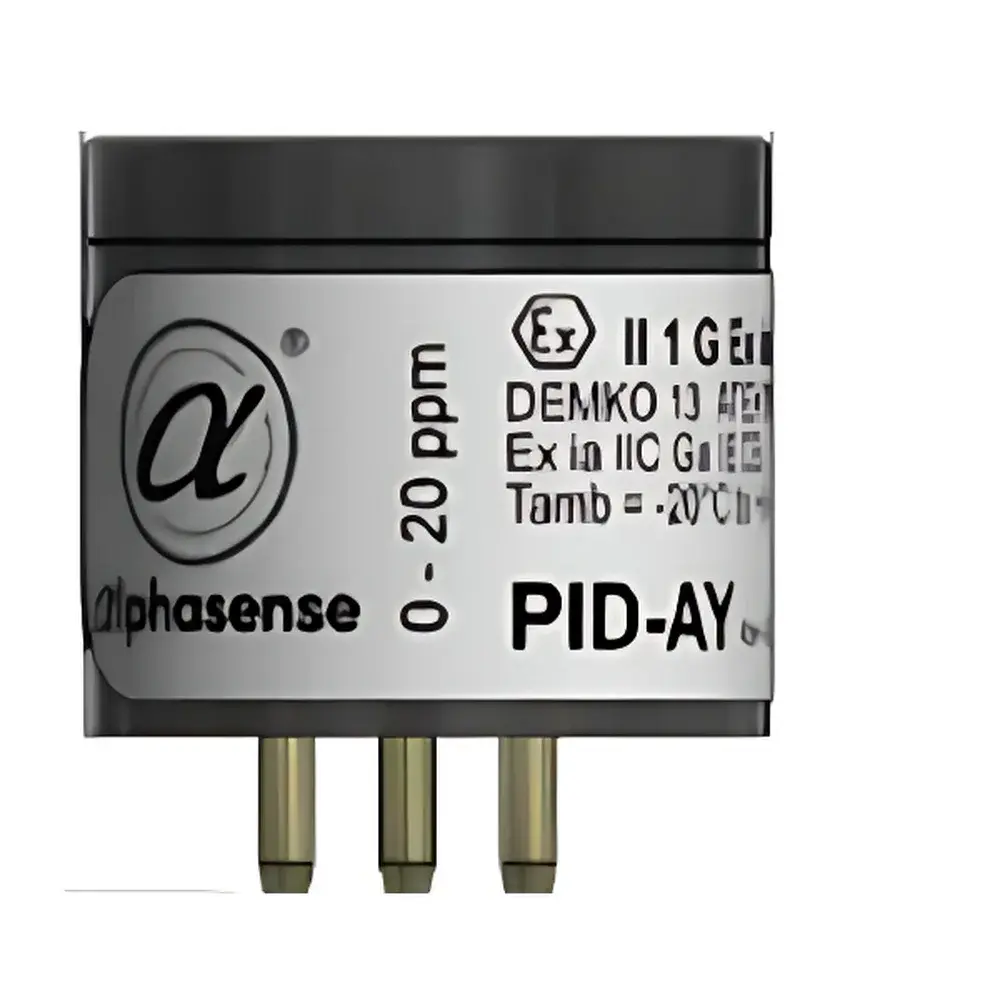
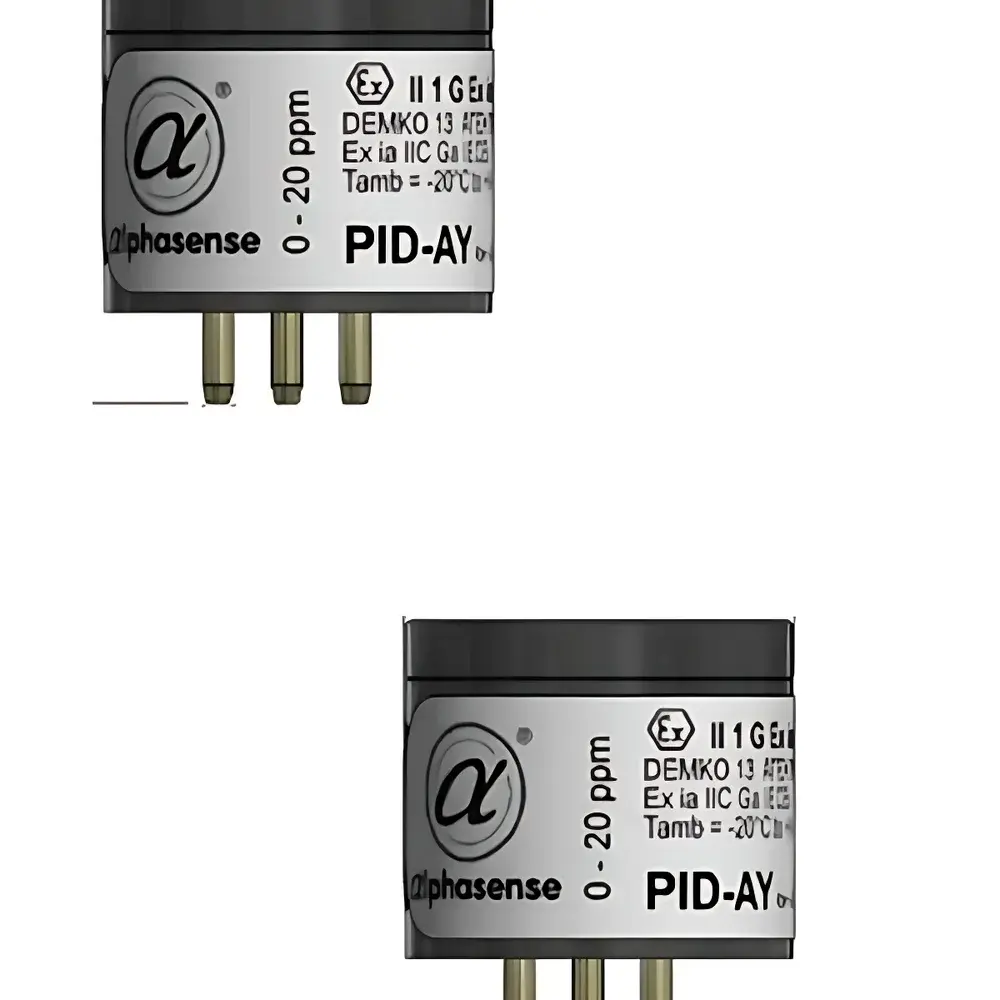
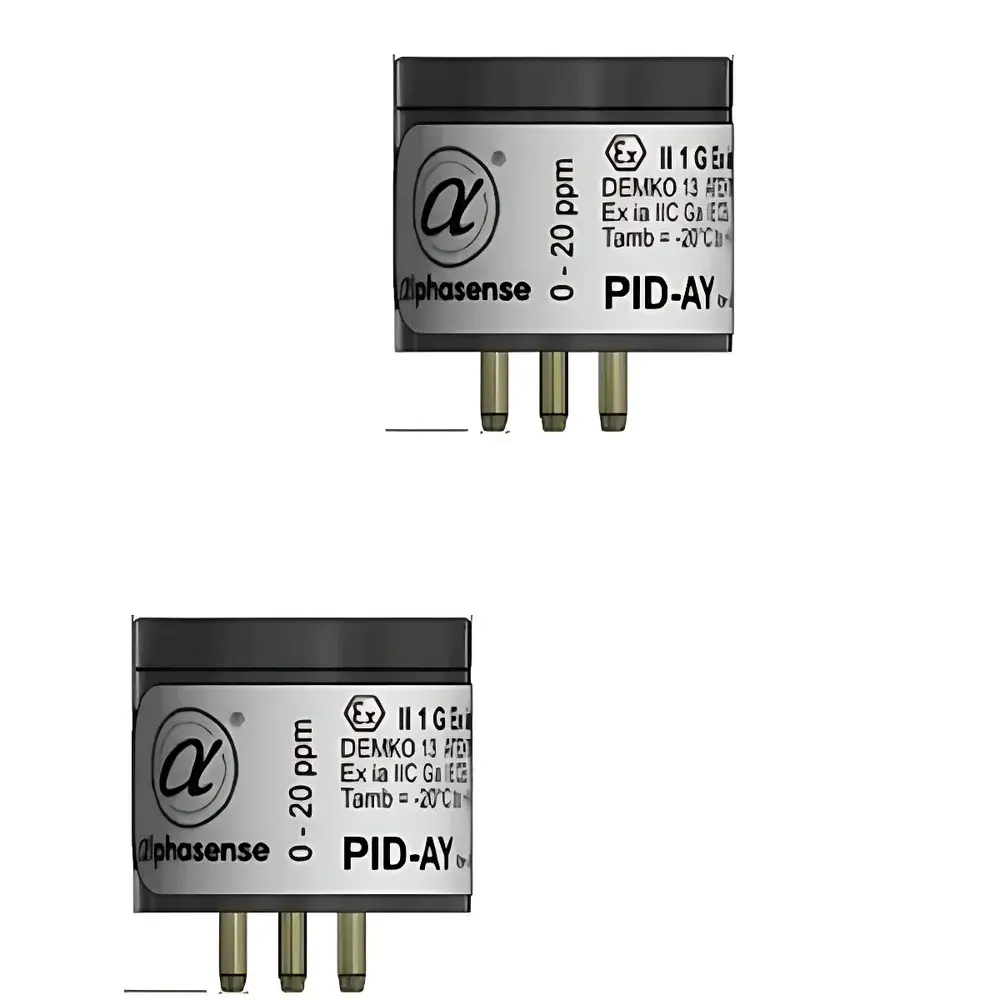
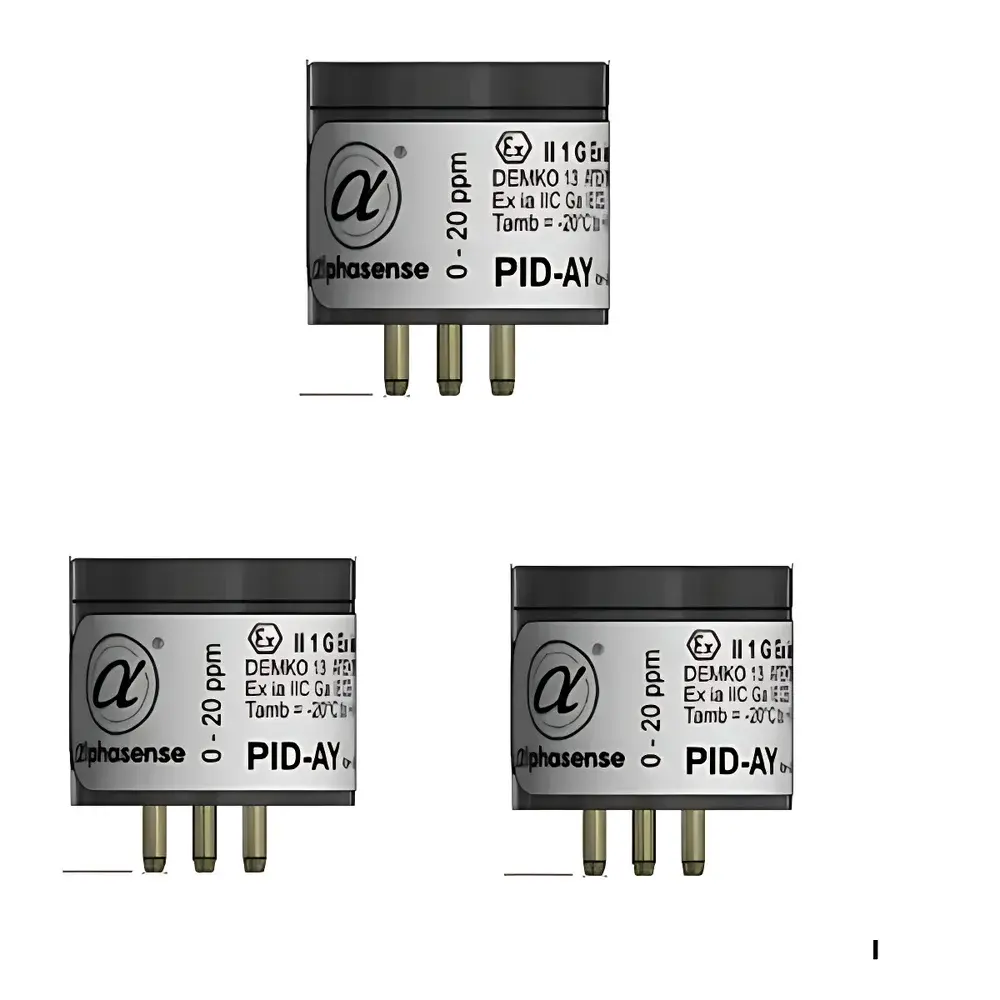
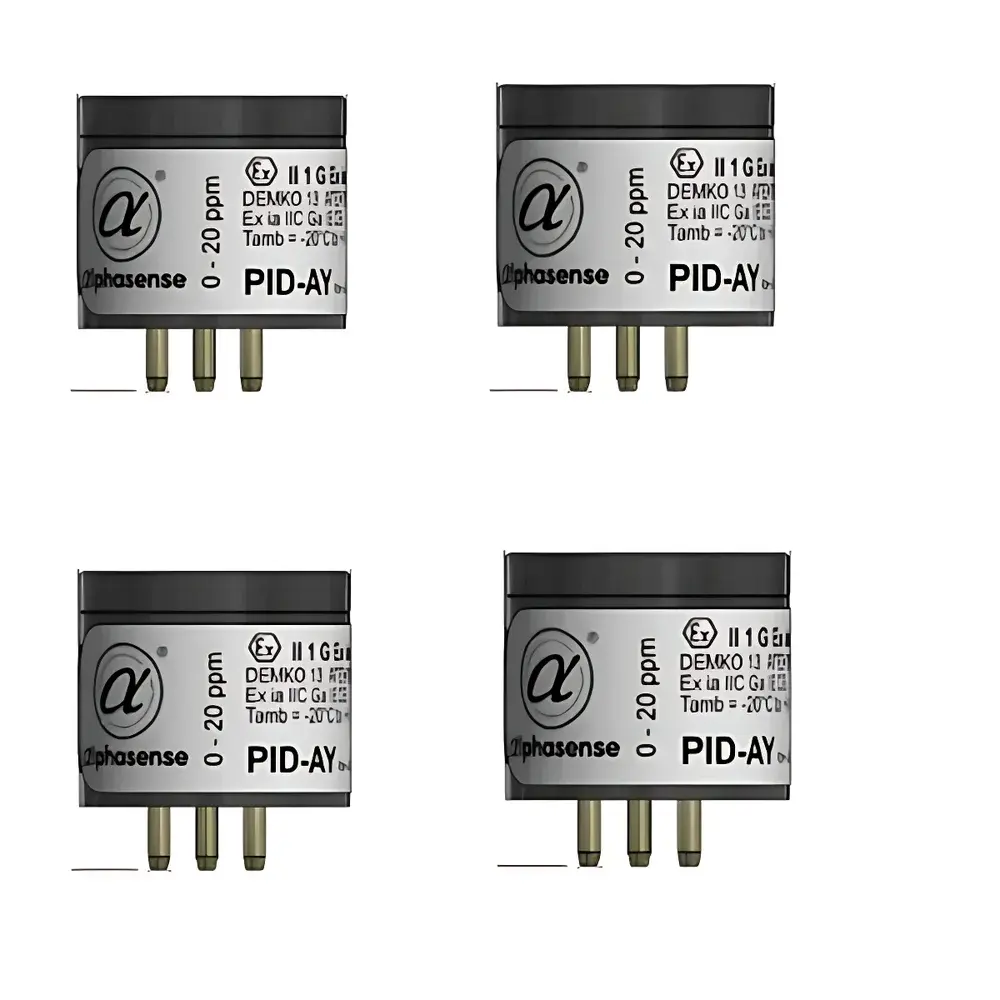
Alphasense PID-AY5 High-Sensitivity Photoionization Detector (PID) Sensor
| Brand | Alphasense |
|---|---|
| Origin | United Kingdom |
| Model | PID-AY5 (High-Sensitivity) |
| Detection Range | 1 ppb – 20 ppm (typical for VOCs) |
| Lamp Energy | 10.6 eV |
| Output Signal | Analog (0–5 V or 4–20 mA, configurable) |
| Operating Temperature | −20 °C to +50 °C |
| Humidity Range | 0–95% RH (non-condensing) |
| Response Time (T90) | < 30 s (diffusion mode) |
| Zero Stability | < 2 ppb drift/week |
| Sensitivity Drift | < 2% FS/month |
| Lifetime | ≥ 12 months (lamp), ≥ 24 months (sensor body) |
Overview
The Alphasense PID-AY5 is a high-sensitivity, OEM-grade photoionization detector (PID) sensor engineered for reliable, low-concentration detection of volatile organic compounds (VOCs) and select inorganic gases with ionization energies below 10.6 eV. Based on the principle of ultraviolet photoionization—where target molecules are ionized by photons emitted from a stable 10.6 eV UV lamp—the sensor generates a current proportional to analyte concentration, enabling quantitative measurement across a dynamic range of 1 ppb to 20 ppm. Unlike catalytic bead or metal oxide semiconductor sensors, the PID-AY5 delivers non-destructive, compound-class-selective detection without cross-sensitivity to CO₂, methane, or common background gases. Its design prioritizes long-term baseline stability, rapid response kinetics, and immunity to humidity-induced signal suppression—critical attributes for continuous ambient air monitoring, industrial hygiene surveys, and fugitive emission detection in compliance-driven environments.
Key Features
- Ultra-low detection limit: Certified sensitivity down to 1 ppb for benzene, toluene, xylene (BTX), and other low-ionization-energy VOCs.
- Stable 10.6 eV krypton-based UV lamp with >12-month operational lifetime and <0.5% energy drift over rated service life.
- OEM-optimized form factor (32 mm × 32 mm × 18 mm) with integrated temperature compensation and analog output (0–5 V or 4–20 mA, jumper-selectable).
- Robust electrochemical cell architecture featuring gold-plated electrodes and PTFE membrane diffusion barrier for consistent mass transport control.
- Validated performance under variable environmental conditions: operates continuously at −20 °C to +50 °C and 0–95% RH (non-condensing) without active humidity compensation hardware.
- Plug-and-play compatibility with standard gas sampling interfaces—including diffusion caps, pump-driven inlet manifolds, and heated sample lines—enabling seamless integration into portable monitors, fixed-site controllers, and drone-mounted sensing platforms.
Sample Compatibility & Compliance
The PID-AY5 detects over 1,500 VOCs—including aliphatic/aromatic hydrocarbons, ketones, aldehydes, amines, and sulfur-containing compounds—provided their first ionization energy is ≤10.6 eV. It does not respond to compounds with higher ionization thresholds (e.g., formaldehyde, methanol, ethylene glycol) unless used with optional 11.7 eV lamp variants (not included). The sensor complies with IEC 60079-29-1:2016 for explosive atmosphere safety documentation and meets EN 50104:2017 requirements for toxic gas detectors in occupational settings. While not intrinsically safe as a standalone component, it is routinely deployed in ATEX-certified host instruments meeting Category 2G/3G standards. For regulatory reporting, data generated using the PID-AY5 aligns with OSHA Method 1018 and NIOSH Method 2549 for workplace VOC assessment, and supports GLP-compliant logging when paired with validated data acquisition firmware.
Software & Data Management
The PID-AY5 operates as an analog transducer and requires external signal conditioning and digitization. When integrated into systems supporting Alphasense’s AS-Interface protocol or third-party ADC modules (e.g., Texas Instruments ADS1256), raw current signals are converted with 24-bit resolution and timestamped at ≥1 Hz sampling rate. Firmware-level calibration routines support two-point (zero/span) and multi-point linearization via EEPROM-stored coefficients. Audit-trail-capable hosts may log sensor diagnostics—including lamp voltage, temperature-corrected gain, and zero-drift history—in accordance with FDA 21 CFR Part 11 requirements when configured with electronic signature and secure storage. Alphasense provides full datasheets, calibration certificates traceable to NPL (UK), and RoHS/REACH declarations for supply chain transparency.
Applications
- Industrial hygiene monitoring: Real-time personal exposure assessment for refinery, petrochemical, and pharmaceutical manufacturing personnel.
- Fugitive emission detection (FED): Quantitative leak screening per EPA Method 21 and LDAR program protocols.
- Indoor air quality (IAQ) networks: Integration into smart building management systems for office, school, and hospital environments.
- Hazardous waste site characterization: On-site screening of soil vapor and headspace samples during Phase II investigations.
- Environmental remediation verification: Post-treatment VOC residual monitoring in groundwater extraction systems and soil vapor extraction units.
- Research-grade atmospheric chemistry studies: Deployment in mobile labs and UAV-based vertical profiling platforms requiring low-power, high-fidelity VOC sensing.
FAQ
What VOCs can the PID-AY5 detect?
It responds to VOCs with ionization energies ≤10.6 eV—including benzene, styrene, isopropanol, acetone, and chlorinated solvents—but not formaldehyde (IE = 10.88 eV) or ammonia (IE = 10.18 eV, though weakly responsive due to quenching effects).
Does the sensor require periodic recalibration?
Yes. Alphasense recommends zero/span calibration every 30 days for critical applications and before each field deployment; longer intervals (up to 90 days) are acceptable under stable laboratory conditions with documented drift validation.
Can the PID-AY5 be used in high-humidity environments?
Yes—its hydrophobic membrane and internal temperature compensation maintain accuracy up to 95% RH non-condensing; however, condensation must be prevented via sample line heating or Nafion dryers in saturated conditions.
Is the 10.6 eV lamp replaceable in the field?
No. The lamp is sealed within the sensor housing and not user-serviceable; end-of-life replacement requires full sensor unit exchange per Alphasense’s warranty and calibration protocol.
What is the expected service life under continuous operation?
Typical operational lifetime is 12 months for the UV lamp and 24 months for the sensor body when operated within specified temperature/humidity limits and protected from particulate contamination and solvent overload.