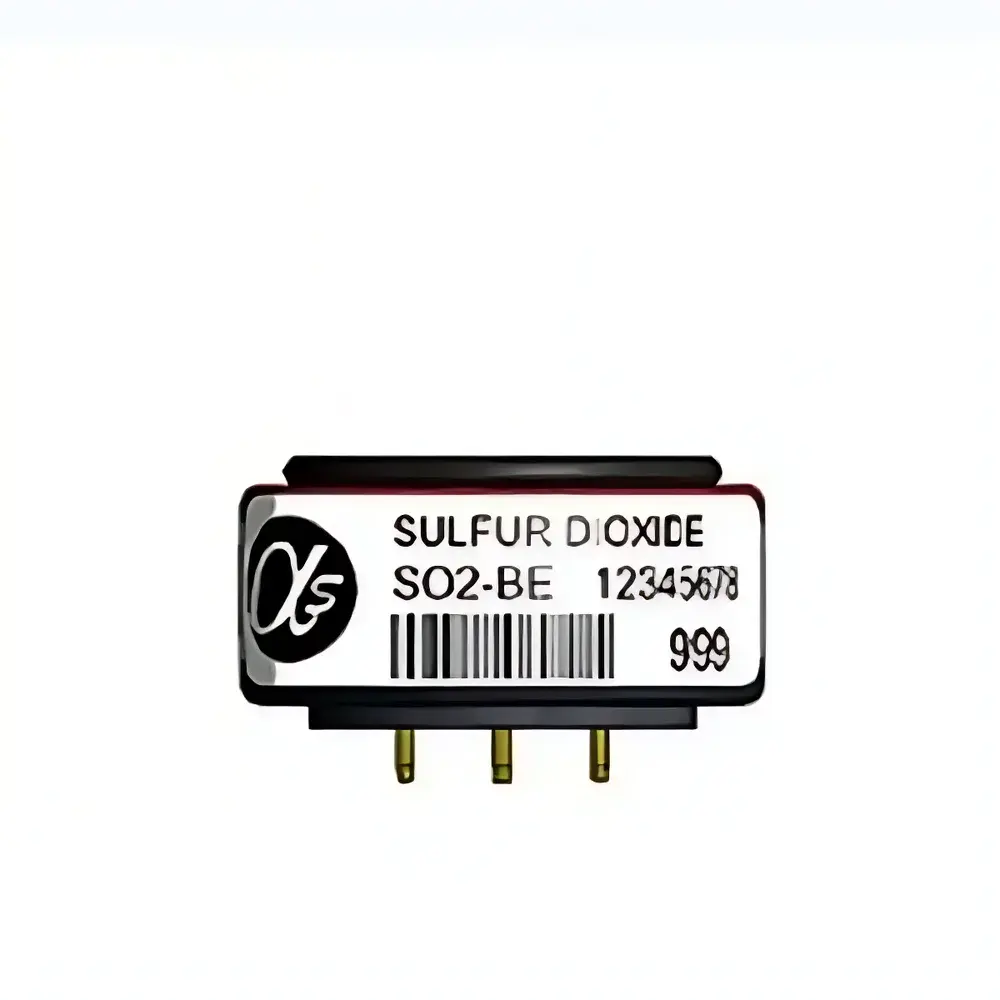
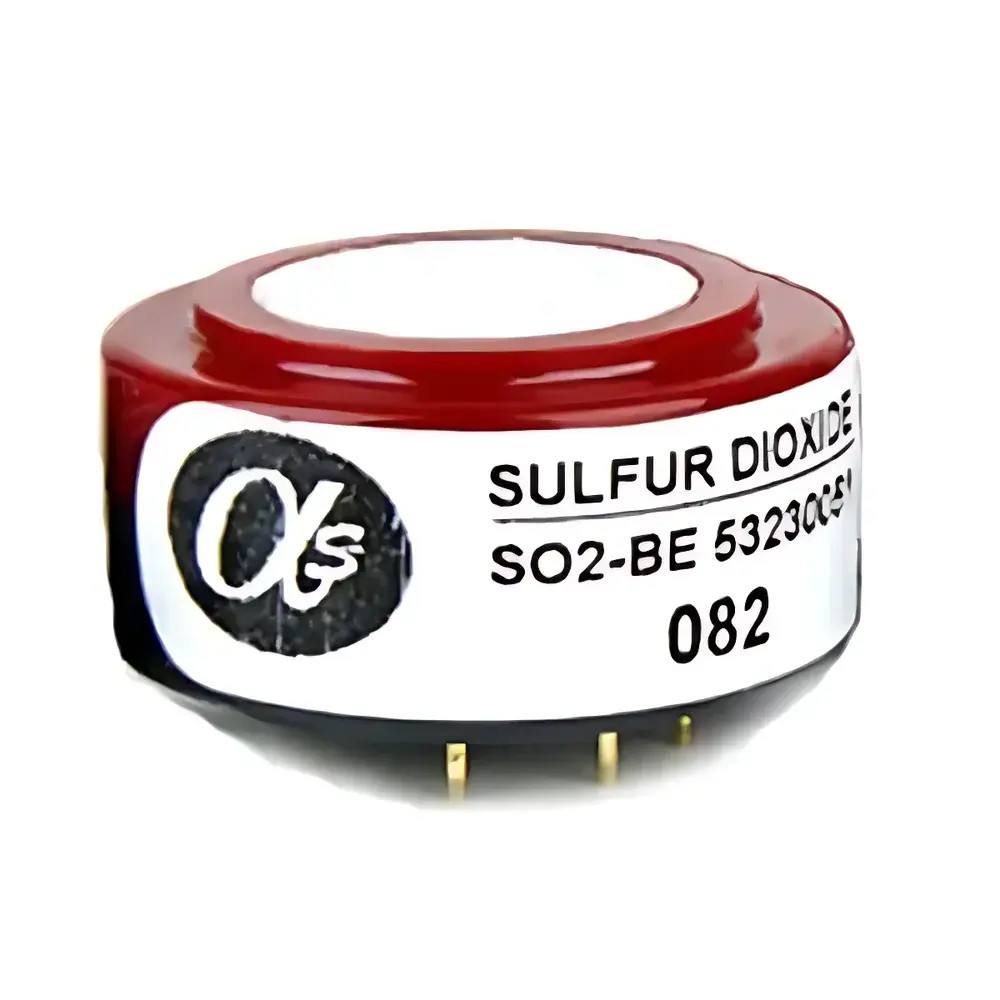
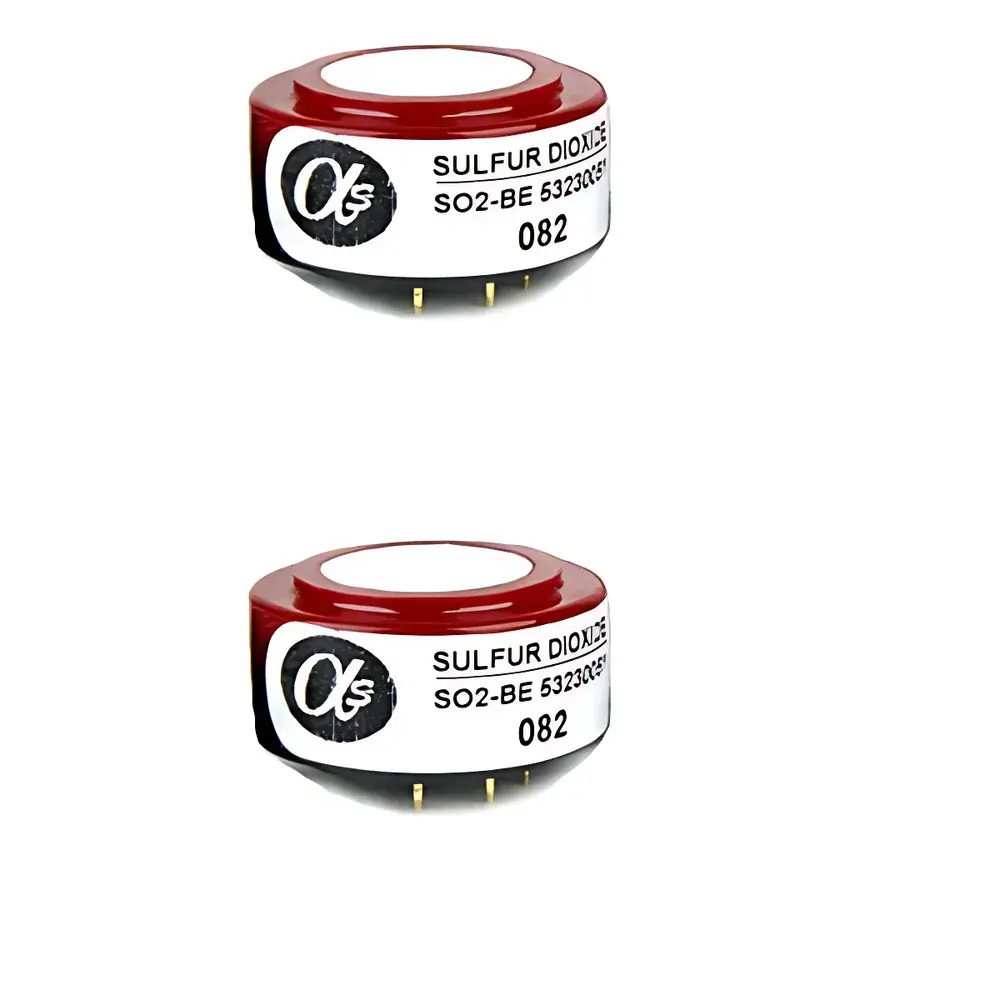
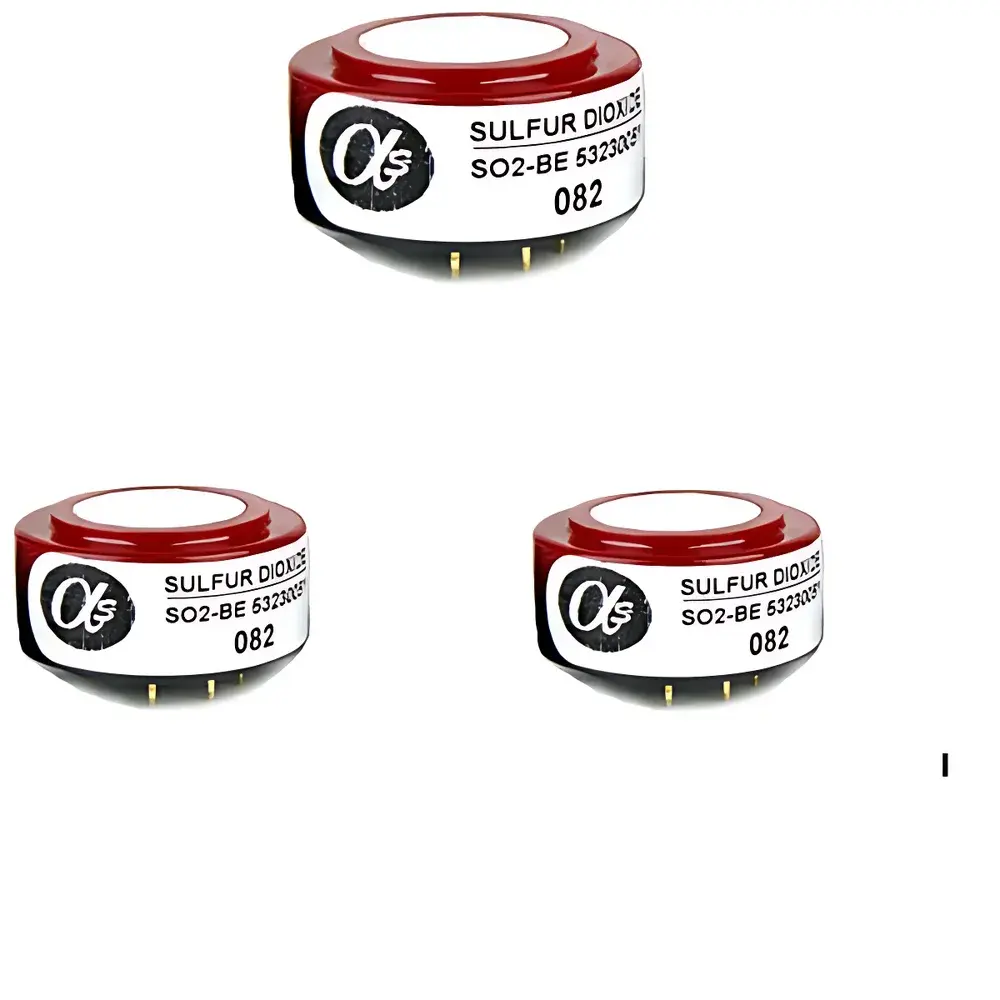
Alphasense SO2-BE Electrochemical Sulfur Dioxide Gas Sensor
| Brand | Alphasense (UK) |
|---|---|
| Origin | United Kingdom |
| Model | SO2-BE |
| Detection Range | 0–2000 ppm |
| Overload Limit | 10,000 ppm |
| Response Time (t₉₀) | <30 s |
| Sensitivity | 70–100 nA/ppm |
| Resolution | <2 ppm |
| Linearity | Linear up to 20 ppm |
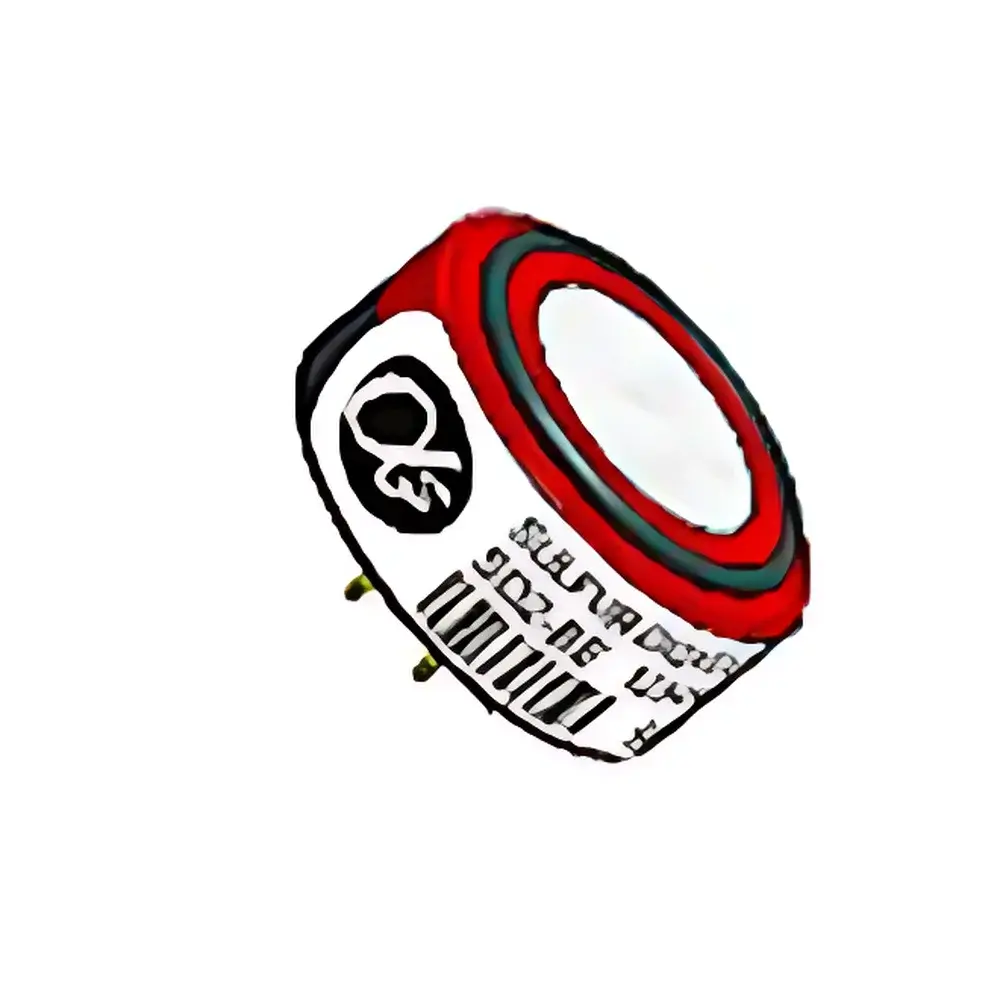
| Dimensions | Ø32.3 × 16.5 mm |
| Operating Temperature | −20 °C to +50 °C |
| Operating Humidity | 15–90% RH (non-condensing) |
| Expected Lifetime | ≥24 months (typical in ambient air) |
Overview
The Alphasense SO2-BE is a high-performance, three-electrode electrochemical gas sensor engineered for the selective and stable detection of sulfur dioxide (SO₂) in ambient air and industrial process environments. Based on amperometric transduction, the sensor operates via diffusion-controlled oxidation of SO₂ at the working electrode in an acidic electrolyte, generating a current proportional to gas concentration. Its robust cell architecture—featuring a PTFE hydrophobic membrane, optimized catalyst layer, and temperature-compensated reference electrode—ensures consistent sensitivity across variable environmental conditions. Designed for integration into fixed or portable gas monitoring systems, the SO2-BE complies with IEC 60079-29-1 for hazardous area suitability (when used with appropriate barrier circuits) and meets the functional requirements outlined in EN 45544-1 for workplace exposure monitoring.
Key Features
- Three-electrode electrochemical design for enhanced stability and reduced zero drift
- Wide linear detection range from 0 to 2000 ppm, supporting both occupational health (TLV-TWA: 2 ppm) and industrial stack monitoring applications
- Fast response time (t₉₀ < 30 seconds), enabling real-time tracking of transient SO₂ events
- High resolution (<2 ppm) and calibrated sensitivity of 70–100 nA/ppm, traceable to NIST-traceable reference standards
- Integrated thermal compensation circuitry minimizes output variation over −20 °C to +50 °C operating range
- Compact cylindrical form factor (Ø32.3 × 16.5 mm) with standardized pin layout compatible with industry-standard sensor carriers (e.g., Alphasense B4 series interface boards)
- Electrolyte retention system ensures >24 months operational lifetime under typical indoor/urban ambient conditions
Sample Compatibility & Compliance
The SO2-BE exhibits minimal cross-sensitivity to common interferents including NO₂ (±8% signal at 5 ppm), CO (±2%), H₂S (±5%), and Cl₂ (±12%). It is not recommended for use in environments containing >50 ppm ozone or continuous exposure to >100 ppm SO₃. The sensor meets ISO 16000-23 for indoor air quality instrumentation validation protocols and is suitable for deployment in systems compliant with OSHA 29 CFR 1910.1000 and EU Directive 2017/164/EU (indicative occupational exposure limit values). When integrated into certified analyzers, it supports GLP-compliant data acquisition per ASTM D5012 and enables audit-ready calibration logs required under FDA 21 CFR Part 11 when paired with compliant host firmware.
Software & Data Management
The SO2-BE outputs a low-impedance analog current signal (typically 0–200 nA for 0–2000 ppm), compatible with standard transimpedance amplifiers and 16-bit ADC modules. Alphasense provides open-format calibration certificates (including sensitivity, zero offset, and temperature coefficient data) for integration into custom data acquisition platforms. For OEM developers, the company supplies SDK-compatible configuration tools (via UART or I²C interfaces using optional breakout boards) supporting automatic baseline correction, span verification alerts, and sensor health diagnostics—including electrolyte depletion estimation and electrode polarization status. All calibration and diagnostic metadata can be embedded into CSV or JSON telemetry streams, facilitating traceability in cloud-based environmental monitoring networks.
Applications
- Fixed-site ambient air quality monitoring stations (AQMS) compliant with EU Directive 2008/50/EC
- Portable personal exposure meters for refinery, power generation, and pulp & paper facility personnel
- Stack emission monitoring systems (CEMS) requiring redundant SO₂ sensing channels
- Indoor air quality (IAQ) controllers in HVAC systems serving museums, archives, and cleanrooms
- Research-grade atmospheric chemistry instrumentation for field-deployable gas chromatography–electrochemical detector hybrids
- Calibration transfer standards in metrology laboratories accredited to ISO/IEC 17025
FAQ
What is the recommended operating humidity range for the SO2-BE?
The sensor is rated for 15–90% relative humidity (non-condensing); prolonged exposure to >95% RH may accelerate electrolyte dilution and reduce service life.
Does the SO2-BE require external temperature compensation?
No—the sensor incorporates an integrated thermistor and factory-applied temperature compensation algorithm; however, host system firmware must apply the published tempco coefficients for highest accuracy across the full −20 °C to +50 °C range.
Can the SO2-BE be used in oxygen-deficient environments?
Yes, but performance below 10% O₂ requires recalibration; the sensor relies on ambient oxygen as the counter-electrode reactant, and significant O₂ depletion will cause nonlinearity and extended recovery time.
How often should the SO2-BE be calibrated in routine operation?
For occupational safety applications, quarterly bump testing with 5 ppm SO₂ challenge gas is recommended; full two-point calibration (zero and span) every six months ensures compliance with ISO 17025 internal QA requirements.
Is the SO2-BE compatible with wireless IoT gateways?
Yes—when interfaced via Alphasense’s ASC-1 evaluation board or third-party analog-to-LoRaWAN modules, the sensor supports secure OTA firmware updates and encrypted payload transmission meeting IEC 62443-3-3 cybersecurity profiles.