
ALS PiL-x Series Picosecond Gain-Switched Laser Diode Module
| Brand | A.L.S. GmbH / Advanced Laser Diode Systems |
|---|---|
| Origin | Germany |
| Model | PiL-x |
| Wavelength Range | 375–2000 nm |
| Pulse Width | 20 ps – 1 ns |
| Peak Power | 20–1000 mW |
| Repetition Rate | Single Shot to 120 MHz |
| Output | Free-space or Fiber-Coupled (SM/MM) |
| Polarization Extinction Ratio | >23 dB |
| Timing Jitter | <3 ps RMS |
| Warm-up Time | <5 min |
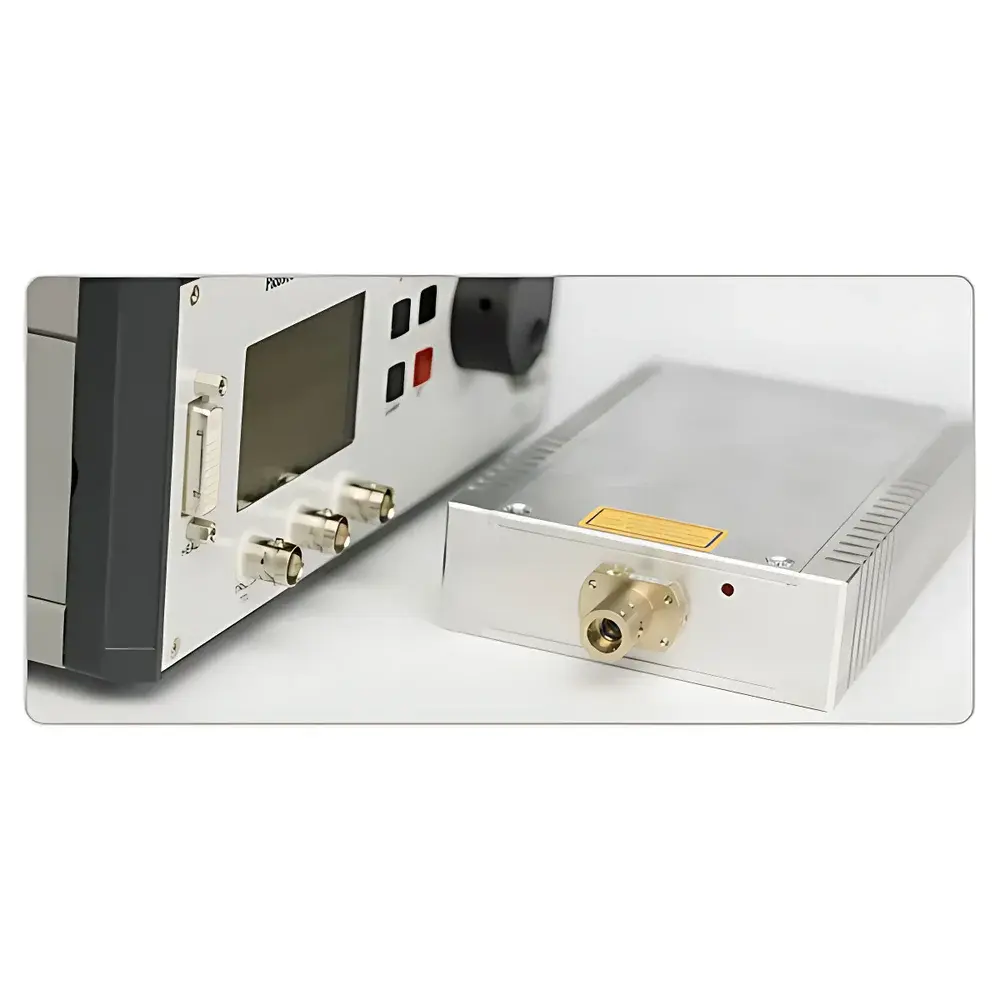
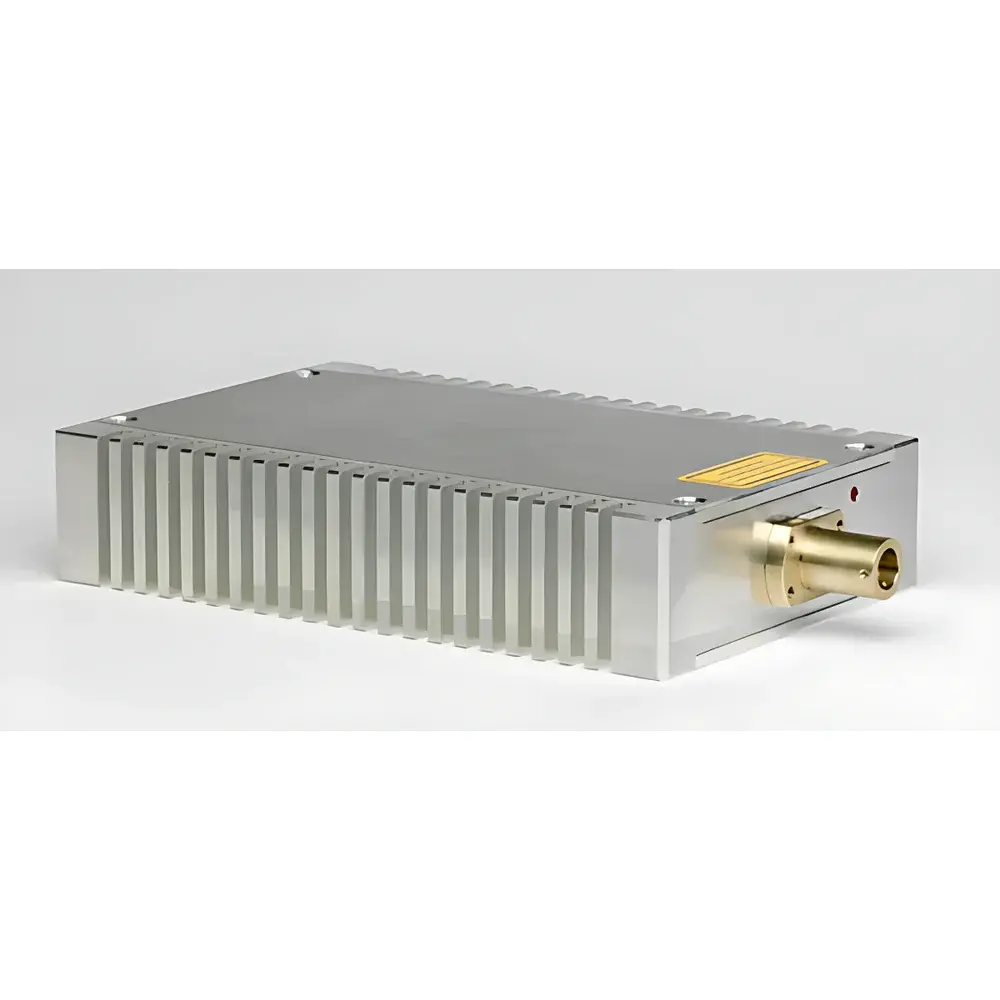
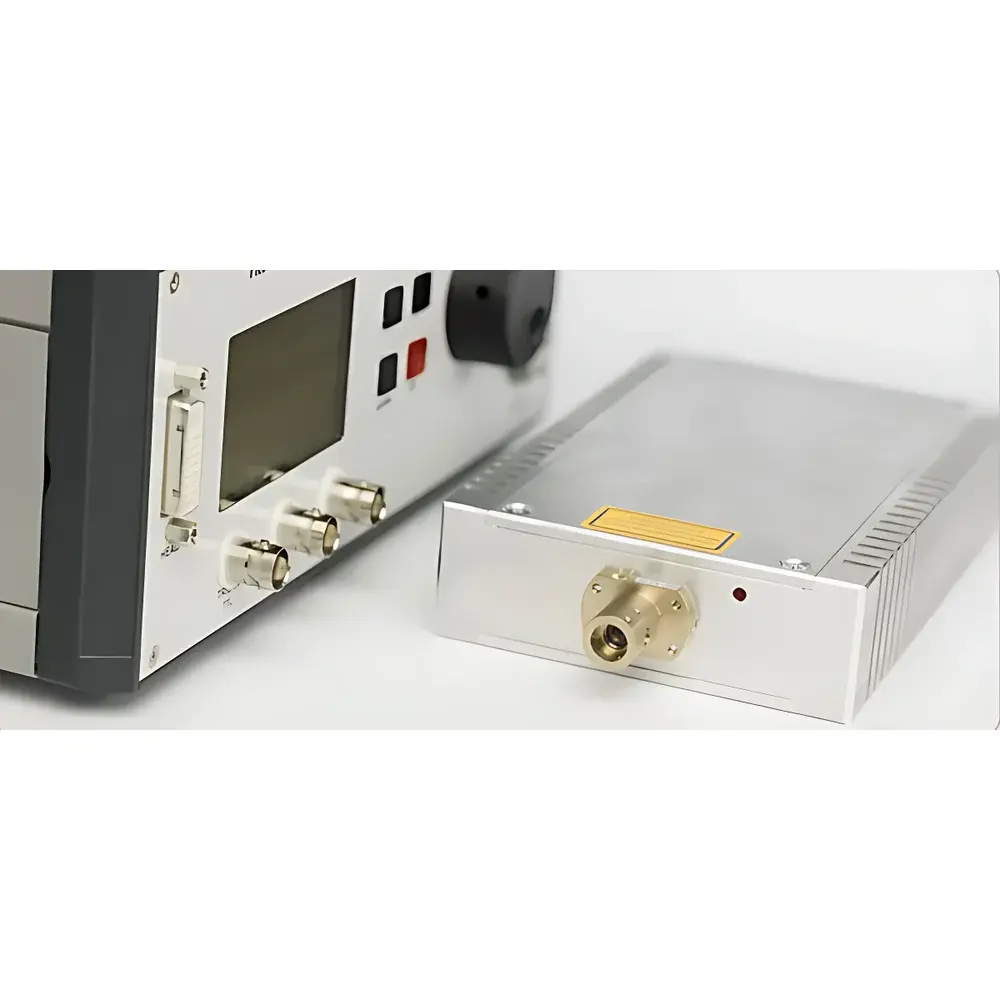
| Laser Head Dimensions | 95 × 31 × 147 mm³ |
| Controller Dimensions | 235 × 88 × 326 mm³ |
| OEM Housing | Compact, Sealed, Maintenance-Free |
Overview
The ALS PiL-x Series is a family of gain-switched picosecond laser diode modules engineered for precision time-resolved optical measurements in research and industrial applications. Based on direct modulation of high-speed semiconductor laser diodes, these sources generate transform-limited optical pulses without external pulse compression or mode-locking. The underlying principle relies on fast current injection into specially designed edge-emitting laser diodes, enabling sub-nanosecond pulse formation with exceptional temporal fidelity. This architecture delivers intrinsic low timing jitter (<3 ps RMS), high pulse-to-pulse stability, and compatibility with synchronization-critical setups such as time-correlated single-photon counting (TCSPC), pump-probe spectroscopy, fluorescence lifetime imaging (FLIM), and ultrafast optoelectronic testing. Unlike Ti:sapphire or fiber-based femtosecond systems, the PiL-x series offers wavelength-specific, turnkey operation across the UV–NIR spectrum (375–2000 nm) with no alignment, no consumables, and no active cooling requirements—making it ideal for integration into OEM instruments, automated test benches, and regulated laboratory environments.
Key Features
- Wide spectral coverage from deep UV (375 nm) to mid-infrared (2000 nm), including DFB variants with linewidths <0.5 nm for atomic spectroscopy and gas sensing
- Adjustable repetition rate from single-shot triggering up to 120 MHz, fully programmable via analog voltage or digital TTL/NIM inputs
- Gain-switched pulse generation ensures deterministic timing with <3 ps RMS jitter—critical for TCSPC histogram binning and cross-correlation measurements
- Compact, hermetically sealed OEM packaging: laser head (95 × 31 × 147 mm³) and controller (235 × 88 × 326 mm³) designed for rack-mount or embedded integration
- Fiber-coupled output options (single-mode or multimode) with optional collimators, focusing optics, or thermally tuned wavelength stabilization
- No routine maintenance or recalibration required; stable performance over 24/7 operation with <5-minute thermal stabilization
- Remote control interface via USB, RS-232, or analog modulation input; compatible with LabVIEW, Python, and MATLAB drivers
Sample Compatibility & Compliance
The PiL-x series supports diverse sample interaction geometries, including free-space illumination (collimated or focused) and fiber-delivered excitation—enabling flexible integration into microscopy, spectrometry, and flow cytometry platforms. Its internal irradiation design (in-situ illumination) minimizes stray light and simplifies optical path alignment in enclosed systems. All models comply with IEC 60825-1:2014 Class 4 laser safety standards when operated above specified power thresholds, and include integrated interlock circuits, emission indicators, and key-controlled enable functions. For regulated environments, the controller firmware supports audit-trail logging and user-access-level configuration—facilitating adherence to GLP, ISO/IEC 17025, and FDA 21 CFR Part 11 requirements when deployed in QC/QA or clinical instrument development.
Software & Data Management
ALS provides a native Windows-based control suite (PiL-Control) supporting real-time parameter adjustment, pulse train monitoring, and trigger delay calibration. The software exports timestamped metadata (wavelength, rep rate, pulse energy, temperature) alongside user-defined acquisition logs in CSV and HDF5 formats—ensuring traceability for method validation and regulatory submissions. API libraries (DLL, .NET, Python bindings) allow seamless integration into custom data acquisition pipelines, including those built on National Instruments DAQmx or Beckhoff TwinCAT. All firmware updates are digitally signed and delivered via secure HTTPS, preserving system integrity during lifecycle management.
Applications
- Time-resolved photoluminescence and carrier dynamics studies in semiconductors and perovskites
- Fluorescence lifetime imaging (FLIM) in confocal and multiphoton microscopes
- Pump-probe transient absorption spectroscopy with variable delay stages
- Calibration of streak cameras, SPAD arrays, and ultrafast oscilloscopes
- Quantum optics experiments requiring heralded photon pairs or time-bin qubit generation
- OEM integration into portable Raman spectrometers, breath analyzers, and LIDAR seed sources
FAQ
What is the difference between gain-switching and Q-switching in this context?
Gain-switching exploits the intrinsic carrier dynamics of laser diodes under short current pulses, producing picosecond pulses without cavity dumping or saturable absorbers—unlike solid-state Q-switched lasers. It enables higher repetition rates and lower jitter but requires diode-specific drive electronics.
Can the PiL-x be synchronized to an external clock with sub-picosecond accuracy?
The module accepts TTL/NIM triggers with <3 ps RMS jitter relative to the optical output. For sub-ps synchronization, users must account for cable propagation delay and use matched-length RF paths—typical system-level jitter remains below 5 ps when using 50-Ω terminated SMA connections.
Is wavelength tuning possible within a single module?
Standard PiL-x modules are fixed-wavelength. However, thermally tunable versions (e.g., PiL085THx) offer ±1.5 nm shift over 20 °C range; DFB variants provide narrow-linewidth stability (<0.5 nm) but no tuning.
How does average power scale with repetition rate?
Average power scales linearly with repetition frequency at constant pulse energy. For example, PiL037x delivers ~2 mW at 100 MHz; reducing rep rate to 10 MHz yields ~0.2 mW, assuming unchanged peak power and pulse width.
Are fiber-coupled versions qualified for medical device integration?
Yes—fiber outputs meet IEC 60601-2-22 mechanical and electrical safety requirements when paired with certified connectors and housing. Full biocompatibility documentation (ISO 10993) is available upon request for specific configurations.





