
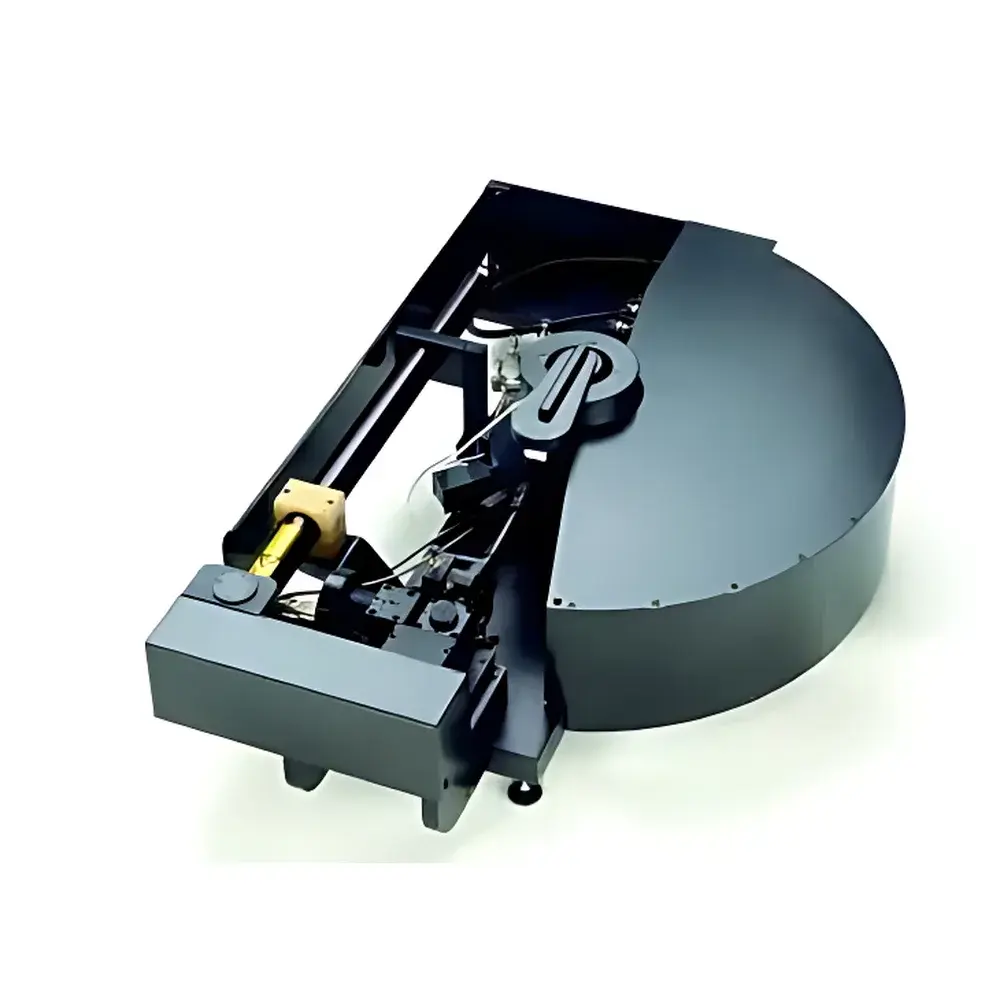
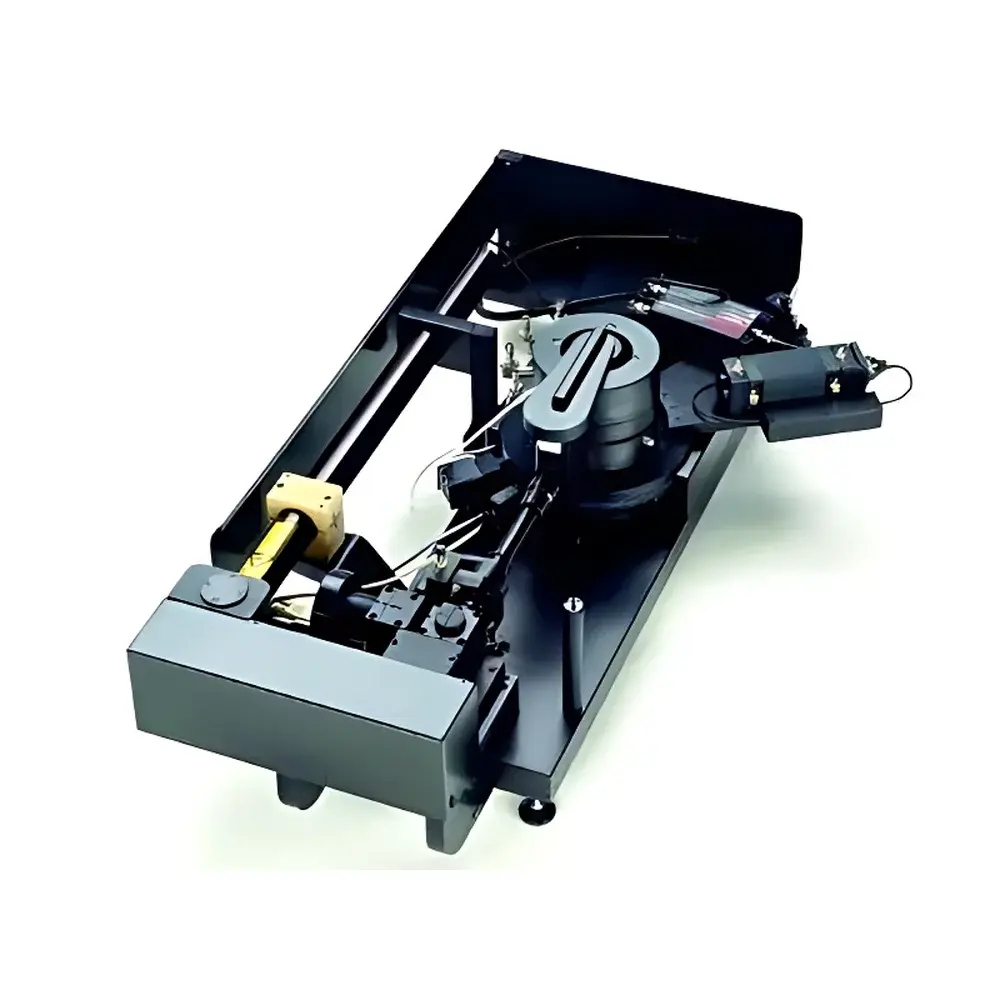
ALV/CGS-3 Integrated Static and Dynamic Light Scattering Instrument
| Brand | ALV |
|---|---|
| Origin | Germany |
| Model | ALV/CGS-3 |
| Laser Source | 50 mW DPSS, 660 nm |
| Angular Range | 12°–152° |
| Angular Resolution | ±0.025° |
| Angular Accuracy | 0.003° at 25.000° |
| Detector | Dual APD (QE >65% @ 660 nm) |
| Correlation Method | Heterodyne quasi-cross-correlation & auto-correlation |
| Sample Cell | 85 mm OD quartz, centering ≤±5 µm, orthogonality ≤±10 µm, AR-coated 0°/180° windows |
| Temperature Control | Up to 70°C standard |
| Sample Volume Options | Standard cuvette + 5 mm NMR tube adapter |
| Attenuation | 8-step motorized optical density selection |
| Safety Class | EN 60825-1:2014 Class 1 (operational) |
| Compliance | GLP-ready architecture, audit-trail-capable software framework |
Overview
The ALV/CGS-3 Integrated Static and Dynamic Light Scattering Instrument is a precision-engineered benchtop system developed by ALV-Laser Vertriebsgesellschaft mbH (Germany) for simultaneous acquisition of static light scattering (SLS) and dynamic light scattering (DLS) data. Based on the fundamental principles of Rayleigh-Gans-Debye scattering theory and photon correlation spectroscopy, the instrument enables rigorous characterization of macromolecular conformation, colloidal stability, and solution thermodynamics without requiring external optical tables or manual alignment. Its monolithic mechanical architecture integrates a high-stability 50 mW DPSS laser (660 nm), dual avalanche photodiode (APD) detectors with quantum efficiency >65% at the operating wavelength, and a motorized goniometer capable of precise angular positioning from 12° to 152°. The system operates under Class 1 laser safety certification per EN 60825-1:2014 during routine measurements, ensuring full compliance with occupational health and safety regulations in ISO 17025-accredited laboratories.
Key Features
- Simultaneous SLS and DLS acquisition within a single measurement cycle — eliminates temporal mismatch between structural and hydrodynamic parameters
- Precision goniometer with absolute angular calibration: auto-homing to 25.000° (±0.003°) upon startup, eliminating cumulative positional drift over extended operation
- Optimized optical path: pre-aligned collimation, integrated beam shutter, and motorized 8-step neutral density filter wheel for automatic intensity optimization across wide dynamic range
- Quartz sample cell (85 mm outer diameter) with sub-5 µm centering tolerance and anti-reflective coated 0°/180° windows to minimize parasitic backscatter and enhance signal-to-noise ratio
- Integrated temperature monitoring via embedded Pt100 sensor; standard thermal control up to 70°C; optional high-temperature module supports 90°C continuous or 120°C intermittent operation
- Laser interlock system: safety lid interrupt activates automatically during sample insertion/removal, disabling laser emission in accordance with IEC 61511 functional safety requirements
- Support for micro-volume analysis using 5 mm NMR tubes — ideal for precious or low-yield biological samples
Sample Compatibility & Compliance
The ALV/CGS-3 accommodates a broad spectrum of sample types including synthetic polymers, proteins, nucleic acids, liposomes, nanoparticles, and soft colloids. Its modular design permits integration of optional accessories such as the CRTU (Cell Rotation and Translation Unit) for non-ergodic systems like gels or highly viscous solutions, and the Glan-Thompson polarizer (GTP) for depolarized scattering experiments targeting anisotropic particles. All hardware and firmware components adhere to ISO/IEC 17025:2017 requirements for testing laboratories, while the data acquisition and processing environment supports full 21 CFR Part 11 compliance through electronic signatures, audit trails, and secure user role management. The system is routinely validated against NIST-traceable polystyrene latex standards for both size and molecular weight calibration.
Software & Data Management
Controlled via ALV’s proprietary Multi-Angle Dynamic and Static Light Scattering (MADLS) software suite, the instrument delivers comprehensive data handling capabilities including real-time correlation function fitting, Zimm and Debye plot generation, and multi-angle Rh/Rg ratio derivation. The software implements robust regularization algorithms (e.g., CONTIN, NNLS) for polydisperse systems and supports batch processing with customizable report templates exportable in PDF, CSV, and XML formats. Raw intensity time-series data are stored in vendor-neutral HDF5 format, enabling third-party analysis in MATLAB, Python (via h5py), or R. All processing steps — from baseline correction to refractive index input — are logged with timestamps and operator IDs, satisfying GLP/GMP documentation requirements for regulated environments.
Applications
- Determination of hydrodynamic radius (Rh), diffusion coefficient (D), and polydispersity index (PDI) via cumulant and distribution analysis of intensity autocorrelation functions
- Calculation of weight-average molar mass (Mw), root-mean-square radius of gyration (Rg), and second virial coefficient (A₂) from angular-dependent excess Rayleigh ratios
- Conformational analysis of biopolymers through shape factor (Rg/Rh) derived from co-registered SLS/DLS datasets at identical concentration and temperature conditions
- Aggregation kinetics monitoring under thermal or chemical stress, supported by long-term stability testing protocols with automated temperature ramping
- Characterization of weakly scattering systems (e.g., low-MW peptides, dilute micellar solutions) enabled by high-sensitivity APD detection and optimized heterodyne mixing
FAQ
What is the minimum detectable hydrodynamic radius?
The theoretical lower limit is <1 nm, contingent on sample optical contrast, concentration, and signal-to-noise ratio — validated experimentally using gold nanoparticles and protein standards.
Can the ALV/CGS-3 perform measurements in turbid media?
Yes — the quasi-cross-correlation detection scheme and high-dynamic-range APDs enable reliable DLS in moderately turbid systems; for strongly scattering samples, depolarized mode (with GTP option) improves resolution.
Is third-party software integration supported?
Raw correlation data are exported in HDF5 format with documented metadata schema, permitting direct import into custom Python, MATLAB, or LabVIEW environments.
How is angular calibration verified?
Calibration is traceable to mechanical stops and encoder feedback; users may perform periodic verification using certified angle reference artifacts compliant with ISO 230-2.
Does the system support automated titration or flow injection?
Not natively — the ALV/CGS-3 is a static cuvette-based platform; however, it interfaces with external syringe pumps and autosamplers via TTL-triggered start/stop signals for unattended sequential measurements.



