Amadyne Fab1 / catAP / EMU Series Automated Pick-and-Place Systems
| Brand | Amadyne |
|---|---|
| Origin | Germany |
| Manufacturer Type | Authorized Distributor |
| Category | Imported Equipment |
| Model | Fab1 / catAP / EMU |
| Pricing | Upon Request |
Overview
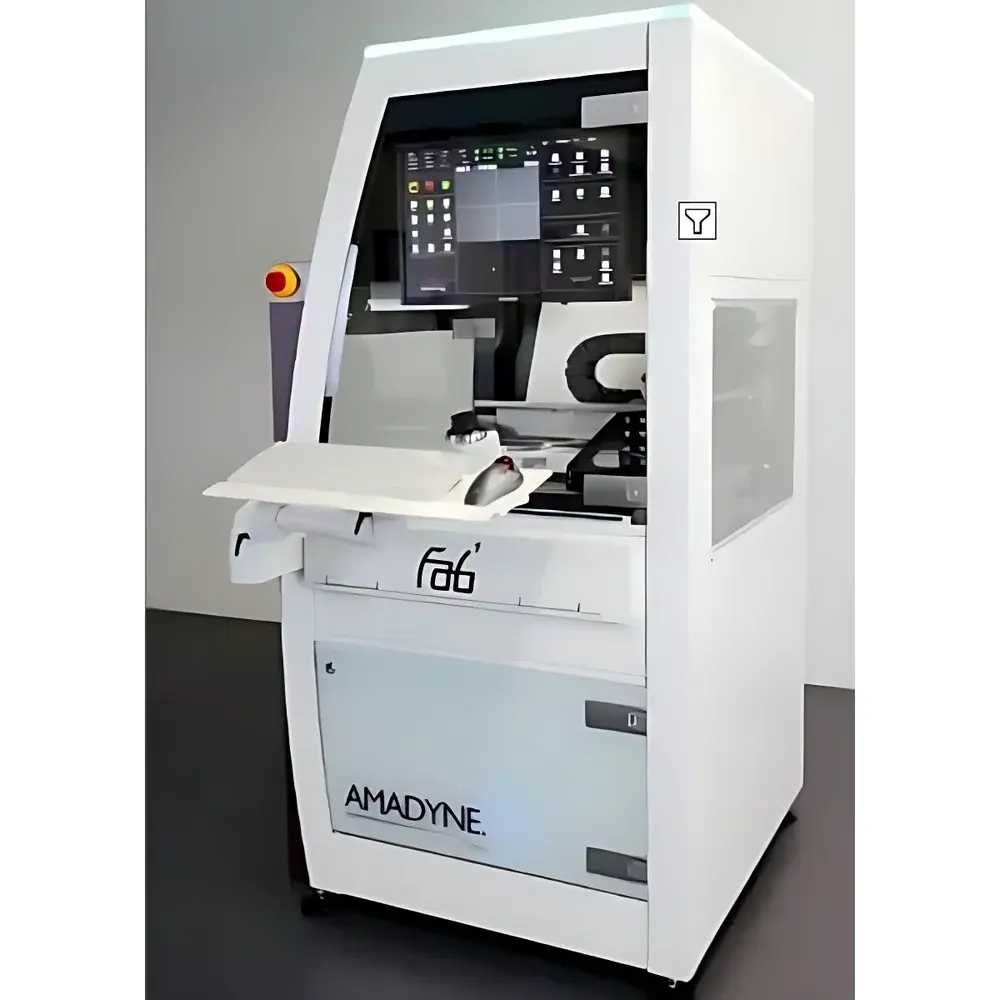
The Amadyne Fab1, catAP, and EMU series represent a tiered family of high-precision automated pick-and-place systems engineered specifically for semiconductor assembly, microelectromechanical systems (MEMS), and advanced electronic packaging. These systems operate on a vision-guided, servo-driven Cartesian motion architecture with closed-loop feedback control, enabling deterministic placement of die, bare chips, passive components, and sensitive micro-devices onto substrates including PCBs, ceramic carriers, silicon wafers, and flexible circuits. Unlike generic SMT mounters, Amadyne platforms are purpose-built for low-volume, high-mix, and ultra-high-reliability applications—particularly where thermal sensitivity, electrostatic discharge (ESD) control, sub-25 µm placement repeatability, and vacuum-compatible handling are critical. The Fab1 serves as the flagship inline-capable platform; the catAP delivers optimized throughput for mid-volume production; and the EMU provides a modular, benchtop-grade solution for prototyping, process development, and small-batch manufacturing (<250 cph). All models integrate real-time fiducial recognition, programmable vacuum nozzle tooling, and environmental stabilization features—including localized HEPA-filtered laminar flow enclosures (Fab1) and integrated ionization for static mitigation.
Key Features
- Fab1: Dual-zone configurable work envelope (500 × 430 mm primary + optional 490 × 250 mm secondary zone); inline integration capability with conveyor interfaces and magazine lifters for unattended substrate, wafer, and tray handling
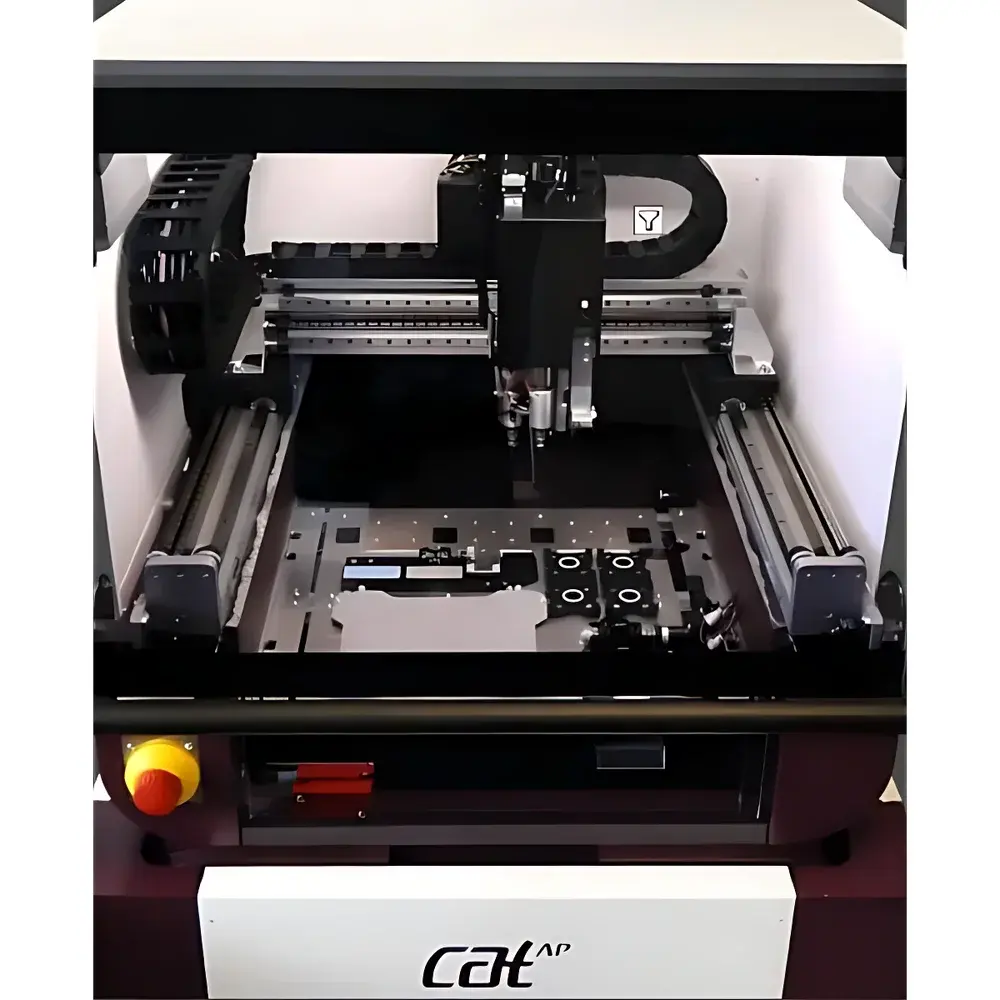
- catAP: Optimized for high-speed sequential placement (up to 700 cph) with <0.2 µm axis resolution and 15 µm/3σ process accuracy under ISO 9001-controlled calibration protocols
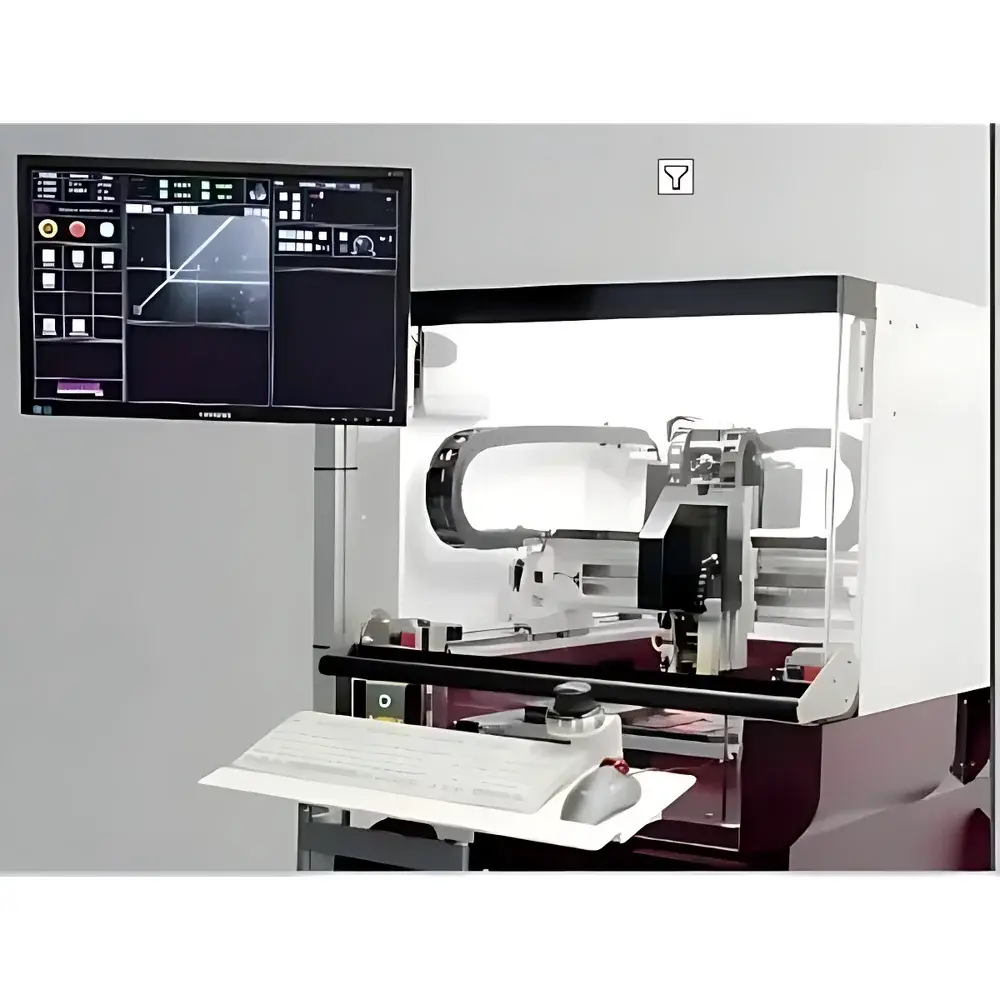
- EMU: Modular open-frame design with 300 × 350 mm active area; supports rapid tooling swaps and custom end-effector integration for R&D and pilot-line validation
- All models feature ESD-safe construction (IEC 61340-5-1 compliant), programmable vacuum pressure control per nozzle, and temperature-stabilized gantry structures to minimize thermal drift
- Integrated optical alignment system with telecentric lenses, 5 MP monochrome CMOS sensors, and sub-pixel centroid detection for fiducial registration down to 2 µm feature size
- Local cleanroom environment: Fab1 includes HEPA Class 5 (ISO 14644-1) enclosure with recirculating airflow; catAP and EMU support add-on laminar flow hoods upon request
Sample Compatibility & Compliance
The Amadyne platform family accommodates a broad spectrum of component geometries and material classes: bare silicon die (50 µm–25 mm), GaAs/InP optoelectronic devices, ceramic capacitors (01005–2220), molded QFNs, flex-mounted sensors, and fragile piezoelectric elements. Substrate compatibility spans rigid FR-4, polyimide flex circuits, alumina and LTCC carriers, silicon wafers (up to 8″), and JEDEC-standard trays (TR, Waffle, Gel-Pak). Each system complies with CE marking requirements (2014/30/EU EMC Directive, 2014/35/EU LVD), RoHS 2011/65/EU, and conforms to ISO 14001 environmental management standards. For regulated industries, full audit trails—including motion log files, placement verification timestamps, nozzle pressure logs, and operator authentication records—are retained in accordance with FDA 21 CFR Part 11 and EU Annex 11 principles. Process documentation meets ASTM F2628-22 (Standard Guide for Microelectronics Packaging Process Validation) and IPC-7351B land pattern referencing conventions.
Software & Data Management
Control is executed via Amadyne’s proprietary APEX (Advanced Placement Execution) software suite, built on a deterministic real-time Linux kernel (PREEMPT_RT patchset). The GUI supports drag-and-drop job creation, multi-layer fiducial mapping, and automatic path optimization using constrained Dijkstra algorithms. All placement programs include full version control (Git-integrated), change history logging, and role-based access permissions (admin/operator/technician tiers). Raw sensor data—including stage encoder counts, vacuum sensor readings, and camera trigger timestamps—is stored in HDF5 format with embedded metadata (sample ID, operator, date/time, calibration ID). Export options include CSV, XML (IPC-2581 compatible), and direct SQL push to enterprise MES systems via ODBC or RESTful API endpoints. Audit trail reports comply with GLP/GMP requirements, including electronic signature capture (PKI-based), tamper-evident hashing (SHA-256), and immutable archival to network-attached storage (NAS) with write-once-read-many (WORM) policy enforcement.
Applications
- Aerospace & Defense: Precision placement of radiation-hardened ASICs, RF MMICs, and inertial sensor dies onto hermetic ceramic packages subjected to MIL-STD-883 qualification testing
- Medical Devices: Assembly of implantable electronics (e.g., neurostimulator ASICs, pacemaker hybrid modules) requiring ISO 13485-compliant traceability and zero-defect placement verification
- Optoelectronics: Flip-chip bonding prep for VCSEL arrays and photodetector dies on silicon interposers, leveraging sub-10 µm alignment accuracy for optical coupling efficiency
- Automotive Electronics: High-reliability mounting of power MOSFETs, SiC diodes, and MEMS pressure sensors onto DBC substrates for ADAS ECUs operating at 155 °C junction temperature
- Semiconductor Packaging R&D: Die attach process development for fan-out wafer-level packaging (FOWLP), 2.5D interposer integration, and heterogeneous chiplet assembly workflows
- Quantum Hardware Fabrication: Handling of superconducting qubit chips and cryogenic sensor dies with non-magnetic tooling and low-vibration isolation mounts
FAQ
What distinguishes the Fab1 from standard SMT placement machines?
The Fab1 is not an SMT placer—it is a metrology-grade die bonder-class system designed for non-reflow, non-solder applications such as epoxy die attach, anisotropic conductive film (ACF) bonding, and precision mechanical assembly under controlled ambient conditions.
Can the EMU be upgraded to catAP-level performance?
No—EMU uses a distinct mechanical architecture (belt-driven vs. direct-drive linear motors in catAP/Fab1) and lacks the dual-camera alignment subsystem required for <15 µm placement fidelity. However, its software stack is fully compatible with APEX v5.x, enabling shared program libraries and recipe migration.
Is wafer-level handling supported across all three models?
Only the Fab1 supports full automated wafer loading/unloading via integrated EFEM-compatible front-end modules. catAP accepts pre-diced wafers on frame; EMU requires manual wafer placement within its work envelope.
Do these systems support thermal compression bonding?
None of the base configurations include heated tools or force-controlled bond heads. However, Amadyne offers OEM-integrated thermal bond modules (TBM-200 series) as validated add-ons for Fab1 and catAP platforms under NDA-bound engineering agreements.
What level of technical support is provided outside the EU?
Amadyne maintains certified service partners in North America (Texas & Massachusetts), Japan (Tokyo), and Singapore, offering remote diagnostics, on-site calibration (traceable to PTB/NIST standards), and annual preventive maintenance contracts aligned with ISO/IEC 17025 competency criteria.