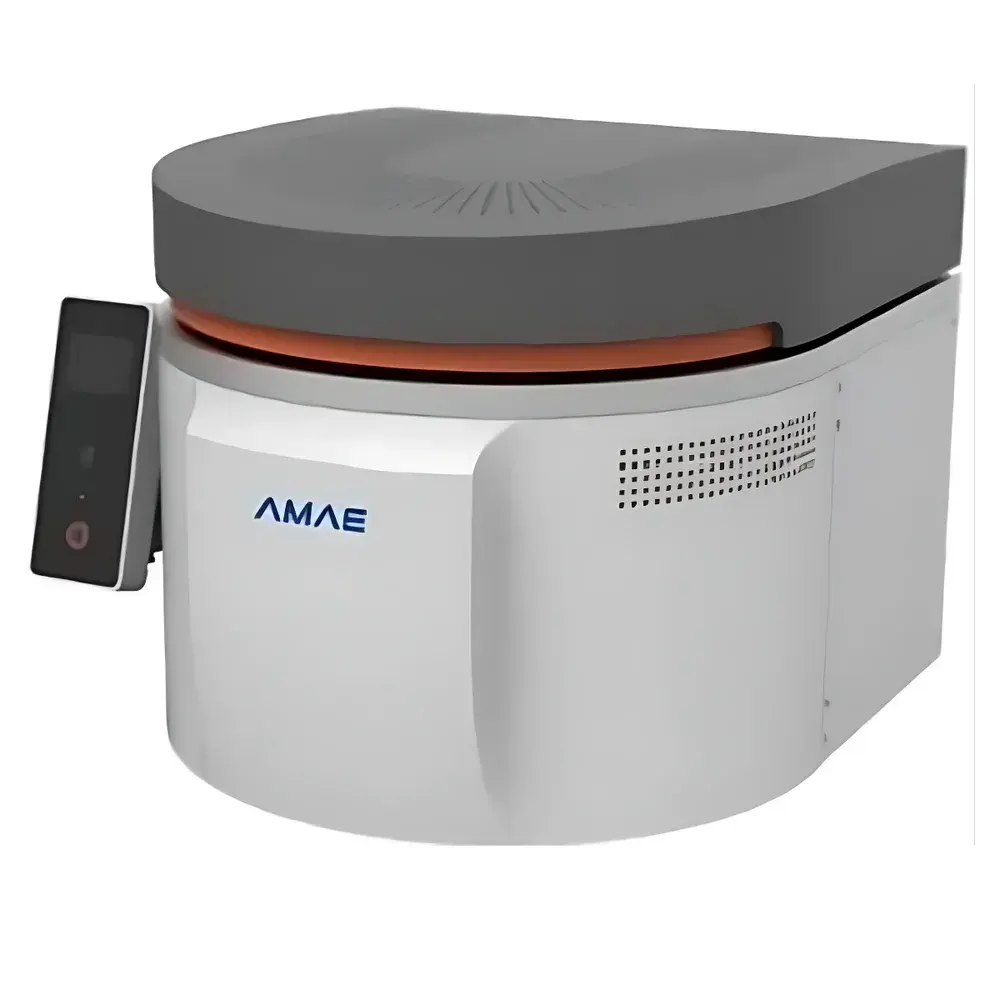
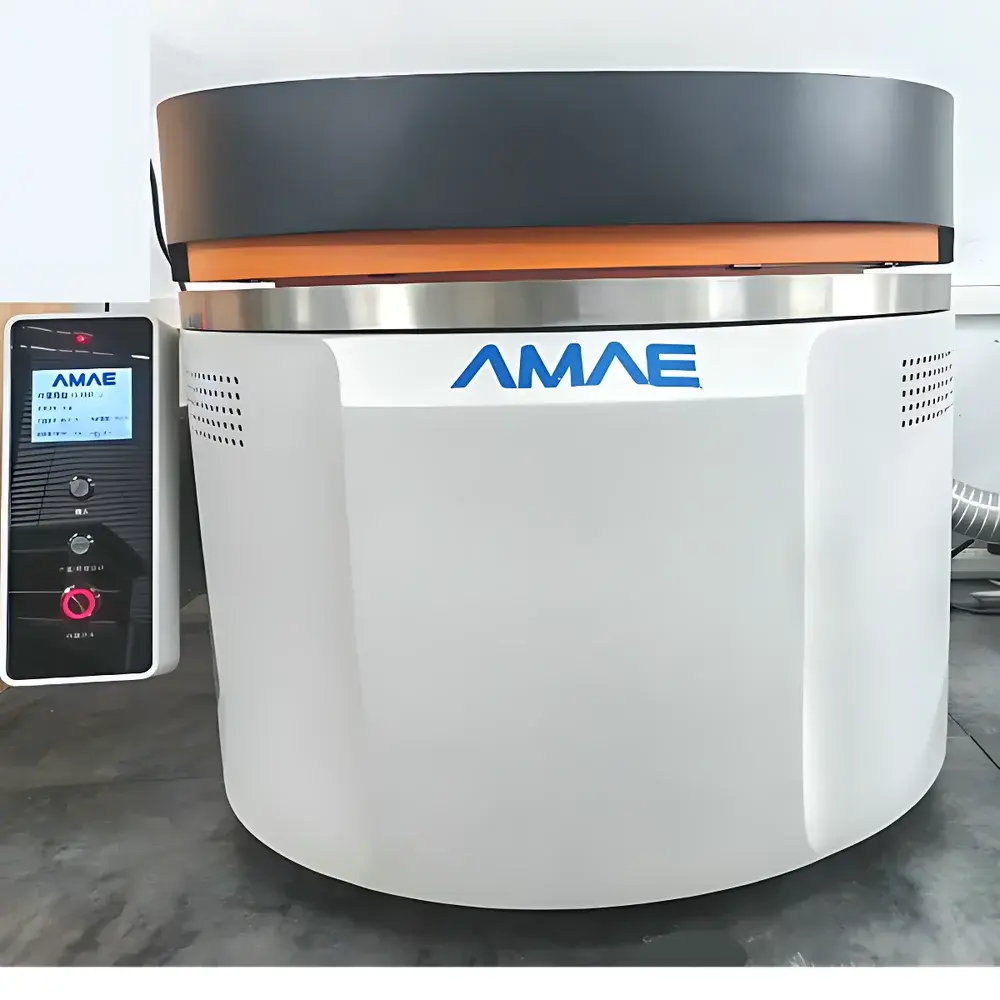
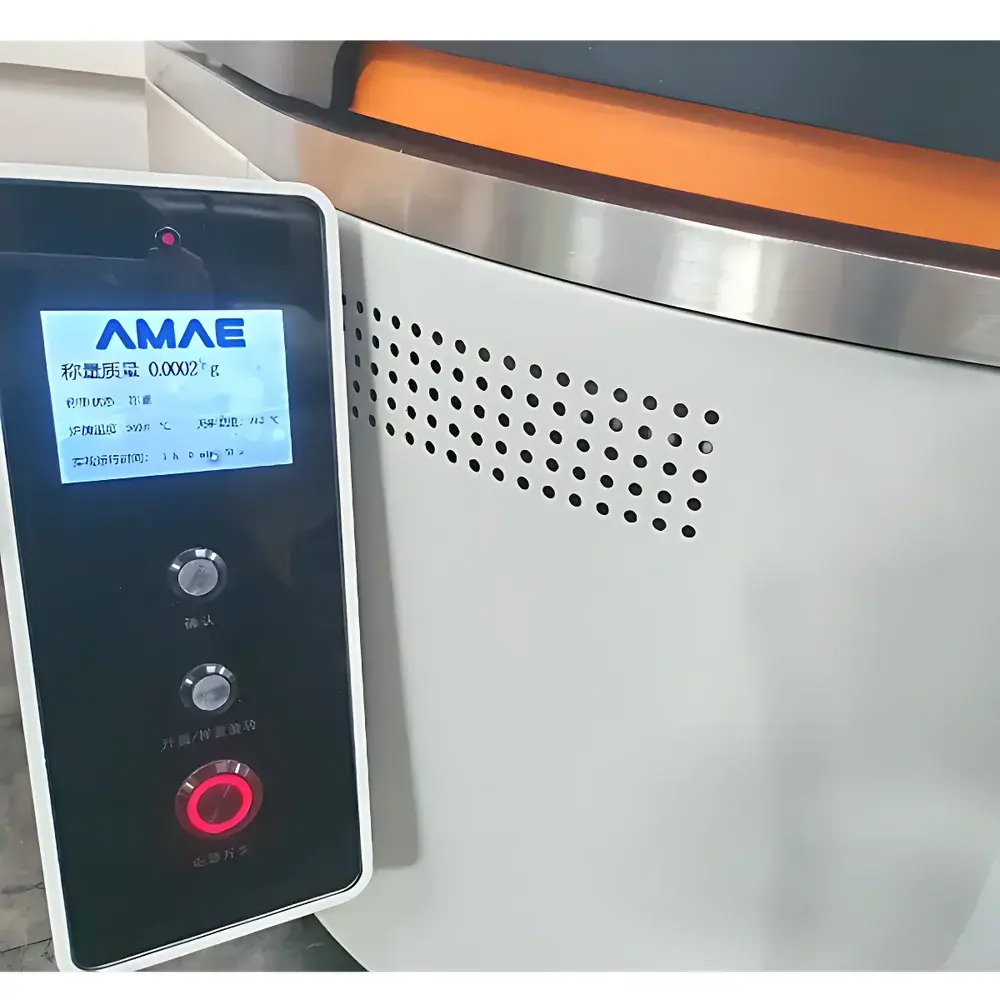
AMAE AM-1260 Fully Automated Ashing and Gravimetric Analysis System
| Brand | AMAE |
|---|---|
| Model | AM-1260 |
| Origin | Guangdong, China |
| Instrument Type | Automated Thermogravimetric Ashing & Weighing Platform |
| Temperature Control | 20-Step Programmable Ramp/Soak Profile |
| Atmosphere Options | Air, N₂, O₂ (0–20 L/min flow control) |
| Integrated Balance | METTLER Toledo high-precision analytical balance (0.1 mg readability, high-temperature stable weighing cell) |
| Compliance Standards | GBZ/T 192.4-2007, GB 5009.3–2016, GB 5009.4–2016, GB/T 6438–2007, YC/T 427–2012 |
| Data Management | Audit-trail enabled software with CFR 21 Part 11–compatible user roles, electronic signatures, and customizable reporting |
Overview
The AMAE AM-1260 Fully Automated Ashing and Gravimetric Analysis System is an integrated thermogravimetric platform engineered for precision ash content determination, moisture loss quantification, and crystalline silica (quartz/cristobalite) analysis in occupational health and food safety laboratories. It implements the principle of controlled thermal decomposition under programmable atmospheres—leveraging gravimetric measurement during and after high-temperature calcination (up to 1000 °C) to determine mass loss profiles, residual inorganic residue (ash), and volatile fraction composition. Unlike conventional muffle furnace–balance workflows requiring manual sample transfer and repeated cooling cycles, the AM-1260 embeds a high-stability METTLER Toledo analytical balance directly within the thermal chamber envelope, enabling real-time, in-situ mass monitoring without interrupting the thermal profile. This architecture eliminates operator-induced variability from handling hot crucibles, mitigates oxidation artifacts during ambient cooling, and ensures metrological traceability per ISO/IEC 17025 requirements for accredited testing.
Key Features
- Integrated high-temperature gravimetry: Built-in 0.1 mg readability analytical balance operates continuously inside the heated zone—no post-calcination cooling required for intermediate or final weighing.
- 20-segment programmable temperature control: Each segment defines start/end temperature, ramp rate (°C/min), dwell time, gas type (air/N₂/O₂), flow rate (0–20 L/min), and data logging mode—supporting method development for diverse matrices including food, feed, tobacco, and airborne dust filters.
- Automated thermal equilibration detection: Algorithm-driven constant-mass (constant-weight) evaluation based on configurable delta-mass thresholds (e.g., ≤0.1 mg over 30 min) and minimum dwell duration—fully compliant with USP , AOAC 984.27, and GB 5009.4–2016 criteria.
- Motorized magnetic positioning system: Ensures repeatable crucible placement and balance pan alignment across hundreds of cycles—minimizing mechanical drift and improving long-term weighing reproducibility.
- Dual thermocouple overtemperature protection: Independent redundant K-type sensors trigger immediate power cutoff if either exceeds user-defined safety limit—meeting IEC 61010-1 Class II electrical safety standards.
- Intelligent active cooling module: Forced convection with variable-speed fan reduces chamber cooldown time by up to 65% versus passive cooling—enabling higher daily throughput without compromising thermal stability.
Sample Compatibility & Compliance
The AM-1260 accommodates standard ceramic, platinum, or quartz crucibles (up to 30 mm diameter × 40 mm height) and supports batch processing of up to 12 samples simultaneously. Its operational parameters align with internationally recognized regulatory frameworks: GBZ/T 192.4–2007 for respirable crystalline silica quantification in workplace air filters; GB 5009.4–2016 and AOAC Official Method 923.03 for total ash in food and beverages; GB/T 6438–2007 for crude ash in animal feed; and YC/T 427–2012 for tobacco ash yield. All thermal protocols are fully documented and exportable as XML-based method files, satisfying GLP audit requirements for method validation, instrument qualification (IQ/OQ/PQ), and data integrity per FDA 21 CFR Part 11.
Software & Data Management
The embedded Windows-based control software provides role-based access control (administrator/operator/auditor), full electronic audit trail (including user ID, timestamp, parameter changes, and result modifications), and digital signature support for report approval. Standard report templates conform to GB and ISO formatting conventions; users may define custom fields, calculation formulas (e.g., % ash = (residue mass / dry sample mass) × 100), and output formats (PDF, CSV, XLSX). Data synchronization with LIMS is supported via OPC UA or TCP/IP protocols. Remote monitoring and multi-instrument coordination—including interoperability with AMAE’s automated silica pre-treatment workstations—are enabled through secure Ethernet connectivity and RESTful API endpoints.
Applications
Primary use cases include quantitative ash residue analysis in nutritional labeling (food, dietary supplements), regulatory compliance testing for heavy metal screening (via subsequent ICP-MS digestion of ash), occupational exposure assessment (NIOSH Method 7500 adaptation), and quality control in pharmaceutical excipient manufacturing. The system also serves research applications involving thermal stability profiling of polymers, catalysts, and battery materials—where sequential mass loss events correlate with dehydration, organic volatilization, carbonate decomposition, and oxide formation.
FAQ
Does the AM-1260 require external balance calibration before each run?
No. The integrated METTLER Toledo balance performs automatic internal calibration at startup and after major thermal transitions, traceable to NIST-certified weights. External verification is recommended quarterly per ISO 17025.
Can the system handle corrosive samples such as halogen-rich polymers?
Yes—when operated under inert nitrogen atmosphere with optimized ramp rates and venting protocols to minimize halogen acid condensation. Optional quartz crucible kits and corrosion-resistant chamber liners are available.
Is method validation documentation provided with the instrument?
Yes. A complete IQ/OQ protocol package—including temperature uniformity mapping, balance linearity verification, gas flow accuracy testing, and repeatability studies—is supplied with installation qualification.
How is data integrity ensured during power interruption?
The system features non-volatile memory backup and automatic resume functionality: thermal profiles and weighing logs are preserved, and the instrument resumes from the last valid measurement point upon recovery.
What maintenance intervals are recommended for routine operation?
Daily: Visual inspection of crucible carrier and gas lines. Quarterly: Balance sensitivity check, thermocouple verification, and filter replacement for cooling module. Annually: Full chamber cleaning and firmware update verification.