
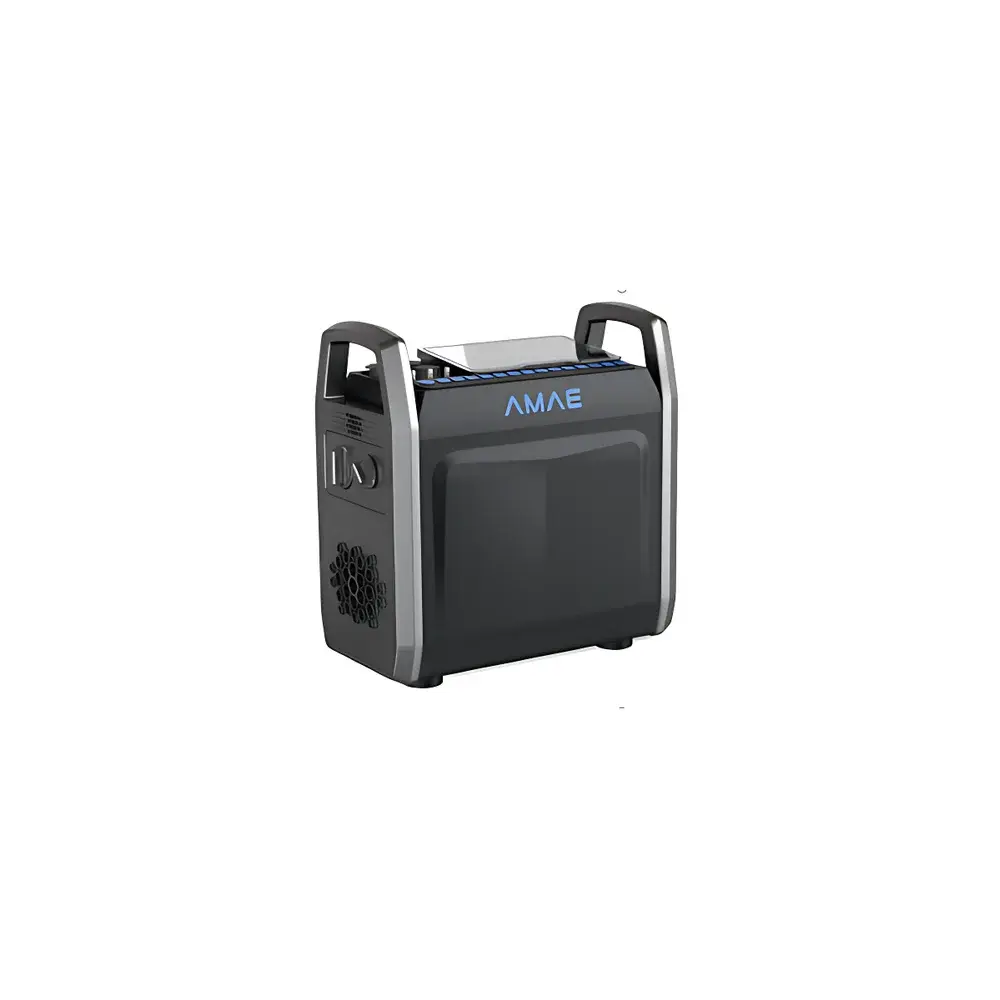
AMAE EM-3088-4.0 Intelligent Flue Gas and Particulate Analyzer
| Brand | AMAE |
|---|---|
| Origin | Guangdong, China |
| Model | EM-3088-4.0 |
| Sampling Flow Rate | 0–110 L/min |
| Flow Accuracy | ±5% or better |
| Sample Type | Isokinetic particulate sampling + flue gas component analysis (O₂, SO₂, CO, NO, NO₂, H₂S, CO₂) |
| Compliance | Designed for fixed-source emission monitoring per Chinese EPA HJ/T 47–1999, HJ/T 48–1999, and compatible with ISO 16911-1:2013 principles |
| Power | Integrated rechargeable battery for field operation |
| Water Removal | Triple-stage condensate removal with auto-drain function |
| Data Output | Real-time parametric logging including stack temperature, static/dynamic pressure, atmospheric pressure, moisture content, flow velocity, and volumetric flow |
Overview
The AMAE EM-3088-4.0 Intelligent Flue Gas and Particulate Analyzer is a field-deployable, integrated emission monitoring system engineered for regulatory-compliant measurement of gaseous pollutants and isokinetic particulate matter from stationary sources. It operates on electrochemical sensing principles for real-time detection of O₂, SO₂, CO, NO, NO₂, H₂S, and CO₂, while simultaneously executing gravimetrically valid isokinetic sampling of suspended particulates in exhaust ducts. The instrument adheres to the fundamental fluid-dynamic requirements defined in ISO 16911-1:2013 — Stationary source emissions — Manual method for determination of velocity and volumetric flow rate of gas streams — Part 1: Velocity and volumetric flow rate — ensuring representative sampling under variable stack conditions. Its modular architecture supports simultaneous acquisition of thermodynamic and compositional parameters: stack gas temperature, static and dynamic pressure, ambient barometric pressure, flue gas moisture content, and volumetric flow rate — all essential for concentration normalization (e.g., dry basis, 11% O₂ reference), mass emission rate calculation, and regulatory reporting.
Key Features
- Isokinetic sampling capability across a calibrated flow range of 0–110 L/min, with flow control accuracy better than ±5% — validated against primary standard rotameters traceable to national metrology institutes.
- Triple-stage condensate management system comprising Peltier-cooled thermoelectric chiller, hydrophobic membrane filter, and automated drain valve — minimizing sensor exposure to liquid water and acidic condensates typical in coal- or biomass-fired boiler exhausts.
- Integrated electrochemical gas sensors with individual temperature and pressure compensation algorithms; each sensor undergoes factory calibration with NIST-traceable standard gases and includes onboard zero/span verification routines.
- Rechargeable lithium-ion battery pack providing ≥4 hours of continuous operation at full sampling load — enabling unattended field measurements in locations without AC power infrastructure.
- Compact ergonomic design (W × D × H: 320 × 180 × 240 mm; weight: ≤6.8 kg) optimized for single-operator handling during stack access, ladder-based deployment, and mobile laboratory integration.
- AMAE-DESK desktop calibration station compatibility — supporting automated flow verification using certified sonic nozzles and pressure transducers per ISO/IEC 17025-accredited procedures.
Sample Compatibility & Compliance
The EM-3088-4.0 is qualified for sampling from ducts and stacks with internal diameters ≥150 mm and gas velocities ≥5 m/s, consistent with HJ/T 48–1999 (Technical Specification for Particulate Matter Sampling from Stationary Sources) and HJ/T 47–1999 (Technical Specification for Gaseous Pollutant Sampling). It supports both dry-basis and wet-basis concentration reporting, with automatic moisture correction applied via chilled-mirror dew point measurement. All data acquisition and storage comply with GLP-aligned audit trail requirements: timestamped records include operator ID, calibration history, sensor drift logs, and environmental metadata. While not FDA 21 CFR Part 11-certified (as it is not used in pharmaceutical manufacturing), its firmware implements write-protected data storage and user-access-level controls suitable for third-party environmental audit readiness.
Software & Data Management
Data is captured via embedded ARM Cortex-M7 controller running a deterministic real-time OS. Measurements are stored internally (8 GB eMMC) in CSV and SQLite formats, with optional USB export or Bluetooth 5.0 wireless transmission to AMAE’s EmissionView™ desktop software. EmissionView enables automated generation of China’s Form 1–3 emission reports (per MEP Order No. 39), calculates normalized concentrations (e.g., 11% O₂, 273.15 K, 101.325 kPa), and exports datasets compliant with national environmental information platform upload protocols (e.g., CNEMC data interface specification v2.1). Audit logs record every configuration change, calibration event, and manual override — retained for ≥18 months per internal QA policy.
Applications
- Regulatory compliance testing for coal-, gas-, and biomass-fired industrial boilers under China’s GB 13271–2014 and provincial emission standards.
- Performance evaluation of flue gas desulfurization (FGD), selective catalytic reduction (SCR), and electrostatic precipitator (ESP) systems.
- Stack testing during environmental impact assessments (EIAs) and post-construction acceptance monitoring.
- QA/QC verification of continuous emission monitoring systems (CEMS) per HJ 75–2017 technical specifications.
- Research-grade characterization of combustion efficiency, excess air ratio, and pollutant formation pathways in pilot-scale thermal processes.
FAQ
What standards does the EM-3088-4.0 meet for isokinetic sampling?
It follows the procedural framework of HJ/T 48–1999 and aligns with the velocity-tracking methodology described in ISO 16911-1:2013, including dynamic probe positioning, pitot tube calibration, and real-time flow adjustment logic.
Can the instrument operate in high-humidity or corrosive flue gas environments?
Yes — the triple-stage moisture removal system and stainless-steel sampling probe (316L grade) enable stable operation in flue gases with dew points up to 60 °C and H₂SO₄ concentrations ≤50 ppmv.
Is external calibration required before each field use?
Field zero/span checks are recommended prior to critical measurements; full calibration is required every 90 days or after sensor replacement, using AMAE-certified calibration gases and the AMAE-DESK station.
Does the device support remote data transmission to municipal environmental platforms?
Direct cloud upload is not built-in, but exported CSV/SQLite files are structured to match CNEMC and provincial platform ingestion schemas — integration via middleware is supported.
What is the service life expectancy of the electrochemical sensors?
Under typical operating conditions (≤80 °C, ≤90% RH, non-condensing), O₂ and CO sensors maintain ±5% linearity for ≥24 months; SO₂ and NOx sensors require replacement every 12–18 months depending on cumulative exposure dose.
Related Products







