
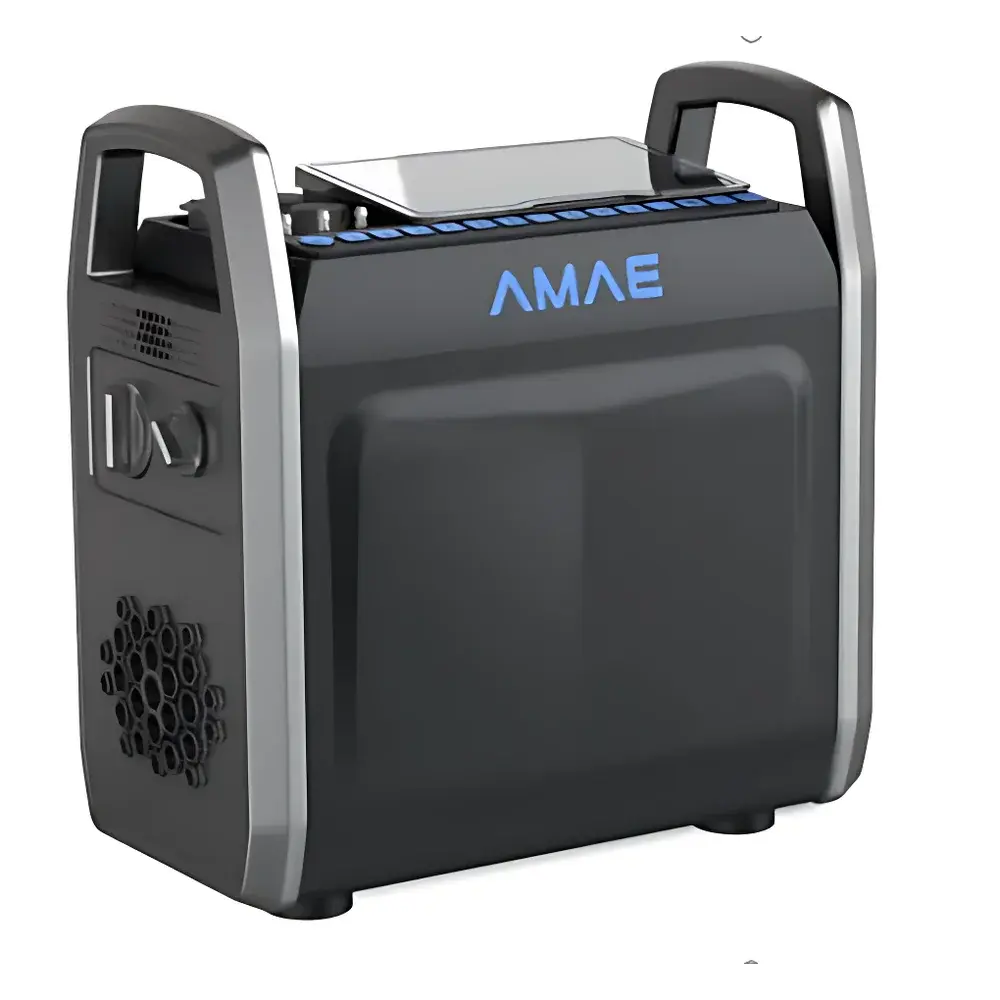
AMAE EM-3088S UV-DOAS & NDIR Optical Flue Gas and Particulate Analyzer
| Brand | AMAE |
|---|---|
| Origin | Guangdong, China |
| Manufacturer Type | Authorized Distributor |
| Product Category | Domestic |
| Model | EM-3088S |
| Price Range | USD 16,500 – 20,500 |
| Instrument Type | Flue Gas and Particulate Sampler |
| Sample Application | Isokinetic particulate sampling and real-time flue gas component analysis in exhaust ducts under industrial operating conditions |
| Sampling Flow Rate | 0–110 L/min |
| Flow Accuracy | ±5% or better |
| Flue Gas Velocity Range (Isokinetic Suction) | 1–50 m/s |
| Moisture Tolerance | Relative Humidity ≤95% RH |
Overview
The AMAE EM-3088S is an integrated optical flue gas and particulate analyzer engineered for regulatory-compliant field measurement of emissions from stationary sources. It combines dual-spectrum optical detection—ultraviolet Differential Optical Absorption Spectroscopy (UV-DOAS) for SO₂, NO, NO₂, and infrared Non-Dispersive Infrared (NDIR) spectroscopy for CO, CO₂, and O₂—with isokinetic particulate sampling capability in a single portable platform. Designed to meet stringent Chinese environmental monitoring standards—including HJ 1131–2020, HJ 1132–2020, GB/T 37186–2018, and HJ 836–2017—the instrument delivers simultaneous, synchronized acquisition of gaseous pollutant concentrations (mg/m³, ppm), particulate mass concentration (mg/m³), and critical flue gas parameters including dynamic/static pressure, temperature, humidity, velocity, and volumetric flow (dry standard state). Its core architecture supports both manual field surveys and semi-automated compliance audits, with full traceability to national calibration protocols (JJG 680–2007, JJG 968–2002). The system operates independently of AC power via an internal high-capacity Li-ion battery, enabling uninterrupted operation in remote or off-grid emission testing sites.
Key Features
- Optical dual-method detection module: UV-DOAS for high-selectivity SO₂/NOₓ quantification and NDIR for CO/CO₂/O₂ with minimal cross-interference, validated per HJ/T 44–1999 and HJ 870–2017
- True isokinetic particulate sampling: Real-time velocity matching (1–50 m/s) with automatic flow compensation ensures representative PM collection per GB/T 16157–1996 and HJ 836–2017
- Triple-stage moisture management: Integrated desiccant dryer + condensate trap + auto-drain mechanism maintains optical path integrity and sensor stability at ≤95% RH
- Dual-CPU architecture: Independent control units for particulate sampling and gas analysis eliminate signal coupling and enable concurrent, non-interfering operation
- 7-inch high-brightness TFT display (1024×600 resolution, 900 cd/m² luminance): Sunlight-readable resistive touchscreen with direct GUI navigation and on-screen calibration
- Robust mechanical design: Industrial-grade aviation connectors, visible filter cartridge with water-level window, anti-backflow protection, and leak-tightness self-test function
- Extended maintenance intervals: Optical modules require no consumable sensors; typical service cycle exceeds 12 months under routine field use
- Field-expandable interfaces: Optional GPS/4G telemetry, heated sampling probes (asphalt fume, cooking oil mist), and multi-pollutant sampling guns (fluoride, sulfuric acid mist, HCl)
Sample Compatibility & Compliance
The EM-3088S is certified under China’s Environmental Protection Product Certification (CCEP: CCAEPI-EP-2020-1093) and conforms to all referenced national standards for method validation, data integrity, and metrological traceability. It supports isokinetic sampling of total suspended particulates (TSP), PM₁₀, and low-concentration PM₂.₅ (per HJ 836–2017), as well as gaseous analytes across defined linear ranges: SO₂ (0–2000 mg/m³), NOₓ (0–1000 mg/m³), CO (0–5000 ppm), CO₂ (0–25% vol), and O₂ (0–25% vol). All measurements are automatically corrected to dry standard cubic meters (Nm³) using real-time temperature, pressure, and humidity inputs. Data output complies with HJ 212–2017 transmission protocol for integration into provincial and national emission monitoring networks.
Software & Data Management
Firmware includes embedded intelligent algorithms for spectral deconvolution, baseline drift correction, and inter-component interference compensation—reducing cross-sensitivity between NO₂ and SO₂ by >92% (per GB/T 37186–2018 validation reports). The system logs >50 operational parameters per sampling point, including isokinetic deviation, filter temperature, pump load, and optical path absorbance. All data are stored with time-stamped audit trails, power-loss recovery (auto-resume on restart), and encrypted local backup. Field data export is supported via USB flash drive; firmware updates retain calibration coefficients and user-defined method configurations. Software supports GLP-aligned features: operator ID login, calibration history logging, and electronic signature for report finalization.
Applications
The EM-3088S is deployed for stack testing at coal-fired boilers, cement kilns, waste incinerators, chemical reactors, and metal smelters. It supports regulatory tasks including emission inventory reporting, permit compliance verification (e.g., discharge limits per DB37/T 2704–2015), and technology-based best available control measures (BACT) assessment. Its portability and battery autonomy make it suitable for mobile source audits, fugitive emission surveys, and emergency response scenarios. Optional accessories extend applicability to asphalt fume (road construction), cooking oil mist (food service sector), and acid mist (electroplating facilities), aligning with multi-pollutant regulatory frameworks.
FAQ
Does the EM-3088S comply with international standards such as ISO 12141 or EN 15267?
While primarily certified to Chinese national standards (HJ, GB/T, DB37/T), its UV-DOAS and NDIR methodologies are technically equivalent to ISO 12141 (SO₂/NOₓ) and EN 15267-3 (performance verification of optical gas analyzers); third-party ISO/IEC 17025 validation is available upon request.
What is the typical response time for gas measurements?
T90 response time is ≤40 seconds for all UV-DOAS and NDIR channels; system stabilization time after flow initiation is ≤60 seconds under nominal flue conditions.
Can the instrument perform continuous unattended monitoring?
It is designed for discrete, method-compliant grab sampling—not continuous emission monitoring (CEMS). However, sequential automated sampling cycles (up to 99 points) can be programmed for extended field campaigns.
Is remote data transmission supported out-of-the-box?
Standard configuration includes RS232/RS485 and USB; optional 4G module enables real-time data streaming to cloud platforms compliant with HJ 212–2017.
How often does the optical module require recalibration?
Factory calibration remains valid for 12 months under normal field use; field zero/span checks are recommended before each sampling campaign using certified span gases traceable to NIM (National Institute of Metrology, China).







