
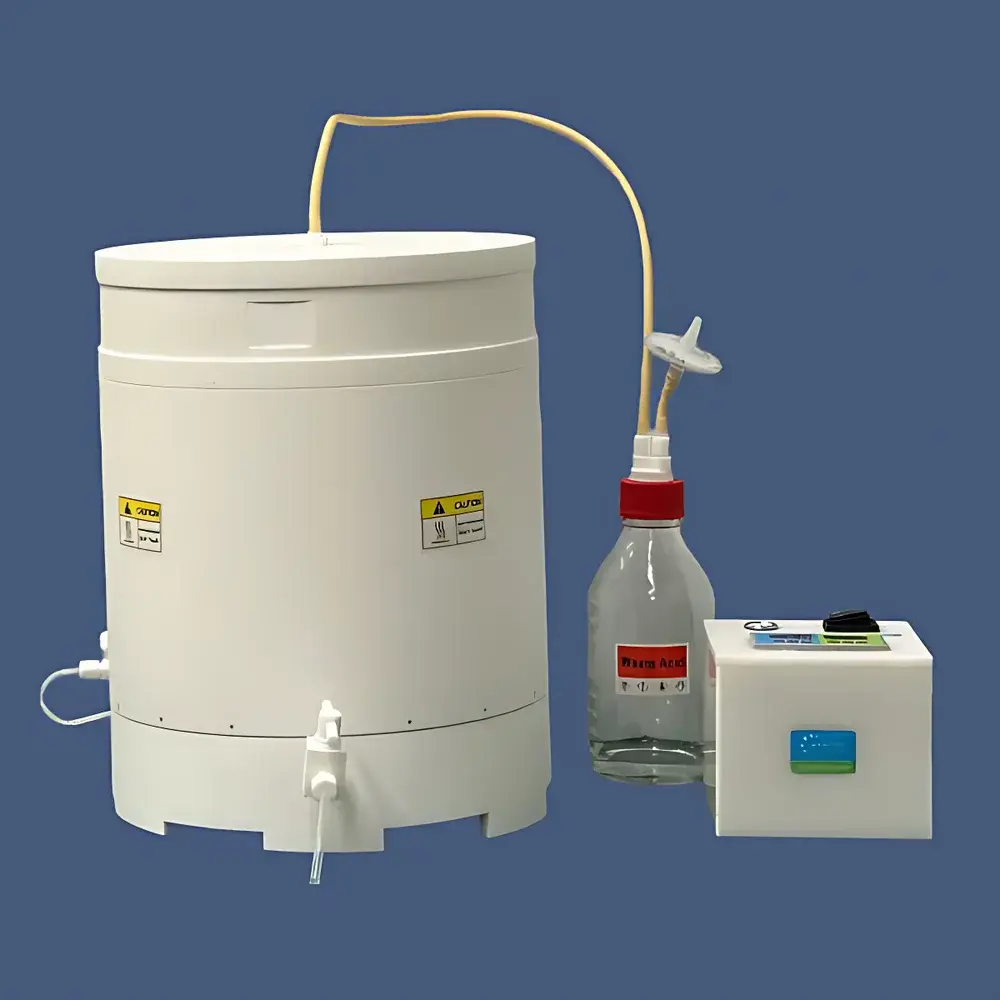
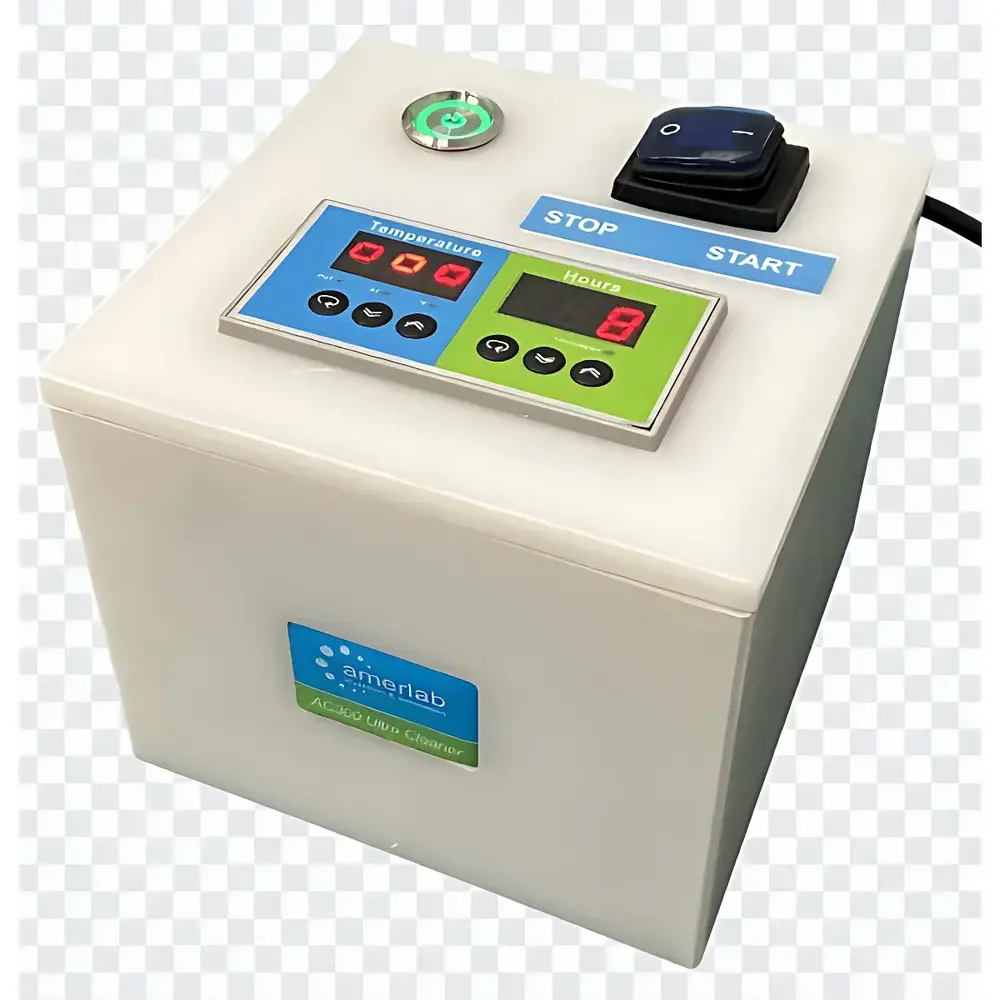
Amerlab AC360 Manual Sub-Boiling Acid Counterflow Ultra-Clean Washer
| Brand | Amerlab |
|---|---|
| Origin | Guangdong, China |
| Manufacturer Type | Direct Manufacturer |
| Product Category | Domestic |
| Model | AC360 Manual |
| Price Range | USD 1,400 – 14,000 |
| Operation Mode | Semi-Automatic |
| Cleanliness Level | ppb–ppt |
| Cycle Time | 1–4 hours |
Overview
The Amerlab AC360 Manual Sub-Boiling Acid Counterflow Ultra-Clean Washer is an engineered solution for trace-level contamination control in analytical laboratories. Designed specifically for the rigorous cleaning of sample preparation vessels—such as microwave digestion vessels (e.g., Teflon® PFA or quartz), open-vessel digesters, volumetric flasks, test tubes, beakers, and pipettes—the system employs sub-boiling acid vapor generation combined with counterflow condensation dynamics to achieve ultra-low background contamination (ppb–ppt level). Unlike conventional hotplate-based acid baths or ultrasonic cleaners, the AC360 operates by maintaining hydrochloric, nitric, or aqua regia at precise sub-boiling temperatures (typically 115–125 °C for HNO₃), generating ultra-pure acid vapor that rises through a central hollow steam conduit and contacts vessel interiors in a controlled, laminar counterflow pattern. This thermodynamically stable vapor-phase cleaning mechanism avoids boiling turbulence, aerosol entrainment, and thermal degradation of acid purity—critical prerequisites for ICP-MS, HR-ICP-MS, and low-level elemental analysis per ASTM D5687, ISO/IEC 17025, and USP <232>/<233> guidelines.
Key Features
- Sub-boiling temperature control via RTC (Real-Time Contact) sensing: A chemically passivated Pt100 probe directly immersed in acid reservoir ensures accurate measurement of bulk liquid temperature—not heater surface temperature—eliminating risk of localized boiling or vapor impurity.
- Monolithic PTFE chamber: CNC-machined from high-purity virgin PTFE (≥99.999% purity), seamless construction eliminates joints, crevices, or adhesive interfaces susceptible to acid creep, stress cracking, or long-term degradation under repeated thermal cycling (up to 260 °C).
- IP67-rated electrical interface: All external connectors feature dual-seal PTFE gaskets and stainless-steel threaded housings rated for continuous exposure to aggressive acid vapors.
- PTFE-integrated structural base: Unlike hybrid designs using metal or PP supports, the entire load-bearing platform—including leveling feet—is machined from solid PTFE, preventing galvanic corrosion or leaching.
- Screw-threaded cavity sealing: The lid-to-chamber interface utilizes precision-machined PTFE-to-PTFE helical threads with integrated O-ring compression, ensuring hermetic containment during full-cycle operation (≤0.1 mbar leakage rate).
- Multi-tiered, application-specific fixtures: Configurable racks include dual-layer microwave digestion tube holders (40 × 55 mL or 77 × 15 mL), volumetric flask stands (customizable by neck diameter), and cap/screw-top accessory trays—all optimized for uniform vapor distribution via radial steam orifices on the hollow central conduit.
Sample Compatibility & Compliance
The AC360 accommodates standard laboratory consumables including PFA, quartz, borosilicate glass, and fused silica vessels up to 500 mL capacity. Its design conforms to GLP/GMP environmental monitoring requirements for cleanroom-adjacent preparation zones. While not certified to UL/CE for standalone safety listing, its architecture meets key functional benchmarks referenced in ISO 15190:2020 (laboratory safety), ASTM E2656-21 (acid cleaning validation), and FDA 21 CFR Part 11 when paired with compliant data logging software (see Software & Data Management). All wetted surfaces comply with USP Class VI biocompatibility and EU REACH Annex XIV restrictions.
Software & Data Management
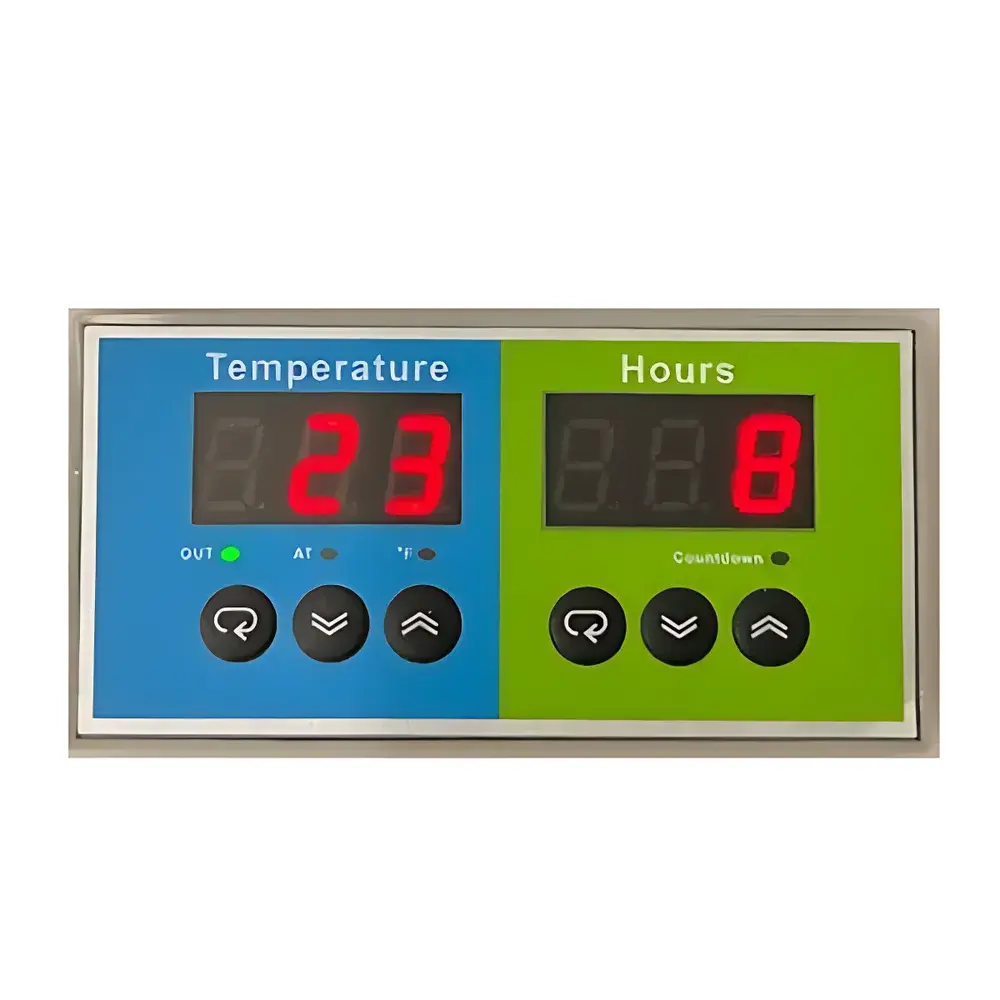
The manual AC360 variant features a microprocessor-based front-panel controller with real-time temperature display, programmable cycle timer (1–240 min), and adjustable setpoint (ambient to 130 °C in 0.1 °C increments). Optional RS-485 Modbus RTU output enables integration into centralized LIMS or SCADA platforms for audit-trail generation. When used with third-party validated charting software (e.g., LabVIEW or Python-based PySerial loggers), the system supports ALCOA+ principles—ensuring Attributable, Legible, Contemporaneous, Original, Accurate, Complete, Consistent, Enduring, and Available records for regulatory review.
Applications
- Preparation of trace-metal-free containers for EPA Method 200.8, 6020B, and 1638 analysis
- Cleaning of high-value quartz ICP-MS sample introduction components (torch injectors, nebulizers)
- Decontamination of reference material handling tools in certified reference material (CRM) labs
- Restoration of reused microwave digestion vessels in food safety testing (AOAC 2017.16, EN 13805:2014)
- Validation support for ISO/IEC 17025 Clause 7.2.2 (method validation of sample prep procedures)
FAQ
What acids are compatible with the AC360?
Concentrated HNO₃ (65%), HCl (37%), HF (up to 5%), and aqua regia mixtures are routinely used. Avoid perchloric or sulfuric acid above 150 °C due to decomposition risks.
Can the AC360 be used for organic solvent cleaning?
No. The system is engineered exclusively for mineral acid vapor-phase cleaning; organic solvents pose fire, pressure, and material compatibility hazards.
Is operator training required?
Yes. Users must complete basic acid handling safety protocols (OSHA 29 CFR 1910.1200) and receive device-specific instruction on lid sealing torque, acid volume calibration, and emergency venting procedures.
How often does the PTFE chamber require maintenance?
Under normal use (≤5 cycles/week), no scheduled replacement is needed. Visual inspection for discoloration or surface pitting every 6 months is recommended.
Does the AC360 meet ISO 17025 accreditation requirements for cleaning validation?
Yes—when operated within documented SOPs, with temperature logs, acid lot traceability, and periodic blank testing (e.g., 10 consecutive acid blanks analyzed by ICP-MS), it satisfies ISO/IEC 17025:2017 Clause 7.2.2(e) for method verification of sample preparation.



