
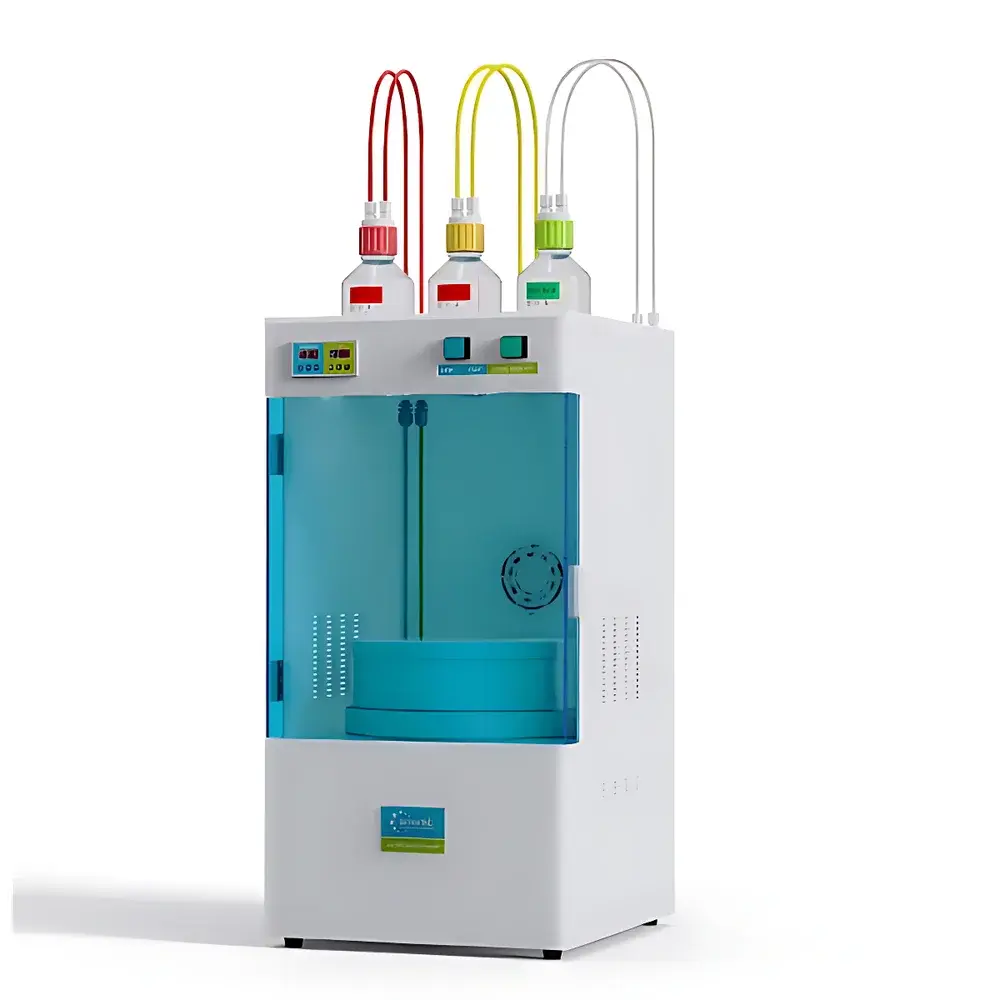
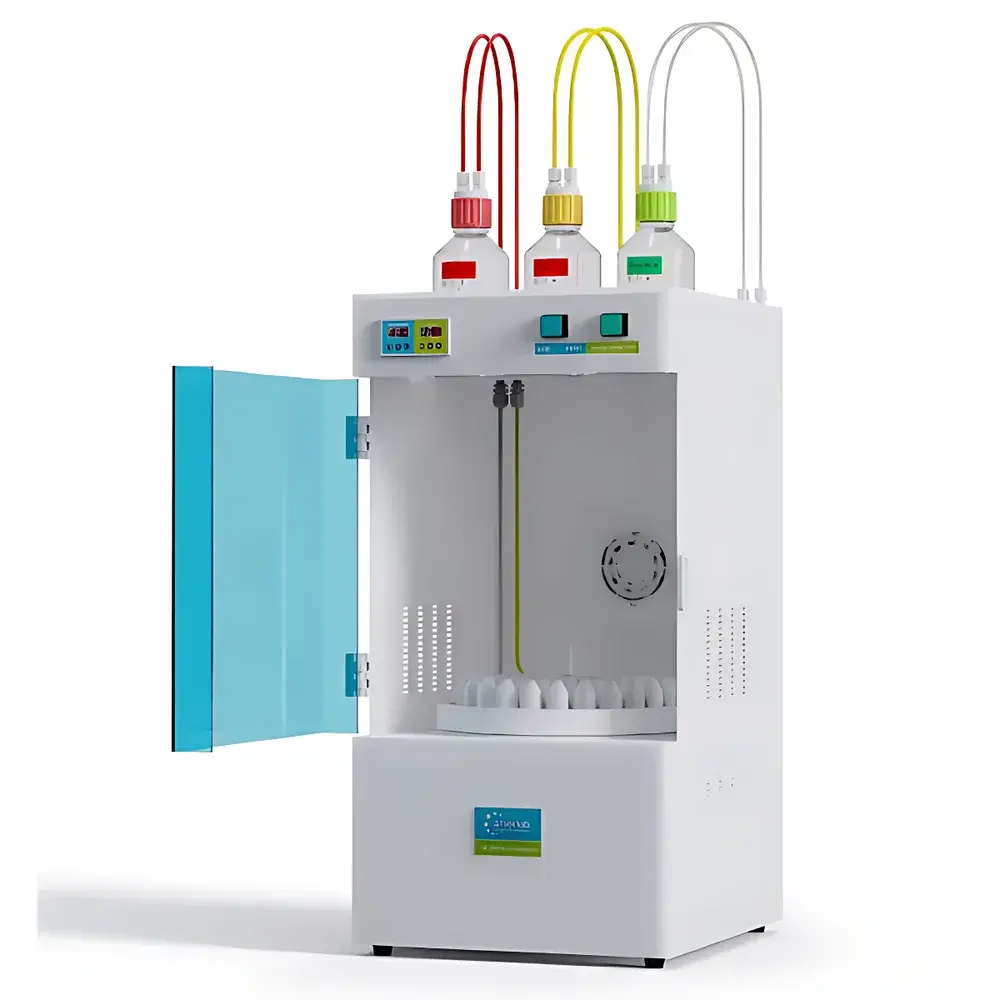
Amerlab AC360 Semi-Automatic Sub-Boiling Acid Vapor Counterflow Cleaner
| Brand | Amerlab |
|---|---|
| Origin | Guangdong, China |
| Manufacturer Type | Direct Manufacturer |
| Country of Origin | China |
| Model | AC360 Semi-Automatic |
| Price Range | USD 14,000–21,000 (FOB) |
| Operation Mode | Semi-Automatic |
| Cleanliness Level | ppt-level trace contamination removal |
| Cycle Time | 1–4 hours |
Overview
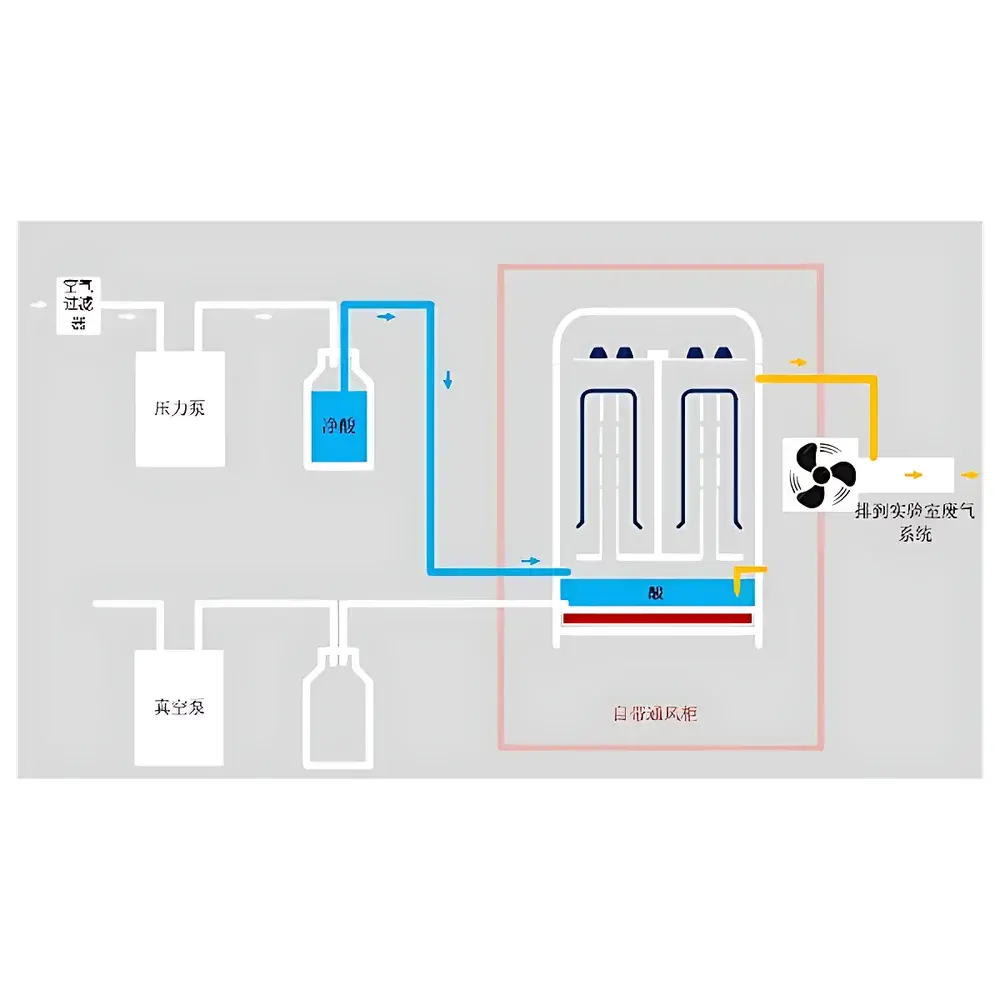
The Amerlab AC360 Semi-Automatic Sub-Boiling Acid Vapor Counterflow Cleaner is an engineered solution for ultra-trace laboratory cleaning applications requiring ppt-level purity. It operates on the principle of sub-boiling acid vapor generation combined with counterflow condensation and gravity-assisted acid reflux—enabling controlled, low-energy evaporation of high-purity acids (e.g., HNO₃, HCl, HF, or aqua regia) without reaching full boiling. This thermodynamically stable state minimizes aerosol formation, suppresses volatile impurity carryover, and ensures consistent delivery of ultra-pure acid vapors to sample containers. Unlike conventional hotplate-based or open-bath acid digestion systems, the AC360 maintains true liquid-phase temperature control via RTC (Real-Time Contact) sensing—where a chemically passivated PTFE-coated platinum resistance thermometer is immersed directly in the acid reservoir, enabling ±0.3 °C accuracy at sub-boiling setpoints (typically 110–125 °C for nitric acid). This eliminates thermal runaway and uncontrolled boiling events that compromise vapor purity and introduce metallic or particulate contaminants.
Key Features
- Sub-boiling vapor generation with RTC real-time acid-liquid temperature monitoring—ensuring reproducible vapor phase purity and eliminating false boiling caused by heater-surface-only temperature feedback.
- Monolithic, machined PTFE cleaning chamber—no seams, no adhesives, no internal corners; fully compliant with long-term exposure to >120 °C concentrated mineral acids.
- Integrated IP67-rated acid-resistant electrical interfaces—PTFE-insulated feedthroughs and sealed connectors prevent corrosion-induced signal drift or failure.
- Semi-automated acid replenishment and waste drainage—user-selectable time/temperature profiles initiate precise acid dosing and timed effluent evacuation without manual intervention.
- Self-contained fume management system—integrated corrosion-resistant blower and acid scrubber eliminate dependency on external lab hoods, preserving valuable ventilation infrastructure.
- Modular, application-specific cleaning racks—including dual-tier microwave digestion tube holders (AC360-L: up to 84 × 55 mL tubes; AC360-M: 40 × 55 mL), 77-position 15 mL super-microwave tube carriers, volumetric flask fixtures (customizable by neck diameter), and multi-channel pipette tip racks (0.2–5 mL).
Sample Compatibility & Compliance
The AC360 accommodates standard trace-metal analysis consumables including quartz, borosilicate glass, fluoropolymer-lined vessels, and PFA/ETFE digestion tubes. Its cleaning efficacy has been validated per ASTM D5686-22 (Standard Practice for Cleaning Trace Metal Sampling Containers) and aligns with EPA Method 1638 (Determination of Metals in Water by ICP-MS) requirements for container pre-treatment. The all-PTFE wetted path meets USP extractables criteria for Class VI polymers, and the closed-loop design supports GLP/GMP audit trails when paired with optional data-logging firmware (see Software section). No metallic components contact process fluids—ensuring compliance with ISO/IEC 17025:2017 clause 5.9.1 on equipment suitability for trace analysis.
Software & Data Management
The AC360 semi-automatic variant features a programmable microcontroller interface with password-protected parameter storage (up to 16 user-defined methods), real-time temperature/vapor pressure logging, and USB export of CSV-formatted cycle reports. Optional firmware upgrade enables 21 CFR Part 11-compliant electronic signatures, audit trail retention (>10,000 entries), and remote diagnostics via Ethernet. All temperature curves are timestamped and digitally signed to support method validation under ISO 17025 Clause 7.2.2 and FDA guidance on analytical instrument qualification.
Applications
- Pre-cleaning of microwave and hot-block digestion vessels prior to ICP-MS, ICP-OES, and GF-AAS analysis.
- Routine decontamination of volumetric flasks, NIST-traceable pipettes, and autosampler vials used in environmental water testing (e.g., EPA 200.8, ISO 17294-2).
- Reconditioning of quartz combustion boats and silica crucibles in geochemical labs performing low-background Li/B isotopic analysis.
- Removal of memory effects in clinical toxicology labs processing blood/urine samples for Pb, Cd, As quantification (CLIA-waived protocols).
- Supporting ISO/IEC 17025 accredited calibration labs requiring documented, repeatable cleaning SOPs for reference material handling.
FAQ
What acids are compatible with the AC360 system?
Concentrated nitric acid (69%), hydrochloric acid (37%), hydrofluoric acid (49%), and aqua regia (3:1 HCl:HNO₃) are routinely used. Sulfuric and perchloric acids are not recommended due to thermal decomposition risks above 120 °C.
How does the AC360 differ from “hotplate + beaker” acid cleaning methods?
It eliminates open-vessel evaporation, reducing operator exposure, acid consumption by ~40%, and airborne particulate generation. Sub-boiling operation prevents nitrate salt spattering and ensures uniform vapor-phase delivery to vessel interiors.
Is the system suitable for cleanroom environments?
Yes—the sealed architecture, zero external venting, and PTFE-only wetted path meet ISO 14644-1 Class 5 particulate limits when installed with HEPA-filtered supply air.
Can the AC360 be integrated into a LIMS or ELN workflow?
Via optional RS-485 or Modbus TCP interface, cycle logs and pass/fail status can be exported to third-party laboratory informatics platforms supporting ASTM E1384 or HL7 standards.
What maintenance is required?
Annual verification of RTC sensor calibration against NIST-traceable reference thermometers; biannual inspection of PTFE gasket integrity; no routine lubrication or filter replacement needed.



