
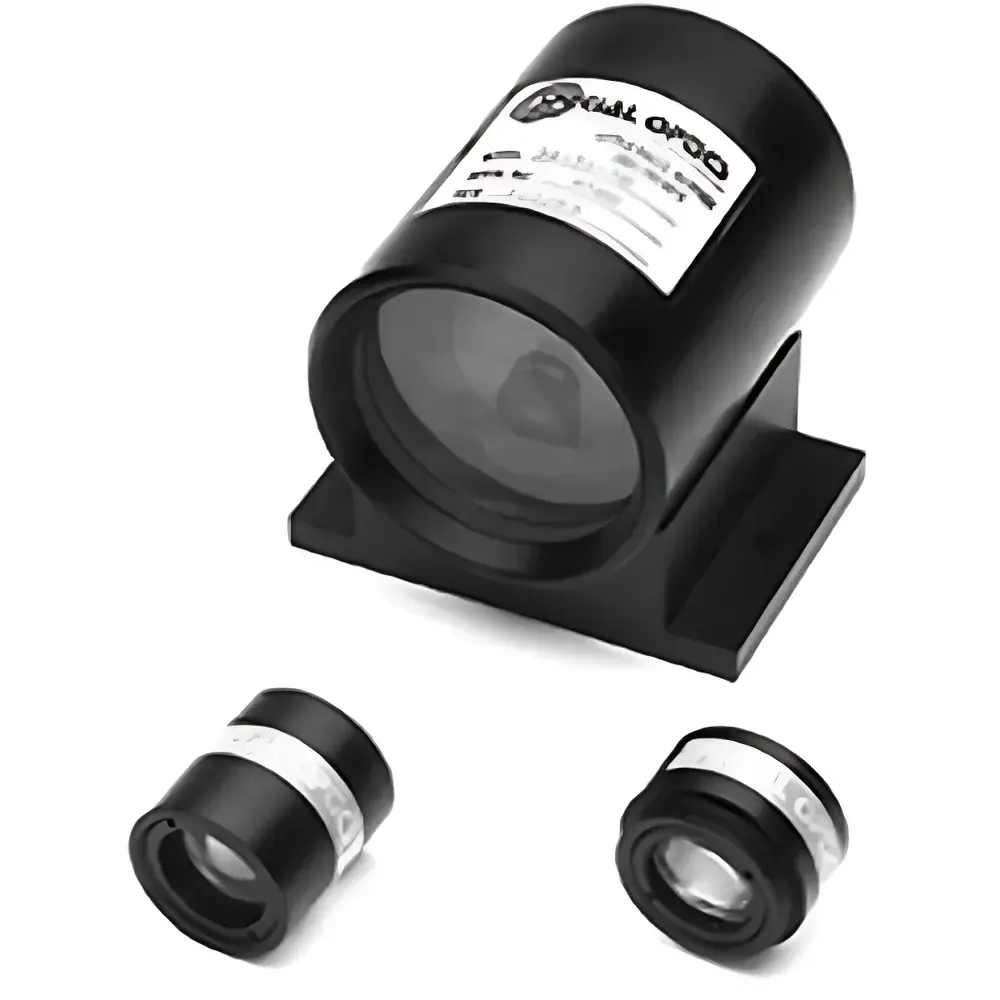
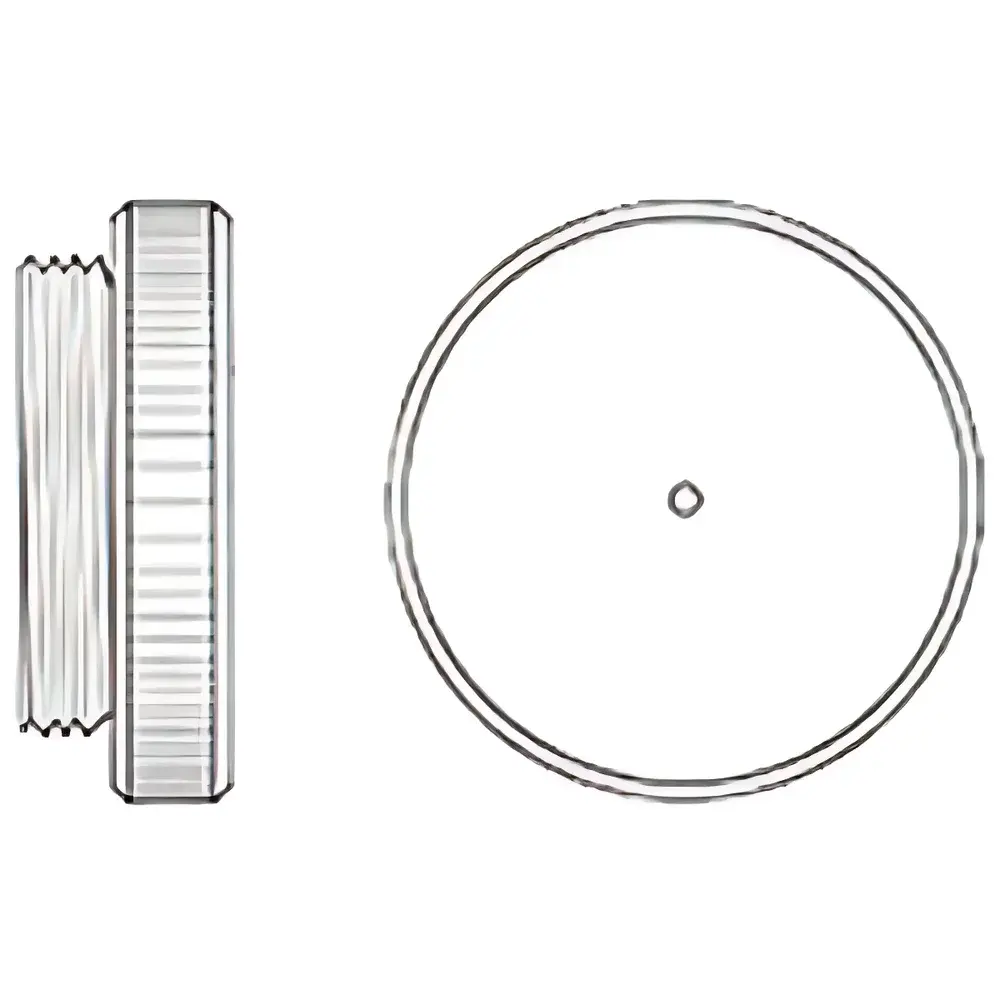
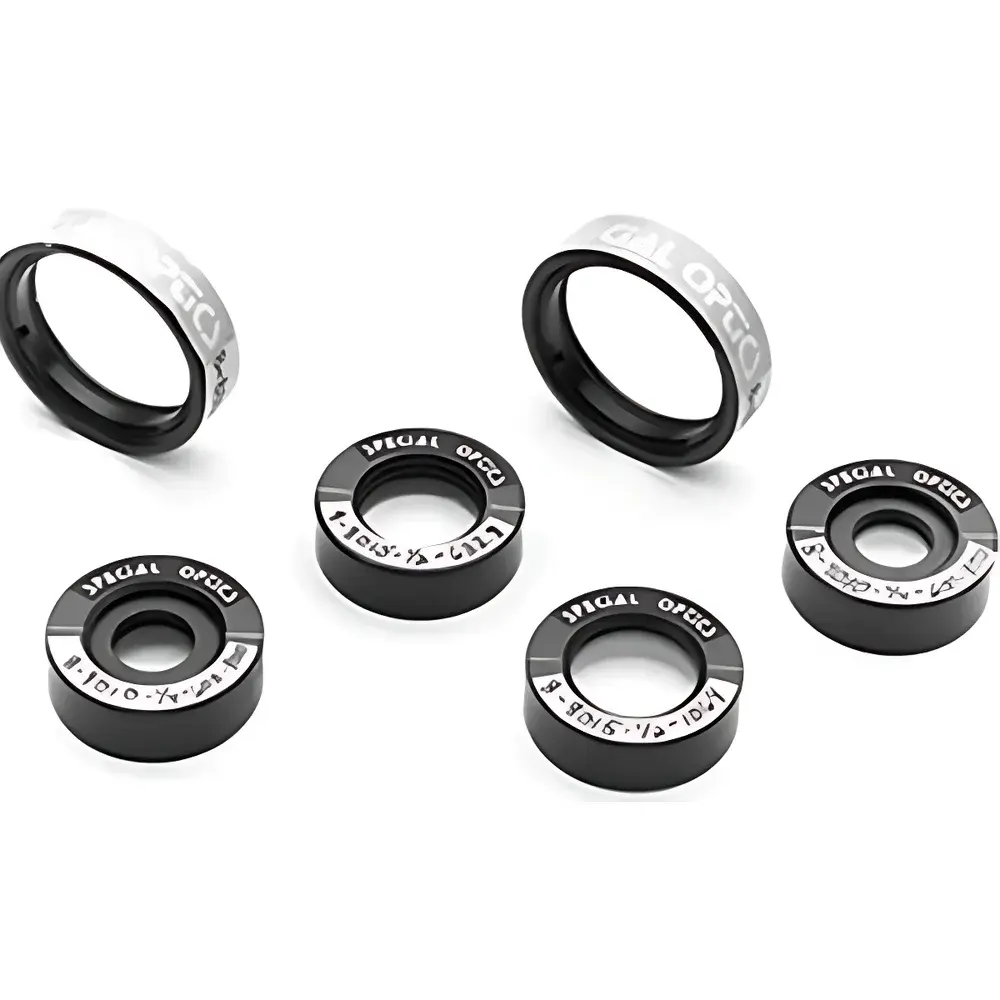
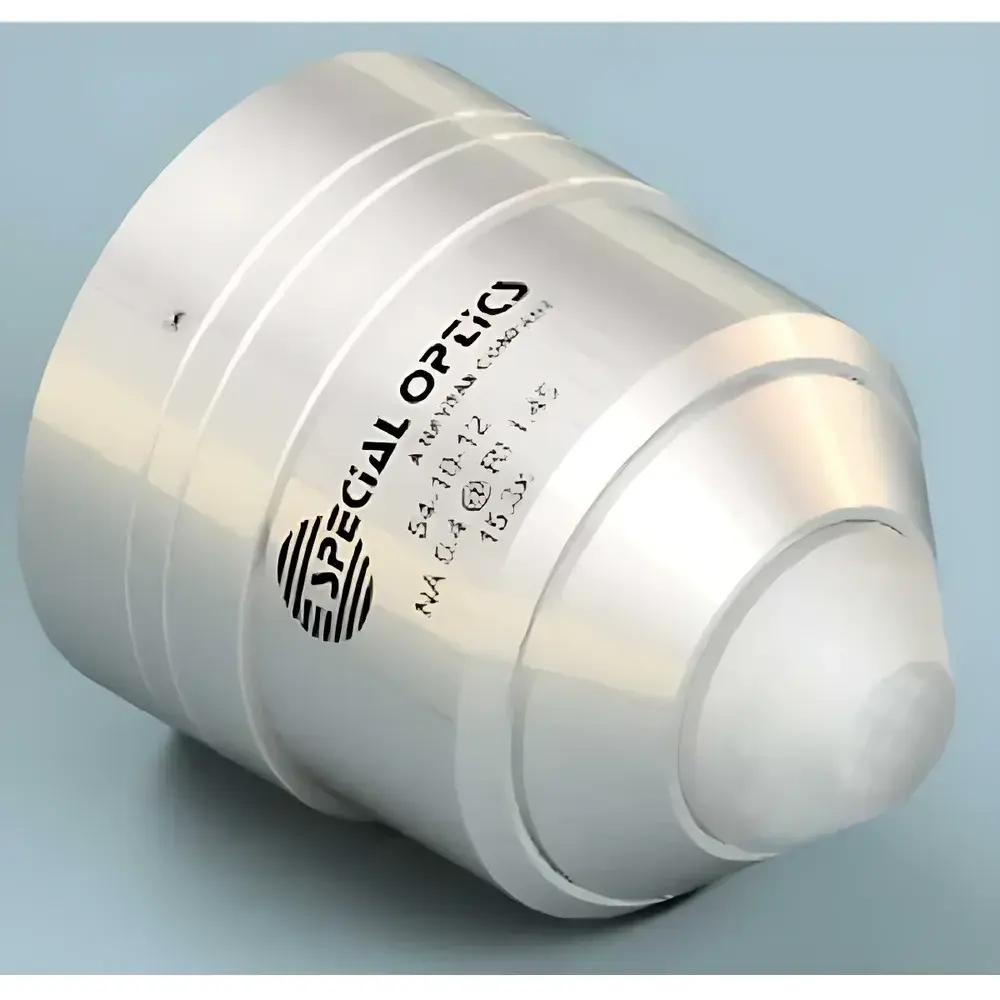
Ametek Special Optics Laser-Focusing Objective, Optical Component, Waveplate, and Custom Microscope Objective
| Brand | AMETEK |
|---|---|
| Origin | USA |
| Distributor Type | Authorized Distributor |
| Import Status | Imported |
| Unit Price | USD 1 (Component) |
| Category | Optical Element |
Overview
Ametek Special Optics laser-focusing objectives, waveplates, and custom microscope objectives are precision-engineered optical components designed for demanding scientific, industrial, and metrological applications. These components operate on fundamental principles of physical optics—including diffraction-limited focusing, polarization state manipulation via birefringent phase retardation, and high-numerical-aperture (NA) aberration-corrected imaging. Unlike standard microscope objectives or singlet lenses, laser-focusing objectives are optimized for broadband correction across wide apertures and multiple laser wavelengths (e.g., 193 nm ArF excimer, 248 nm KrF, 355 nm tripled Nd:YAG, 532 nm doubled Nd:YAG, and 1064 nm fundamental), enabling stable, repeatable beam delivery in ultrafast, high-peak-power, and continuous-wave laser systems. The waveplates employ air-spaced zero-order or achromatic designs to ensure minimal wavefront distortion and high laser-induced damage threshold (LIDT), while the custom microscope objectives integrate rigorous optical design with environmental robustness—supporting operation in vacuum, immersion media (water, glycerol, oil), and extreme humidity conditions.
Key Features
- Diffractive-limit performance across UV–NIR spectral ranges (193–1600 nm)
- Air-spaced construction for high LIDT (>500 MW/cm² for pulsed, >500 W/cm² for CW, depending on wavelength and pulse duration)
- Achromatic and zero-order waveplate architectures with <0.05% per-surface reflectivity AR coatings (R<0.05% @ specified bands)
- Wavefront distortion ≤ λ/8 @ 633 nm; parallelism <1 arc second
- Retardation tolerance ±0.005 waves; material options include fused silica, crystalline quartz, and MgF₂
- Custom microscope objectives with working distances from 0.3 mm to 55 mm and NA up to 1.3
- Environmental sealing compatible with vacuum (10⁻⁶ Torr), high-humidity (>95% RH), and immersion environments
- Housings fabricated from stainless steel, titanium, or polyetherimide (PEI) for thermal and mechanical stability
Sample Compatibility & Compliance
These optical components comply with international standards governing optical manufacturing quality and laser safety. All waveplates and objectives are manufactured under ISO 9001-certified processes, with full traceability of substrate material lot numbers, coating deposition parameters, and interferometric verification reports. Achromatic waveplates meet ISO 10110-5 specifications for surface figure and retardation uniformity. Laser-focusing objectives are validated per ISO 10110-7 for transmitted wavefront error and ISO 10110-8 for coating durability. For regulated life science and pharmaceutical applications, documentation supports GLP/GMP audit readiness—including calibration certificates, coating spectral transmission data, and LIDT test reports aligned with ISO 21254-1 (laser damage threshold testing). No proprietary software lock-in or vendor-specific firmware is required; all components are passive and fully interoperable with third-party motion stages, laser sources, and imaging platforms.
Software & Data Management
As passive optical elements, these components do not incorporate embedded electronics or firmware. However, comprehensive metrology datasets—including spectral transmission curves (200–2000 nm), wavefront maps (Zernike coefficients), polarization extinction ratios, and LIDT validation reports—are delivered in standardized formats (CSV, TIFF, PDF) compliant with laboratory data management systems. Transmission and retardation data conform to ASTM E308-22 spectral data exchange conventions. All calibration and verification documentation is timestamped, digitally signed, and archived for ≥15 years in accordance with FDA 21 CFR Part 11 requirements for electronic records retention. Integration into automated optical alignment workflows is supported via standardized mechanical interfaces (e.g., SM1, SM2, M25×0.75, M32×0.75 threads) and kinematic mounting solutions (V-blocks, kinematic mounts, XYZ translation stages).
Applications
- Laser micromachining and ablation (e.g., PCB drilling, thin-film scribing, medical device structuring)
- UV lithography and maskless direct-write photolithography (248 nm, 193 nm)
- Multi-photon microscopy of thick neural tissue (700–1300 nm NIR optimization)
- Electrophysiology-compatible objectives for patch-clamp imaging with inert immersion media
- Polarization-resolved Raman spectroscopy and ellipsometry using high-extinction-ratio waveplates
- Cold atom trapping and quantum optics experiments requiring vacuum-compatible, low-outgassing objectives
- High-speed laser scanning confocal and light-sheet microscopy requiring diffraction-limited spot stability
FAQ
Are these components supplied with calibration certificates?
Yes—each batch undergoes interferometric wavefront verification and spectral transmission measurement. Certificates include serial-numbered traceability, measurement uncertainty budgets, and compliance statements per ISO/IEC 17025.
Can I specify custom focal lengths or NA for a laser-focusing objective?
Yes. Special Optics accepts full optical design requests, including non-standard conjugates, telecentricity requirements, and multi-wavelength correction targets (e.g., simultaneous 355/532/1064 nm focus). Lead time depends on complexity but typically ranges from 12–20 weeks.
What is the maximum average power handling for an air-spaced quartz waveplate at 1064 nm?
For CW operation, the typical LIDT is ≥500 W/cm² with proper beam homogenization and cooling; for nanosecond pulses (10 ns, 10 Hz), it exceeds 5 J/cm². Exact values depend on coating design and mounting configuration.
Do you offer vacuum-compatible versions of microscope objectives?
Yes—all vacuum-rated objectives use metal housings (stainless steel or titanium), low-outgassing adhesives (<10⁻⁹ g/cm²·s per ASTM E595), and bake-out tested AR coatings. Standard vacuum rating is 10⁻⁶ Torr, with optional 10⁻⁹ Torr qualification available.
Is there a minimum order quantity for custom waveplates?
No. Single-unit prototyping is supported. Volume pricing applies starting at 5 units for production lots.





