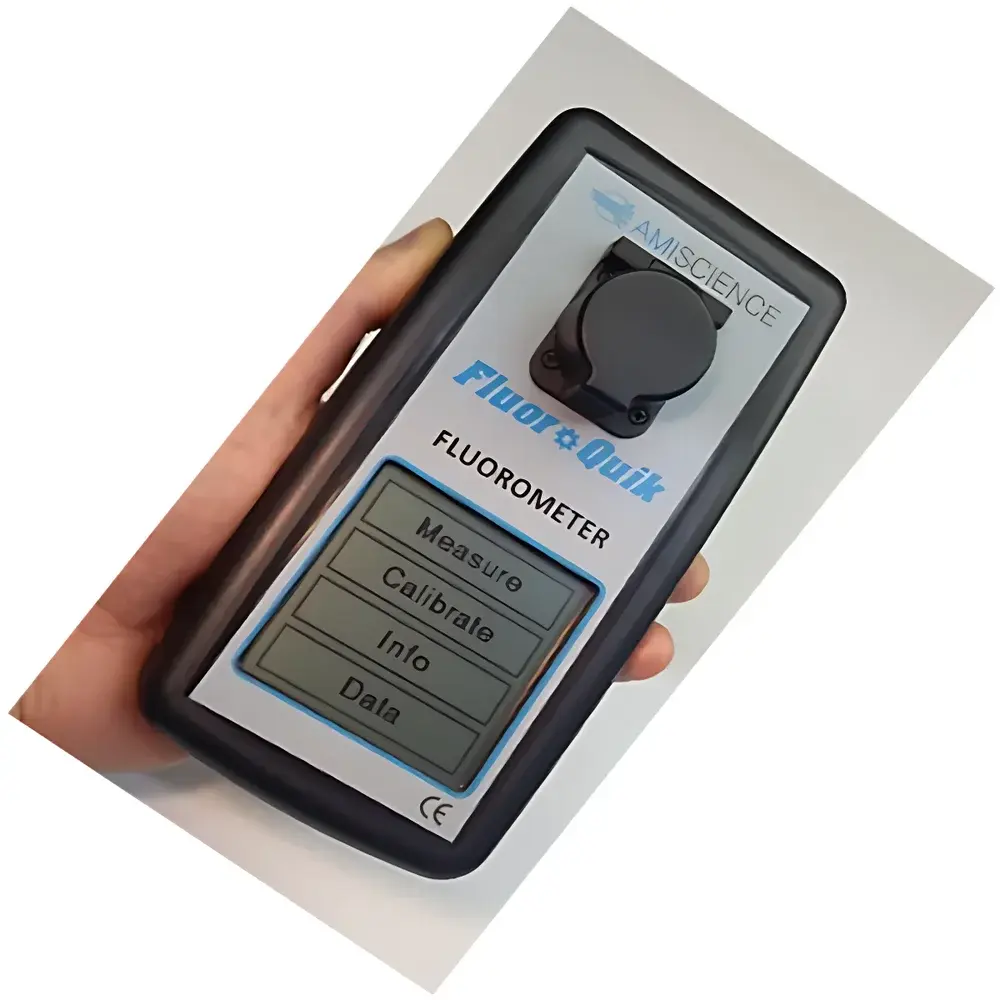
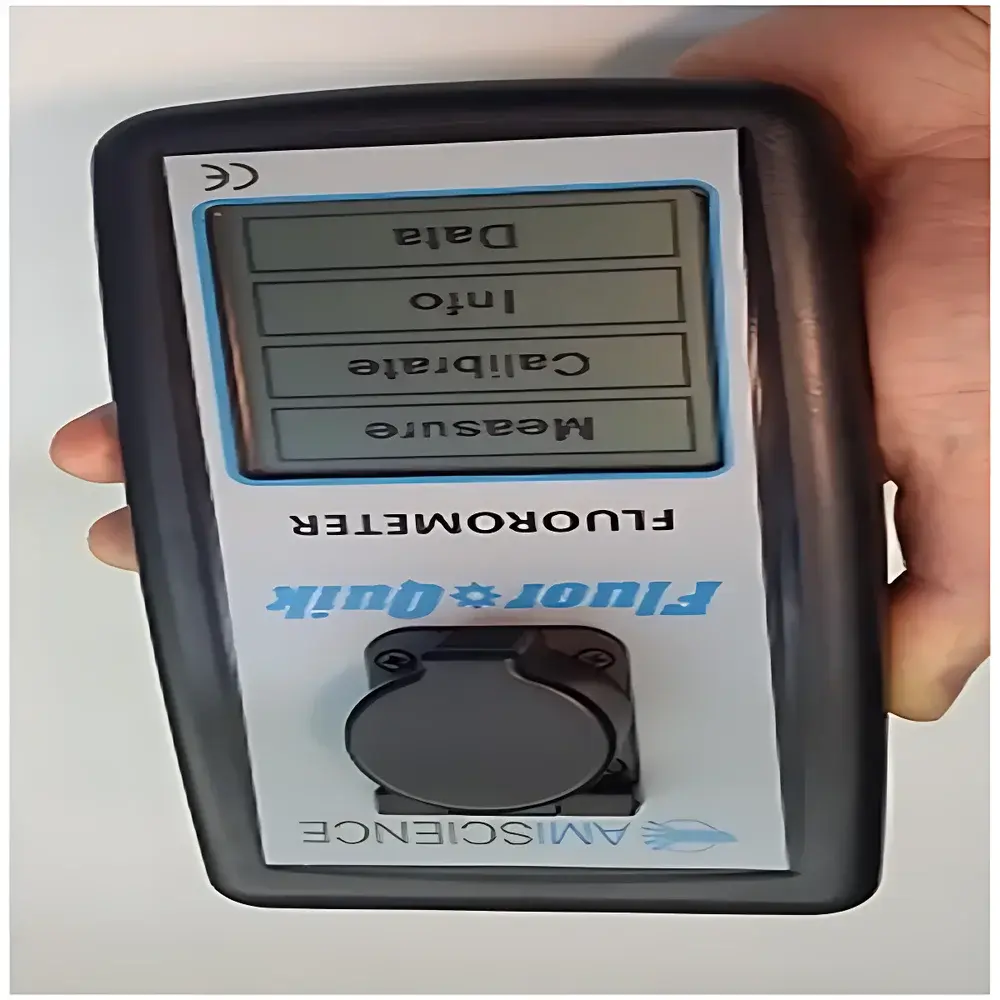
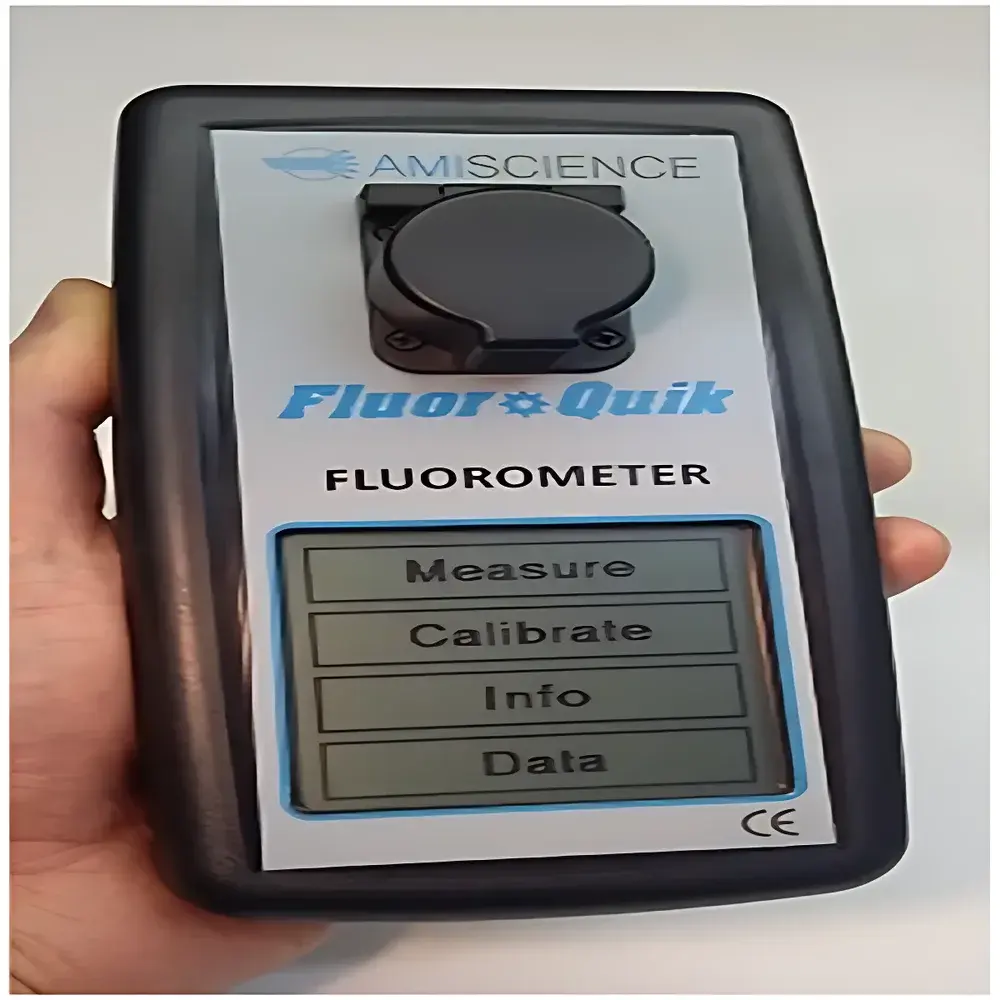
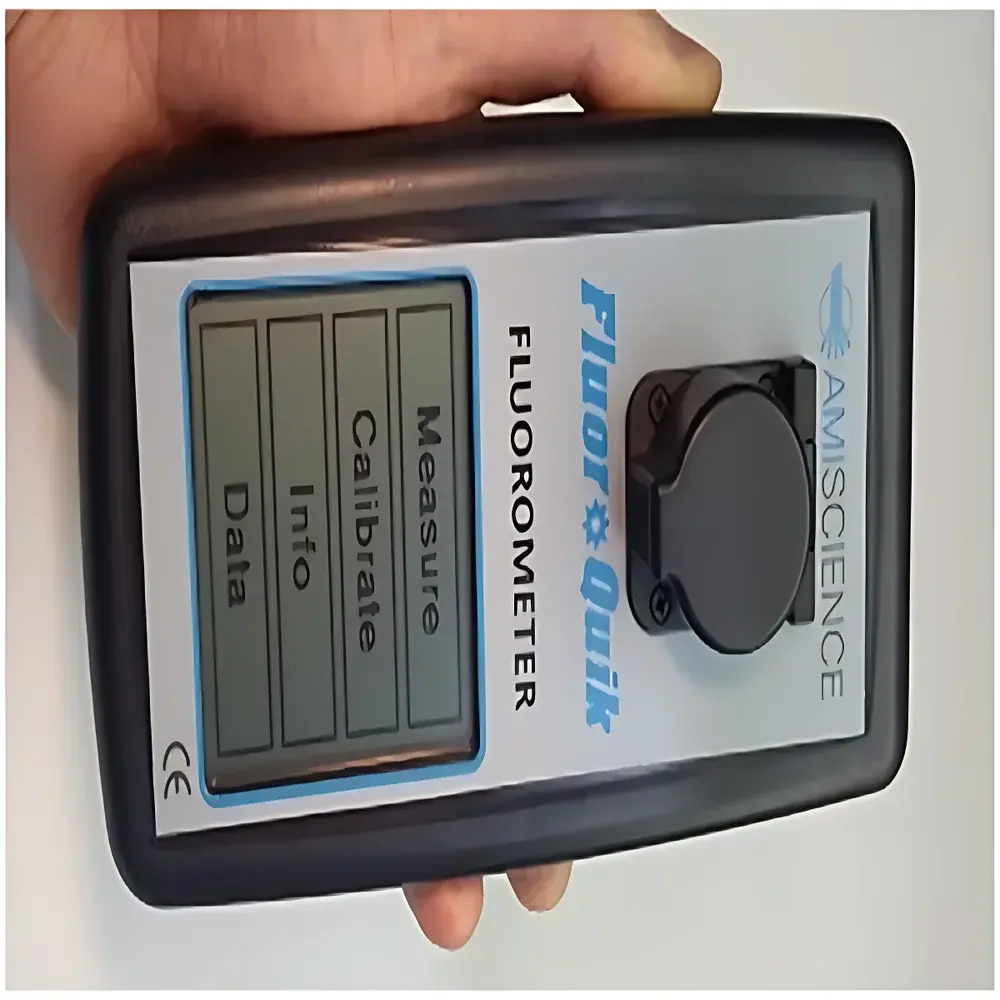
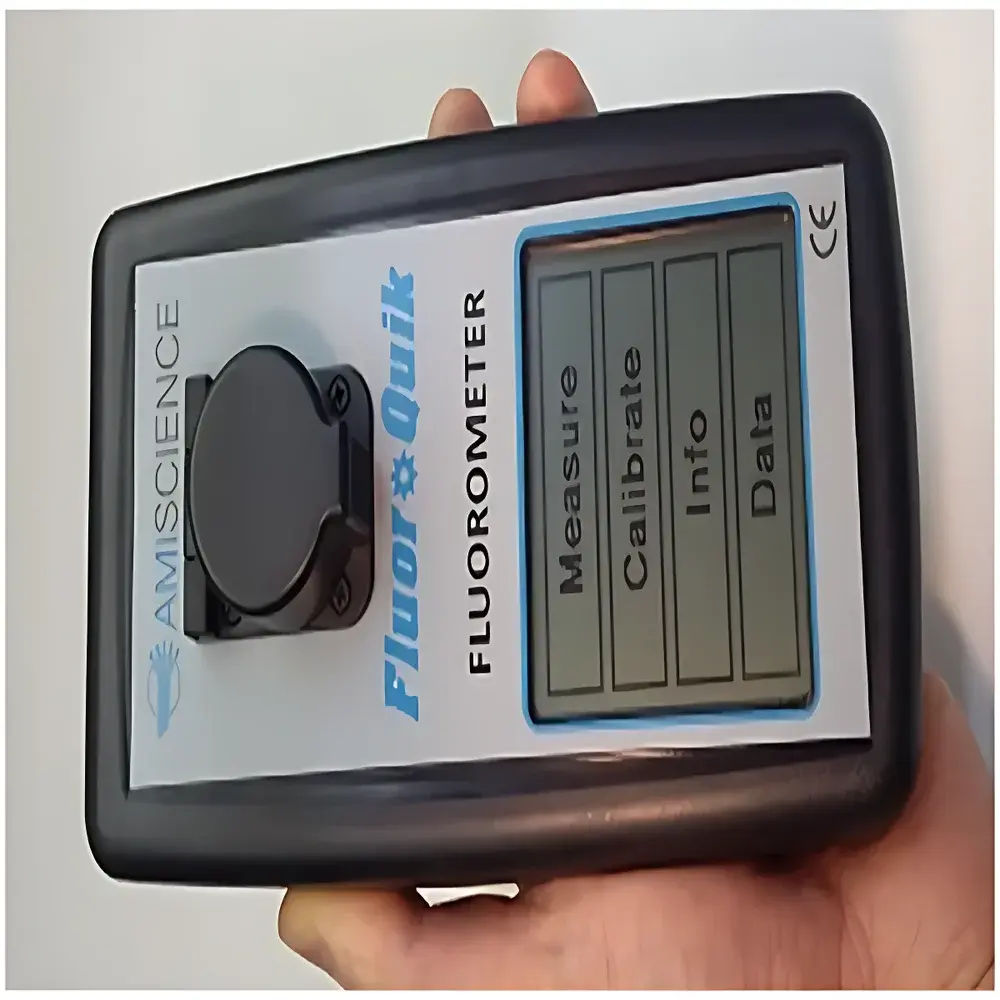
Amiscience FluoroQuik Handheld Fluorescence Tracer Analyzer
| Brand | Amiscience |
|---|---|
| Origin | USA |
| Manufacturer Type | Authorized Distributor |
| Origin Category | Imported |
| Model | FluoroQuik |
| Pricing | Available Upon Request |
Overview
The Amiscience FluoroQuik is a compact, handheld fluorescence tracer analyzer engineered for rapid, field-deployable quantification of fluorescent tracers in aqueous matrices. It operates on the principle of fixed-wavelength fluorometry—exciting target analytes at discrete, user-selectable excitation wavelengths and detecting emitted fluorescence at corresponding emission bands. This dual-wavelength configuration enables selective detection of common environmental and industrial tracers—including fluorescein, eosin, rhodamine B, optical brighteners, and p-toluenesulfonic acid (PTSA)—with high specificity and minimal spectral interference. Designed for hydrological connectivity studies, leak detection, and wastewater tracing, the FluoroQuik delivers quantitative concentration data (ppb) directly from raw RFU (Relative Fluorescence Units), leveraging calibrated linear or logarithmic response curves across a dynamic range exceeding six orders of magnitude. Its solid-state optical architecture, low-power LED excitation sources, and thermally stabilized photodiode detection ensure measurement reproducibility under variable ambient conditions—critical for both laboratory validation and uncontrolled field deployments.
Key Features
- Handheld form factor (185 × 90 × 35 mm) with ruggedized polycarbonate housing rated for IP54 environmental protection
- Dual-channel configurable optics: pre-aligned excitation/emission filter sets available across five standard wavelength pairs (e.g., 360/460 nm, 480/530 nm, 530/590 nm, 600/650 nm, 440/670 nm)
- Three sample format options: 100 µL in capillary tubes, 200 µL in PCR tubes (–A variant), 500 µL in microcentrifuge tubes (–B variant), or 1 mL in 1-cm quartz cuvettes (–C variant)
- High-sensitivity detection down to 0.1 ppb for fluorescein and PTSA; auto-ranging RFU output with selectable high- and low-gain modes
- Integrated capacitive touchscreen LCD with multilingual UI support—including fully localized Chinese menu navigation and on-device calibration prompts
- Flexible power management: 4× AA alkaline batteries (≥12 hours continuous operation) or external 5 V DC adapter with reverse-polarity protection
- Onboard memory stores up to 240 total measurements (80 per method × 3 predefined assay protocols), retrievable via USB 2.0 interface
Sample Compatibility & Compliance
The FluoroQuik supports direct analysis of untreated water samples—including potable water, surface runoff, groundwater, cooling tower effluent, and municipal wastewater—without mandatory filtration or dilution in most routine applications. Its optical path design minimizes inner-filter effects and scattering artifacts in turbid matrices (<50 NTU). The instrument complies with ASTM D5907–22 (Standard Test Method for Fluorescent Tracer Determination in Water) and aligns with EPA Method 1600 series guidelines for tracer-based hydrological investigations. While not FDA-cleared as an in vitro diagnostic device, its performance characteristics meet GLP documentation requirements for environmental monitoring labs conducting ISO/IEC 17025-accredited tracer studies. Traceability is maintained through two-point calibration using NIST-traceable reference standards; calibration logs include timestamp, operator ID, and standard lot numbers.
Software & Data Management
Data acquisition and reporting are managed exclusively through the embedded firmware—no external software installation required. Each stored measurement includes RFU value, calculated concentration (ppb), assay ID, timestamp (RTC-synced), battery voltage, and active filter pair identification. USB mass-storage mode allows drag-and-drop export of CSV-formatted datasets compatible with Excel, R, or LIMS platforms. Audit trail functionality records all calibration events, method modifications, and system resets—supporting 21 CFR Part 11–compliant workflows when paired with lab-controlled user authentication protocols. Firmware updates are delivered via signed .bin files loaded from FAT32-formatted USB drives.
Applications
- Hydrogeological connectivity mapping between springs, wells, and karst conduits
- Sanitary sewer overflow (SSO) and combined sewer system leak localization
- Stormwater infiltration verification and urban runoff pathway analysis
- In-plant cooling water circuit integrity testing in power generation and manufacturing facilities
- Rapid screening of drinking water distribution networks for cross-connection risks
- Validation of membrane filtration efficiency via fluorescent dye challenge tests
- Field-based assessment of biocide residual activity in recirculating systems
- Academic research in tracer hydrology, contaminant transport modeling, and ecohydrology
FAQ
What types of fluorescent tracers can the FluoroQuik detect?
It is validated for fluorescein sodium, eosin Y, rhodamine B, Tinopal CBS-X (fluorescent whitening agent), and p-toluenesulfonic acid (PTSA). Other compounds may be measurable if their excitation/emission maxima align with available filter sets.
Does the FluoroQuik require daily recalibration?
No—two-point calibration is recommended before each sampling campaign or after extended storage (>72 h). Drift verification using a mid-range check standard is advised every 10 measurements during intensive use.
Can it operate submerged or in high-humidity environments?
The device is IP54-rated (dust-protected and splash-resistant), but submersion or prolonged condensation exposure is not supported. Use with optional silicone sleeve accessory for enhanced moisture mitigation.
Is method development supported for custom tracers?
Yes—users may define new calibration curves via the touchscreen interface using up to six concentration points; curve fit options include linear, quadratic, and four-parameter logistic regression.
How is data security handled during USB transfer?
All exported CSV files contain no embedded credentials or proprietary metadata. The device itself does not store passwords or network identifiers—ensuring compliance with ITAR and EAR export control frameworks for international deployment.