
Ampliconyx TGMA-PM Tapered Double-Clad Fiber (T-DCF) Polarization-Maintaining Gain Module
| Brand | Ampliconyx |
|---|---|
| Origin | Finland |
| Model | TGMA-PM |
| Core Technology | Patented Polarization-Maintaining Tapered Yb-Doped Double-Clad Fiber |
| Wavelength Range | 1030–1065 nm |
| Pump Wavelength | 976 nm |
| Mode Field Diameter | 40 µm |
| PER | 13–15 dB |
| M² | ≤1.3 |
| Core Diameter (thin/thick end) | 29/48 µm |
| Cladding Diameter (thin/thick end) | 275/380 µm |
| Fluorine-Doped Cladding Diameter (thin/thick end) | 285/430 µm |
| Cladding Absorption @976 nm | 25 dB/m |
| Gain Fiber Length | 2.5 m |
| Input Fiber | 10/125 PM (standard) |
| Max Pump Power (free-space) | 250 W |
| Max Output Power | 150 W |
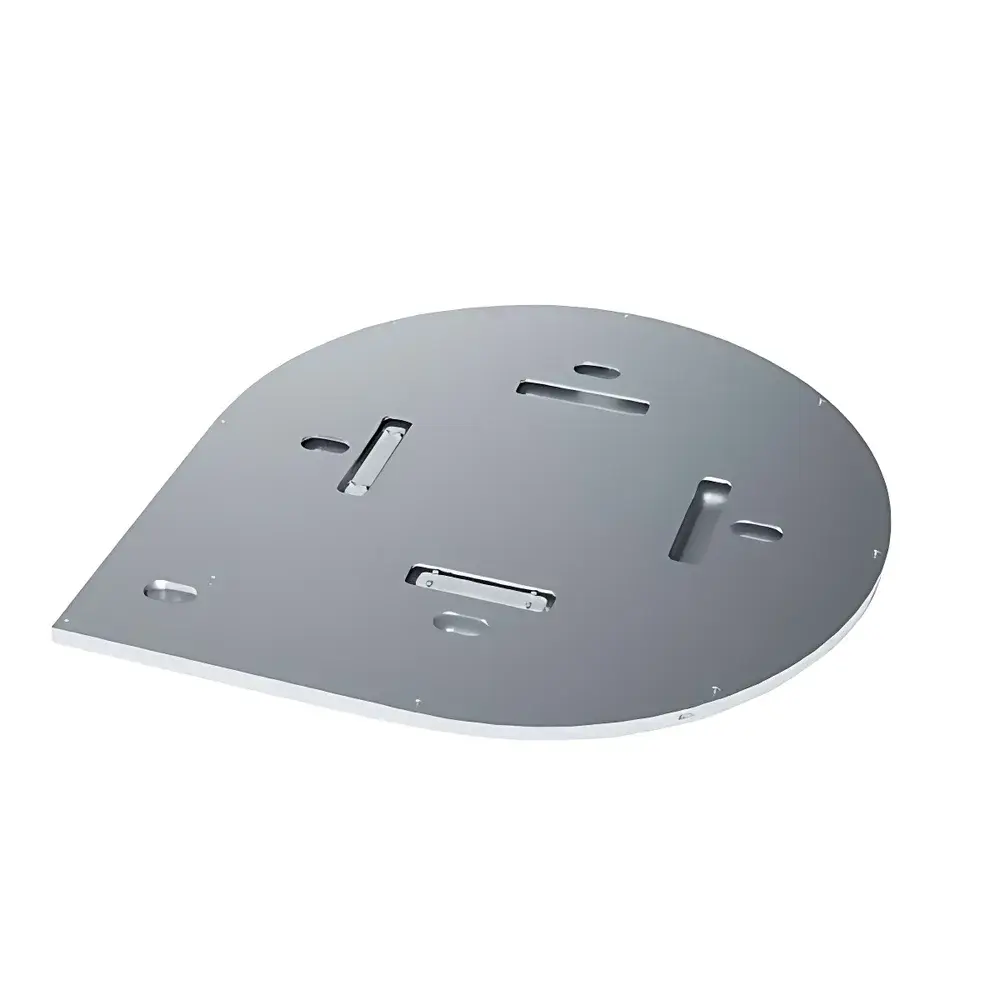
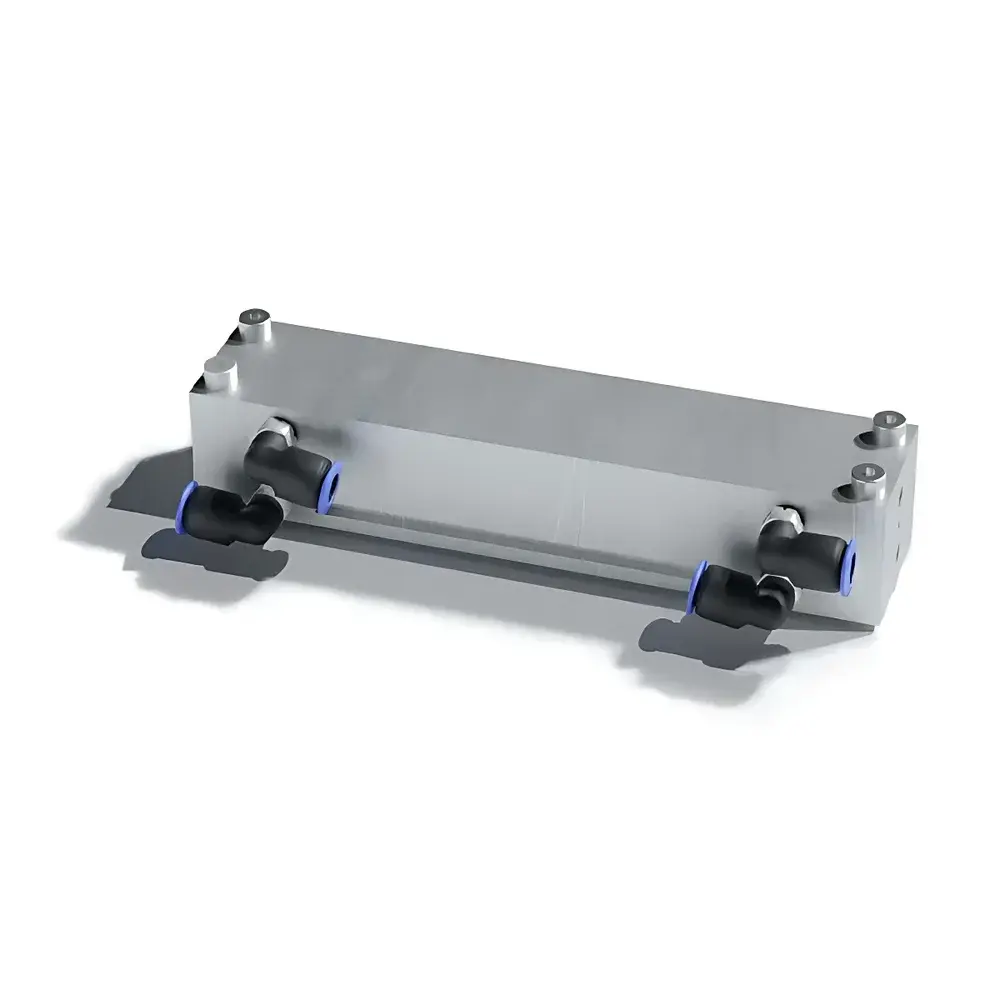
| Cooling Options | Active water-cooled fiber mount & thermal platform |
Overview
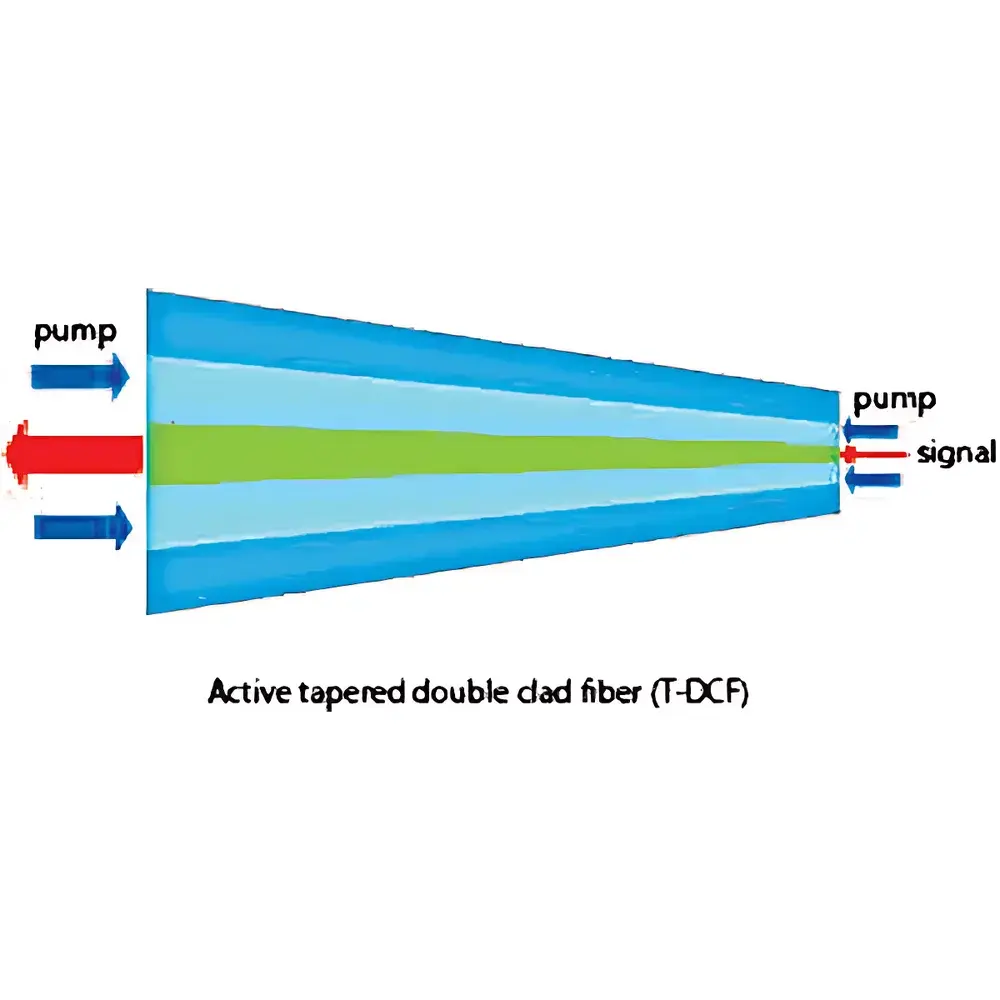
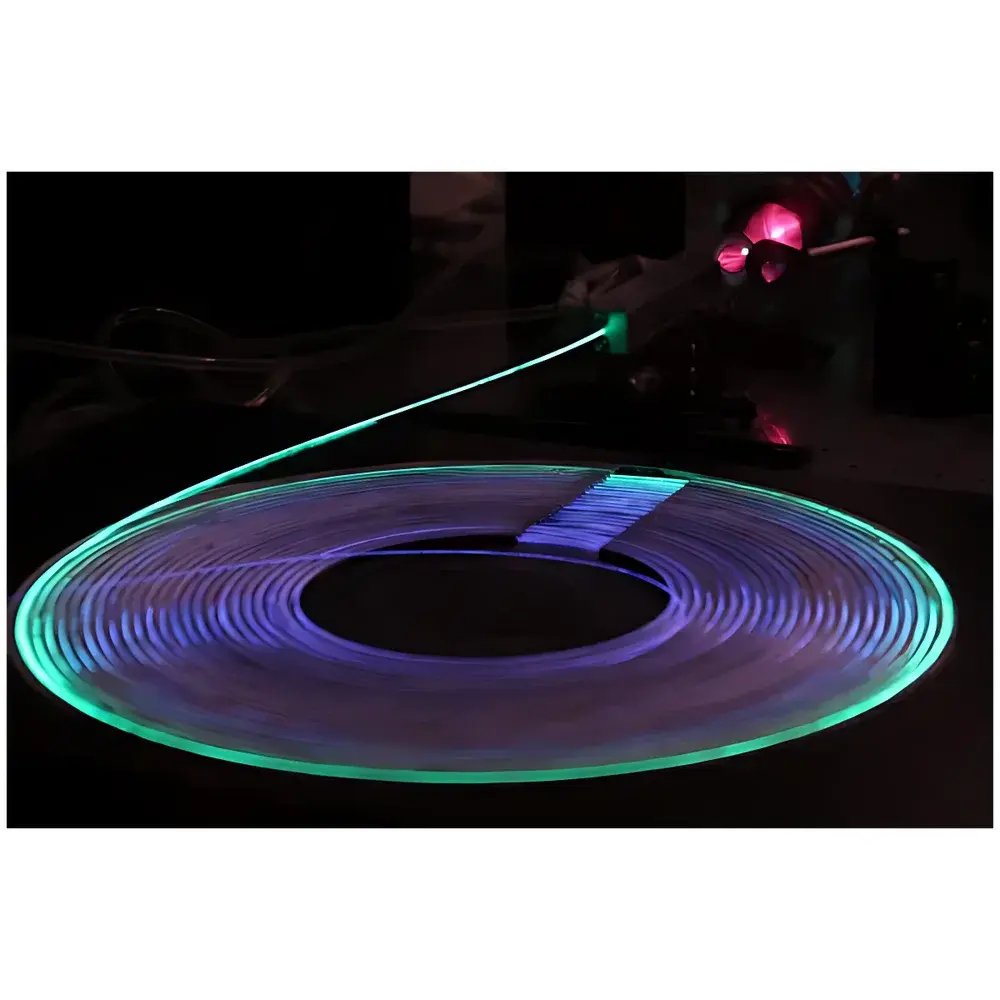
The Ampliconyx TGMA-PM is a polarization-maintaining (PM), high-power tapered double-clad fiber (T-DCF) gain module engineered for robust, diffraction-limited amplification in continuous-wave (CW) and pulsed laser systems operating in the 1030–1065 nm spectral range. At its core lies a proprietary, patent-protected Yb-doped T-DCF structure—where both core and inner cladding diameters increase monotonically along the fiber length. This geometric taper enables single transverse mode (LP₀₁) guidance across the entire active region despite a large effective mode field diameter (up to 40 µm), thereby simultaneously suppressing nonlinear impairments—including stimulated Raman scattering (SRS), self-phase modulation (SPM), and stimulated Brillouin scattering (SBS)—while preserving beam quality (M² ≤ 1.3) and polarization fidelity (PER ≥ 13 dB). Unlike conventional step-index double-clad fibers, the T-DCF architecture decouples mode confinement from pump absorption efficiency: high numerical aperture (NA = 0.28) outer cladding ensures >25 dB/m pump absorption at 976 nm, enabling compact amplifier designs (<2.5 m gain length) with reduced thermal load per unit length. The module integrates a cladding mode stripper (CMS) at the signal input end and accepts free-space pump coupling via precision-polished angled facets—requiring active thermal management during operation.
Key Features
- Polarization-maintaining architecture based on stress-induced birefringence in 10/125 PM input fiber (standard); custom fiber types available upon request
- Patented tapered Yb-doped double-clad fiber with smooth, adiabatic core/cladding expansion—designed to support fundamental mode propagation while enabling scalable power handling
- High pump absorption coefficient: 25 dB/m at 976 nm, reducing required fiber length and mitigating thermal lensing effects
- Integrated cladding mode stripper (CMS) at the signal input end to suppress higher-order cladding modes and ensure clean, low-noise seed injection
- Optimized thermal interface design compatible with external water-cooled mounts and precision translation stages for alignment-critical free-space pump coupling
- Robust mechanical packaging suitable for integration into OEM laser platforms compliant with IEC 60825-1 (laser safety) and ISO 10110 (optical component specifications)
Sample Compatibility & Compliance
The TGMA-PM is designed for use with polarization-preserving seed sources (e.g., PM fiber lasers or external cavity diodes) operating between 1030 nm and 1065 nm. It supports both CW and nanosecond-to-picosecond pulsed regimes, provided pulse energy and peak power remain within fiber damage thresholds defined by ISO 21254. The module complies with RoHS Directive 2011/65/EU and meets CE marking requirements for electromagnetic compatibility (EN 61326-1) and low-voltage safety (EN 61010-1). Its PM fiber termination adheres to Telcordia GR-1209-CORE and GR-1221-CORE standards for polarization extinction ratio stability under thermal cycling (-5 °C to +60 °C). For regulated environments (e.g., medical or aerospace laser systems), full traceability of fiber draw records, coating certification, and test reports (including PER vs. temperature, output power linearity, and long-term power stability over 100 hrs) are available under NDA.
Software & Data Management
While the TGMA-PM is a passive optical gain element without embedded electronics, it is fully compatible with industry-standard laser system control frameworks including LabVIEW-based DAQ interfaces (NI PXIe-6363), Python-controlled power meters (Thorlabs PM100D), and thermally monitored pump diode drivers (e.g., QPhotonics QFLD-976-250S). Ampliconyx provides comprehensive characterization datasets—including spectral gain profiles, small-signal gain vs. pump power, noise figure measurements (per ITU-T G.661 definitions), and polarization-dependent loss (PDL) maps—for integration into automated calibration workflows. All performance data are archived in HDF5 format with metadata compliant with FAIR principles (Findable, Accessible, Interoperable, Reusable), supporting GLP/GMP-aligned documentation practices where audit trails and version-controlled test logs are required.
Applications
- High-brightness narrow-linewidth fiber amplifiers for gravitational wave interferometry (e.g., LIGO-style 1064 nm pre-stabilized lasers)
- Ultrafast chirped-pulse amplification (CPA) front-ends requiring diffraction-limited beam quality and high PER stability
- Industrial micromachining lasers demanding >100 W average power with M² < 1.3 and minimal thermal drift
- Coherent lidar transmitters requiring polarization purity for heterodyne detection sensitivity
- Scientific pump-probe systems where temporal contrast and SBS suppression are critical for sub-ps pulse fidelity
- OEM integration into turnkey ultrafast laser platforms subject to FDA 21 CFR Part 11 electronic record requirements
FAQ
What pump source configuration is recommended for optimal coupling efficiency?
Free-space pump delivery via collimated 976 nm diode stacks is required; beam quality (M² < 1.5) and pointing stability (<5 µrad) are critical. A 1:1 imaging relay with AR-coated fused silica optics onto the polished 8° facet is advised.
Is the TGMA-PM suitable for amplifying ultrashort pulses below 500 fs?
Yes—when used in CPA architectures with appropriate dispersion compensation. The low nonlinearity and high SBS threshold enable pulse energies up to 100 µJ at 1 MHz repetition rates without spectral distortion.
Can the module be operated without active cooling?
No. Sustained operation above 30 W output requires water-cooled fiber mounting (≤20 °C coolant temperature) to maintain PER stability and prevent thermal depolarization.
Are splice-on connectors available for the input/output ports?
Standard FC/APC-PM connectors are offered; angle-polished PM pigtails with factory-verified PER >20 dB are available as optional upgrades.
How is gain saturation behavior characterized for system modeling?
Ampliconyx supplies small-signal gain (G₀), saturation fluence (Fsat ≈ 0.8 J/cm²), and effective emission cross-section (σem = 0.68 × 10⁻²⁰ cm² at 1040 nm) derived from multi-wavelength ASE and amplified spontaneous emission spectroscopy per ISO 11146-3.





