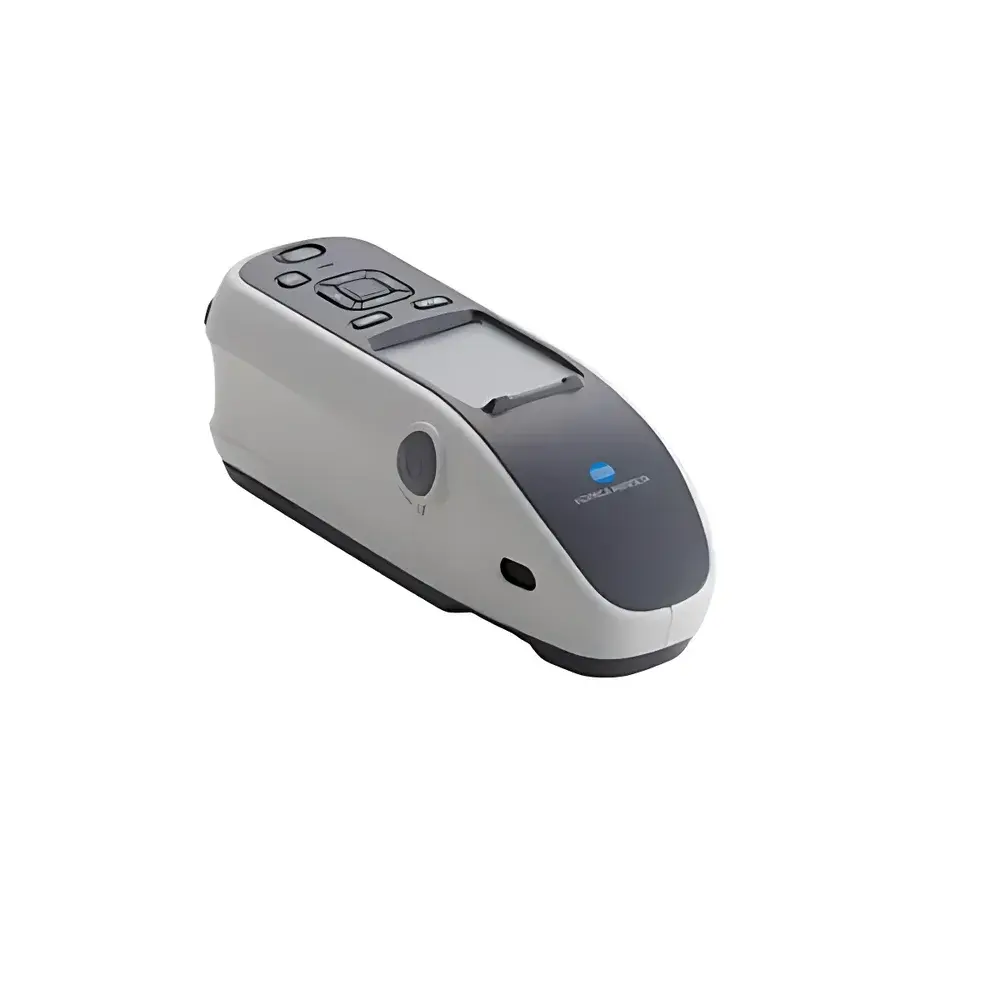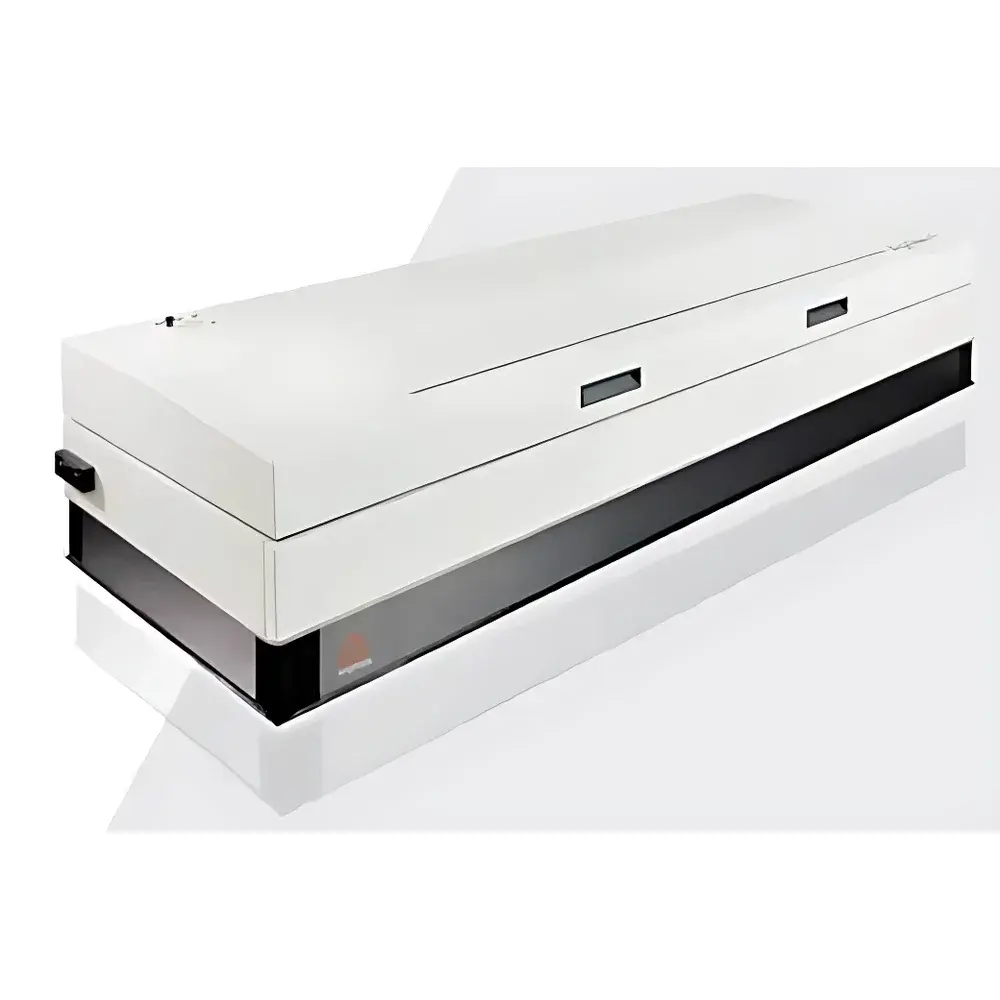
Amplitude Agilite Series Arbitrary Waveform Pulsed Laser Amplifier
| Brand | Amplitude |
|---|---|
| Origin | France |
| Product Type | MOPA-based Pulsed Laser Amplifier |
| Model Series | Agilite |
| Wavelength Options | 1064 nm / 532 nm (Nd:YAG & Nd:YLF) |
| Pulse Width Range | Agilite: 30 ns – 10 µs |
| Intrepid | 300 ps – 15 ns |
| Output Energy | Up to 4 J per pulse |
| Beam Diameter | 6 mm / 9 mm / 12 mm |
| Beam Quality | M² < 1.7 |
| Spectral Linewidth | < 2× transform-limited |
| Pulse-to-Pulse Stability | < 2.5% RMS |
| Timing Jitter | < 2 ns RMS |
| Repetition Rate | 1–20 Hz |
| Harmonic Generation | Standard SHG option available |
| Application Role | Seed source for multi-stage amplifier systems (e.g., Nd:glass amplifiers) |
| Compliance | Designed for integration into ISO/IEC 17025-compliant laser laboratories and high-energy physics testbeds |
Overview
The Amplitude Agilite Series Arbitrary Waveform Pulsed Laser Amplifier is a high-fidelity, master oscillator–power amplifier (MOPA) architecture system engineered for precise temporal shaping of nanosecond-scale laser pulses. Unlike conventional Q-switched or mode-locked lasers, the Agilite platform employs a single-mode continuous-wave (CW) seed laser that is externally modulated via high-speed electro-optic or acousto-optic drivers—enabling full user control over pulse width, amplitude envelope, delay, and inter-pulse timing. This capability supports advanced applications in pump-probe spectroscopy, laser-induced breakdown spectroscopy (LIBS), optical parametric chirped-pulse amplification (OPCPA) seeding, and inertial confinement fusion (ICF) diagnostic calibration. The system operates at fundamental wavelengths of 1064 nm and frequency-doubled 532 nm, with optional Nd:YLF (1053 nm) configurations available for compatibility with Nd:glass amplifier chains. Its robust mechanical design and thermally stabilized cavity ensure long-term pointing stability and shot-to-shot reproducibility under laboratory and industrial environmental conditions.
Key Features
- Arbitrary waveform generation via intuitive graphical user interface (GUI), supporting user-defined pulse shapes including square, ramp, Gaussian, and multi-peak envelopes
- Two operational variants: Agilite (30 ns – 10 µs pulse width range) and Intrepid (300 ps – 15 ns), optimized for distinct temporal resolution requirements
- High spectral purity with linewidth < 2× transform limit and M² < 1.7 beam quality for efficient coupling into downstream optics and nonlinear crystals
- Integrated second-harmonic generation (SHG) module as standard option, enabling seamless 532 nm output without external doubling stages
- Modular architecture supporting scalable energy scaling: Agilite units deliver up to 4 J/pulse and serve as stable seed sources for higher-energy Nd:glass or Ti:sapphire amplifier systems
- Low timing jitter (< 2 ns RMS) and pulse energy stability (< 2.5% RMS) validated per ISO 11554 and ASTM E2831 standards for pulsed laser characterization
Sample Compatibility & Compliance
The Agilite Series is designed for use with optically transparent, reflective, and plasma-generating targets across materials science, plasma physics, and precision metrology domains. Its pulse parameters comply with safety classifications per IEC 60825-1:2014 (Class 4 laser product). System integration supports alignment with GLP/GMP documentation workflows, including audit-trail-enabled parameter logging and timestamped output metadata export. Firmware adheres to deterministic real-time execution constraints required for synchronization with external diagnostics (e.g., streak cameras, photodiodes, RF triggers). All optical mounts and thermal management subsystems conform to ISO 10110 surface quality specifications and MIL-STD-810G environmental ruggedness testing protocols.
Software & Data Management
Control and configuration are managed through Amplitude’s proprietary LaserStudio software suite, which provides cross-platform (Windows/Linux) support and IEEE 1394 / Ethernet-based communication. Pulse shape definitions are stored in HDF5-formatted files compatible with MATLAB, Python (h5py), and LabVIEW environments. Software includes built-in compliance modules for FDA 21 CFR Part 11 electronic record/electronic signature (ER/ES) readiness—featuring role-based access control, change history tracking, and digital signature validation. Exported datasets include calibrated energy traces, temporal profiles (via integrated fast photodiode + digitizer), and thermal drift logs synchronized to GPS-referenced timestamps.
Applications
- Seeding multi-stage high-energy laser systems (e.g., Nd:glass, Ti:sapphire CPA systems) requiring sub-nanosecond jitter and programmable temporal contrast
- Time-resolved spectroscopy setups requiring precisely timed pump and probe pulses with variable delay and intensity ratios
- Laser-induced damage threshold (LIDT) testing of coatings and optical components under realistic pulse-shape conditions
- Plasma diagnostics calibration, including Thomson scattering and interferometry, where pulse shape fidelity directly impacts signal-to-noise ratio
- Development of adaptive pulse compression schemes in ultrafast optics research labs
- Industrial micromachining process optimization using shaped pulses to minimize thermal diffusion and recast layer formation
FAQ
What distinguishes the Agilite from the Intrepid model?
The Agilite series targets nanosecond-scale pulse shaping (30 ns – 10 µs), while the Intrepid variant extends into the sub-nanosecond regime (300 ps – 15 ns), optimized for ultrafast seeding and high-temporal-resolution diagnostics.
Can the Agilite operate at both 1064 nm and 532 nm simultaneously?
No—output wavelength is selected per configuration; however, dual-wavelength operation is supported via interchangeable harmonic modules or external dichroic beam combining.
Is remote triggering and synchronization supported?
Yes—TTL/PECL-compatible external trigger input with < 1 ns skew tolerance and programmable delay (0–10 s, 10 ps resolution) enables tight synchronization with external diagnostics.
Does the system meet regulatory requirements for use in certified calibration laboratories?
Yes—the Agilite Series includes factory-calibrated energy and timing measurement subsystems traceable to NIST and LNE standards, and supports ISO/IEC 17025 documentation templates.
What maintenance intervals are recommended for sustained M² < 1.7 performance?
Optical alignment verification is recommended every 500 operating hours; full cavity realignment and thermal recalibration are advised annually or after transport-induced shock events.