
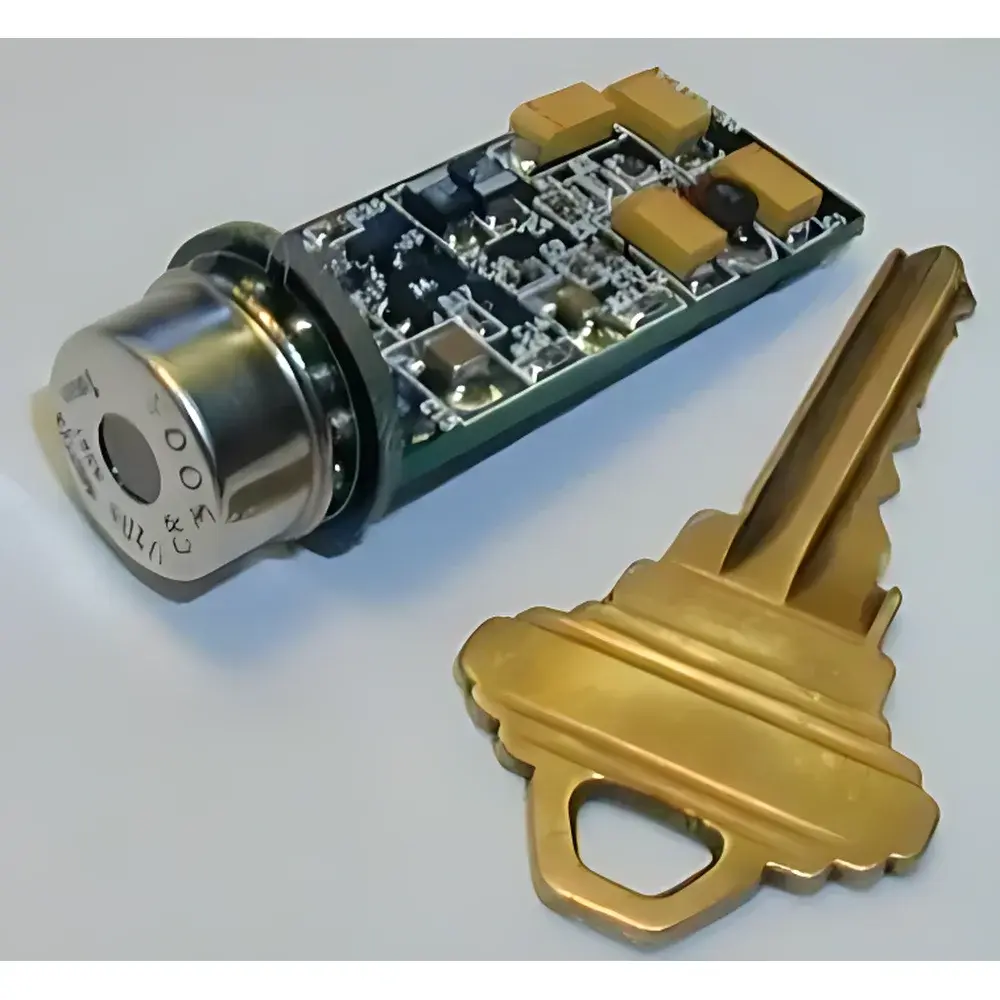
Amptek PA-210/PA-230 X-ray Preamplifier Modules for Si-PIN, SDD, and CdTe Detectors
| Brand | Amptek |
|---|---|
| Origin | USA |
| Model | PA-210/PA-230 |
| Power Supply Requirements | +5 VDC @ 15 mA, −5 VDC @ 15 mA |
| HV Input Range | +100 to +200 V (Si-PIN), −90 to −260 V (SDD/CdTe) |
| TEC Drive | +3.5 VDC @ 350 mA |
| Temperature Monitoring | 160 µA-biased silicon diode output |
| Signal Output | Negative pulse (Si-PIN), Positive pulse (SDD/CdTe) |
| Connector | 10-pin micro-DIN (1.0 mm pitch) |
| Thermal Control Capability | Closed-loop stabilization down to 230 K (−43 °C) |
| Compliance | Designed for integration into ISO/IEC 17025-compliant XRF, XRD, and EDX systems |
Overview
The Amptek PA-210 and PA-230 are high-stability, low-noise charge-sensitive preamplifiers engineered specifically for integration into OEM X-ray spectrometry systems. These modules serve as the critical first stage in the signal chain for energy-dispersive X-ray (EDX) detection, interfacing directly with Amptek’s family of solid-state X-ray detectors—including silicon PIN diodes (Si-PIN), silicon drift detectors (SDD), and cadmium telluride (CdTe) sensors. Operating on the principle of charge-to-voltage conversion, each module converts the minute charge pulses generated by incident X-ray photons into proportional voltage signals suitable for subsequent shaping, filtering, and spectral analysis. The PA-210 features a compact cylindrical form factor (Ø18 mm × 40 mm), optimized for fixed-mount configurations in benchtop or portable analyzers. The PA-230 introduces mechanical flexibility via a bendable substrate, enabling conformal integration into space-constrained or curved detector assemblies—particularly valuable in handheld XRF, synchrotron beamline endstations, and custom XRD goniometer designs. Both variants support thermoelectric cooling (TEC) control and real-time temperature monitoring, ensuring stable detector biasing and spectral resolution across ambient temperature fluctuations.
Key Features
- Low-noise charge-sensitive architecture optimized for <15 eV FWHM equivalent noise charge (ENC) performance with Si-PIN and SDD detectors
- Dual high-voltage polarity support: +100 to +200 V for Si-PIN; −90 to −260 V for SDD/CdTe—with voltage regulation stability better than ±0.1% over load and line variations
- Integrated TEC driver interface supporting up to 350 mA at ≤3.5 V, with ripple <0.1 Vpp to minimize thermal drift
- On-board temperature sensing via calibrated silicon diode (160 µA bias), traceable to NIST-traceable diode characterization curves
- 10-pin 1.0 mm pitch micro-DIN connector with defined pinout for signal integrity, grounding separation, and EMI resilience
- Modular mechanical design: PA-210 accepts standardized Ø18 mm housings with threaded mounting; PA-230 offers flex-circuit routing for non-planar detector integration
- Compatible with Amptek’s DP5 digital pulse processor and PC5 power supply—enabling full system-level synchronization, dead-time correction, and firmware-upgradable spectral acquisition
Sample Compatibility & Compliance
The PA-210/PA-230 preamplifiers are designed for use with vacuum-compatible, cryogenically stabilized X-ray detectors deployed in regulated analytical environments. They support all Amptek detector types certified to ASTM E1399 (standard test method for energy-dispersive X-ray fluorescence spectrometry), and their electrical interfaces comply with IEC 61000-6-3 (EMC emission limits) and IEC 61000-6-2 (immunity requirements). When integrated into final instruments intended for pharmaceutical QC, geological assay, or materials science applications, these modules contribute to system-level compliance with ISO/IEC 17025:2017 (general requirements for competence of testing and calibration laboratories). Their grounding topology—separating signal return (PIN 5), chassis ground (PIN 8), and TEC return (PIN 1)—minimizes ground loops and ensures measurement reproducibility required under GLP and GMP audit conditions. No internal calibration memory or firmware is present; calibration responsibility resides with the host spectrometer’s digital processing unit per USP <857> and FDA 21 CFR Part 11 data integrity guidelines.
Software & Data Management
As analog front-end components, the PA-210/PA-230 modules do not incorporate embedded software or onboard storage. All configuration, diagnostics, and temperature feedback control must be implemented externally—either through discrete analog circuitry (e.g., PID controllers using the diode voltage output on PIN 7) or via host-based digital control using Amptek’s DPPM (Digital Pulse Processing Module) firmware suite. When used with the DP5 processor, temperature telemetry from the PA-series preamp is automatically acquired, linearized using Amptek’s published diode calibration curve (Figure 3), and logged with timestamped metadata in HDF5 or CSV format. Audit trails—including HV setpoint changes, TEC current logs, and ambient temperature correlation—are maintained in accordance with ALCOA+ principles when paired with compliant laboratory information management systems (LIMS). Raw pulse output remains unprocessed and unfiltered, preserving full fidelity for post-acquisition deconvolution, pile-up rejection, or machine-learning–based peak identification workflows.
Applications
- OEM integration into benchtop and portable X-ray fluorescence (XRF) analyzers for mining, scrap metal sorting, and RoHS compliance screening
- Beamline instrumentation for synchrotron-based X-ray diffraction (XRD) and extended X-ray absorption fine structure (EXAFS) experiments
- Custom electron microprobe (EPMA) and scanning electron microscope (SEM)-EDS detector upgrades requiring ultra-low-noise preamplification
- Space-qualified radiation monitoring systems where mechanical flexibility (PA-230) and thermal stability down to 230 K are mandatory
- Academic and national lab setups performing fundamental detector physics research, including charge transport modeling and radiation damage studies
FAQ
Do the PA-210 and PA-230 require external power supplies?
Yes. Each module requires regulated +5 VDC and −5 VDC rails (15 mA each), plus a separate low-noise +3.5 VDC supply for the TEC driver. Ripple must remain below 50 mVpp on analog rails and 0.1 Vpp on TEC rail.
Can I use the same preamplifier for both Si-PIN and SDD detectors?
Yes—provided the high-voltage polarity and magnitude are correctly configured. Si-PIN requires positive HV (+100 to +200 V); SDD/CdTe require negative HV (−90 to −260 V). Polarity mismatch will prevent proper detector biasing.
Is temperature feedback control mandatory?
Not mandatory for basic operation, but strongly recommended. Uncontrolled detector temperature causes gain drift, resolution degradation, and peak shift—particularly above 25 °C ambient. Closed-loop control to 230 K ensures long-term spectral stability per ISO 11047.
Are mechanical housings included with the module?
No. Housings (e.g., Figures 7 and 13) are optional accessories. They provide EMI shielding, thermal mass, and standardized mounting—but customers may also design custom enclosures using the provided mechanical drawings.
Does Amptek provide calibration certificates for these modules?
No. As passive signal-conditioning components, PA-210/PA-230 units are supplied without factory calibration. System-level calibration—including energy scale, resolution, and efficiency—is performed during final instrument integration using reference sources (e.g., 55Fe, 241Am) per ASTM E1598.





