
AMS GP Lightweight Power Soil Sampler
| Brand | AMS |
|---|---|
| Origin | USA |
| Manufacturer Type | Authorized Distributor |
| Origin Category | Imported |
| Model | GP |
| Price | USD 7,000 (FOB) |
Overview
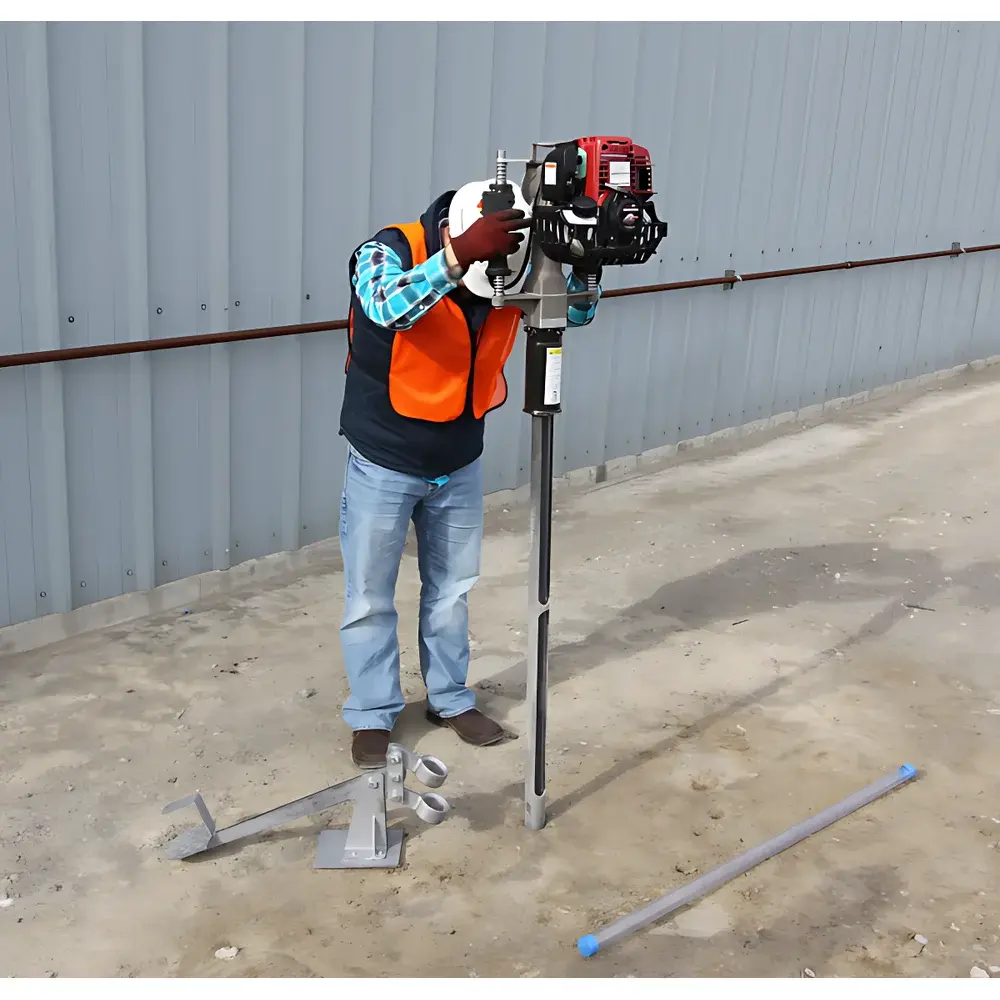
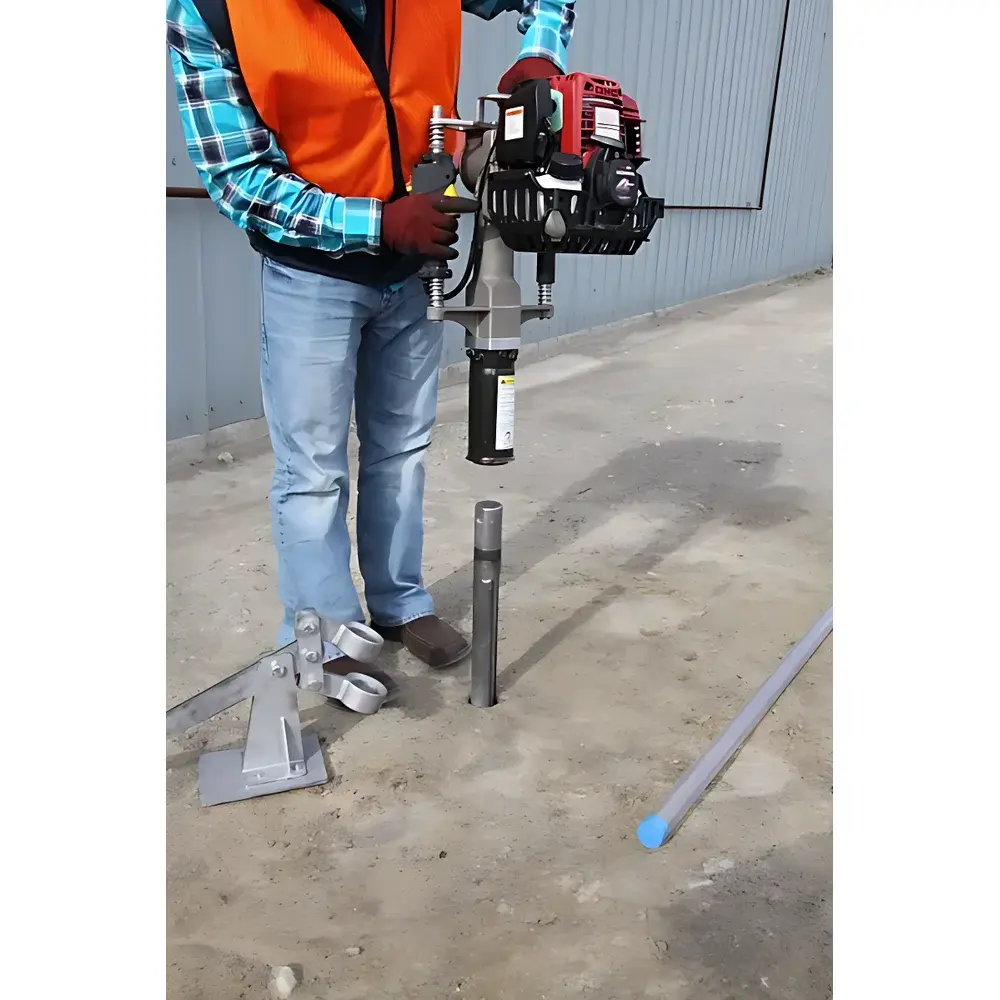
The AMS GP Lightweight Power Soil Sampler is a field-deployable, gasoline-powered direct-push sampling system engineered for rapid, consistent collection of undisturbed soil cores from 0.6 m to 2.4 m depth—extendable to 3.0 m with optional configurations. Based on the proven mechanical principle of percussive hammer-driven advancement, the GP system applies controlled vertical impact energy to advance hollow-stem sampling rods into unconsolidated to moderately cohesive soils (e.g., sands, silts, clays, and weathered till), minimizing sample disturbance and preserving stratigraphic integrity. Unlike rotary or auger-based systems, the GP avoids soil mixing and wall smearing, making it especially suitable for environmental site assessments (ESA), vadose zone characterization, landfill cover monitoring, and regulatory compliance sampling where representative in-situ structure and moisture retention are critical.
Key Features
- Compact, single-operator design weighing under 32 kg (70 lbs) — fully portable without requiring vehicle-mounted support or external power sources;
- Gasoline-powered impact hammer delivering repeatable strike energy (approx. 120–150 J per blow) with adjustable stroke frequency (40–60 bpm);
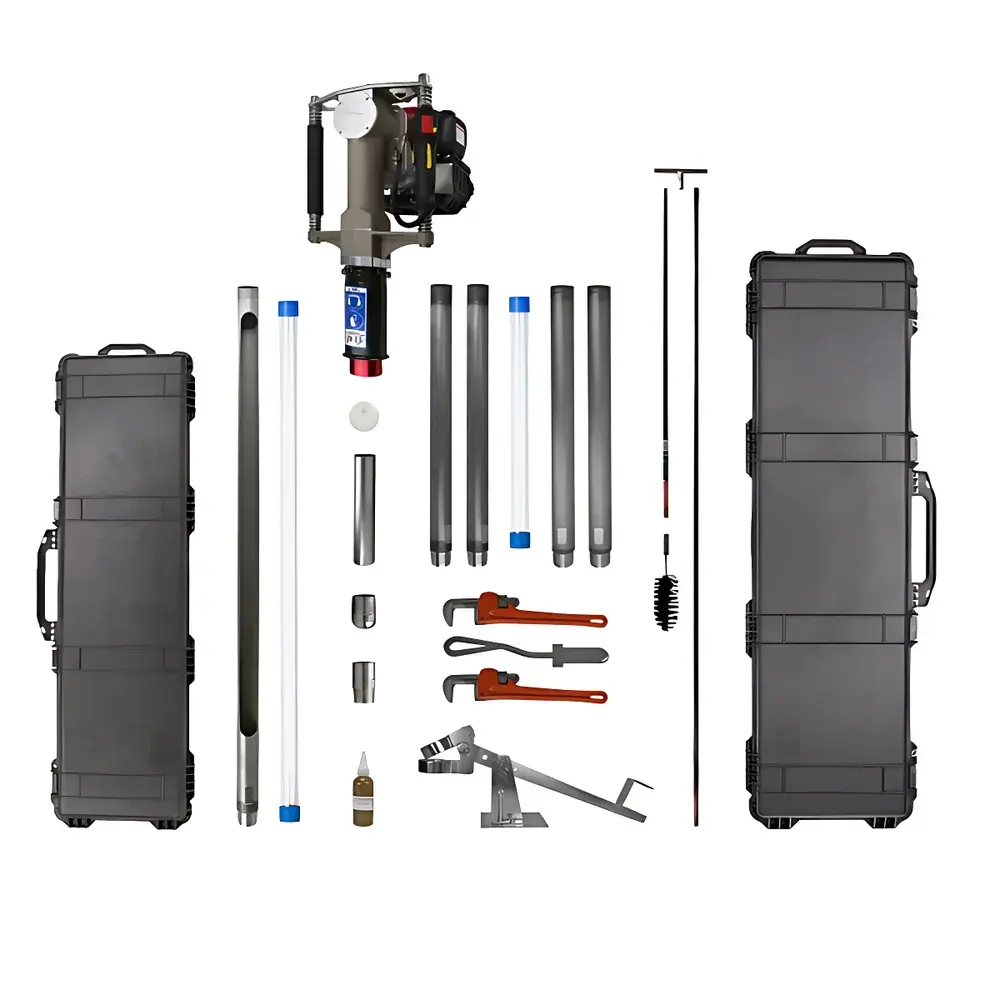
- Modular rod system: Includes two 1.2 m and two 0.9 m stainless-steel sampling tubes (38 mm OD), plus dual 1.2 m upper extension rods and dual 0.6 m lower extension rods for configurable depth assembly;
- Integrated alignment reference system: Dual parallel raised indexing lines on each tube ensure correct rotational and axial positioning during coupling — preventing liner misalignment and core extrusion failure;
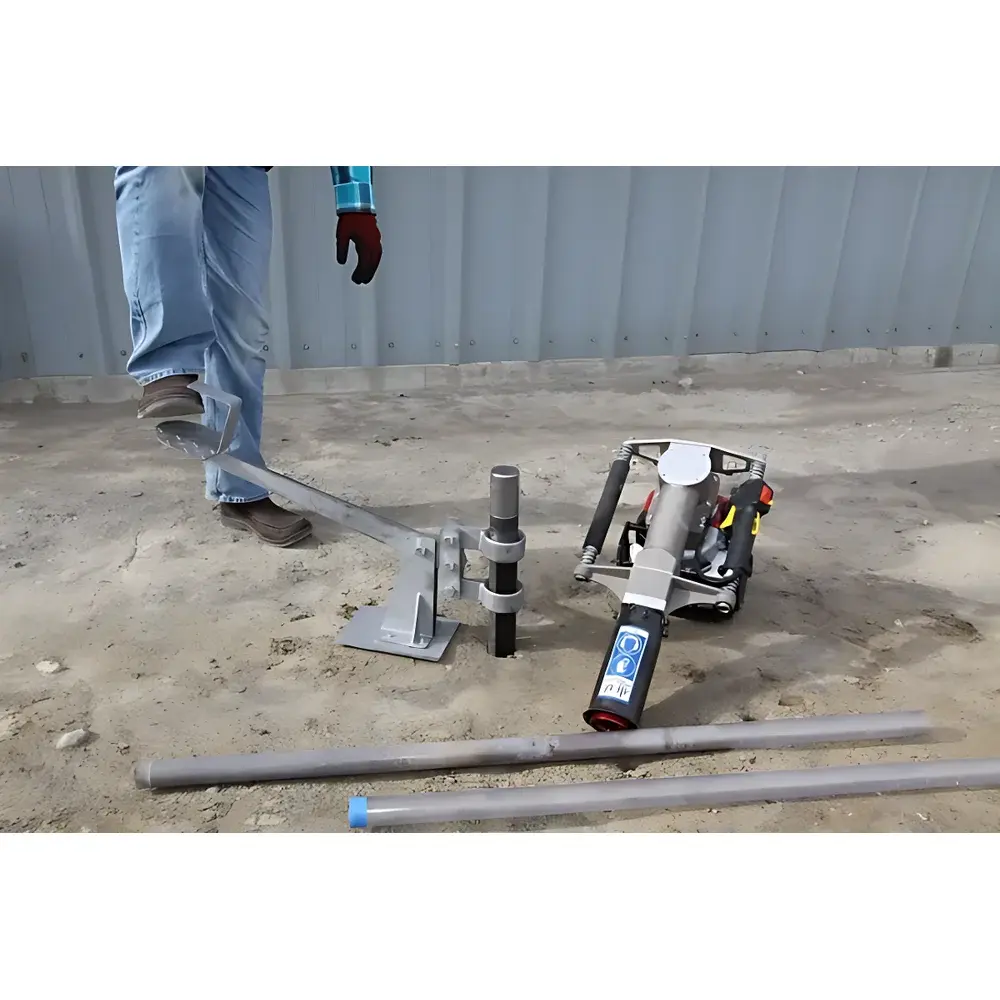
- Foot-operated extraction mechanism with 50 mm quick-coupling collar; enables controlled, stepwise retrieval of full-length cores without manual lifting or twisting;
- Transparent polymeric liner set (38 mm × 1200 mm and 38 mm × 600 mm) compatible with ASTM D1586 (Standard Test Method for Penetration Resistance and Classification of Soils) and EPA SW-846 Method 5035A (Soil Core Sampling for Volatile Organic Compounds);
- Includes dedicated cleaning brush, pipe wrench, portable carrying case, and footplate stabilizer for soft-ground operation.
Sample Compatibility & Compliance
The GP sampler is validated for use in non-lithified, low-to-medium density geotechnical matrices, including granular soils (SP, SW), fine-grained sediments (ML, CL), and organic-rich topsoil layers (up to 20% OM). It is not recommended for gravelly soils (>15% >20 mm particles), bedrock, or highly cemented strata. All metallic components meet ASTM A240/A240M (304 stainless steel) specifications for corrosion resistance in humid and mildly acidic field environments. The liner geometry and extraction force profile comply with U.S. EPA Region 10 Field Sampling Guidance (2022) for VOC-sensitive soil coring and maintain chain-of-custody integrity per ISO/IEC 17025:2017 requirements for accredited environmental laboratories.
Software & Data Management
While the GP is a manually operated mechanical system with no embedded electronics or onboard data logging, its operational protocol integrates seamlessly with industry-standard digital workflows. Depth progression, strike count, and liner insertion status are recorded via AMS FieldLog™ mobile app (iOS/Android), which supports GPS-tagged location stamping, photo documentation, and export to CSV or PDF for inclusion in Phase I/II ESA reports. All sampling events are traceable through unique rod serial numbers and liner batch IDs — supporting audit readiness under EPA 40 CFR Part 264 Subpart D and state-level hazardous waste facility inspection protocols.
Applications
- Environmental site investigations (Phase I/II ESAs) requiring representative vadose zone sampling;
- Regulatory compliance monitoring at RCRA subtitle C facilities and brownfield redevelopment sites;
- Soil gas probe installation support and shallow groundwater plume delineation;
- Agricultural soil health profiling (bulk density, texture, horizon boundaries);
- Geotechnical pre-boring for foundation design in low-rise construction projects;
- Academic field research involving pedogenic horizon analysis and contaminant migration studies.
FAQ
What is the maximum achievable sampling depth with the standard GP kit?
With the included rods (two 1.2 m + two 0.9 m tubes + extensions), the nominal operational depth is 2.4 m. Using optional 0.6 m couplers and additional liners, field validation confirms reliable operation up to 3.0 m in uniform sandy loam profiles.
Can the GP be used in saturated or high-water-table conditions?
Yes — the sealed liner system prevents water infiltration during advancement; however, extraction efficiency decreases above the water table due to hydrostatic suction. Use of the footplate stabilizer and staged extraction is recommended.
Is the GP compliant with ASTM D1586 and EPA Method 5035A?
The GP’s core geometry, liner compatibility, and minimal-disturbance advancement method satisfy the physical sampling criteria outlined in both standards; final analytical compliance depends on laboratory handling and preservation per SW-846 Chapter Five protocols.
Does AMS provide calibration or performance verification documentation?
Each GP unit ships with a factory-verified impact energy certificate (per ASTM E2504), rod dimensional inspection report, and liner permeability test summary — all traceable to NIST-traceable references.
Related Products







