
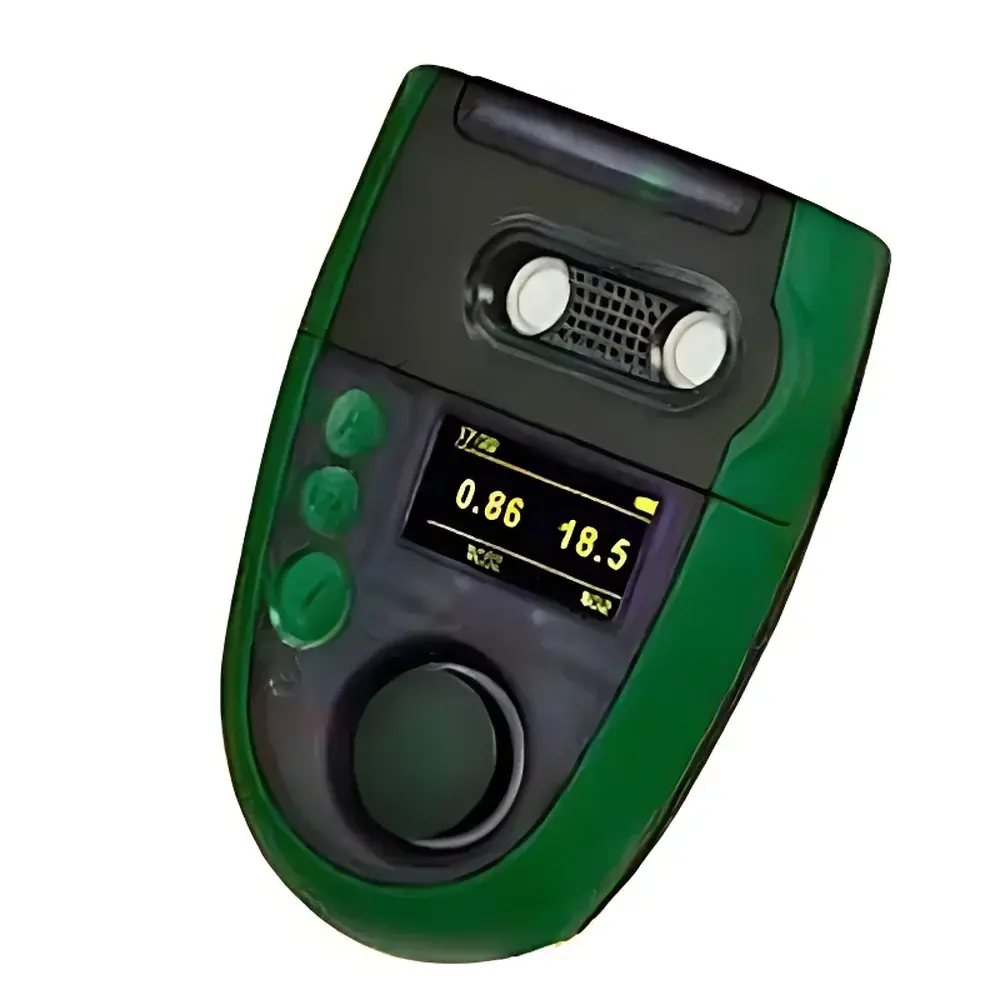
Analox ASPIDA Portable Carbon Dioxide (CO₂) Detector
| Brand | Analox |
|---|---|
| Origin | United Kingdom |
| Model | ASPIDA |
| Instrument Type | Portable |
| Detection Target | Single-Gas (CO₂) |
| Measurement Range | 0.01–5.00% vol CO₂ |
| Resolution | 0.01% vol |
| Accuracy | ±2% FS (0.01–2.5% range), ±3% FS (2.5–5.0% range) |
| Response Time (T90) | <60 s |
| Zero Drift | ±1% FS/6 months |
| Span Drift | ±1% FS/6 months |
| Linearity Error | ±1% FS |
| Operating Temperature | –5 to +50 °C |
| Battery | 2 × 2100 mAh NiMH AA |
| Runtime | >12 h (continuous) |
| Charging Time | 4.5 h |
| Display | High-visibility OLED |
| Alarm | 95 dB @ 30 cm (audible), tri-color LED indicators, fall detection alarm (110 dB) |
| Sensor Technology | Non-dispersive infrared (NDIR), MIR-based |
| CO₂ Sensor Lifetime | 5 years |
| Optional O₂ Sensor | Electrochemical, 0.1–25.0% vol, T90 <30 s, 2-year lifetime |
Overview
The Analox ASPIDA is a purpose-engineered portable carbon dioxide (CO₂) detector designed for continuous personal exposure monitoring in high-risk occupational environments where CO₂ accumulation poses acute asphyxiation hazards. Built upon Analox’s proprietary mid-infrared (MIR) non-dispersive infrared (NDIR) sensing platform, the ASPIDA delivers stable, interference-resistant measurement of CO₂ concentrations across a calibrated range of 0.01–5.00% volume. Its operational principle relies on selective absorption of infrared radiation at characteristic wavelengths (≈4.26 µm) by CO₂ molecules—enabling high specificity without cross-sensitivity to common background gases such as methane, water vapor, or carbon monoxide. The device meets the functional safety requirements for Category 3 personal gas monitors under EN 50104:2018 and is routinely deployed in confined spaces including beverage fermentation cellars, draft beer storage areas, hotel basement utility rooms, soft drink dispensing zones, and commercial kitchen CO₂ cylinder storage cabinets.
Key Features
- Robust, IP67-rated enclosure with belt-clip and optional wall-mount bracket for flexible deployment
- Dual-mode operation: real-time continuous monitoring and event-triggered data logging (timestamped CO₂ concentration, alarm status, battery level)
- Integrated fall detection algorithm with dedicated 110 dB audible alarm—compliant with HSE guidance for lone-worker protection
- OLED display with auto-brightness adjustment ensures legibility in low-light and high-glare conditions (e.g., cellar stairwells, refrigerated storage corridors)
- Configurable dual-threshold alarms (TWA and STEL) aligned with OSHA PEL (5,000 ppm), ACGIH TLV (5,000 ppm), and EU Directive 2004/37/EC
- Onboard rechargeable NiMH battery system supporting >12 hours of uninterrupted operation—validated per IEC 62368-1 for secondary lithium-free energy storage safety
- Field-replaceable sensor modules with factory traceable calibration certificates (NIST-traceable reference gas standards)
Sample Compatibility & Compliance
The ASPIDA is validated for use in ambient air matrices containing up to 95% relative humidity and typical atmospheric pressure fluctuations (80–106 kPa). It is not intended for use in inert atmospheres, explosive gas mixtures (ATEX Zone 0/1), or environments exceeding 50 °C. The CO₂ sensor exhibits minimal drift under sustained exposure to ethanol vapors (<100 ppm) and glycol aerosols commonly encountered in brewery and keg-handling operations. Device firmware and hardware architecture comply with ISO 9001:2015 manufacturing controls and support GLP-compliant audit trails when paired with Analox’s PC-based configuration software. Calibration records, alarm logs, and sensor diagnostics are exportable in CSV format for integration into enterprise EHS management systems.
Software & Data Management
Configuration, calibration, and data retrieval are managed via Analox’s Windows-compatible ASPIDA Configuration Utility (v3.2+), which supports password-protected user roles (Operator, Technician, Administrator). The utility enables full parameterization of alarm thresholds, data logging intervals (1–300 s), auto-zero cycles, and sensor span verification routines. All logged datasets include UTC timestamps synchronized to host PC time—ensuring temporal integrity for incident reconstruction. Exported files contain embedded metadata (device serial number, firmware revision, sensor lot ID, calibration due date) satisfying documentation requirements under FDA 21 CFR Part 11 for regulated food & beverage facilities. Firmware updates are delivered via signed binary packages to prevent unauthorized modification.
Applications
- Real-time CO₂ monitoring in wine cave cellars, craft brewery fermentation tanks, and sparkling beverage production lines
- Lone-worker protection during routine inspection of CO₂ manifold systems in hotel HVAC plant rooms
- Verification of ventilation effectiveness in draft beer storage coolers and keg delivery vehicles
- Pre-entry screening for confined space entry (e.g., grain silos, fermentation pits) per OSHA 1910.146 protocols
- Periodic validation of fixed CO₂ detection system performance during maintenance audits
- Training and competency assessment for hospitality staff handling compressed gas cylinders
FAQ
What is the recommended calibration frequency for the ASPIDA CO₂ sensor?
Analox recommends bump testing before each shift and full span calibration every 6 months—or after exposure to >10,000 ppm CO₂, physical shock, or condensation ingress.
Can the ASPIDA be used in environments with high ethanol concentration?
Yes—the MIR-based NDIR sensor shows negligible cross-sensitivity to ethanol below 200 ppm; however, prolonged exposure above this threshold may require more frequent zero checks.
Does the device support Bluetooth or wireless data transmission?
No—ASPIDA operates as a standalone instrument with wired USB-C data transfer only, ensuring electromagnetic compatibility in electrically noisy industrial settings.
Is the oxygen (O₂) sensor module interchangeable with the CO₂ sensor?
Yes—both sensors mount in the same bay using standardized mechanical and electrical interfaces; however, simultaneous dual-gas operation requires firmware v4.0+ and separate calibration procedures.
How is sensor lifetime defined and verified?
Sensor lifetime is rated at 5 years for CO₂ (based on accelerated aging tests at 40 °C/75% RH) and documented in the Certificate of Conformance shipped with each unit; end-of-life is flagged via diagnostic code “SNS-LIFE” in the display menu.
Related Products







