
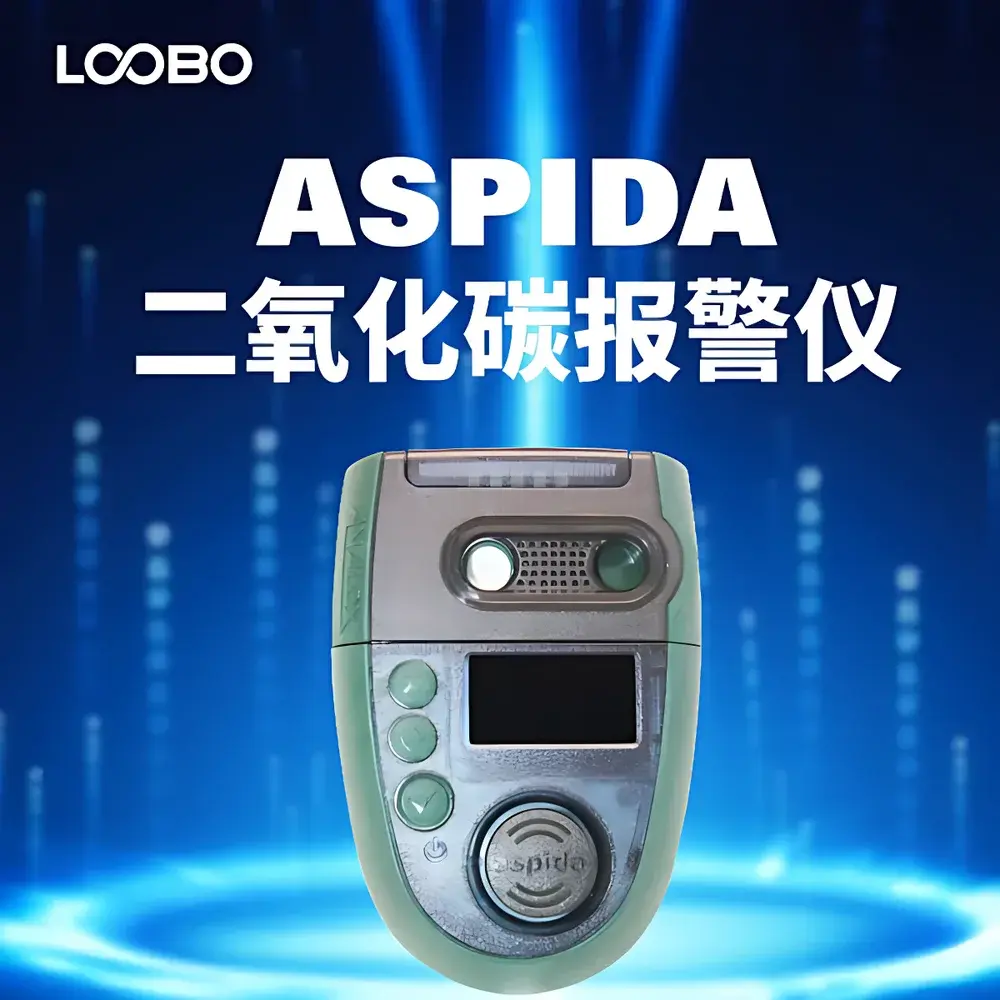
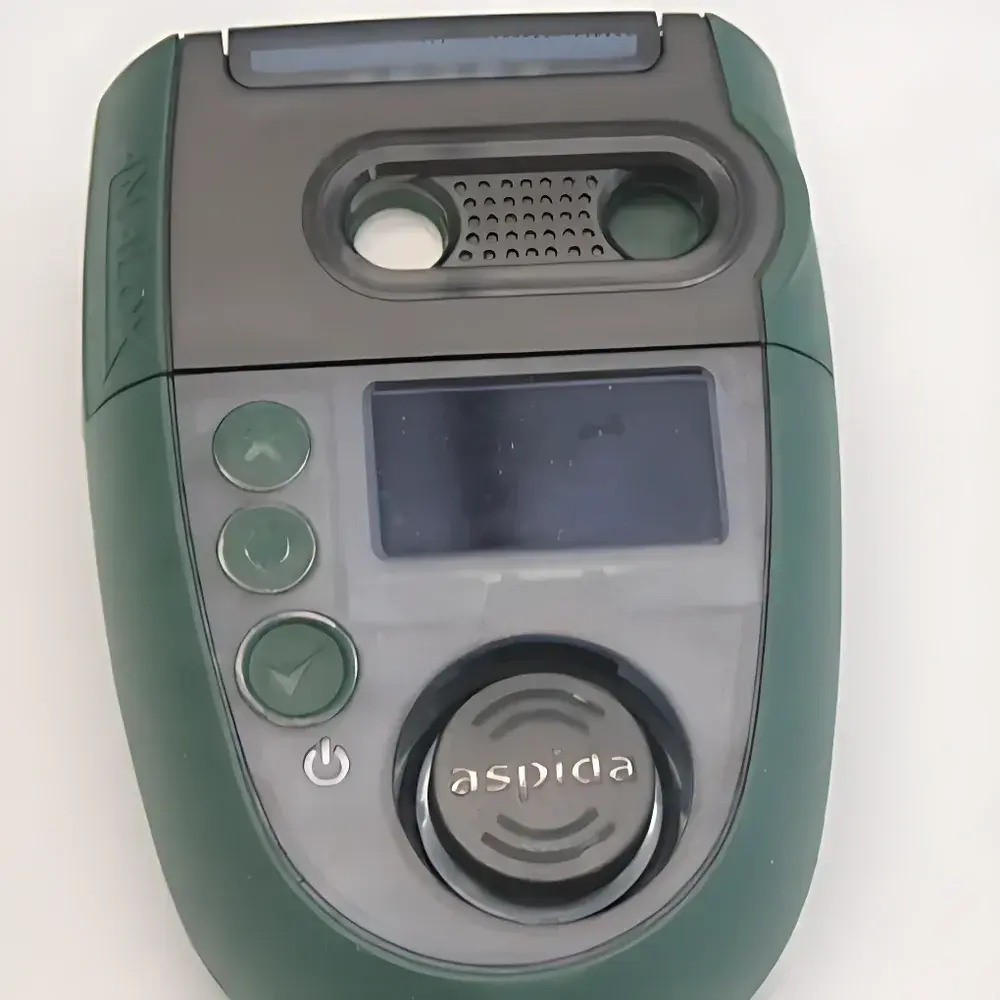
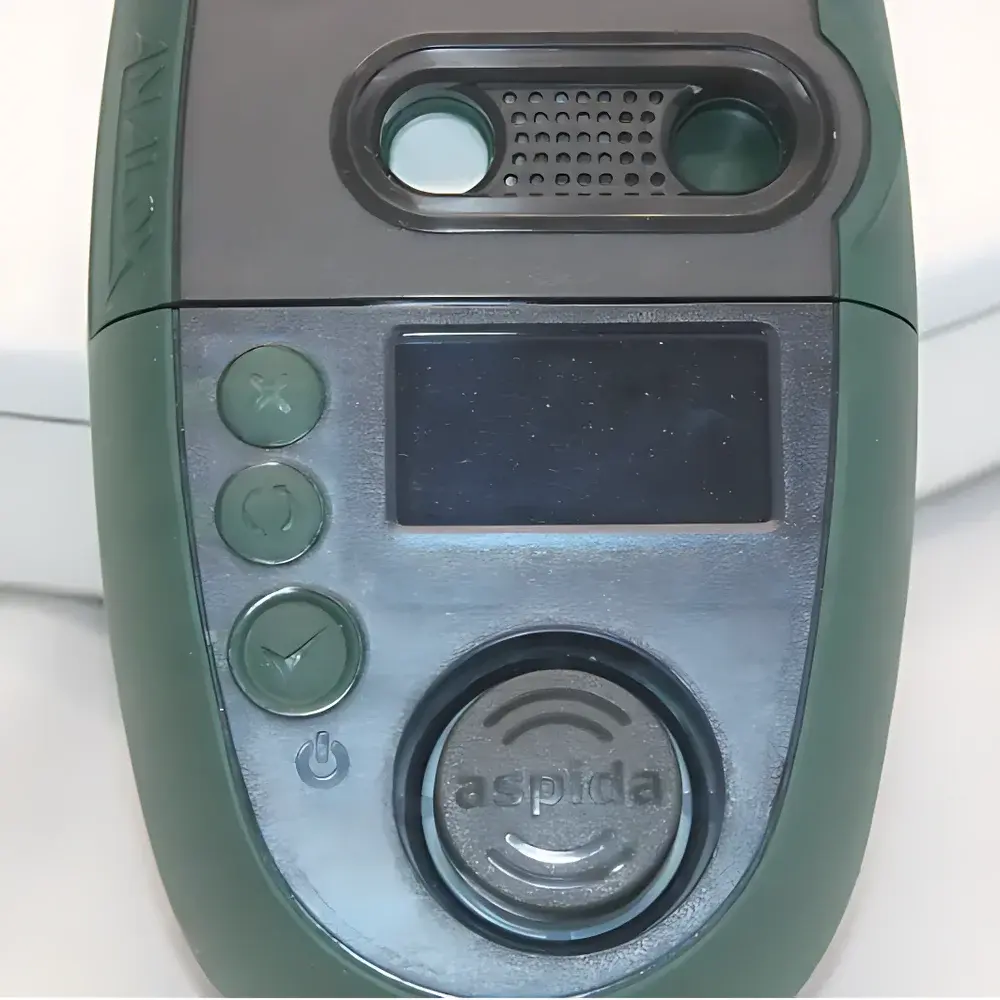
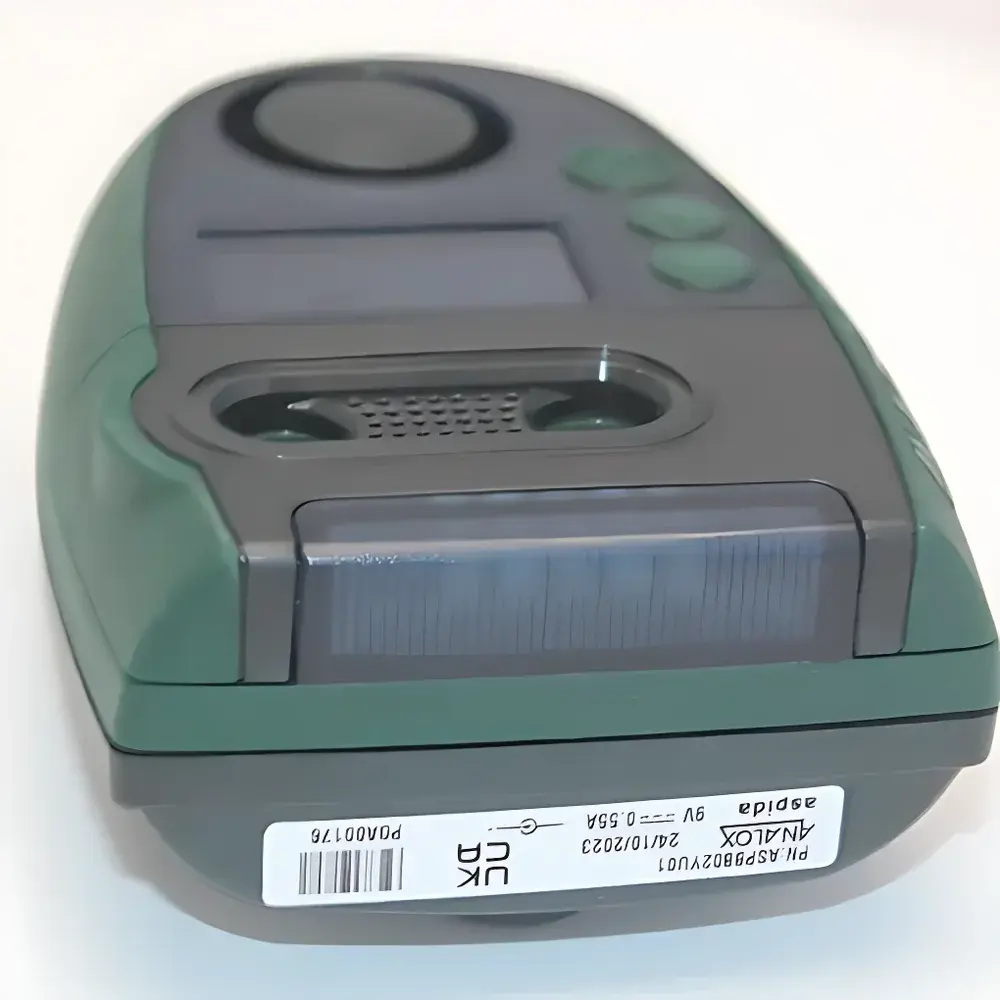
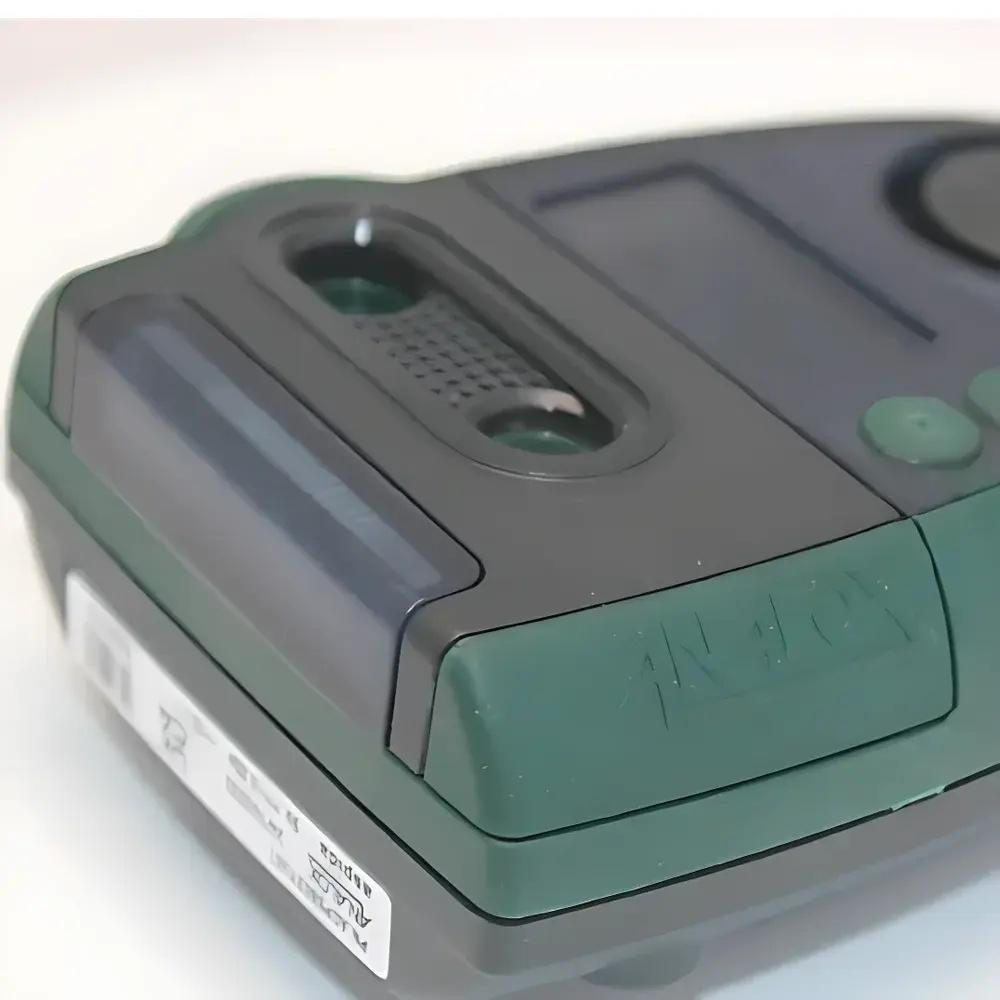
Analox Aspida Portable Carbon Dioxide (CO₂) Gas Detector
| Brand | Analox |
|---|---|
| Origin | United Kingdom |
| Model | Aspida |
| Instrument Type | Portable |
| Detection Target | Single-Gas (CO₂) |
| Measurement Range | 0.01–5% vol CO₂ |
| Repeatability | ±2% FS (0.01–2.5% vol), ±3% FS (2.5–5% vol) |
| Resolution | 0.01% vol |
| Response Time (T90) | 20 s |
| Zero Drift | ≤±5% FS |
| Span Drift | ≤±1% FS |
| Linearity Error | ≤±2% FS |
| Operating Temperature | −5 to +50 °C |
| IP Rating | IP65 |
| EMC Compliance | 2004/108/EC |
| Battery Life | 12 h (fully charged or with two AA alkaline batteries) |
| Acoustic Alarm | 95 dB @ 30 cm |
| Man-Down/Emergency Alarm | 110 dB @ 30 cm |
| Visual Indication | Tri-color LED status (green/yellow/red) |
| Display | High-contrast OLED |
| Data Logging | Internal storage with PC export capability |
Overview
The Analox Aspida Portable Carbon Dioxide (CO₂) Gas Detector is an intrinsically safe, field-deployable instrument engineered for real-time, quantitative monitoring of carbon dioxide concentrations in occupational and confined-space environments. Utilizing non-dispersive infrared (NDIR) sensing technology, the Aspida delivers stable, interference-resistant measurements across its calibrated range of 0.01–5% vol CO₂. Designed in accordance with European electromagnetic compatibility (EMC Directive 2004/108/EC) and mechanical robustness standards, the device meets IP65 ingress protection requirements—ensuring reliable operation in dusty, humid, or intermittently wet conditions typical of industrial maintenance, fermentation facilities, cold storage, and biogas handling sites. Its NDIR optical path is factory-calibrated and thermally compensated, minimizing drift under ambient thermal fluctuations while maintaining traceable accuracy per ISO 12032 and EN 45544-1 guidelines for portable gas detection equipment.
Key Features
- Intrinsically safe design certified for use in potentially explosive atmospheres (ATEX/IECEx compliant configurations available upon request)
- High-contrast, sunlight-readable OLED display with intuitive icon-based navigation and multilingual menu support
- Dual-power architecture: supports both rechargeable Li-ion packs and standard AA alkaline cells—enabling uninterrupted operation during extended field shifts or emergency deployments
- Intelligent maintenance prompting system: embedded firmware monitors sensor health, battery degradation, and calibration interval compliance, delivering proactive notifications via display and audible cues
- Configurable alarm hierarchy: three user-defined threshold alarms plus a time-weighted average (TWA) alarm aligned with OSHA PEL and ACGIH TLV exposure limits
- Man-down and manual emergency activation: integrated accelerometer triggers an 110 dB acoustic alert at 30 cm if motion cessation exceeds preset duration; also activatable via dedicated hardware button
- Vibration feedback for silent-alert scenarios in high-noise environments (e.g., compressor rooms, packaging lines)
Sample Compatibility & Compliance
The Aspida is optimized for single-gas detection of CO₂ in air matrices and exhibits minimal cross-sensitivity to common interferents including CO, CH₄, H₂O vapor (within specified RH limits), and ambient hydrocarbons. It is not intended for use in inert or oxygen-deficient atmospheres without supplemental O₂ monitoring. The instrument complies with key regulatory frameworks governing workplace safety instrumentation, including EN 62209-1 (RF exposure), EN 61000-6-2/-4 (EMC immunity/emission), and conforms to functional safety principles outlined in IEC 61508 SIL 2 for detector subsystems. While not FDA 21 CFR Part 11–validated out-of-the-box, its data logging output (CSV format via USB) supports audit-trail reconstruction for GLP-aligned recordkeeping when paired with controlled file management protocols.
Software & Data Management
Data acquisition and configuration are managed through Analox’s proprietary Aspida Configuration Tool (Windows-compatible), enabling full parameter editing—including alarm setpoints, TWA averaging periods (8-hr default), sampling intervals (1–60 s), and unit preferences (% vol, ppm, mg/m³). All logged measurements include timestamps, sensor status flags, and alarm event metadata. Exported datasets retain ISO 8601-compliant time stamps and are structured for direct import into LIMS platforms or statistical analysis tools (e.g., Minitab, JMP). Firmware updates are delivered via signed binary packages to ensure integrity; version history and update logs are retained onboard for traceability during internal QA audits.
Applications
- Confined space entry monitoring (tanks, silos, fermentation vats, wine cellars) where CO₂ accumulation poses asphyxiation risk
- Quality assurance in food & beverage production, especially mushroom cultivation, modified-atmosphere packaging (MAP), and carbonation control
- Preventive maintenance in HVAC systems serving occupied buildings with demand-controlled ventilation
- Field verification of CO₂ scrubber efficiency in marine, mining, and submarine life-support systems
- Emergency response teams conducting post-incident atmospheric assessment in fire-damaged structures or biogas leaks
- Academic and industrial research labs requiring portable, repeatable CO₂ concentration validation prior to analytical instrument calibration
FAQ
What is the recommended calibration frequency for the Aspida?
Analox recommends bump testing before each day’s use and full span calibration every 6 months—or more frequently in high-exposure or extreme environmental conditions—using certified 2.5% vol CO₂ in air standard gas.
Can the Aspida detect gases other than CO₂?
No. The Aspida is a dedicated single-gas detector configured exclusively for CO₂. Multi-gas variants (e.g., CO₂/O₂ or CO₂/CO/O₂) require separate model numbers and sensor modules.
Is the internal data logger compliant with 21 CFR Part 11?
The Aspida does not provide electronic signature, audit trail, or role-based access control natively. However, exported CSV files may be incorporated into validated Part 11–compliant workflows when managed within a qualified document control system.
Does the device require periodic sensor replacement?
The NDIR sensor has a typical service life of 5–7 years under normal operating conditions. The instrument’s self-diagnostic system alerts users when end-of-life thresholds are approached, allowing scheduled replacement without unplanned downtime.
How is zero calibration performed in the field?
Zero adjustment requires exposure to certified zero air (CO₂ <10 ppm) for ≥2 minutes in stable ambient conditions. This procedure is accessible only via password-protected service mode and should be conducted by trained personnel per Analox Technical Bulletin TB-ASP-004.







