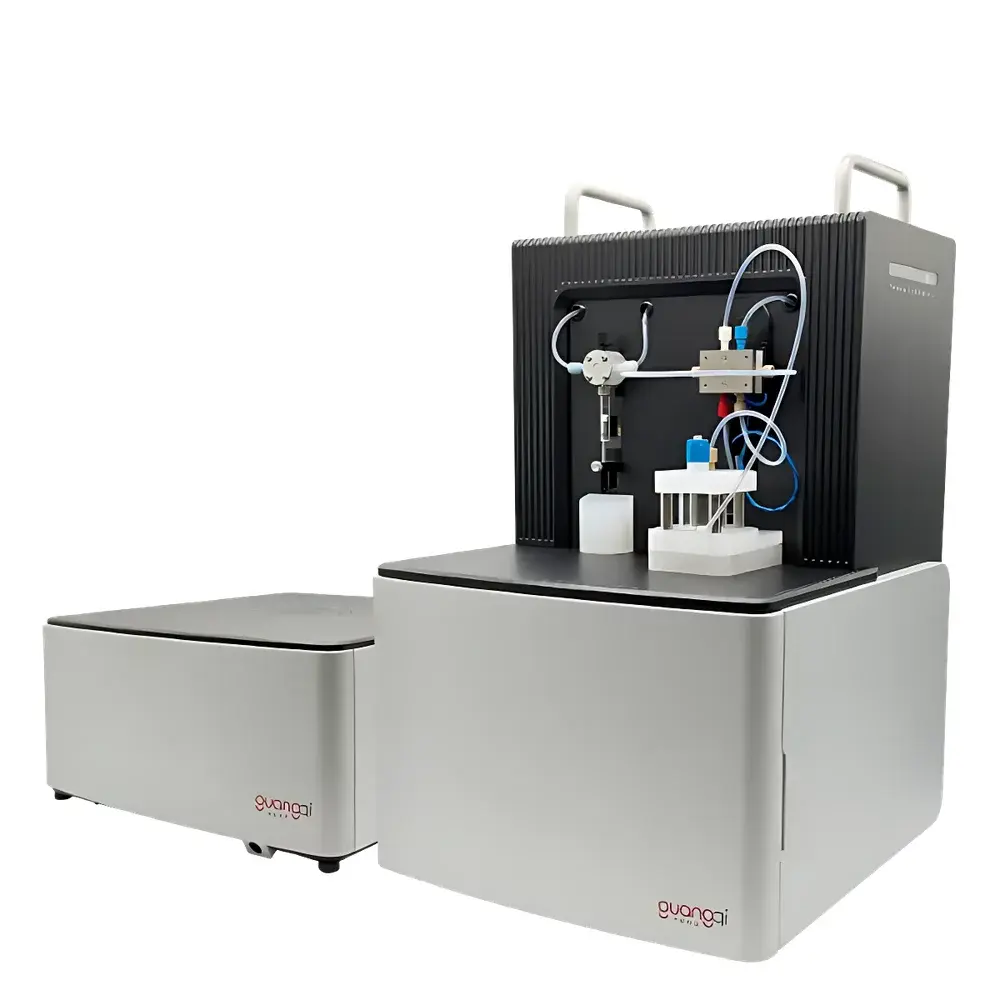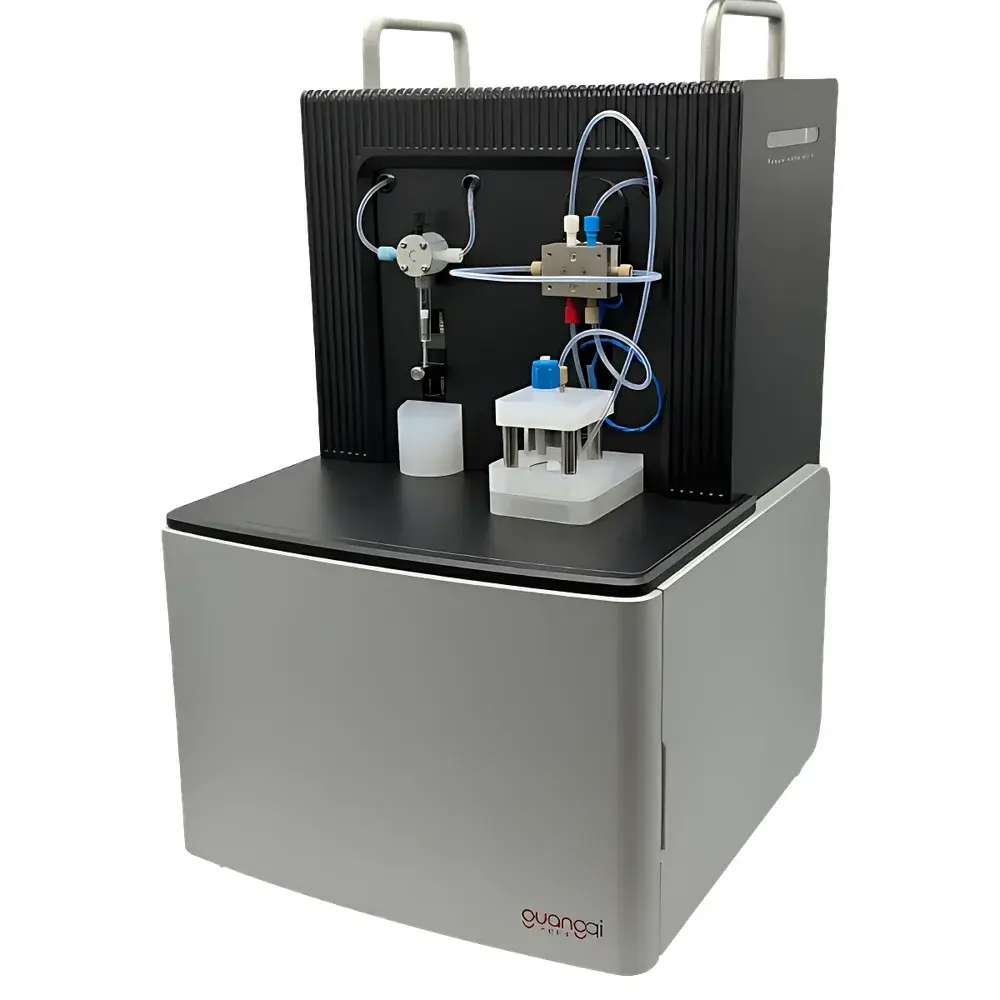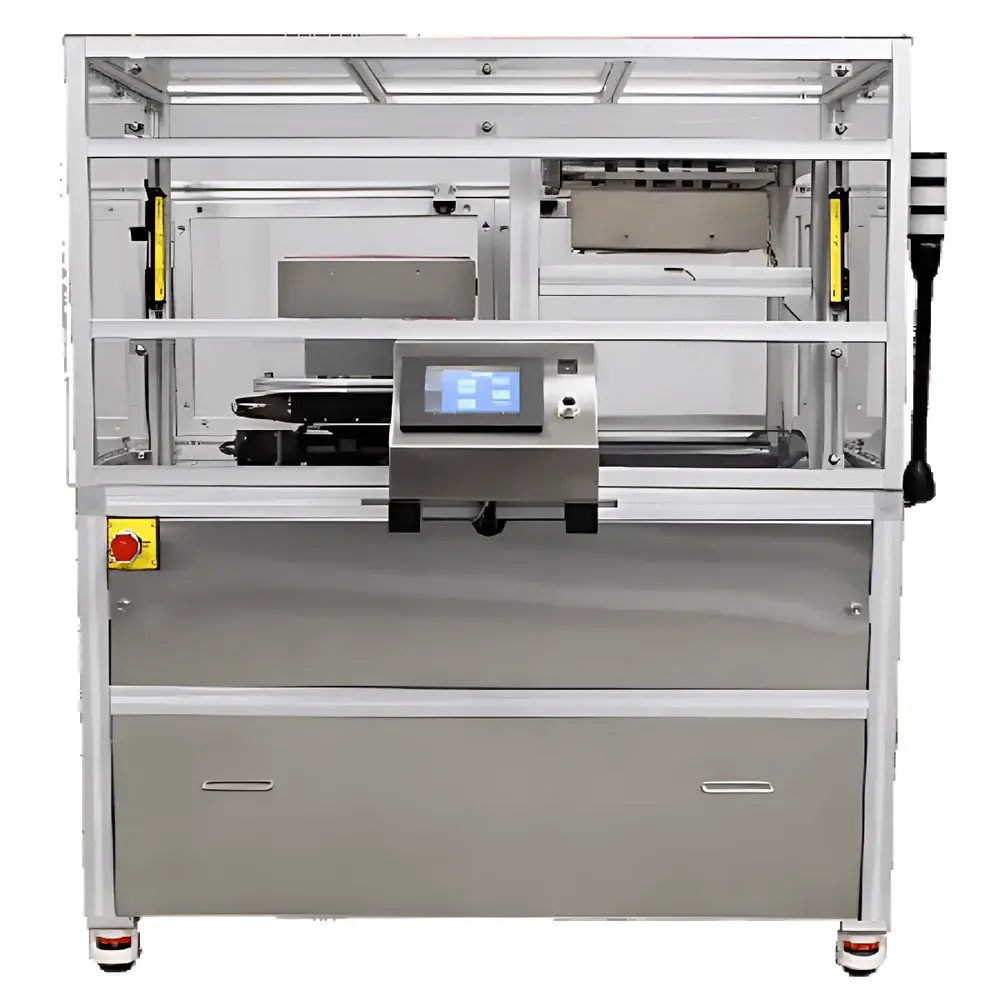
Analysis 1300CSX Thermal Sliding Debonding System
| Brand | Analysis |
|---|---|
| Origin | USA |
| Manufacturer Type | Authorized Distributor |
| Origin Category | Imported |
| Model | 1300CSX |
| Price Range | USD $26,000–$39,000 (FOB US Port) |
| Max Substrate Diameter | 300 mm |
| Max Operating Temperature | 300 °C |
| Force Range | 0–445 N (0–100 lbf) |
| Speed Limit | 100 mm/s |
| Vacuum Level | −63.5 to −68.6 kPa (−25 to −27 inHg) |
| Nitrogen/CDA Supply | 689 kPa (100 psi), 28.3 L/min |
| Footprint | 1245 mm × 1003 mm × 1334 mm (W×D×H) |
| Weight | 187 kg (operational), 581 kg (shipping) |
| MTBF | >600 h / >6000 cycles |
| Uptime | >99% over 12 months |
| MTTR | <24 h |
| Throughput | 8–14 WPH (<150 mm), 4–8 WPH (200–300 mm) |
Overview
The Analysis 1300CSX Thermal Sliding Debonding System is a precision-engineered platform designed for controlled, high-reproducibility debonding of ultra-thin compound semiconductor wafers from temporary carrier substrates under elevated temperature and calibrated mechanical shear. Utilizing thermally activated interfacial weakening combined with programmable lateral sliding motion, the system enables deterministic separation of fragile device layers—such as GaAs, GaN, InP, SiC, sapphire, silicon, and glass—without inducing microcracks, delamination, or residual stress. Unlike conventional thermal release or laser lift-off methods, the 1300CSX applies a precisely regulated normal force while executing synchronized horizontal displacement between upper and lower chucks, thereby minimizing shear-induced damage at the adhesive interface. This principle—rooted in interfacial fracture mechanics and viscoelastic relaxation kinetics—is validated across R&D, pilot-line, and low-volume production environments where process traceability, repeatability, and substrate reuse are critical.
Key Features
- Full-wafer debonding capability for proprietary ultra-thin devices (down to 50 µm thickness) with integrated vacuum-assisted chucking and foot-pedal–actuated end-effectors
- High-resolution force control (±1.5 nm bond line axis resolution) and real-time monitoring of critical parameters: normal force, sliding distance, velocity, top/bottom platen vacuum, platen temperatures, Z-axis position, and total cycle duration
- Robust industrial architecture with >99% operational uptime over 12 months and mean time between failures exceeding 600 hours or 6000 cycles
- Compact footprint (1245 mm × 1003 mm) enabling flexible integration into Class 100–1000 cleanrooms or shared lab spaces without requiring structural floor reinforcement
- Dual-mode operation: programmable constant-force mode (0–445 N) and velocity-limited sliding (≤100 mm/s), both with hardware-enforced over-force detection and automatic fault recovery
- Enhanced safety infrastructure including E-stop–integrated light curtains, audible/visual alarm tree, hinged rear and side service panels, and “Super User” override for controlled process interruption
Sample Compatibility & Compliance
The 1300CSX supports circular substrates ranging from 50.8 mm (2″) to 300 mm (12″) in diameter, accommodating industry-standard carrier configurations including sapphire (1–1.5 mm thick), silicon (280–725 µm), and glass carriers. It is routinely deployed for debonding post-thinning GaAs RF power devices (3″, 100–150 mm), SiC high-voltage diodes (100–150 mm), InP photonic ICs (100 mm), and silicon-based MEMS or image sensors (up to 200 mm). The system complies with IEC 61000-6-2 (EMC immunity) and IEC 61000-6-4 (EMC emissions), meets UL 61010-1 requirements for laboratory equipment safety, and supports audit-ready data logging aligned with GLP and GMP documentation practices. Optional nitrogen or CDA purge lines enable inert-atmosphere processing for oxygen-sensitive adhesives.
Software & Data Management
Controlled via Windows-based PC interface with deterministic real-time OS layer, the 1300CSX provides full-cycle parameter logging with timestamped metadata (operator ID, recipe name, lot number, environmental conditions). All raw sensor streams—including force vs. displacement curves, thermal profiles, vacuum decay rates, and actuator position traces—are stored in vendor-neutral CSV and HDF5 formats. Audit trails include user login/logout events, recipe modifications, and emergency stop triggers—fully compliant with FDA 21 CFR Part 11 requirements when paired with network-authenticated domain accounts and electronic signature workflows. Remote diagnostics and firmware updates are supported via encrypted Ethernet (RJ-45) connection; USB ports facilitate offline data export and configuration backup.
Applications
The 1300CSX serves as a foundational tool in advanced packaging R&D and compound semiconductor process development. Key use cases include: debonding of GaN-on-silicon HEMTs prior to backside metallization; separation of thin-film InP photonics from handle wafers during heterogeneous integration; release of SiC power modules after grinding and polishing; and carrier removal in LED epitaxial lift-off processes. Its throughput scalability—from 8–14 wafers/hour (≤150 mm) to 4–8 wafers/hour (200–300 mm)—makes it suitable for rapid prototyping, failure analysis sample preparation, and qualification of new adhesive systems (e.g., UV-curable, thermoplastic, or sacrificial layers). The system’s ability to preserve carrier integrity enables up to 20+ reuses per sapphire or silicon carrier, reducing consumables cost and waste generation.
FAQ
What wafer thicknesses can the 1300CSX reliably debond?
The system is validated for device layers ranging from 50 µm to 725 µm, depending on material stiffness and carrier-adhesive pairing. Thinner GaAs and InP wafers (50–170 µm) require optimized ramp rates and reduced sliding velocity to prevent buckling.
Is nitrogen purging required for standard operation?
Nitrogen or clean dry air (CDA) is optional but recommended for adhesive systems prone to oxidation or moisture absorption during thermal activation (e.g., certain polyimide or acrylic-based temporary bonds).
How does the system ensure force accuracy and repeatability?
Force transduction is performed via calibrated load cells with NIST-traceable calibration certificates; closed-loop feedback maintains setpoint deviation within ±0.5% FS across the full 0–445 N range.
Can the 1300CSX integrate with factory automation systems?
Yes—RS-232, Modbus TCP, and SECS/GEM protocol support is available via optional communication module, enabling host-directed job queuing, status polling, and event-driven notifications.
What maintenance intervals are recommended?
Preventive maintenance is scheduled every 6 months or 1,000 cycles, including vacuum seal inspection, chuck surface metrology, thermal sensor validation, and motion stage lubrication—all documented in the included maintenance logbook and digital service portal.