
Analysis CONSUL22 High-Capacity Benchtop Centrifuge
| Brand | Analysis |
|---|---|
| Origin | Spain |
| Manufacturer Type | Original Equipment Manufacturer (OEM) |
| Product Category | Imported |
| Model | CONSUL22 |
| Instrument Type | Benchtop Centrifuge |
| Speed Range | 100–14,300 rpm |
| Maximum RCF | 21,948 × g |
| Maximum Capacity | 4 × 400 mL |
| Dimensions (W×D×H) | 490 × 600 × 400 mm |
| Noise Level | <60 dB(A) |
| Power Supply | 220–230 V / 50–60 Hz or 110–120 V / 50–60 Hz |
| Power Consumption | 620 W |
| Rotor Recognition | Automatic |
| Safety Compliance | EN 61010-1, EN 61010-2-101, EN 61010-2-020, EN 61326-1, EN 61326-2-6 |
| Regulatory Directives | 2011/65/EU (RoHS), 2012/19/EU (WEEE), 2014/30/EU (EMC), 2014/35/EU (LVD), 98/79/EC (IVDD) |
Overview
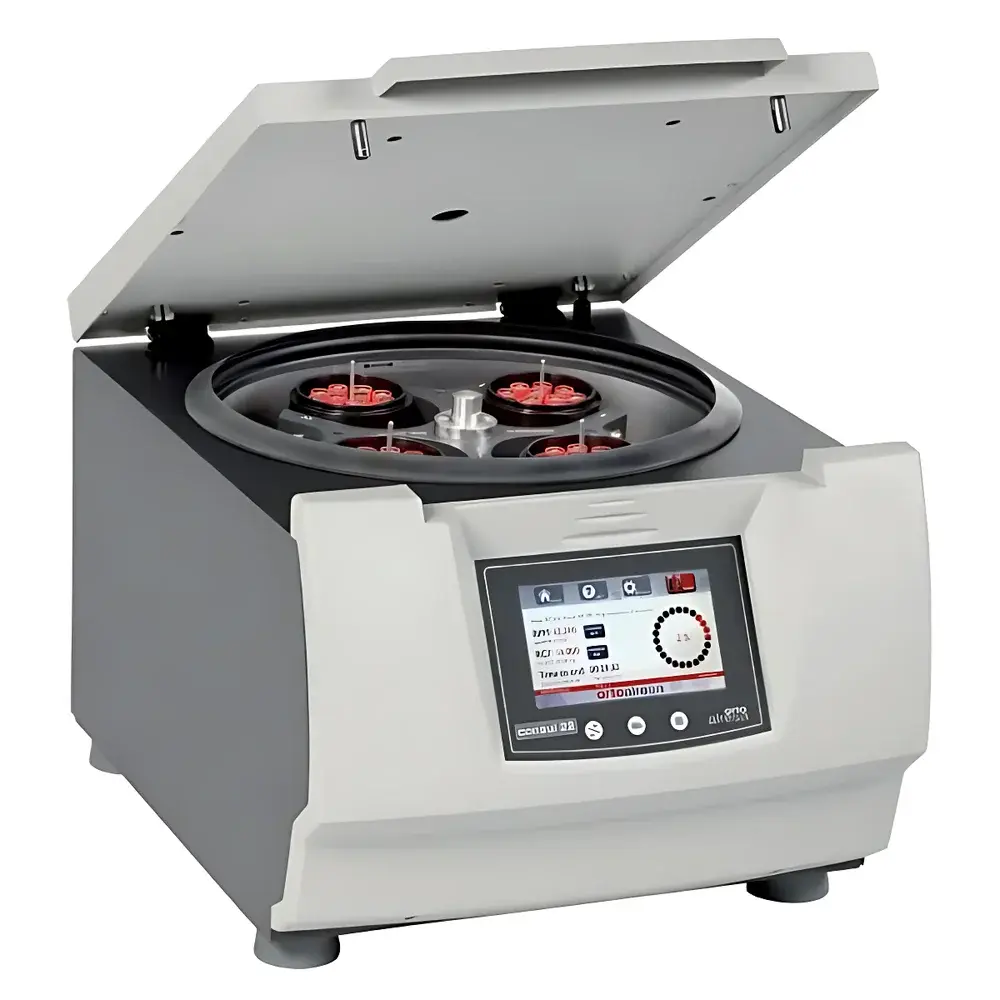
The Analysis CONSUL22 is a high-capacity benchtop centrifuge engineered for precision separation in demanding laboratory environments—including clinical diagnostics, biopharmaceutical process development, blood banking, and academic research. Utilizing fixed-angle and swing-bucket rotor configurations, it operates on the principle of sedimentation under controlled gravitational force (RCF), enabling reproducible pelleting, clarification, and density-gradient separations. With a maximum capacity of 4 × 400 mL and an RCF ceiling of 21,948 × g at 14,300 rpm, the CONSUL22 bridges the performance gap between standard benchtop units and floor-standing preparative systems—without compromising footprint or operational flexibility. Its compact design (490 × 600 × 400 mm) integrates seamlessly into regulated workflows while supporting scalable throughput for routine and method-development applications.
Key Features
- TFT color touchscreen interface with visibility up to 3 meters; displays real-time RPM, RCF, elapsed time, programmable acceleration/deceleration profiles (PCBS), and Unbalance Location System (ULS) feedback.
- Programmable speed resolution: ±10 rpm / ±10 × g increments; RCF recalculated dynamically based on selected rotor and adapter configuration.
- Time control range: 1 second to 99 hours, with 1-second accuracy and hold-at-end functionality.
- Progressive Control Braking System (PCBS): 175 selectable acceleration/deceleration ramps to minimize post-centrifugation resuspension and preserve pellet integrity.
- ULS detects and identifies the specific bucket causing imbalance, displaying its position numerically on-screen prior to automatic shutdown.
- 100 user-programmable protocols with password protection; last-used parameters retained in non-volatile memory.
- Maintenance-free brushless induction motor; automatic rotor recognition; integrated rotor/adapter database.
- Noise emission <60 dB(A) during operation; forced-air cooling maintains thermal stability across extended runs.
- Auto-lid locking with dual electromechanical interlocks, emergency manual release, lid-drop protection, and lid-port calibration access.
Sample Compatibility & Compliance
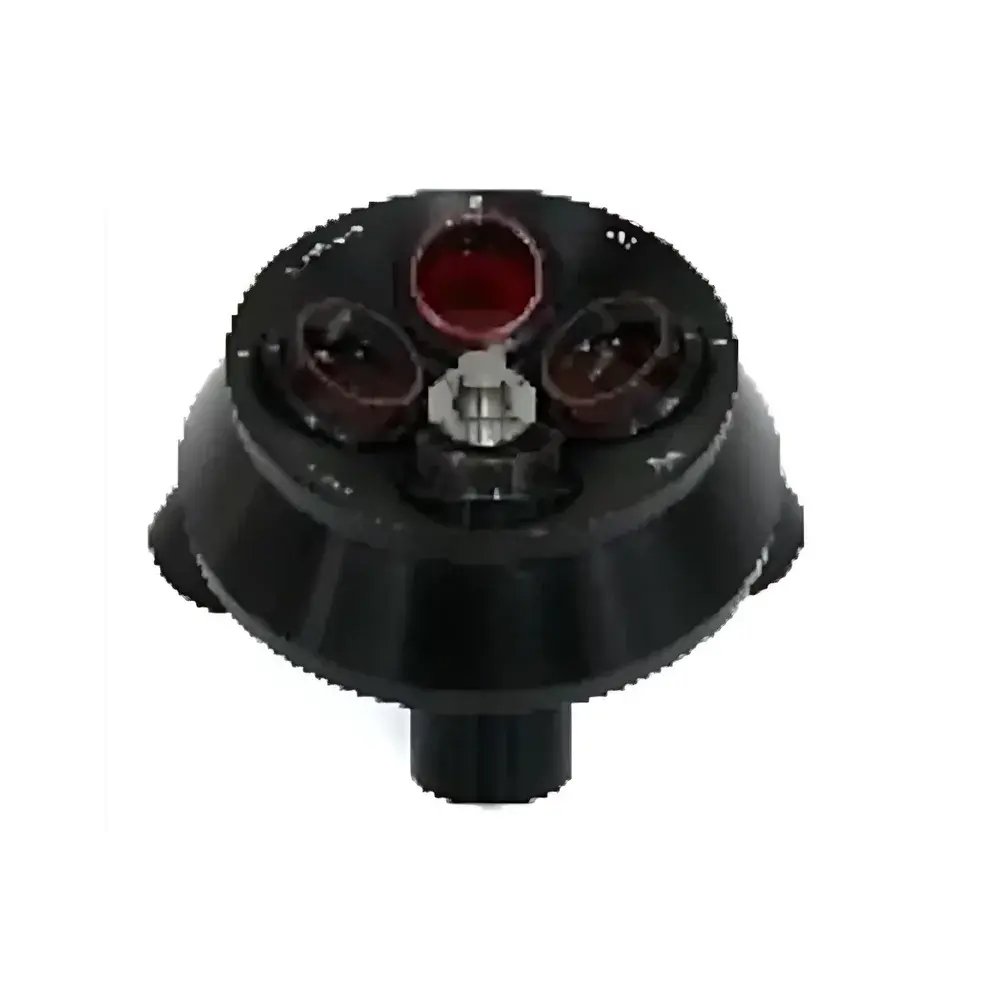
The CONSUL22 supports diverse sample formats via interchangeable rotors: 400 mL swing-bucket rotors for large-volume cell harvests; microplate carriers (80 mm height); high-speed fixed-angle rotors for microtubes (0.2–50 mL); and a full suite of adapters for conical tubes, PCR strips, and custom vessels. All rotors and adapters are autoclavable (121 °C, 20 min), facilitating GLP/GMP-compliant decontamination. The stainless-steel chamber ensures corrosion resistance and ease of cleaning. Device architecture complies with EN 61010-1 (safety), EN 61010-2-101 (centrifuge-specific requirements), and EN 61010-2-020 (microprocessor-controlled equipment). Electromagnetic compatibility adheres to EN 61326-1 and EN 61326-2-6, meeting EU directives including RoHS (2011/65/EU), WEEE (2012/19/EU), EMC (2014/30/EU), LVD (2014/35/EU), and IVDD (98/79/EC).
Software & Data Management
The embedded microprocessor enables full parameter logging—including start/stop timestamps, actual RCF achieved, rotor ID, imbalance events, and temperature trends—stored internally and exportable via USB or RS-232. Optional PC connectivity supports remote monitoring and protocol synchronization across multi-instrument labs. Audit trails meet FDA 21 CFR Part 11 requirements when paired with validated third-party LIMS or ELN platforms. Programmable auto-shutdown (up to 8 hours idle timeout) reduces energy consumption without compromising data retention integrity.
Applications
- Clinical: Whole blood fractionation, platelet-rich plasma (PRP) preparation, serum/plasma isolation from 400 mL blood bags.
- Bioprocessing: Harvesting mammalian or microbial cells at pilot scale; clarifying lysates prior to chromatography.
- Research: Density-gradient centrifugation (e.g., Percoll®, Ficoll®) for subcellular organelle isolation; virus purification in biosafety level 2 (BSL-2) settings.
- Quality Control: Stability testing of suspensions and emulsions per USP and ISO 13320 guidelines.
- Regulatory: Method transfer support for pharmacopeial assays requiring defined RCF and dwell time traceability.
FAQ
Does the CONSUL22 support regulatory-compliant data archiving?
Yes—internal logging includes timestamped RCF, rotor ID, imbalance events, and cycle history. Exported CSV files retain metadata required for GLP audits and 21 CFR Part 11–aligned validation.
Can I use third-party rotors with this centrifuge?
No. Automatic rotor recognition requires OEM-certified rotors and adapters to ensure mechanical integrity, RCF accuracy, and safety interlock functionality.
Is the centrifuge suitable for continuous operation over multiple shifts?
The brushless motor, forced-air cooling, and thermal overload protection enable unattended overnight runs; however, routine maintenance (e.g., chamber cleaning, O-ring inspection) is recommended per 500 operating hours.
What safety certifications apply to the CONSUL22?
It carries CE marking per EN 61010-1, EN 61010-2-101, EN 61010-2-020, EN 61326-1, and EN 61326-2-6, and conforms to EU directives covering electrical safety, electromagnetic compatibility, and in vitro diagnostic device classification.
How is rotor imbalance detected and managed?
The Unbalance Location System (ULS) uses vibration signature analysis to identify the offending bucket in real time, triggering immediate deceleration and displaying the bucket number on the touchscreen—preventing mechanical damage and ensuring operator safety.



