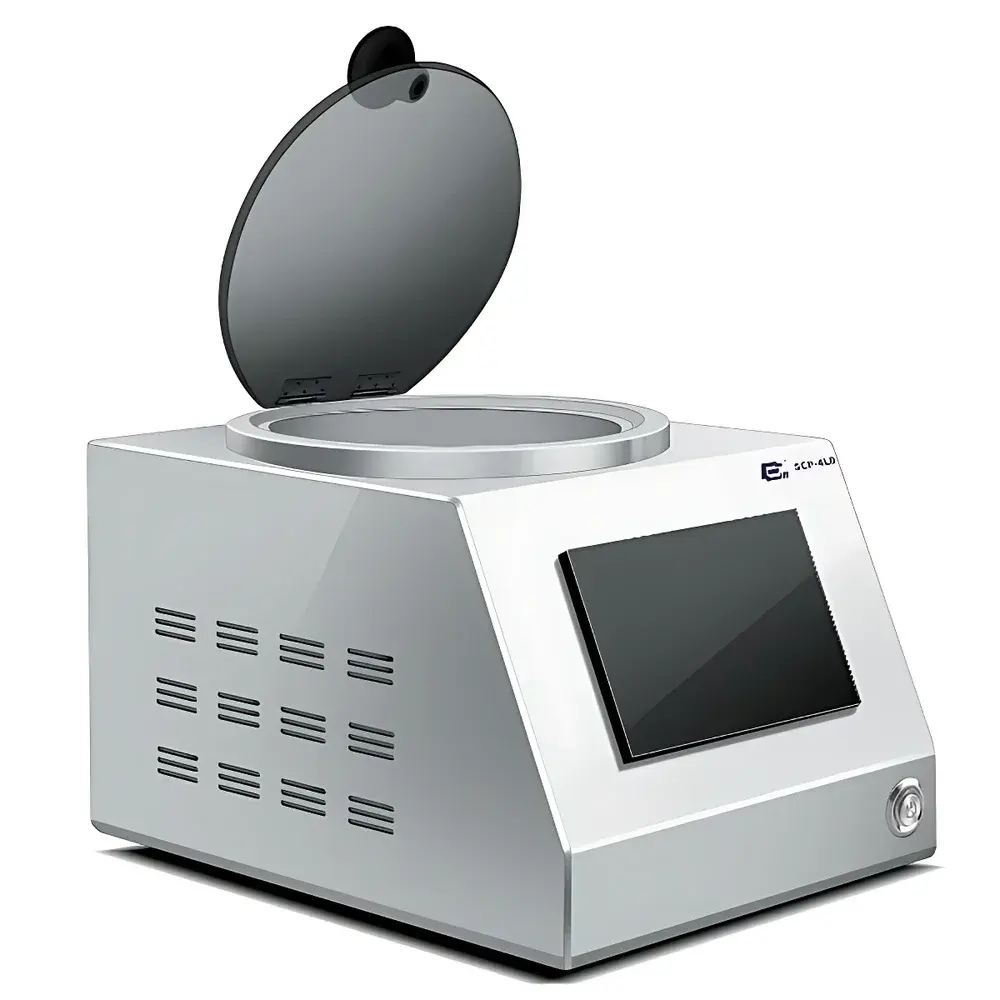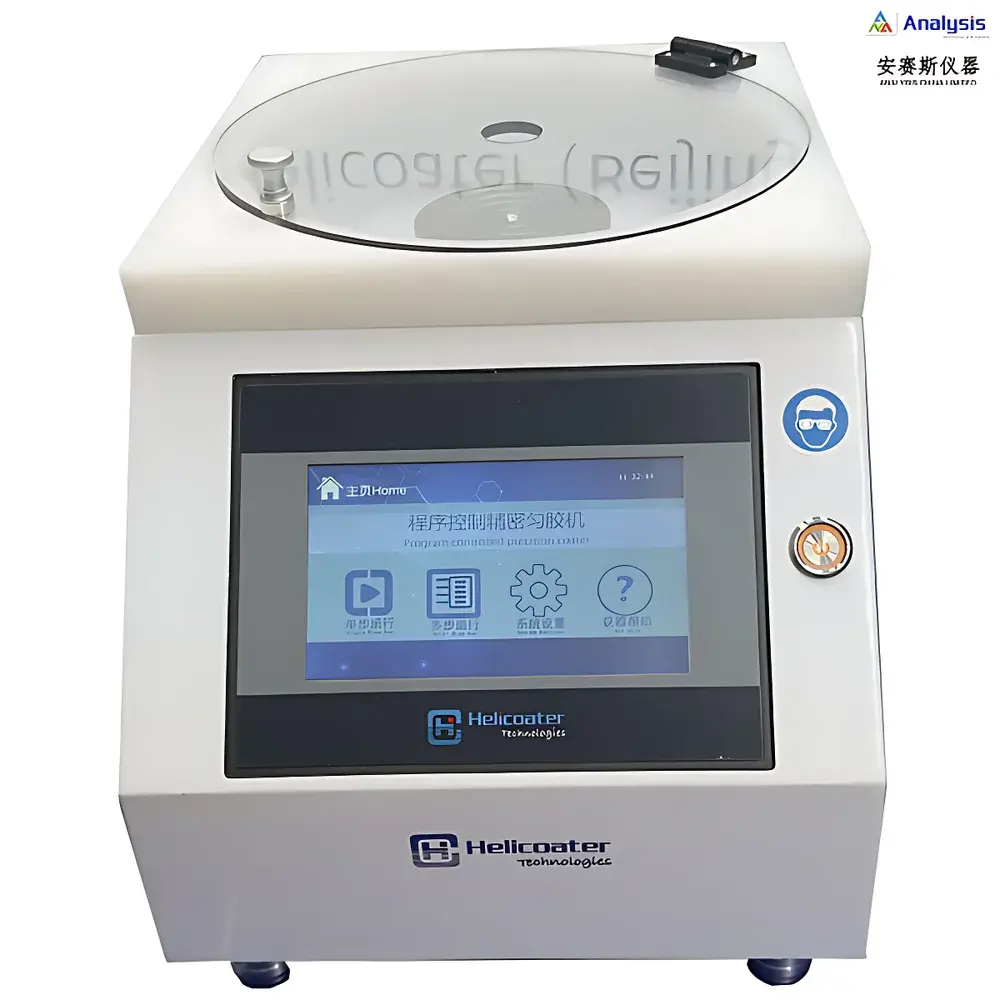
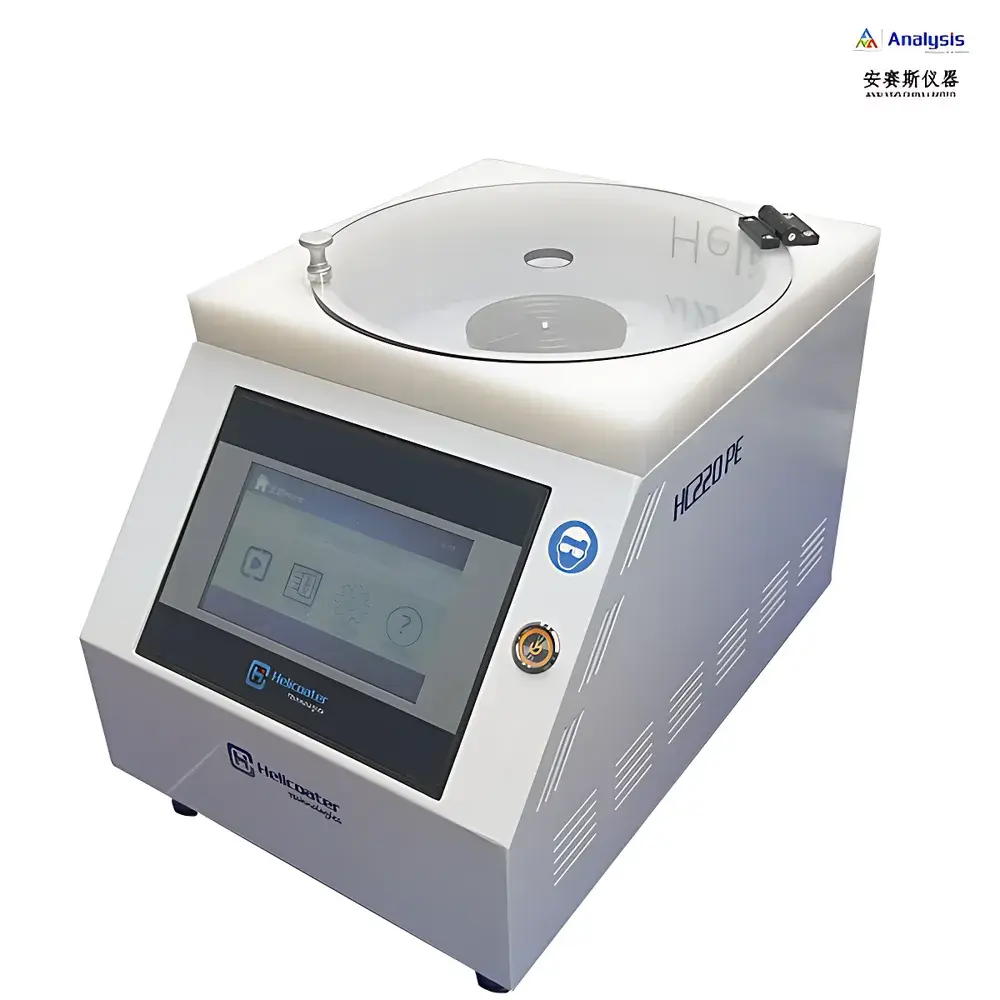
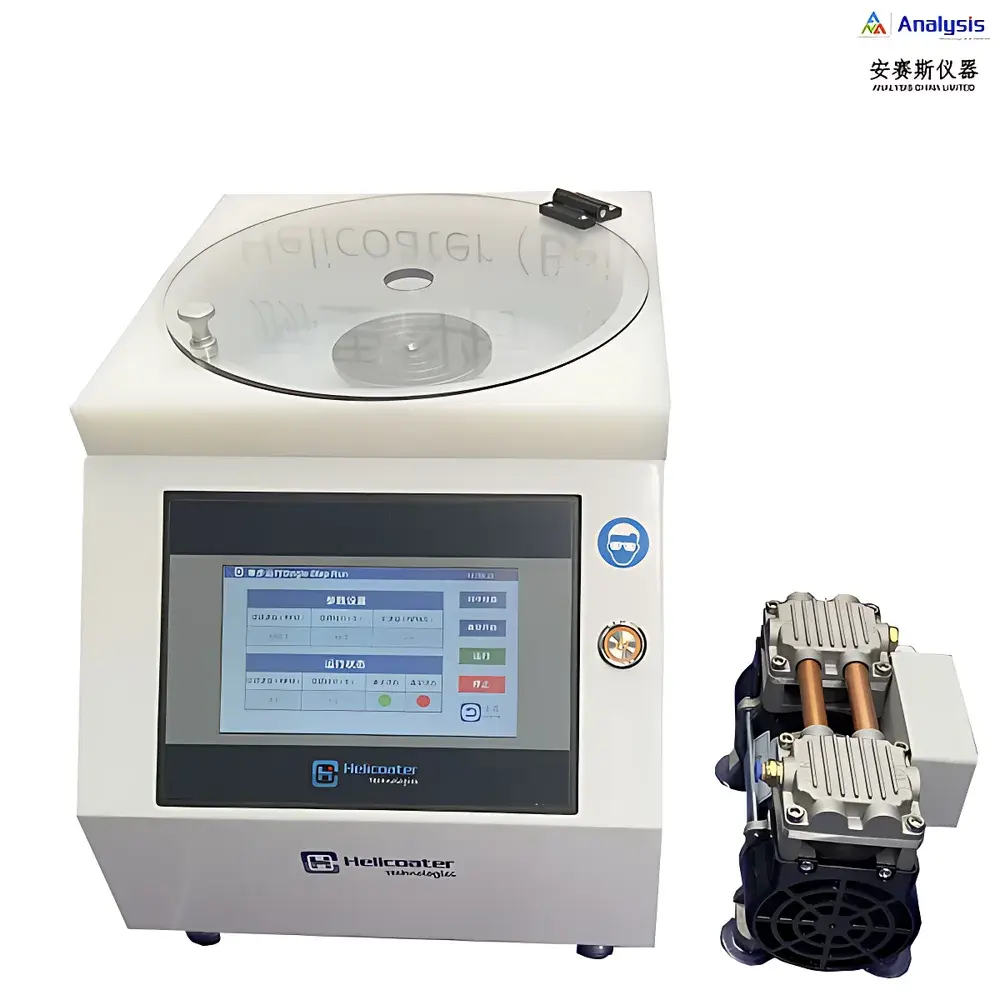
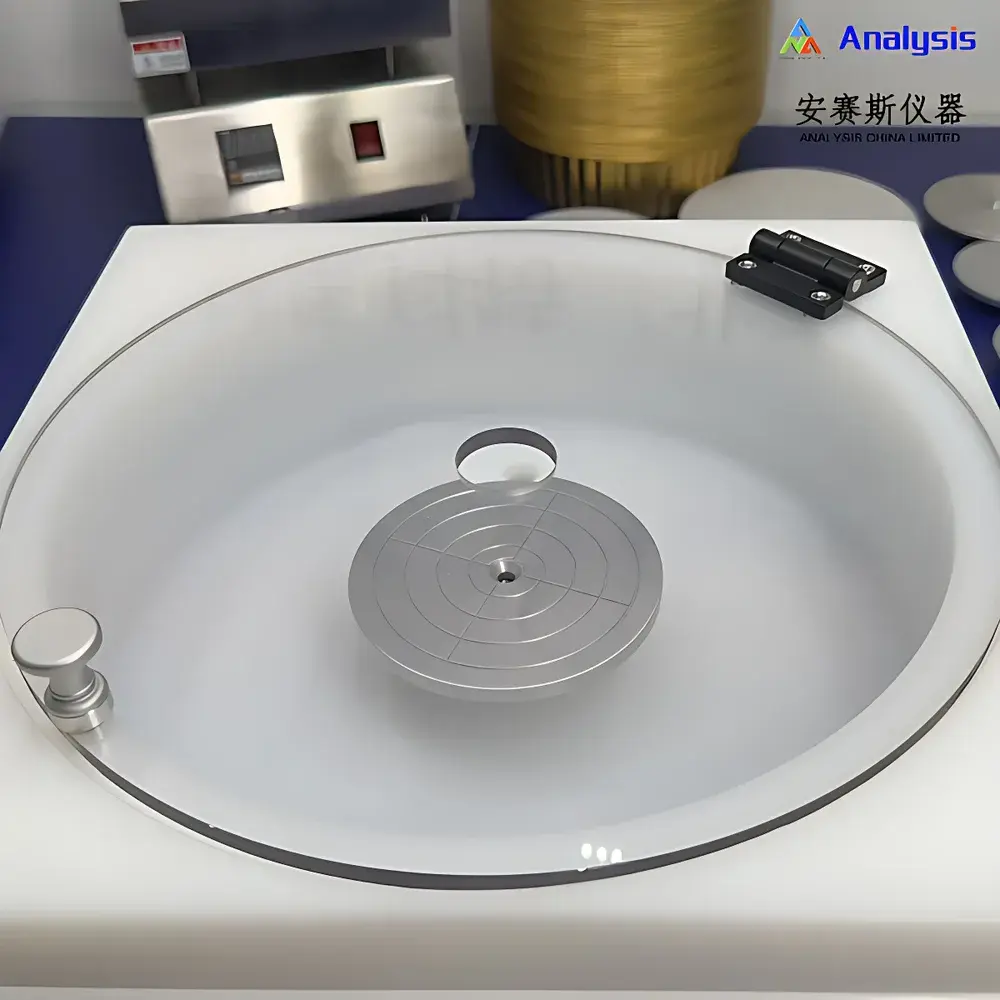
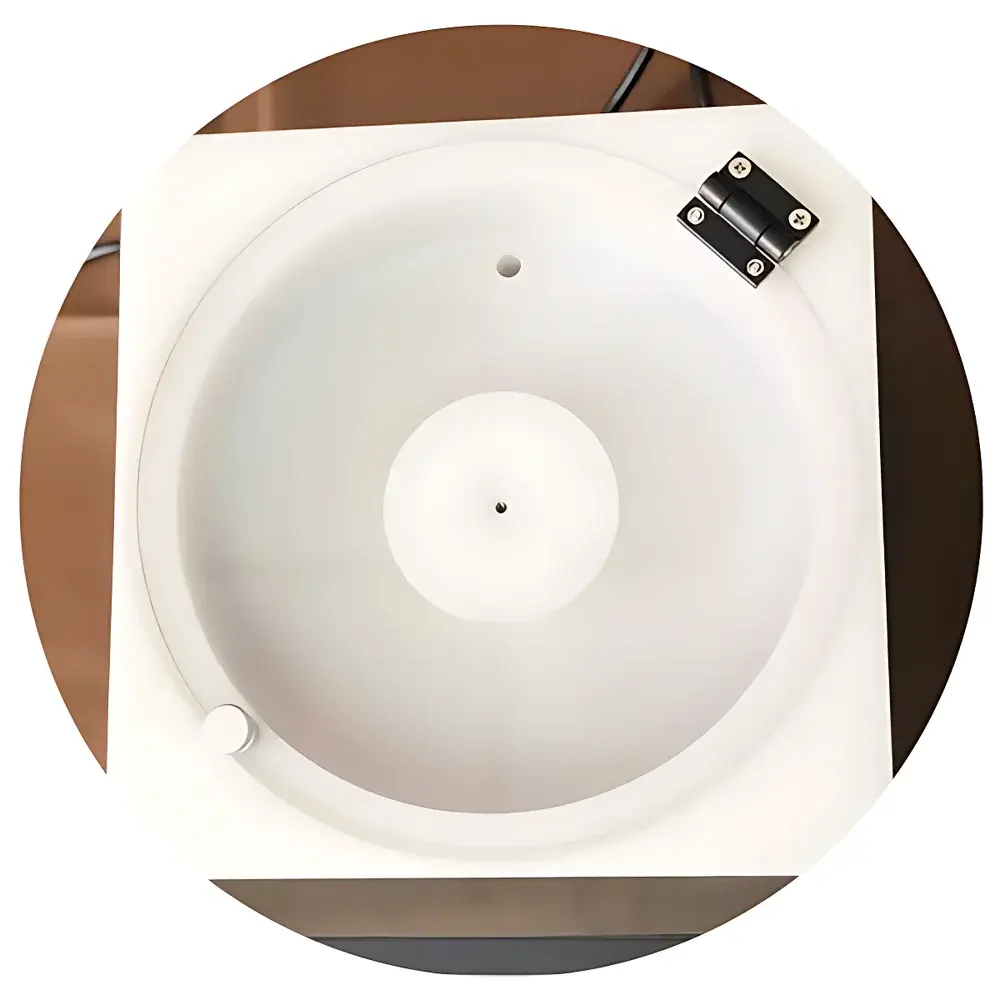
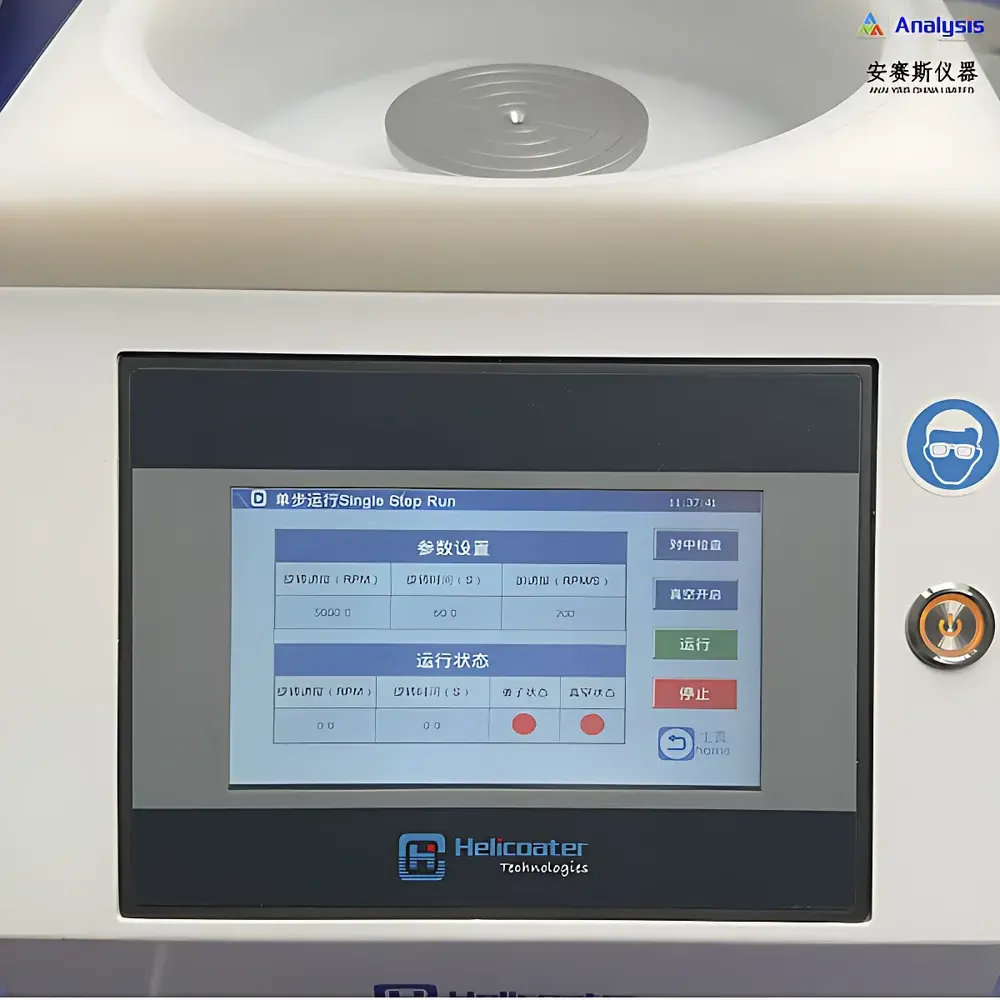
Analysis HC220SE Programmable Spin Coater
| Brand | Analysis |
|---|---|
| Origin | Beijing, China |
| Model | HC220SE |
| Max Speed | 0–10000 rpm |
| Speed Resolution | 0.1 rpm |
| Speed Stability | < ±0.1 rpm |
| Acceleration | 0–50000 rpm/s (no-load) |
| Substrate Diameter Range | 5–220 mm |
| Chamber Diameter | 252 mm |
| Programmable Steps | 100 programs × 100 steps each |
| Touchscreen Interface | 8-inch color HMI |
| Vacuum Interlock | Yes |
| Lid Safety Interlock | Yes |
| Waste Drain Port | Yes |
| Leveling Adjustable Feet | Yes |
| Chamber Material | CNC-machined corrosion-resistant HDPE |
| Anti-splash Cavity Design | Concave inner wall geometry |
| Spin Direction | Reversible (CW/CCW) |
| Time Resolution | 0.1 s |
| Maximum Spin Duration | 3000 s |
| Uniformity | < ±3% (edge-excluded, 3 mm border) |
| Power Input | AC 200–230 V |
Overview
The Analysis HC220SE Programmable Spin Coater is an industrial-grade thin-film deposition instrument engineered for precision and repeatability in semiconductor fabrication, microelectronics R&D, and advanced materials processing. It operates on the principle of centrifugal force-driven fluid dispersion: a controlled volume of photoresist, polymer solution, or functional ink is dispensed onto a rotating substrate, where radial acceleration governs film thickness, uniformity, and morphology via solvent evaporation kinetics. Designed to meet cleanroom-compatible operational requirements, the HC220SE integrates a high-torque 400 W servo motor with off-axis drive architecture—minimizing mechanical vibration and enabling stable rotation across its full 0–10000 rpm range. Its compact footprint (252 mm chamber diameter) and ventilated enclosure compatibility make it suitable for integration into fume hoods, gloveboxes, or Class 100–1000 cleanroom environments.
Key Features
- High-precision motion control: 0.1 rpm speed resolution and < ±0.1 rpm stability over extended operation—critical for reproducible film thickness in photolithography and sol-gel processing.
- Robust chamber construction: CNC-machined, seamless HDPE (high-density polyethylene) cavity with concave inner wall geometry to suppress droplet splashing and edge accumulation during high-acceleration spin cycles.
- Programmable flexibility: Supports up to 100 independent protocols, each comprising up to 100 sequential steps—including ramp-up, dwell, ramp-down, and pause intervals—with real-time speed-vs.-time curve visualization on the 8-inch industrial HMI.
- Integrated safety architecture: Dual interlocks (lid closure + vacuum presence), automatic vacuum deficiency alert and shutdown, motor-driven dispensing protection, and emergency stop compliance per IEC 60204-1.
- Modular fluid handling: Four standardized auto-dispense ports enable future expansion to multi-nozzle, timed, or pressure-regulated dispensing systems; all tubing paths feature quick-access, non-clog geometry for routine maintenance.
- User administration & data integrity: Password-protected parameter access, EEPROM-based power-loss recovery (retains all active settings and program memory), and adjustable leveling feet for optimal substrate planarity alignment.
Sample Compatibility & Compliance
The HC220SE accommodates substrates from 5 mm wafers to full 220 mm (8.7″) diameter discs—including silicon, glass, quartz, GaAs, flexible PET/PI foils, and ceramic carriers. Its HDPE chamber resists aggressive solvents (e.g., PGMEA, xylene, chlorobenzene, DMF) and acidic/basic developers common in lithographic processes. The system complies with CE marking directives (EMC 2014/30/EU, LVD 2014/35/EU) and supports GLP/GMP-aligned workflows through audit-trail-capable parameter logging (when paired with optional RS-232/USB data export). While not FDA 21 CFR Part 11 certified out-of-box, its programmable logic controller (PLC) architecture allows integration into validated environments via external electronic lab notebook (ELN) or MES interfaces.
Software & Data Management
Control firmware is embedded within an industrial PLC platform, ensuring deterministic timing and immunity to OS-level latency. The HMI interface stores all programs and calibration offsets locally in non-volatile memory. Optional serial (RS-232) or USB-C connectivity enables remote parameter upload/download, time-stamped run log export (.csv), and synchronization with laboratory information management systems (LIMS). No proprietary software installation is required—configuration and monitoring occur entirely via the touchscreen or terminal commands. All user-modifiable parameters (e.g., speed setpoints, acceleration profiles, dispense timing) are subject to password-level access control, supporting multi-user labs with role-based permissions.
Applications
- Photolithography: Uniform photoresist coating (e.g., AZ, SU-8, PMMA) on Si, SOI, and compound semiconductor wafers prior to mask alignment and UV exposure.
- Nanomaterial deposition: Controlled spin-casting of perovskite precursors, graphene oxide dispersions, conductive polymer inks (PEDOT:PSS), and quantum dot suspensions for optoelectronic device prototyping.
- MEMS & NEMS fabrication: Low-defect dielectric (SiO₂, Si₃N₄) or sacrificial layer (polyimide, BCB) coating on microstructured substrates.
- Academic research: Teaching and method development in surface science, colloidal self-assembly, and thin-film rheology—particularly where solvent volatility, viscosity gradients, or Marangoni effects must be systematically evaluated.
- Quality assurance: In-process verification of coating uniformity per ASTM D1212 (standard test methods for thickness of applied organic coatings) using post-spin ellipsometry or profilometry.
FAQ
What substrate sizes does the HC220SE support?
It accepts circular substrates from 5 mm to 220 mm in diameter, including standard wafer formats (100 mm, 150 mm, 200 mm) and custom discs.
Is vacuum chuck compatibility available for non-standard substrates?
Yes—the baseplate includes standardized vacuum port threading (M6) and optional vacuum chuck adapters can be configured for irregular or low-rigidity samples.
Can the system operate under inert atmosphere?
The sealed chamber design permits integration with nitrogen purge lines via the waste drain port; optional O-ring-sealed lid gasket kits are available for enhanced gas retention.
How is film thickness repeatability ensured across multiple runs?
Through closed-loop speed control, temperature-stabilized motor drivers, and pre-calibrated acceleration profiles—combined with edge-exclusion metrology protocols aligned with SEMI standards.
Does the HC220SE meet ISO 14644 cleanroom classification requirements?
The unit itself is rated for Class 1000 (ISO 6) environments; particle generation testing per ISO 14644-1 confirms < 35,200 particles ≥0.5 µm/m³ during operation at 8000 rpm.