
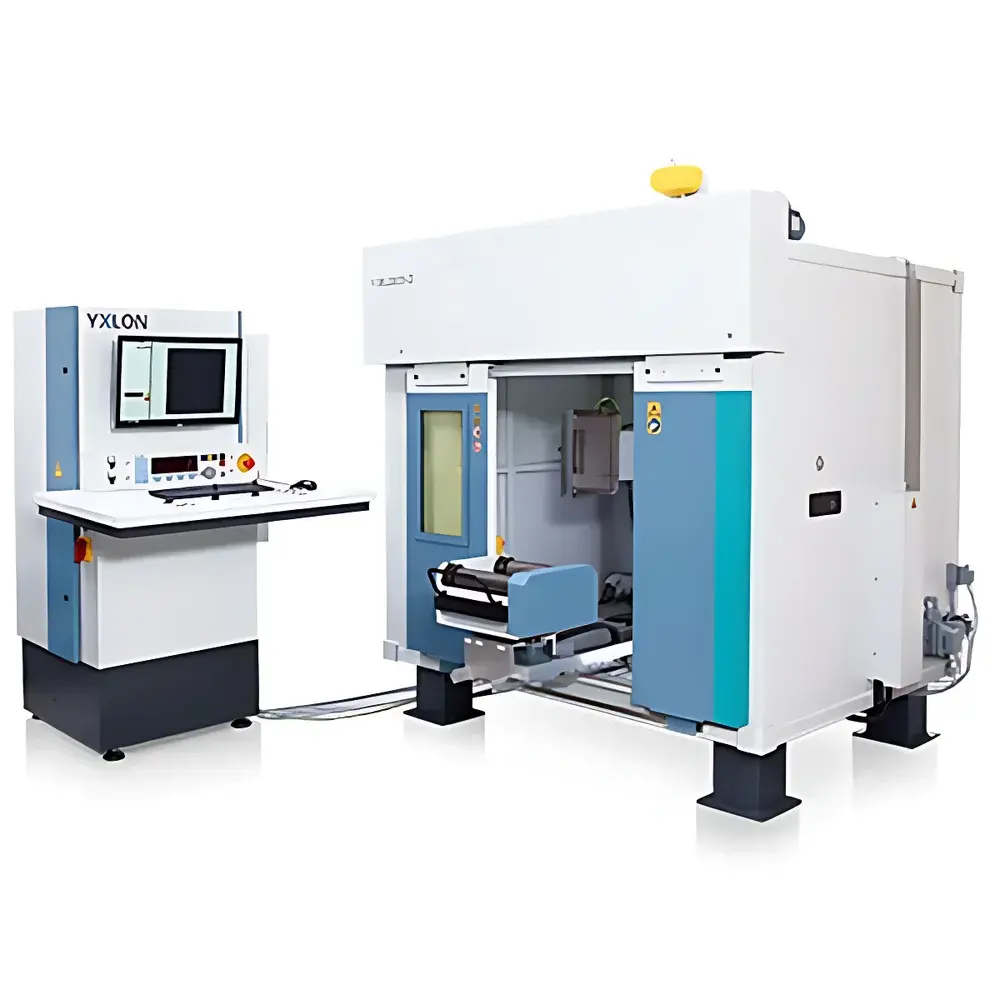
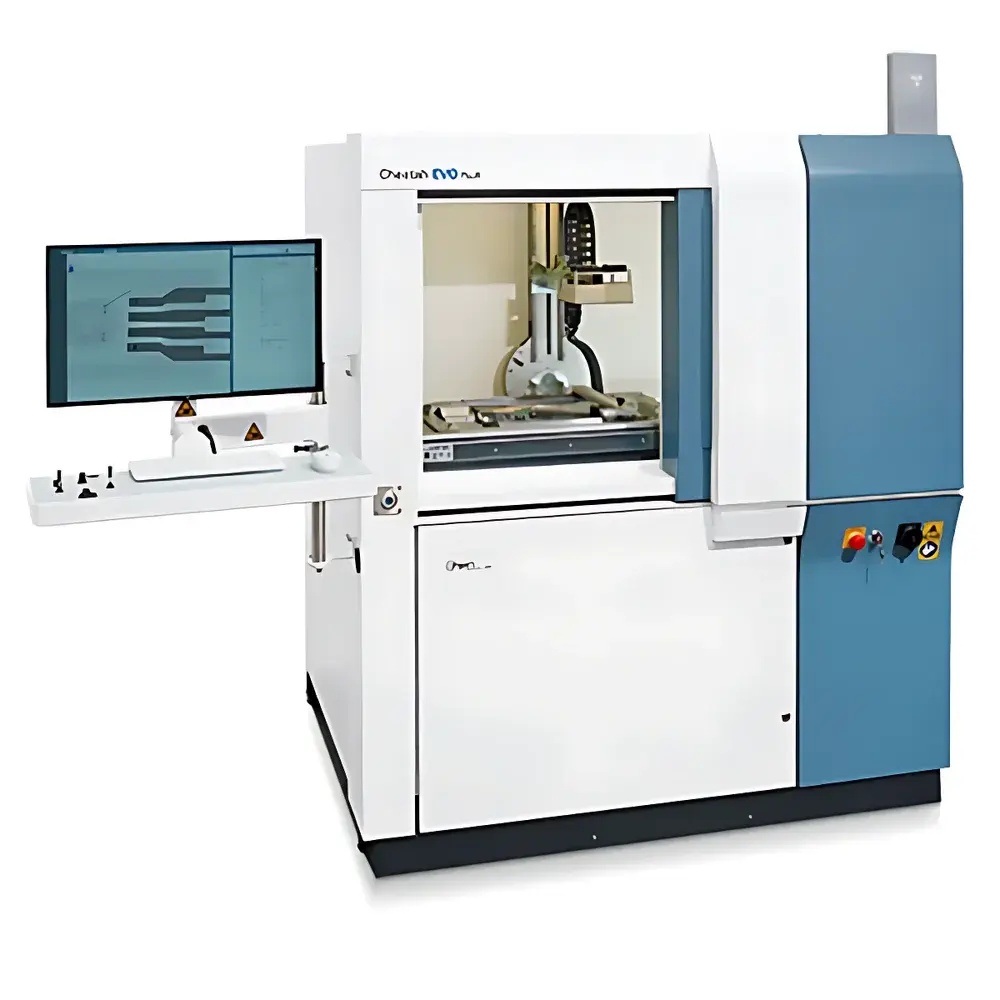
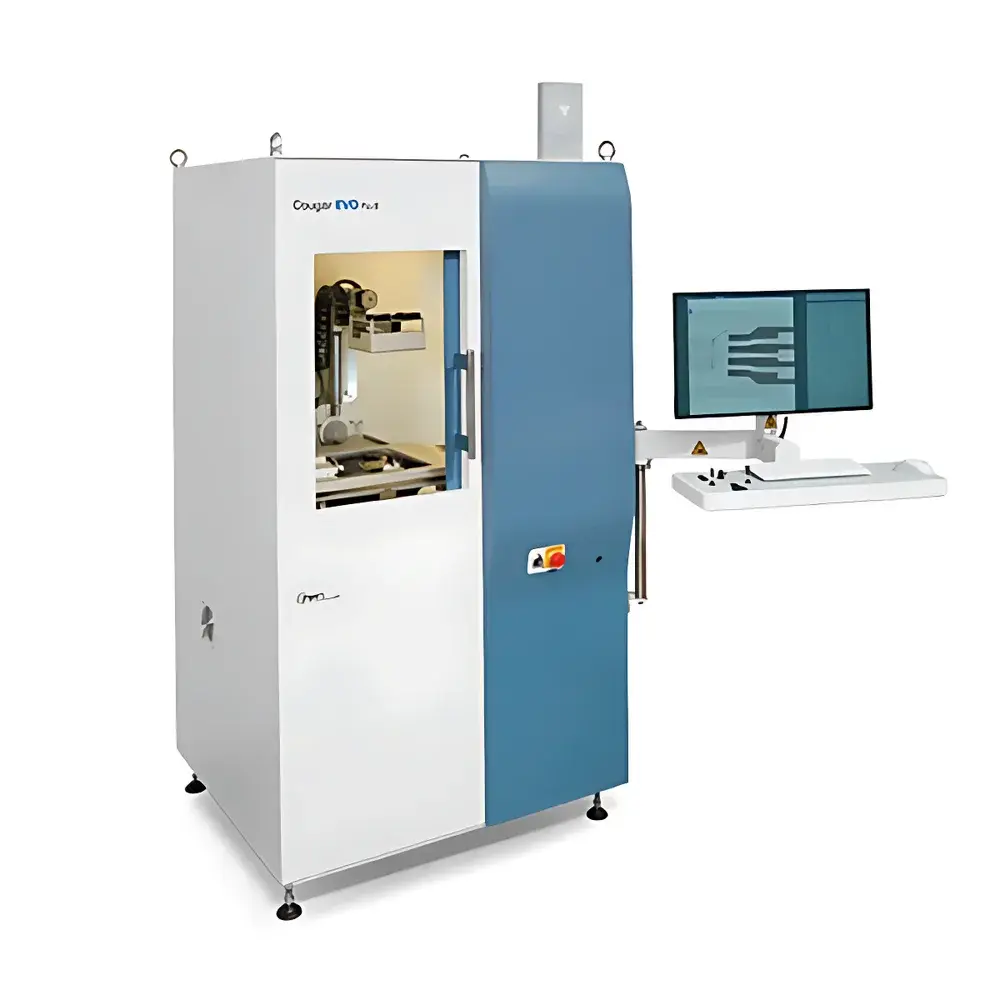
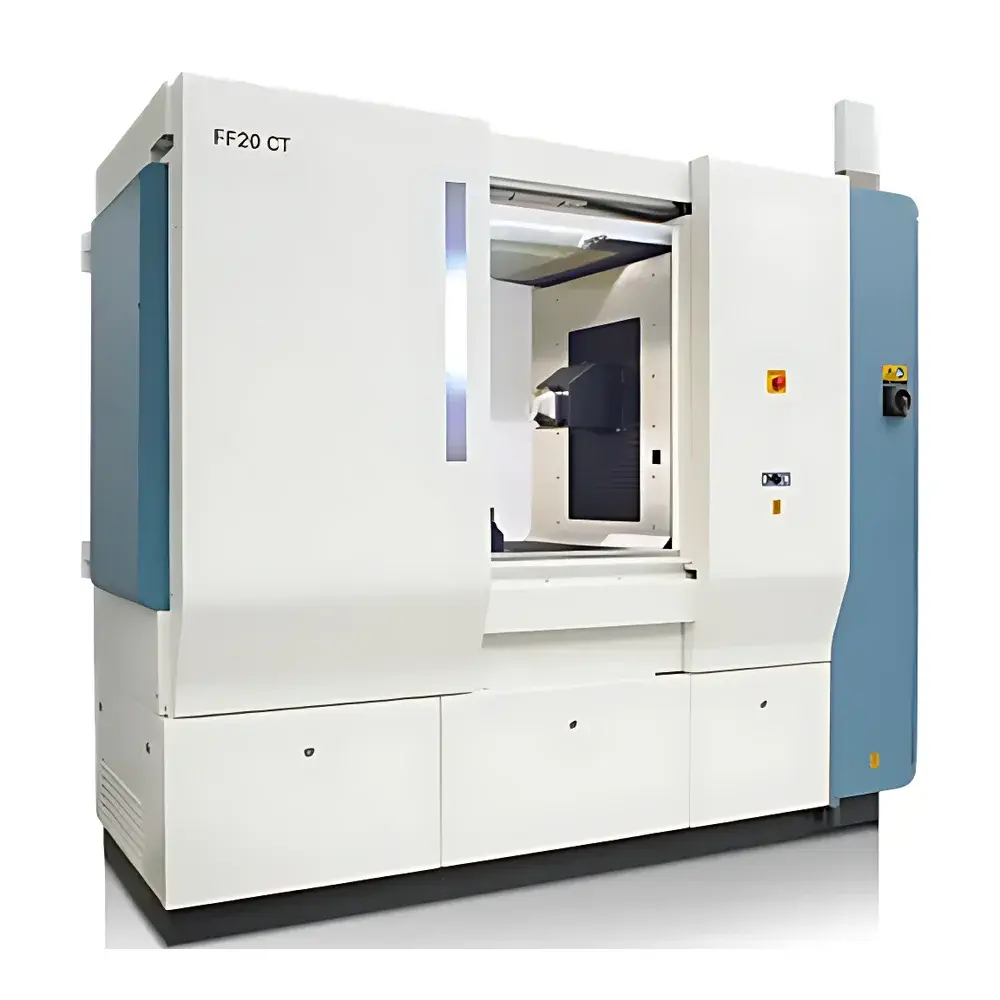
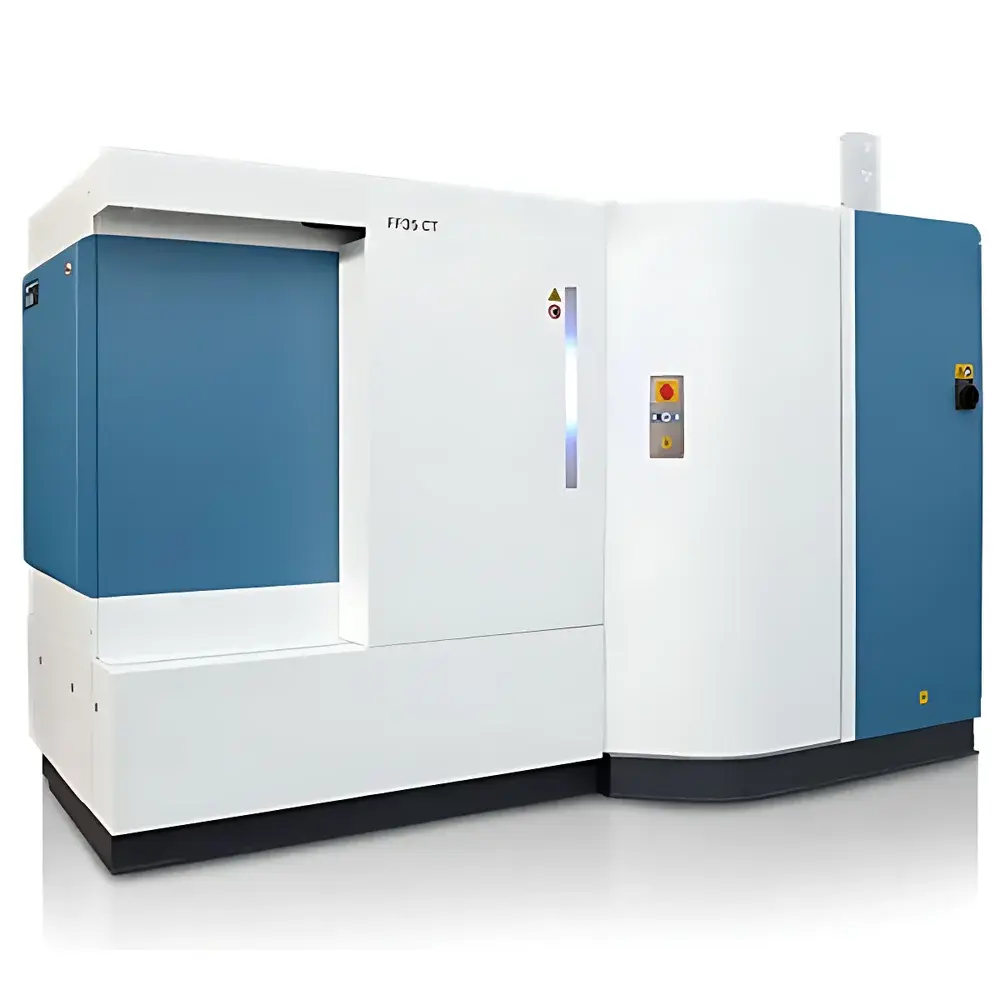
Analysis Y.MU2000-D Industrial Micro-CT System
| Brand | Analysis |
|---|---|
| Origin | Germany |
| Manufacturer Type | Authorized Distributor |
| Import Status | Imported |
| Model | Y.MU2000-D |
| Detector Type | Flat-Panel Detector |
| Scanning Mode | Translation-Rotation (TR) |
| Spatial Resolution | Up to 2.5 lp/mm |
| Density Resolution | 0.2–0.5% |
| X-ray Energy | 225 kV |
| Maximum Penetration | 350 mm (steel equivalent) |
| Inspection Envelope | 800 mm × 1100 mm (diameter × height) |
| Dimensional Measurement Accuracy | ±0.011 mm |
| Density Measurement Accuracy | ±0.2% |
| Maximum Sample Weight | 100 kg |
| System Dimensions | 3700 mm × 2300 mm × 2800 mm (L × W × H) |
Overview
The Analysis Y.MU2000-D is a high-performance industrial micro-computed tomography (micro-CT) system engineered for non-destructive evaluation (NDE) and dimensional metrology in demanding manufacturing and R&D environments. Based on cone-beam X-ray computed tomography principles, the system employs a 225 kV microfocus X-ray source coupled with a high-sensitivity flat-panel detector to acquire volumetric datasets with sub-millimeter spatial fidelity. Its translation-rotation (TR) scanning geometry ensures mechanical stability and geometric reproducibility—critical for quantitative CT metrology compliant with ISO 15784 and ASTM E1441/E2737. Designed for castings, additive-manufactured components, composites, and ceramic parts, the Y.MU2000-D delivers traceable 3D density mapping and defect characterization without sample preparation or destructive sectioning.
Key Features
- 225 kV high-power X-ray tube with adjustable voltage and current settings, optimized for multi-material penetration up to 350 mm steel-equivalent thickness
- High-dynamic-range flat-panel detector enabling single-exposure acquisition across heterogeneous material thicknesses
- Translation-rotation (TR) gantry architecture minimizing mechanical drift and ensuring repeatable projection geometry
- Nanometer-class mechanical stability supported by granite base and precision linear/rotary stages
- Integrated Y.HDR-Inspect real-time imaging software for live dynamic range optimization during manual manipulation of samples in the beam path
- Touchscreen-enabled workflow interface with one-button CT acquisition (optional)
- Modular expandability: field-upgradable to full-volume reconstruction, VGStudio MAX integration, and automated defect classification pipelines
- Ergonomic operator station with radiation-shielded enclosure meeting IEC 61331-1 and local regulatory requirements
Sample Compatibility & Compliance
The Y.MU2000-D accommodates samples up to 100 kg and 800 mm in diameter × 1100 mm in height, supporting cast aluminum engine blocks, turbine blades, carbon-fiber wheel hubs, ceramic brake calipers, and metal-AM lattice structures. Its measurement uncertainty profile—±0.011 mm for dimensional analysis and ±0.2% for relative density quantification—is validated per VDI/VDE 2630 Part 1.3 and supports GLP/GMP-aligned reporting. The system complies with ASTM E801 (standard practice for radiographic examination), ASTM E2737 (CT data acquisition and reconstruction), and automotive OEM-specific specifications including VW 60309 and GMW16875. All CT datasets include embedded metadata for audit trail integrity, satisfying FDA 21 CFR Part 11 requirements when paired with Volume Graphics VGStudio MAX v4.0+.
Software & Data Management
Acquisition and reconstruction are managed via proprietary Y.HDR-Inspect software, which implements real-time histogram-driven exposure control and motion-compensated projection alignment. Reconstructed volumes (16-bit TIFF stacks or DICOM-CT format) are imported into Volume Graphics VGStudio MAX for metrology, porosity analysis, wall-thickness mapping, and GD&T evaluation. The platform supports batch processing, scripting (Python API), and export to industry-standard formats including STEP AP242, STL, and CSV. Data provenance—including source parameters, calibration logs, and reconstruction kernels—is embedded in XMP metadata. Networked deployment enables centralized data archiving, role-based access control, and integration with MES/QMS systems via RESTful API.
Applications
- Porosity, shrinkage, and inclusion detection in aluminum, magnesium, and iron castings per ISO 10042 and EN 15589
- Dimensional validation of AM parts against CAD models, including as-built vs. nominal deviation heatmaps
- Failure analysis of composite laminates and fiber-reinforced polymers via void fraction and delamination mapping
- Quantitative analysis of sintered powder metallurgy components and ceramic inject-molded parts
- Reverse engineering of legacy components using surface mesh extraction and NURBS fitting
- Long-term stability monitoring of critical aerospace components under thermal cycling or fatigue loading
FAQ
What is the minimum detectable defect size in aluminum castings?
Detection limit depends on part geometry and contrast; under optimal conditions (e.g., 50 mm thick Al-Si alloy), sub-50 µm gas pores are resolvable at 2.5 lp/mm spatial resolution.
Can the system perform metrology-certified measurements per ISO 15784?
Yes—the TR scanning geometry, calibrated stage encoders, and VGStudio MAX metrology module support first-article inspection and PPAP submission with full uncertainty budgeting.
Is VGStudio MAX included or licensed separately?
VGStudio MAX is supplied as a fully licensed, perpetual node-locked version; optional annual maintenance includes updates, technical support, and calibration verification tools.
How is radiation safety ensured during operation?
The system features interlocked lead-acrylic shielding, dose-rate monitoring, emergency stop circuitry, and compliance documentation for local radiation protection authorities (e.g., NRC, BfS, HSE).
What training and service support is provided?
Analysis offers on-site installation qualification (IQ), operational qualification (OQ), and user training covering acquisition, reconstruction, metrology, and report generation—plus remote diagnostics and 24-month warranty on X-ray tube and detector.
Related Products



