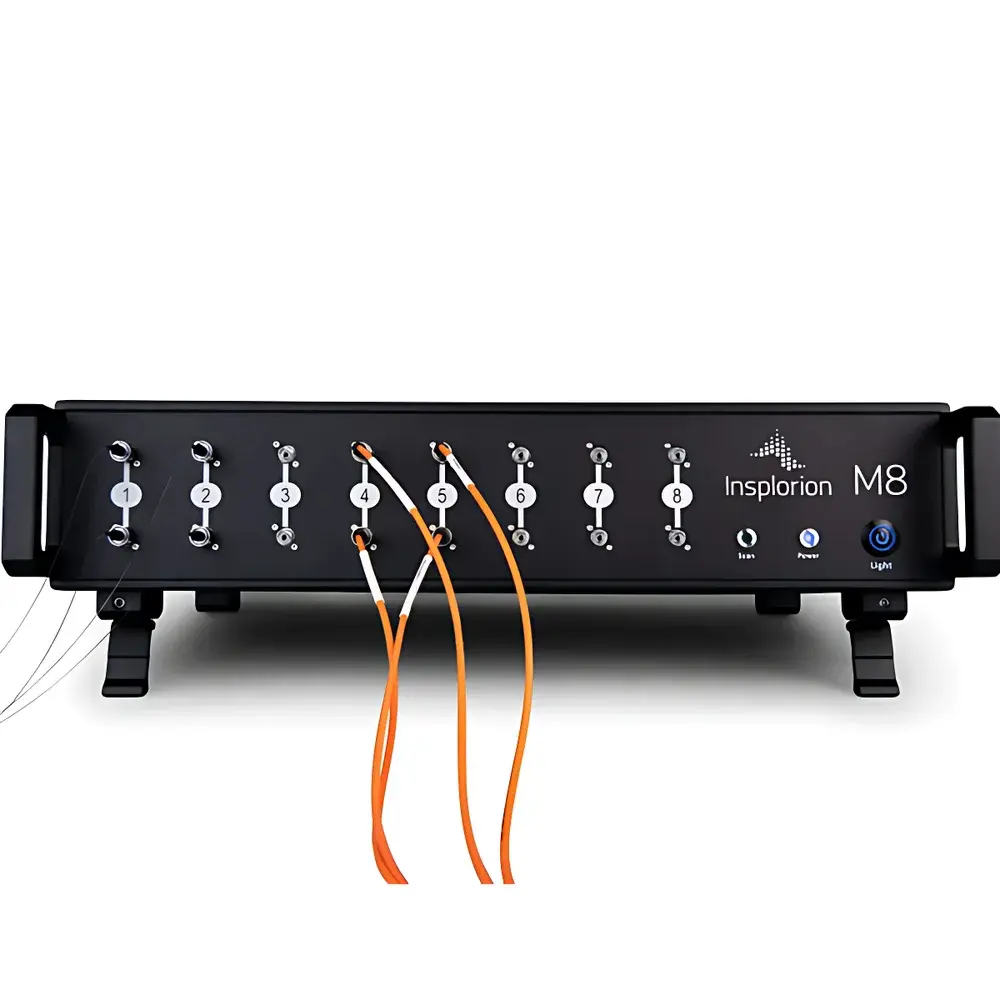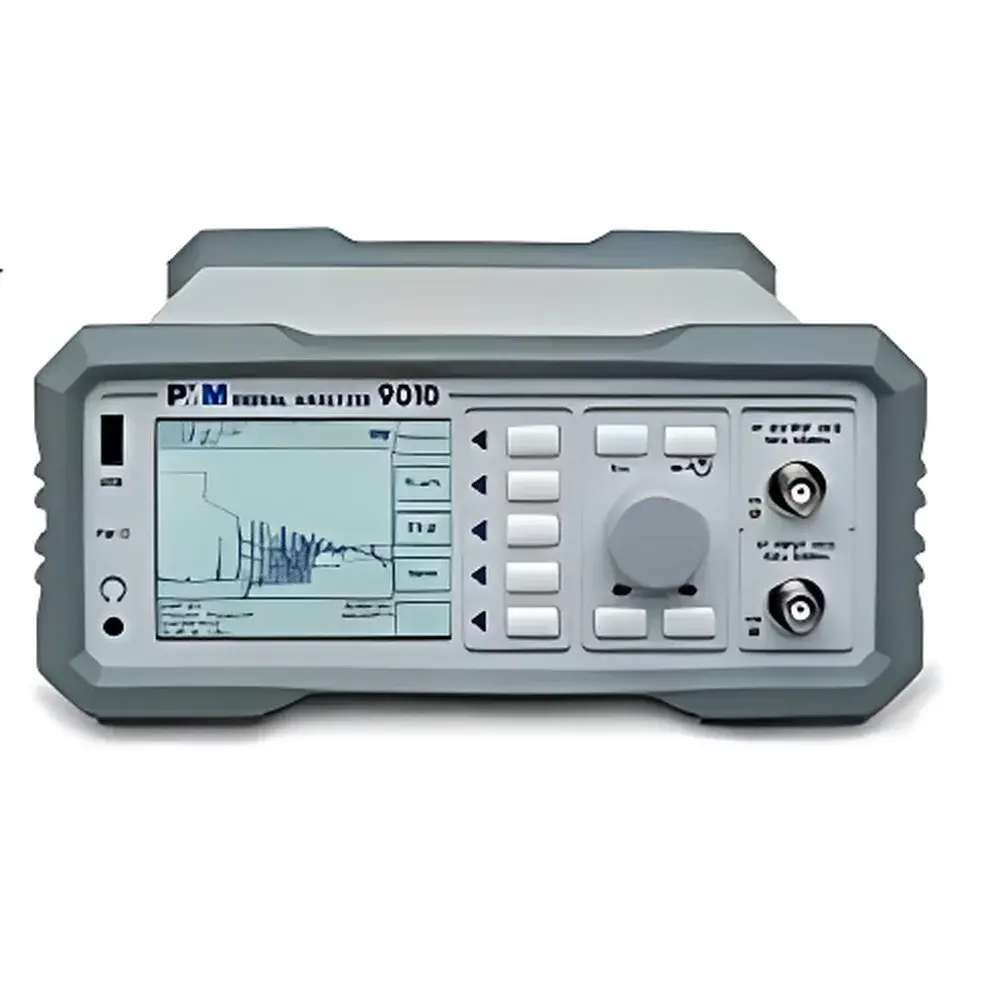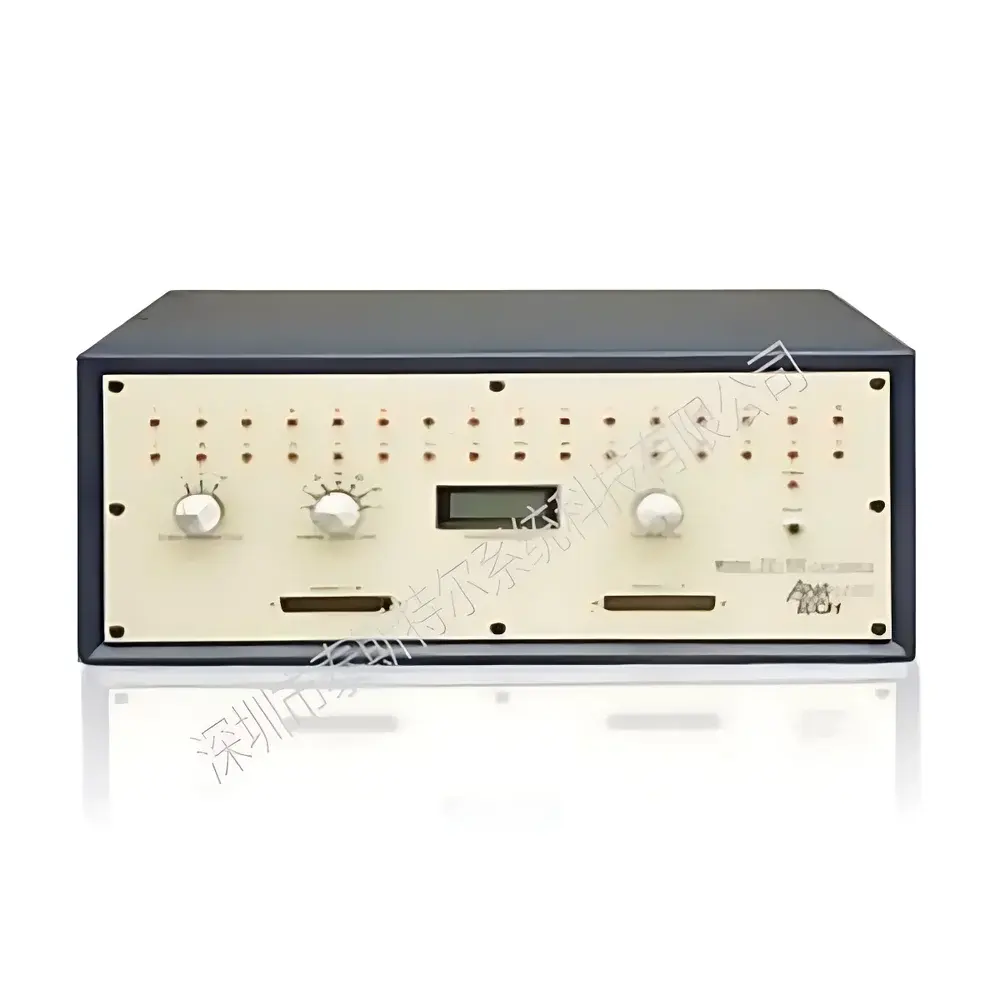
Analysis Tech 32-106 Event Monitor (Fault Analysis Detector)
| Brand | ANALYSIS TECH |
|---|---|
| Origin | USA |
| Manufacturer Type | Authorized Distributor |
| Import Status | Imported |
| Model | 32-106 |
| Price | Upon Request |
| Channel Count | 32 |
| Threshold Resistance Range | 0.1–2000 Ω |
| Minimum Event Duration | 100 ns (standard settings: 0.1, 0.5, 1.0 µs) |
| Channel Test Current Options | 1, 5, 10, 20, 50, 100 mA |
| Max Channel Source Voltage | 2.5 V |
| Max Sensing Current | 100 mA |
| Threshold Tolerance | ±5% |
| Operating Temperature | ≤35 °C |
| Power Supply | 120 VAC, 60 Hz, 3 A |
| Enclosure Dimensions | 7.5" H × 18" W × 16.5" D |
| Weight | 26 lbs |
| Input Cable Standard | PVC-shielded ribbon cable (rated to 105 °C) |
| Optional Cable | High-temp shielded cable (rated to 180 °C) |
| Compatibility | HLV Amplifier for milliohm-range sensing |
Overview
The Analysis Tech 32-106 Event Monitor is a precision-engineered, 32-channel resistive continuity monitor designed for high-speed fault detection and transient event analysis in electronic components and semiconductor devices. It operates on the principle of continuous DC current injection across each monitored loop, measuring real-time resistance changes with microsecond-level temporal resolution. When resistance deviates beyond a user-defined voltage threshold—corresponding to a specific resistance change—the system registers and timestamps the occurrence as an “event.” This makes the 32-106 particularly suited for detecting intermittent opens, micro-cracks, solder joint failures, bond wire fractures, and thermal-induced resistance transients during accelerated life testing (ALT), highly accelerated stress testing (HAST), or burn-in qualification protocols.
Key Features
- 32 independent, galvanically isolated monitoring channels with front-panel adjustable parameters: minimum event duration (100 ns resolution), per-channel test current (1–100 mA in six discrete steps), and voltage threshold (configurable for 0.1–2000 Ω equivalent resistance range).
- High-fidelity analog signal path engineered for low-noise, high-reproducibility resistance trend capture—critical for statistical process control (SPC) and failure mode identification in wafer-level and packaged device testing.
- Modular architecture centered on a single 32-channel plug-in board; compatible with Analysis Tech’s HLV amplifier modules for sub-milliohm sensitivity when paired with four-wire Kelvin sensing configurations.
- Front-panel rotary controls enable rapid setup without software dependency—ideal for lab environments requiring immediate instrument deployment and deterministic response during thermal cycling or mechanical shock tests.
- Robust industrial enclosure rated for continuous operation at ambient temperatures up to 35 °C; power input conforms to IEC 61000-4 immunity standards for conducted disturbances.
Sample Compatibility & Compliance
The 32-106 supports a broad spectrum of electronic and semiconductor test specimens—including bare die, leadframe assemblies, PCB traces, flex circuits, and hermetically sealed packages—provided they form a measurable resistive loop. Its configurable current sourcing enables safe characterization of low-resistance interconnects (e.g., copper pillars, Cu-wire bonds) as well as higher-impedance paths such as ESD protection networks or thin-film resistors. The instrument complies with UL 61010-1 (Safety Requirements for Electrical Equipment for Measurement, Control, and Laboratory Use) and meets CE marking requirements for EMC Directive 2014/30/EU. While not inherently 21 CFR Part 11 compliant, audit-ready data logging can be implemented via external timestamp-synchronized acquisition systems meeting GLP/GMP traceability requirements.
Software & Data Management
The 32-106 operates as a stand-alone hardware monitor with no embedded firmware or onboard storage. Event detection outputs are delivered as TTL-compatible logic pulses (active-low) per channel, synchronized to an internal high-stability clock. These signals interface directly with external data acquisition systems (e.g., National Instruments DAQmx, Keysight U1051A), programmable logic controllers (PLCs), or custom FPGA-based recorders. Timestamping accuracy depends on the host system’s clock resolution and synchronization method (e.g., PTP, GPS-disciplined oscillators). For automated test environments, Analysis Tech provides pinout documentation and timing diagrams to support integration into test executive frameworks such as NI TestStand or Python-based PyVISA workflows.
Applications
- Intermittent fault detection during temperature-humidity-bias (THB) and biased HAST testing per JEDEC JESD22-A110.
- Real-time monitoring of bond wire integrity under thermomechanical stress per MIL-STD-750 Method 2074.
- Validation of electrostatic discharge (ESD) clamp behavior in IC input protection structures.
- Process yield analysis in wafer probe stations where loop resistance drift correlates with lithography or etch anomalies.
- Qualification of flexible printed electronics subjected to dynamic flex fatigue per IPC-6013 Class 3 requirements.
FAQ
What is the difference between the 32-105 and 32-106 models?
The 32-105 accommodates four 32-channel plug-in boards (totaling 128 channels), whereas the 32-106 accepts only one—making it suitable for lower-channel-count applications where space or cost constraints apply.
Can the 32-106 detect resistance changes below 1 mΩ?
Yes—when used with the optional HLV amplifier and four-wire Kelvin connections, the system achieves sub-milliohm resolution; however, absolute accuracy depends on cabling, contact resistance, and thermal EMF compensation practices.
Is calibration traceable to NIST?
Analysis Tech provides factory calibration certificates with uncertainties referenced to NIST-traceable standards; recalibration intervals are recommended annually or after 500 operational hours, whichever occurs first.
Does the unit support remote configuration via USB or Ethernet?
No—the 32-106 is intentionally designed as an analog-dominant, front-panel-controlled instrument to ensure deterministic timing and eliminate software-induced latency; all parameter adjustments are manual and hardware-based.
What safety certifications does the 32-106 hold?
It carries UL 61010-1 certification and meets CE EMC Directive 2014/30/EU for radiated and conducted emissions, ensuring compatibility with regulated laboratory infrastructure.
Related Products