
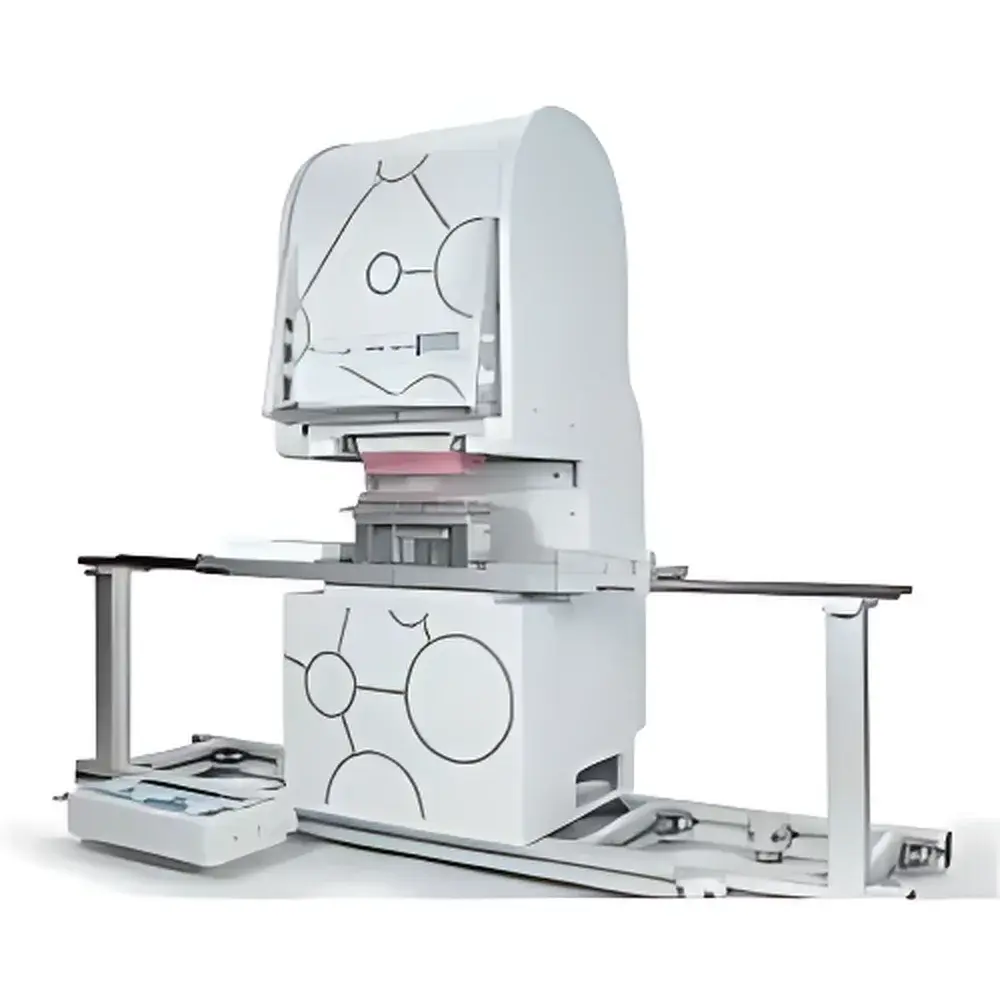
Analytik Jena Cybi-Well Vario High-Throughput Liquid Handling Workstation
| Brand | Analytik Jena |
|---|---|
| Origin | Germany |
| Manufacturer | Analytik Jena GmbH |
| Country of Origin | Germany |
| Model | Cybi-Well Vario |
| Pipetting Heads | 9 interchangeable heads (96-channel, 384-channel, 1536-channel, capillary) |
| Volume Range | 25 nL – 250 µL (wet & dry) |
| Precision | CV ≤ 1–7% depending on volume and head |
| Plate Formats Supported | 96-, 384-, and 1536-well microplates (shallow & deep well) |
| Carrier Options | 3-, 4-, 5-, or 10-plate carriers |
| Tip Types | Disposable plastic tips, ceramic tips, glass capillaries |
| Software | CyBi-Composer with auto-head recognition and GLP-compliant audit trail |
Overview
The Analytik Jena Cybi-Well Vario is a modular, high-throughput liquid handling workstation engineered for precision, reproducibility, and operational flexibility across diverse life science and pharmaceutical laboratory environments. Built upon a robust German-engineered platform, it employs positive-displacement and air-displacement pipetting principles—optimized per head type—to ensure traceable, low-volume accuracy without reliance on external calibration after head exchange. Its core architecture supports both wet and dry dispensing protocols across an unprecedented 25 nL to 250 µL dynamic range, enabling seamless transition between assay development, compound screening, NGS library preparation, and qPCR setup—all on a single instrument. Designed for integration into automated lab ecosystems, the Cybi-Well Vario meets foundational requirements for GLP-compliant workflows and serves as a validated foundation for ISO/IEC 17025-accredited testing laboratories.
Key Features
- Modular head architecture: Nine field-replaceable pipetting heads—including 96-, 384-, and 1536-channel configurations—installed manually from front or rear access points without recalibration.
- Multi-tip compatibility: Supports disposable polypropylene tips, chemically inert ceramic tips, and precision glass capillaries—enabling solvent-resistant, low-retention, or ultra-low-volume applications.
- Volume versatility: Four calibrated volume tiers (2.5 µL, 25 µL, 60 µL, 250 µL max) span five orders of magnitude, eliminating platform fragmentation for nanoliter-scale hit confirmation and microliter-scale reformatting.
- Carrier scalability: Configurable plate carriers accommodate 3, 4, 5, or 10 standard SBS-format microplates—supporting serial dilution stacks, source/destination segregation, and multi-step protocol staging.
- Integrated contamination control: Patented tip ejection geometry, positive-pressure tip purging, and non-contact aspirate/dispense routines minimize carryover risk below 0.001% (validated per ASTM E2878).
Sample Compatibility & Compliance
The Cybi-Well Vario accommodates shallow-well (e.g., PCR plates), deep-well (e.g., 2 mL storage plates), and high-density formats (1536-well assay plates) without mechanical adaptation. All pipetting heads comply with ISO 8655-6 for gravimetric performance verification and support traceable calibration via built-in weight-based validation routines. The system adheres to EU Machinery Directive 2006/42/EC and IEC 61000-6-2/6-3 for electromagnetic compatibility. When operated with CyBi-Composer software under configured user roles and electronic signatures, the platform satisfies FDA 21 CFR Part 11 requirements for audit trail generation, data integrity, and change control—making it suitable for regulated QC/QA environments in biopharma and contract research organizations.
Software & Data Management
CyBi-Composer is a Windows-based, object-oriented control suite that enables intuitive graphical programming of complex liquid handling sequences—including serial dilutions, plate replication, normalization, and multi-source transfers—without scripting. It features real-time head recognition: upon installation, each pipetting head self-reports its model, volume class, and factory calibration ID to the software, automatically loading appropriate error models and tolerance thresholds. All executed protocols are timestamped, digitally signed, and archived with full parameter metadata (aspirate/dispense height, mixing cycles, tip type, environmental logs). Raw data exports to CSV or XML; optional LIMS integration via RESTful API supports bidirectional sample tracking and result ingestion.
Applications
- High-content screening (HCS): Precise dispensing of cell suspensions, cytokines, and inhibitors into 384- and 1536-well plates for phenotypic assays.
- Genomics workflow automation: Fragmentation buffer addition, enzyme master mix preparation, and library normalization prior to Illumina sequencing.
- Compound management: Replication of small-molecule libraries from DMSO stock plates into assay-ready plates with sub-microliter fidelity.
- Diagnostics assay development: Parallel setup of ELISA, lateral flow, and digital PCR reaction plates with minimized inter-plate CV.
- Regulatory testing: Execution of USP sterility test media transfers and EP 2.6.27 microbial enumeration protocols under documented SOPs.
FAQ
Does the Cybi-Well Vario require recalibration after changing pipetting heads?
No—each head contains embedded calibration identifiers recognized by CyBi-Composer; system-level accuracy is maintained without manual intervention.
Can the workstation handle viscous or volatile solvents?
Yes—ceramic and glass capillary heads are compatible with DMSO, glycerol, ethanol, and acetonitrile; dry-pipetting mode reduces evaporation artifacts for volatiles.
Is remote monitoring or troubleshooting supported?
Yes—via integrated Ethernet port and optional VNC-enabled remote desktop access; service logs and diagnostic reports can be exported for technical review.
What validation documentation is provided?
Factory-issued IQ/OQ documentation, ISO 8655-6 test reports, and a customizable PQ template aligned with GAMP 5 guidelines are included with purchase.
How is data integrity ensured during long-duration runs?
CyBi-Composer implements cyclic redundancy checks (CRC) on all command packets, writes operation logs to redundant storage partitions, and halts execution on any detected hardware anomaly—preserving auditability per ALCOA+ principles.



