
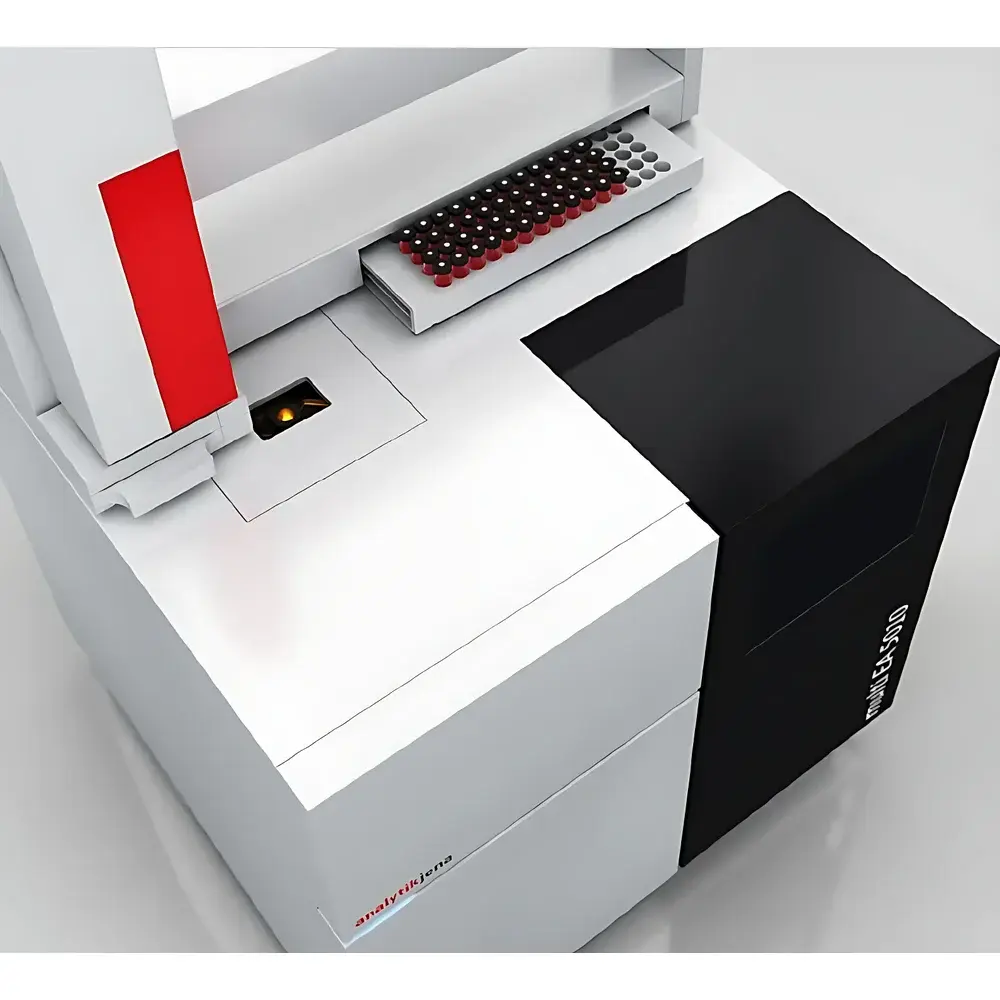
Analytik Jena multi EA 5010 Sulfur and Nitrogen Analyzer
| Brand | Analytik Jena |
|---|---|
| Origin | Germany |
| Manufacturer Type | Original Equipment Manufacturer (OEM) |
| Origin Category | Imported Instrument |
| Model | multi EA 5010 |
| Pricing | Available Upon Request |
Overview
The Analytik Jena multi EA 5010 is a high-performance, combustion-based elemental analyzer engineered for the simultaneous and independent quantification of total sulfur (S) and total nitrogen (N) in liquid, gaseous, and liquefied petroleum gas (LPG) samples. It operates on high-temperature catalytic combustion (900–1150 °C) followed by selective detection: sulfur is measured via pulsed ultraviolet fluorescence (PUVF), while nitrogen is determined using chemiluminescence detection (CLD). This dual-detection architecture ensures orthogonal validation, eliminates spectral interference between S and N signals, and delivers trace-level sensitivity without cross-talk—critical for complex hydrocarbon matrices such as crude oil fractions, gasoline, jet fuel, diesel, and refinery process streams. Designed for routine compliance testing and R&D applications, the multi EA 5010 meets the physical and operational demands of modern analytical laboratories where throughput, regulatory traceability, and method robustness are non-negotiable.
Key Features
- Compact footprint (0.3 m²) enabling flexible benchtop integration in space-constrained QC labs
- True unattended operation with automated sample introduction, calibration, drift correction, and system diagnostics
- Dual independent detection channels: PUVF for sulfur (detection limit ≤ 0.02 mg/kg) and CLD for nitrogen (detection limit ≤ 0.05 mg/kg) in liquid samples
- Integrated touchscreen interface (≥ 7″ capacitive display) with embedded firmware and optional remote PC control via Ethernet (TCP/IP)
- Modular gas handling system supporting direct injection of pressurized gases (up to 10 bar), LPG, and volatile liquids without cryogenic trapping or dilution
- Self-monitoring hardware architecture with real-time status logging for combustion temperature, oxygen flow, ozone generation, and detector voltage stability
- Low-maintenance design: ceramic combustion tube lifetime > 2,000 analyses; quartz reaction chamber lifetime > 5,000 runs; no consumable catalyst cartridges required
Sample Compatibility & Compliance
The multi EA 5010 accepts a broad range of sample types—including gasoline, kerosene, naphtha, lubricating oils, biodiesel blends, natural gas condensates, and compressed refinery off-gases—without matrix-specific method reconfiguration. Its patented sample introduction module accommodates both liquid autosampler vials (2–100 µL) and gas-tight loop injection (0.1–10 mL) with pressure-regulated carrier gas control. Regulatory compliance is embedded at the system level: full support for ASTM D5453 (S), ASTM D4294 (S, XRF backup), ASTM D5762 (N), IP 544 (S/N), EN ISO 20846 (S), EN ISO 14111 (N), DIN 51446-2, SH/T 0689, GB/T 17040, and UOP 477. All measurement sequences generate audit-trail-enabled reports compliant with GLP and GMP requirements; optional 21 CFR Part 11 software package provides electronic signatures, user access tiers, and secure data archiving.
Software & Data Management
The instrument is operated via EA Control Software v3.x—a Windows-based application supporting method development, sequence scheduling, real-time chromatogram visualization, and automated report generation in PDF/XLS formats. The software includes a validated method library with pre-configured protocols for >30 standard test methods and allows custom calibration curve management (linear, quadratic, or multi-point weighted regression). All raw signal data (detector voltage vs. time), system logs, and environmental parameters (oven temp, O₂ flow, lamp intensity) are stored in an encrypted SQLite database with timestamped metadata. LIMS integration is achieved through ASTM E1384-compliant ASCII export or direct ODBC connectivity. Data integrity safeguards include automatic checksum validation, write-once-read-many (WORM) archive mode, and configurable retention policies aligned with ISO/IEC 17025 clause 7.5.2.
Applications
- Refinery quality control: monitoring sulfur content in FCC gasoline, hydrotreated diesel, and marine fuels per IMO 2020 and EU Sulphur Directive limits
- R&D of low-sulfur catalysts and denitrification processes in petrochemical research
- Third-party certification labs performing accredited testing to ISO/IEC 17025 scope for fuel specifications
- Environmental analysis of nitrogen compounds in shale gas condensates and biogas upgrading streams
- Method transfer and validation studies requiring interlaboratory reproducibility (RSD < 2.5% at 10 mg/kg S)
- Regulatory submission support for EPA, REACH, and China’s GB 17930–2016 compliance documentation
FAQ
What sample introduction options does the multi EA 5010 support?
It supports liquid autosampling (via 10-position carousel), direct gas loop injection (with pressure regulation up to 10 bar), and LPG sampling using a heated vaporization module with back-pressure control.
Is the system compliant with 21 CFR Part 11?
Yes—when equipped with the optional EA Security Pack, it provides role-based access control, electronic signatures, audit trail generation, and data encryption meeting FDA requirements for regulated environments.
How often does the combustion tube require replacement?
Under typical use (≤ 50 samples/day), the ceramic combustion tube maintains performance for ≥ 2,000 analyses; routine cleaning with air purge after each run extends service life.
Can the instrument measure sulfur and nitrogen simultaneously in one injection?
No—S and N are measured sequentially in a single combustion event, but the dual-detector configuration enables concurrent signal acquisition without re-injection, preserving sample integrity and reducing cycle time.
Does the system require external cooling water or compressed air?
No—it operates with ambient air cooling and integrated zero-air generator; only laboratory-grade oxygen (≥ 99.995%) and instrument-grade nitrogen (≥ 99.999%) are required as carrier and purge gases.
Related Products





