
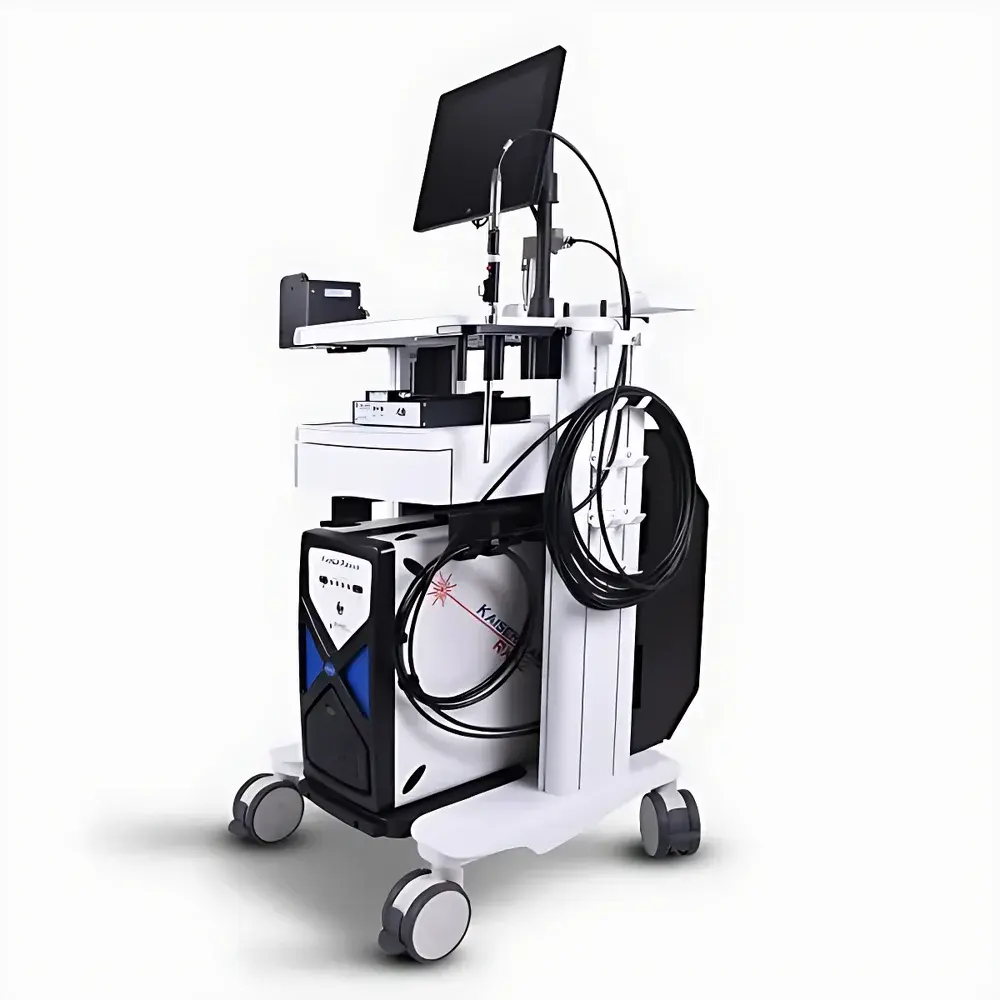
Analytik Jena RXN Series In-situ Online Raman Spectrometer
| Brand | Analytik Jena |
|---|---|
| Origin | Germany |
| Model | RXN |
| Instrument Type | In-line Raman Spectrometer |
| Probe Compatibility | PhAT and non-PhAT probes |
| Sample Phase Support | Solid and liquid (dual-channel configuration) |
| Optical Spot Size Range | 1 µm to 6 mm |
| Application Environment | Certified for hazardous / classified areas (ATEX/IECEx compliant) |
| Spectral Resolution | High (typical < 4 cm⁻¹ FWHM) |
| Architecture | Modular, rack-mountable industrial platform |
| Software Compliance | Supports 21 CFR Part 11 audit trail, electronic signatures, and GLP/GMP data integrity requirements |
Overview
The Analytik Jena RXN Series In-situ Online Raman Spectrometer is an engineered solution for real-time, non-invasive molecular characterization in continuous manufacturing and process analytical technology (PAT) environments. Based on confocal or quasi-confocal Raman scattering detection, the RXN platform leverages monochromatic laser excitation (typically 785 nm or 830 nm) to induce inelastic photon scattering from vibrational modes of chemical bonds. This enables label-free, reagentless identification and quantification of active pharmaceutical ingredients (APIs), polymorphs, crystallinity, reaction intermediates, and contaminants—without sample preparation or physical contact. Designed for deployment directly at the point of use—inside reactors, dryers, fluidized beds, or transfer lines—the RXN system operates under industrial conditions while maintaining laboratory-grade spectral fidelity. Its core architecture integrates thermally stabilized optics, low-noise CCD or back-illuminated EMCCD detectors, and precision wavelength calibration via internal neon or argon reference lines, ensuring long-term measurement stability across shifts and campaigns.
Key Features
- Hybrid probe interface supporting both PhAT (Photonics-based Area Targeting) and conventional fiber-coupled probes—enabling seamless transition between macro-scale (up to 6 mm spot diameter) and micro-scale (down to 1 µm) sampling without mechanical refocusing or recalibration.
- Dual-channel optical design: one dedicated PhAT-enabled channel for solids (e.g., powders, granules, tablets) and a second independent channel optimized for liquids and slurries—eliminating cross-phase interference and enabling concurrent multi-phase monitoring.
- ATEX Zone 1 / IECEx Zone 1 certified enclosure options available; intrinsically safe operation with explosion-proof housings, purged enclosures, or fiber-optic signal transmission for deployment in Class I Div 1, Group D or ATEX II 2G environments.
- Industrial-grade thermal management: Peltier-cooled detector stage and ambient-compensated laser diode control ensure consistent spectral baseline and peak position reproducibility over temperature fluctuations (±0.02 cm⁻¹ drift per °C).
- Modular hardware architecture: 19-inch rack-mount chassis with hot-swappable spectrometer modules, configurable I/O for PLC integration (Profibus, Profinet, EtherNet/IP), and optional HART or 4–20 mA analog output for DCS interfacing.
Sample Compatibility & Compliance
The RXN Series accommodates heterogeneous solid samples—including cohesive powders, agglomerates, coated particles, and compressed tablets—without requiring dilution, pressing, or pelletization. PhAT technology mitigates particle-size bias by averaging signal across statistically representative surface areas, improving robustness for API content uniformity testing (per USP ) and polymorphic phase mapping. For liquid-phase applications, flow cells (0.1–5 mL pathlength), immersion probes, or dip tubes support inline monitoring of reactions, extractions, or crystallizations. All configurations comply with ISO/IEC 17025 method validation requirements and support full traceability per FDA Guidance for Industry: PAT—A Framework for Innovative Pharmaceutical Development, Manufacturing, and Quality Assurance. System validation packages include IQ/OQ/PQ documentation templates aligned with ASTM E2962–14 (Standard Guide for Raman Spectroscopy in Pharmaceutical Analysis).
Software & Data Management
Operated via the proprietary QuantOS™ software suite, the RXN platform delivers secure, role-based access control, multivariate calibration management (PLS, PCA, SIMCA), and automated model transfer across instruments using standardized spectral preprocessing (SNV, derivatives, Savitzky-Golay filtering). Raw spectra are stored in HDF5 format with embedded metadata (timestamp, probe ID, environmental sensor readings, operator ID). The software natively supports 21 CFR Part 11 compliance through electronic signature workflows, immutable audit trails, and user-level permission hierarchies. Data export conforms to ASTM E1382 (Standard Practice for Digital Storage of Analytical Data) and is compatible with LIMS, MES, and DeltaV DCS platforms via OPC UA or RESTful API interfaces.
Applications
- Real-time endpoint determination in hydrogenation, nitration, and esterification reactions.
- In-process monitoring of polymorphic transitions during fluid-bed drying or hot-melt extrusion.
- Content uniformity assessment of blended powders prior to tableting (replacing offline HPLC assays).
- Identification of counterfeit or degraded APIs in supply chain verification.
- Crystallization process optimization via nucleation and growth kinetics tracking.
- Slurry concentration and solid-phase composition monitoring in continuous filtration units.
FAQ
Can the RXN system be validated for GMP manufacturing environments?
Yes—the platform includes prequalified validation protocols, documented risk assessments (ICH Q9), and full traceability features required for FDA and EMA submissions.
Is model transfer between different RXN units straightforward?
Yes—QuantOS™ employs instrument-standardized spectral normalization and built-in transfer learning algorithms to maintain prediction accuracy across units without full recalibration.
What safety certifications are available for hazardous area installation?
ATEX II 2G Ex db IIB T4 Gb, IECEx Ex db IIB T4 Gb, and UL/cUL Class I Div 1 Groups B, C, D certified configurations are offered with appropriate probe and housing options.
Does the system support automated cleaning-in-place (CIP) cycle monitoring?
Yes—via integration with conductivity, pH, and temperature sensors, the RXN can correlate spectral changes with rinse efficacy and detect residual solvents or actives post-CIP.
How is spectral library management handled across multiple sites?
Centralized library hosting via QuantOS Cloud enables version-controlled, encrypted spectral database synchronization with change history and approval workflows.
Related Products





